Mastotermes darwiniensis 达尔文澳白蚁
- Type locality
- Australia: Northern Territory: Darwin
- Distribution
- northern Australia, tropical northern region, introduced: Papua New Guinea
List: English (genus page) · 中文 · Español
Summary
Mastotermes darwiniensis is the only extant species of the genus Mastotermes, in the family MASTOTERMITIDAE. The species was described by Froggatt in 1897; the type locality is Australia: Northern Territory: Darwin. Distribution: northern Australia, tropical northern region, introduced: Papua New Guinea. This site records 1 junior synonym for the species.
Etymology
Genus name Mastotermes: From Greek mastos (breast, nipple) + Latin termes (termite).
Specific epithet darwiniensis: Named after the locality Darwin
Taxonomic position
- Family: MASTOTERMITIDAE — 1 genus, 1 species
- Genus: Mastotermes — monotypic, 1 species
Distribution
- Distribution records: northern Australia, tropical northern region, introduced: Papua New Guinea
The record above follows the wording of the original data; no geocoding or standardized place names have been applied.
Junior synonyms
This site records 1 junior synonym for the species, listed by its original literature source:
- Termes errabundus Froggatt, 1898: 733 — type locality: Australia: Queensland: north Queensland
In older literature, regional checklists and database searches, this species may appear under the synonym Termes errabundus; this site treats it under Mastotermes darwiniensis.
Morphology
The description below is paraphrased from the original or a later revision, by caste; the source is cited at the end.
Diagnostic characters
Genus-level characters of the wing venation: the radial sector of the forewing is highly fused, with narrow spacing between adjacent upper branches; the humeral suture of the forewing is more curved and convex than in Blattotermes; the hindwing has a well-developed anal lobe, which the original describes as a character of this genus and its close relatives; the radial sector is compact and the media lies closer to the radial sector than to the anterior cubitus, which allows specimens known only from wings to be assigned to this genus.
Alate
Radial sector of the forewing highly fused, with narrow spacing between adjacent upper branches; the humeral suture of the forewing forms a distinct arcuate convexity and is more curved than in Blattotermes; the anal lobe of the hindwing is well developed.
This genus is monotypic, containing only this species; the following is the genus-level description based on the original literature; species-level measurements and intraspecific variation are given in the original.
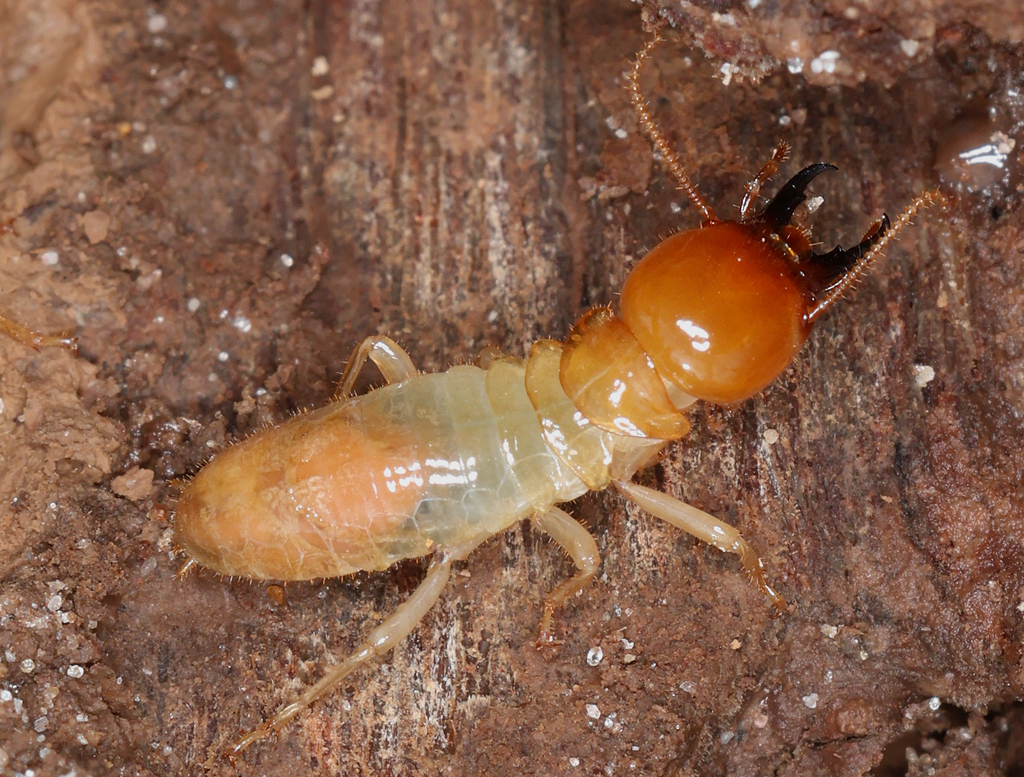
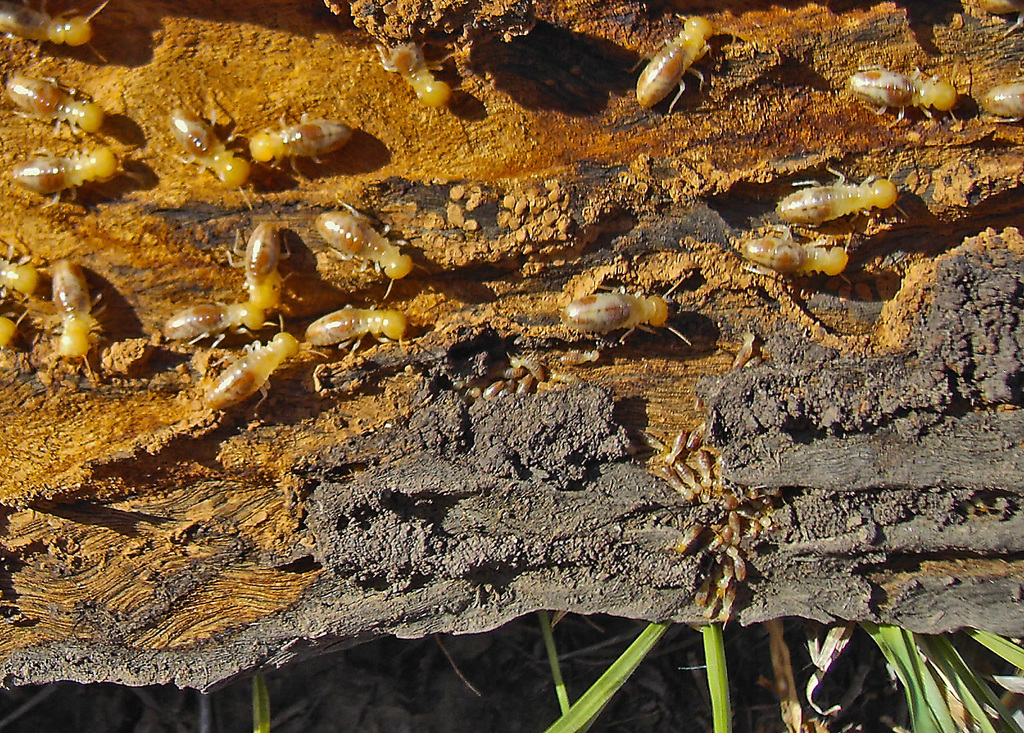
Photos 13 photos
Freely licensed photos, click to enlarge. Hotlinked from iNaturalist / Wikimedia Commons; the rights stay with the photographers — author, licence and source page are shown under each photo. Only the first 6 are shown here; the rest are under “All photos” at the end of the page.


Distribution map
Aggregated from GBIF occurrence records on a 1° grid; only extant taxa of this checklist are used, so fossil records are excluded. Dot size and shade show the number of records inside a cell.
Related papers
Cached papers for this genus (matched automatically, for reference); to search this species with its junior synonyms merged in, use the literature search.
- The ommatidium of the termite mastotermes darwiniensis
Abstract
- POPULATION AND COLONY GENETIC STRUCTURE OF THE PRIMITIVE TERMITE MASTOTERMES DARWINIENSIS
Abstract
The termite Mastotermes darwiniensis is the sole extant member of its family and occupies the basal position in the phylogeny of the eusocial order Isoptera. In this study, we investigated the micro- and macrogeographic genetic structure of M. darwiniensis in its native range in Australia. A total of 1591 workers were sampled from 136 infested trees in 24 locales. Each locale was separated by 2-350 km, and these locales were found within two broader geographic regions approximately 1500 km apart. The multilocus genotypes of all termites were assayed at six polymorphic microsatellite loci. The genetic data indicated that colonies typically fed on multiple trees within locales and extended over linear distances of up to 320 m. Single colonies were frequently headed by multiple reproductives. Workers were highly related (r = 0.40) and substantially inbred (f = 0.10). Thus, M. darwiniensis colonies are characterized by the input of alleles from multiple reproductives, which sometimes engage in consanguineous matings. Our analyses of population genetic structure above the level of the colony indicated that locales and regions were significantly differentiated (theta(locale) = 0.50, theta(region) = 0.37). Moreover, locales showed a pattern of genetic isolation by distance within regions. Thus, M. darwiniensis populations display restricted gene flow over moderate geographic distances. We suggest that the genetic patterns displayed by M. darwiniensis result primarily from selective pressures acting to maintain high relatedness among colonymates while allowing colonies to grow rapidly and dominate local habitats.
- Caste Development in Mastotermes and Kalotermes: Which is Primitive?
Abstract
Papers on this species, synonyms included → OpenAlex Google Scholar CNKI
Abstracts come from open metadata; copyright remains with the original authors/publishers. For reference only — please check the original.
Literature notes
Edited notes based on the original literature, not transcriptions. The source markers in each paragraph point to archived records in .sources; full citations are listed below.
Ultrastructure of the multiflagellate spermatozoon
According to the abstract, Baccetti and Dallai (1978) described the spermatozoon of Mastotermes darwiniensis, the first example of a multiflagellate spermatozoon in animals: the sperm consists of a conical head and 100 flagella, lacks an acrosome, its centriole contains doublet rather than triplet microtubules, the axoneme lacks central microtubules and its doublets have only a single arm, and flagellar motility is weak.
References
Cite this species
Citation strings are generated from the fields of this page; please keep the DOI and the version number when citing.
GB/T 7714
班奈特格林. Extant Isoptera (termites): a checklist of Latin and Chinese names: Mastotermes darwiniensis 达尔文澳白蚁[EB/OL]. Version 2026.10.30. https://termite-extant-isoptera.org/en/species/mastotermes-darwiniensis/. DOI: 10.5281/zenodo.23646836.
BibTeX
@misc{isoptera_mastotermes_darwiniensis_2026,
  author       = {班奈特格林},
  title        = {Mastotermes darwiniensis: a checklist of extant Isoptera (termites)},
  year         = {2026},
  version      = {2026.10.30},
  howpublished = {https://termite-extant-isoptera.org/en/species/mastotermes-darwiniensis/},
  note         = {MASTOTERMITIDAE; version 2026.10.30; DOI: 10.5281/zenodo.23646836},
  doi          = {10.5281/zenodo.23646836}
}
RIS
TY  - ELEC
TI  - Mastotermes darwiniensis: a checklist of extant Isoptera (termites)
AU  - 班奈特格林
PY  - 2026
UR  - https://termite-extant-isoptera.org/en/species/mastotermes-darwiniensis/
DO  - 10.5281/zenodo.23646836
ER  -