Incisitermes minor 小楹白蚁
- Type locality
- United States: California: San Diego
- Distribution
- western United States, northern Mexico; introduced: Canada, China, Hawaii (United States), Italy, Japan
List: English (genus page) · 中文 · Español
Summary
Incisitermes minor is a species of the genus Incisitermes, in the family KALOTERMITIDAE. The species was described by Hagen in 1858; the type locality is United States: California: San Diego. Distribution: western United States, northern Mexico; introduced: Canada, China, Hawaii (United States), Italy, Japan. This site records 2 junior synonyms for the species.
Etymology
Genus name Incisitermes: From Latin incisus (cut, notched) + termes.
Specific epithet minor: Latin minor (smaller)
Taxonomic position
- Family: KALOTERMITIDAE — 23 genera, 480 species
- Genus: Incisitermes — 30 species
- Type species of the genus: Incisitermes schwarzi
Distribution
- Distribution records: western United States, northern Mexico; introduced: Canada, China, Hawaii (United States), Italy, Japan
The record above follows the wording of the original data; no geocoding or standardized place names have been applied.
Junior synonyms
This site records 2 junior synonyms for the species, listed by their original literature source:
- Kalotermes arizonensis Snyder, 1926: 393-394 — type locality: United States: Arizona: Copper Butte Canyon: Ray
- Kalotermes minor varius Snyder, 1926: 394, 397 — type locality: United States: Arizona: Copper Butte Canyon: Ray
In older literature, regional checklists and database searches, this species may appear under the synonyms above (Kalotermes arizonensis, Kalotermes minor varius); this site treats them all under Incisitermes minor.
Recorded in Fauna Sinica
The morphological and biological accounts below are taken from Fauna Sinica and related literature; only structure and punctuation have been standardized here.
Morphology
Soldier
Head capsule elongate, the apex of the frons often raised above the rest, forming twin peaks; frontal surface either inclined or steep, its rugae sometimes coarse and deep, sometimes smooth, or merely punctate. Antennae short, mostly 10 to 12 segments. Mandibles short and stout, much shorter relative to the head length than in Neotermes, with several clearly discernible marginal teeth, the mandibular basal hump either distinct or flat. Labrum mostly square. Pronotum flat and broad, femora not thickened; tibial spur formula 3:3:3, tarsi 4-segmented.
Alate
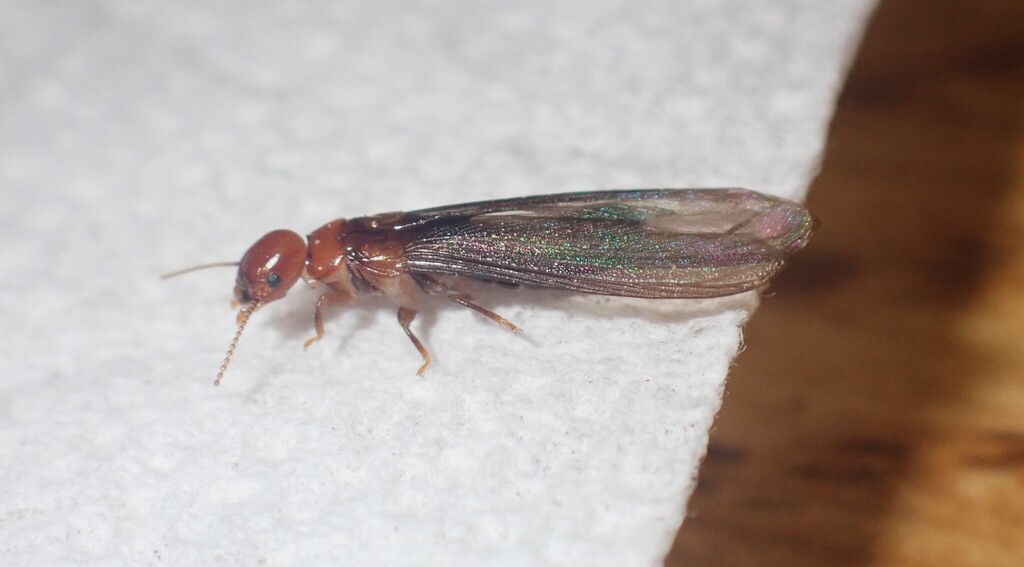
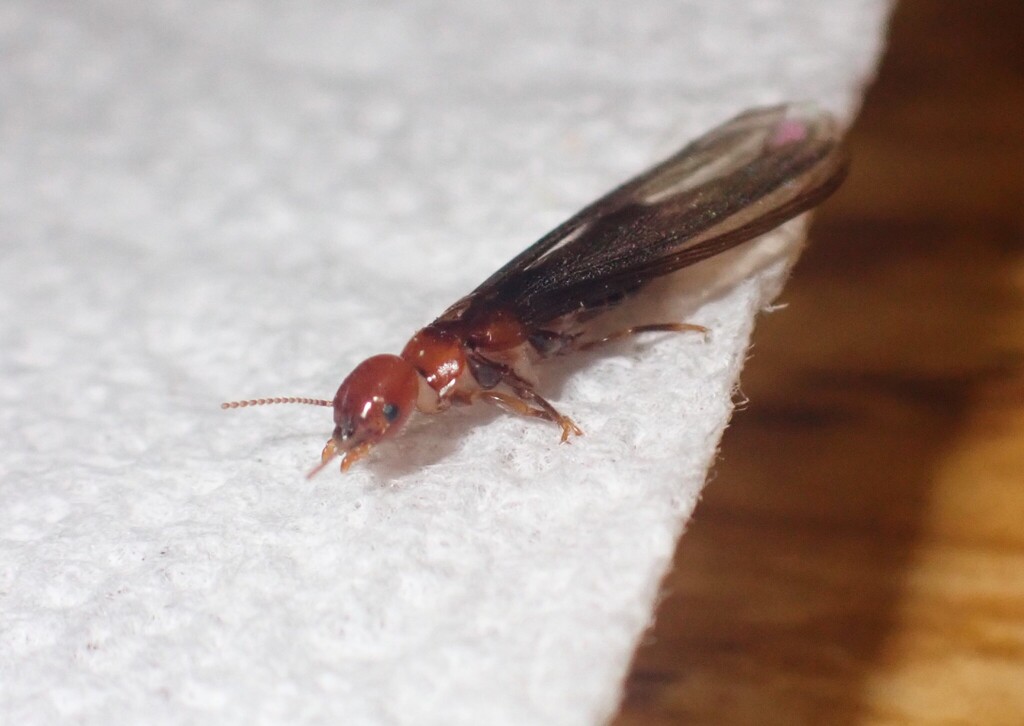
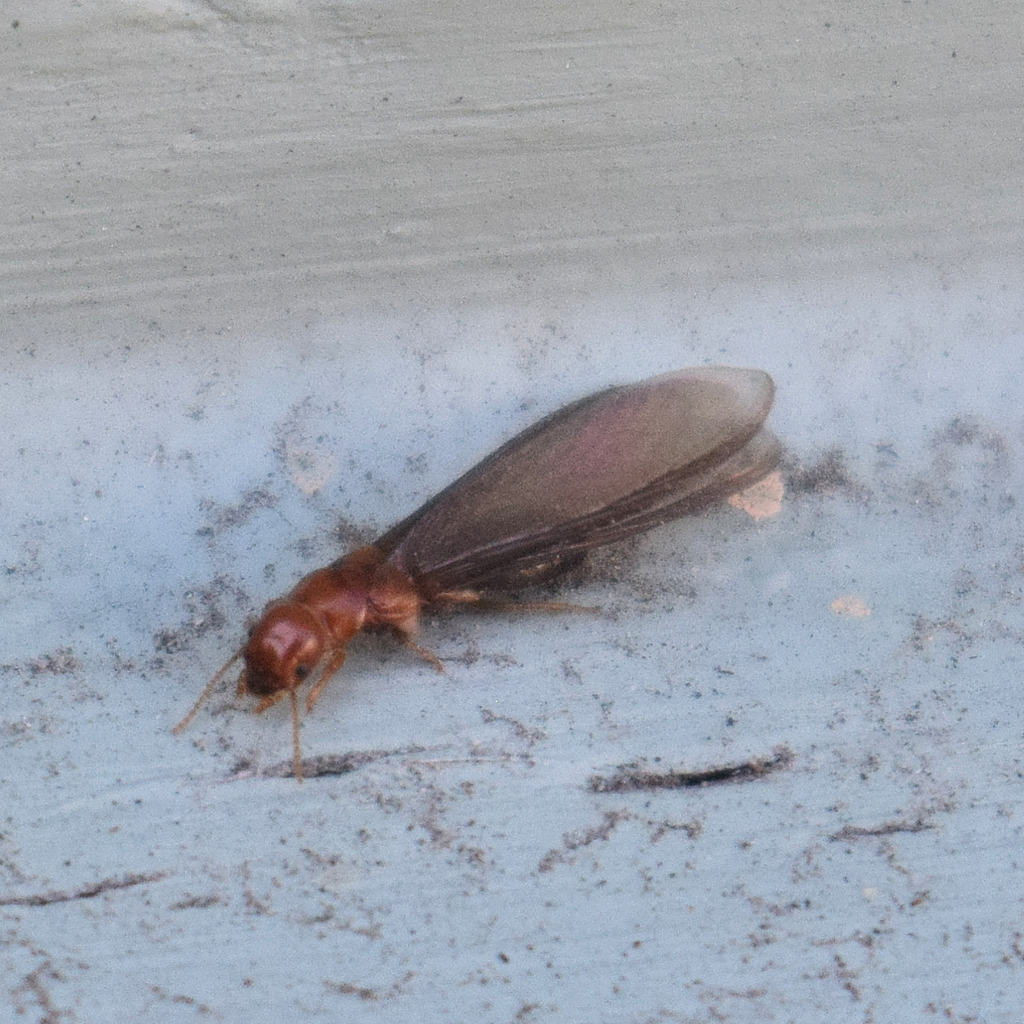
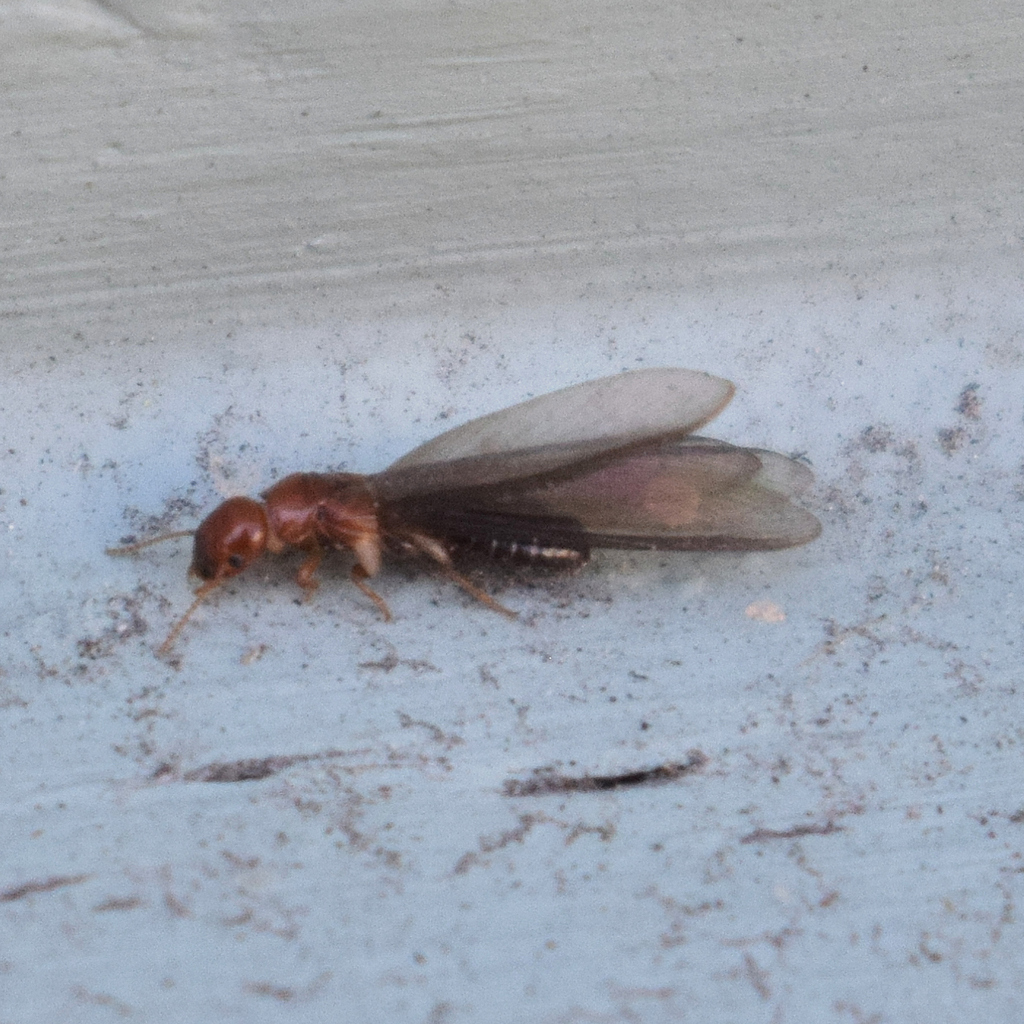
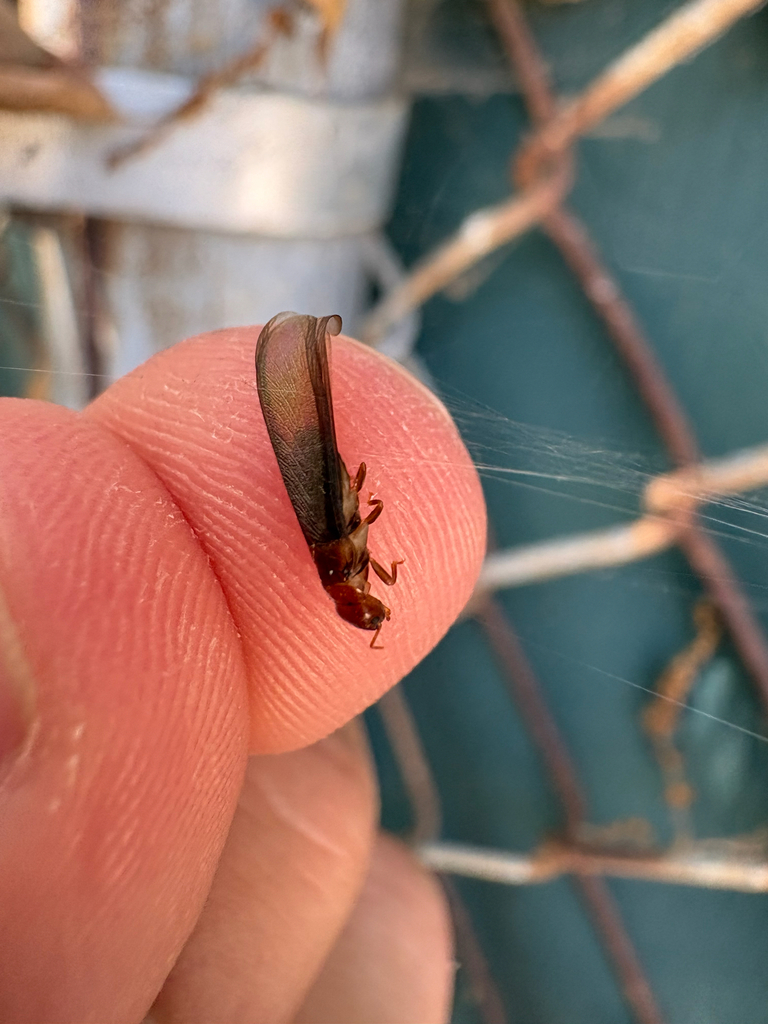
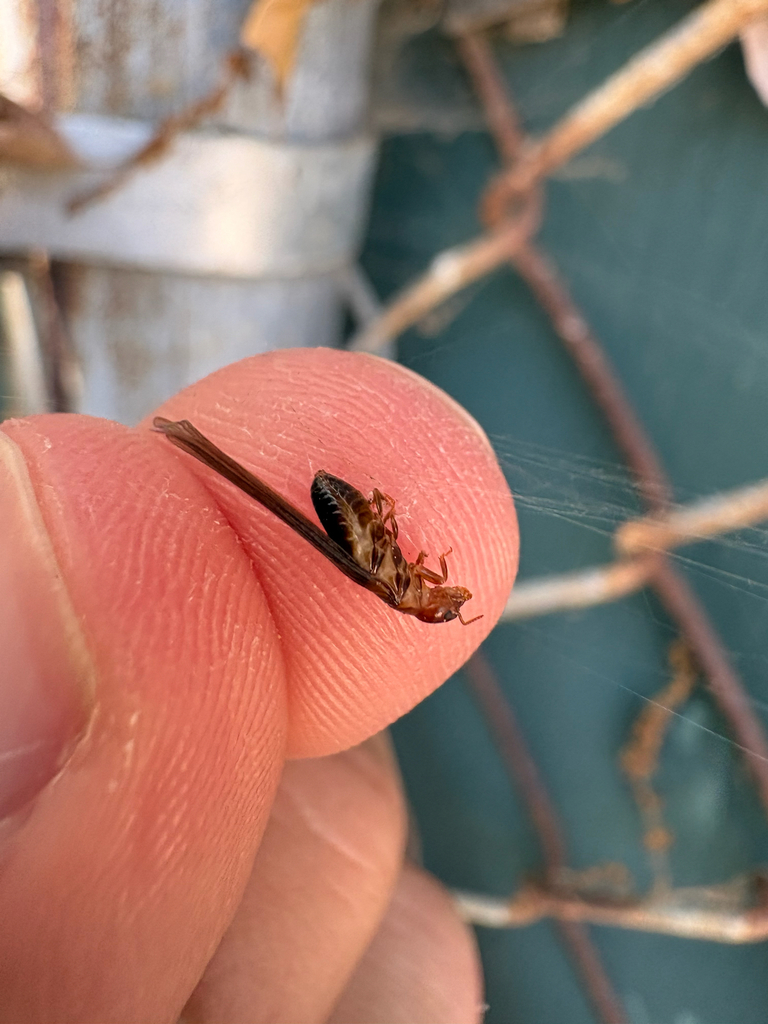
Head yellowish brown, compound eyes dark brown, ocelli pale, labrum greyish white, antennal segment 3 dark brown while the remaining segments are pale; thorax yellowish brown, legs yellow, wings brown and transparent. Head nearly circular, length and width almost equal; compound eyes nearly round, prominent; ocelli slightly round, not touching the compound eyes. Antennae slender, 15 to 20 segments, segment 3 slightly longer than segments 2 and 4, the terminal five or six segments stouter, the apical segment smaller, oval. Pronotum generally slightly wider than the head, sometimes almost as wide, with a notch in the middle of the anterior margin, posterior margin slightly flat. Tibial spur formula 3:3:3, tarsi 4-segmented.
Worker
Nymph
Abstract (from the source)
Soldiers have an elongate head capsule whose forehead rises above the rest as twin peaks, an inclined or steeply rising frons that may be coarsely wrinkled, smooth or punctate, and short antennae of 10 to 12 segments. The mandibles are short and stout with several distinct marginal teeth, and the pronotum is broad and flat. Alates are yellowish brown with a round head, prominent eyes, 15 to 20 antennal segments, and a pronotum nearly as wide as the head.
Biology
Distribution and locality
In China recorded from Nanjing, Jiangsu; Shanghai; and Ninghai, Zhejiang; abroad it occurs in California and Arizona in the United States, and in Mexico.
Taxonomic notes
Source: Huang Fusheng et al. (2000), Fauna Sinica, Insecta vol. 17, Isoptera, Science Press. (entry no. 11 in the original work) Entries are cited by their number in the original work.
Photos 120 photos
Freely licensed photos, click to enlarge. Hotlinked from iNaturalist / Wikimedia Commons; the rights stay with the photographers — author, licence and source page are shown under each photo. Only the first 6 are shown here; the rest are under “All photos” at the end of the page.
Distribution map
Aggregated from GBIF occurrence records on a 1° grid; only extant taxa of this checklist are used, so fossil records are excluded. Dot size and shade show the number of records inside a cell.
Related papers
Cached papers for this genus (matched automatically, for reference); to search this species with its junior synonyms merged in, use the literature search.
- The cytogenetics of Incisitermes schwarzi and other Florida termites.
Abstract
- Permanent segmental interchange complex in the termite Incisitermes schwarzi
Abstract
- Two new Incisitermes (Isoptera: Kalotermitidae) species from the Caribbean Basin, genetic relationships with other regional Incisitermes, and synonymy of Incisitermes tabogae with I. schwarzi
Abstract
Two new species of Incisitermes are described from the soldier and imago caste: Incisitermes lisae sp. nov. (Yucatan Region) and Incisitermes mariae sp. nov. (Venezuela and Trinidad and Tobago). Incisitermes tabogae (Snyder, 1924) is reduced to a junior synonymy of Incisitermes schwarzi (Banks, 1920), known from Florida, the West Indies, and the Caribbean basin mainland. The phylogenetic relationships of these three species are compared with other Incisitermes of the region.
Papers on this species, synonyms included → OpenAlex Google Scholar CNKI
Abstracts come from open metadata; copyright remains with the original authors/publishers. For reference only — please check the original.
Other species in Incisitermes (29 species)
- Incisitermes banksi
- Incisitermes barretti
- Incisitermes bequaerti
- Incisitermes didwanaensis
- Incisitermes emersoni
- Incisitermes fruticavus
- Incisitermes furvus
- Incisitermes galapagoensis
- Incisitermes immigrans
- Incisitermes inamurai
- Incisitermes incisus
- Incisitermes laterangularis
- Incisitermes lisae
- Incisitermes marginipennis
- Incisitermes mariae
- Incisitermes marianus
- Incisitermes mcgregori
- Incisitermes milleri
- Incisitermes nishimurai
- Incisitermes pacificus
- Incisitermes platycephalus
- Incisitermes repandus
- Incisitermes rhyzophorae
- Incisitermes schwarzi
- Incisitermes seeversi
- Incisitermes semilunaris
- Incisitermes snyderi
- Incisitermes solidus
- Incisitermes taylori
Cite this species
Citation strings are generated from the fields of this page; please keep the DOI and the version number when citing.
GB/T 7714
班奈特格林. Extant Isoptera (termites): a checklist of Latin and Chinese names: Incisitermes minor 小楹白蚁[EB/OL]. Version 2026.10.30. https://termite-extant-isoptera.org/en/species/incisitermes-minor/. DOI: 10.5281/zenodo.23646836.
BibTeX
@misc{isoptera_incisitermes_minor_2026,
  author       = {班奈特格林},
  title        = {Incisitermes minor: a checklist of extant Isoptera (termites)},
  year         = {2026},
  version      = {2026.10.30},
  howpublished = {https://termite-extant-isoptera.org/en/species/incisitermes-minor/},
  note         = {KALOTERMITIDAE; version 2026.10.30; DOI: 10.5281/zenodo.23646836},
  doi          = {10.5281/zenodo.23646836}
}
RIS
TY  - ELEC
TI  - Incisitermes minor: a checklist of extant Isoptera (termites)
AU  - 班奈特格林
PY  - 2026
UR  - https://termite-extant-isoptera.org/en/species/incisitermes-minor/
DO  - 10.5281/zenodo.23646836
ER  -