Family Kalotermitidae · 木白蚁科
Filter the taxa recorded under this family by name and locality; for the whole site use the full-text search.
Distribution map
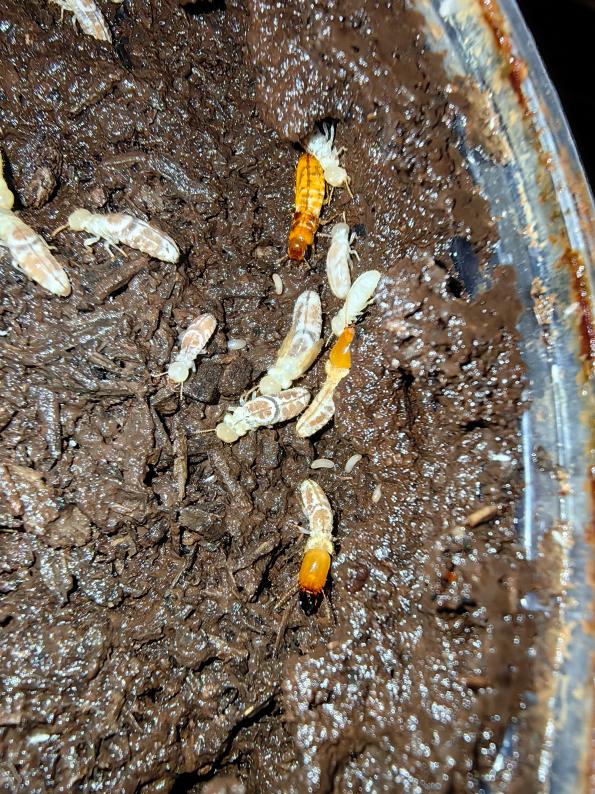
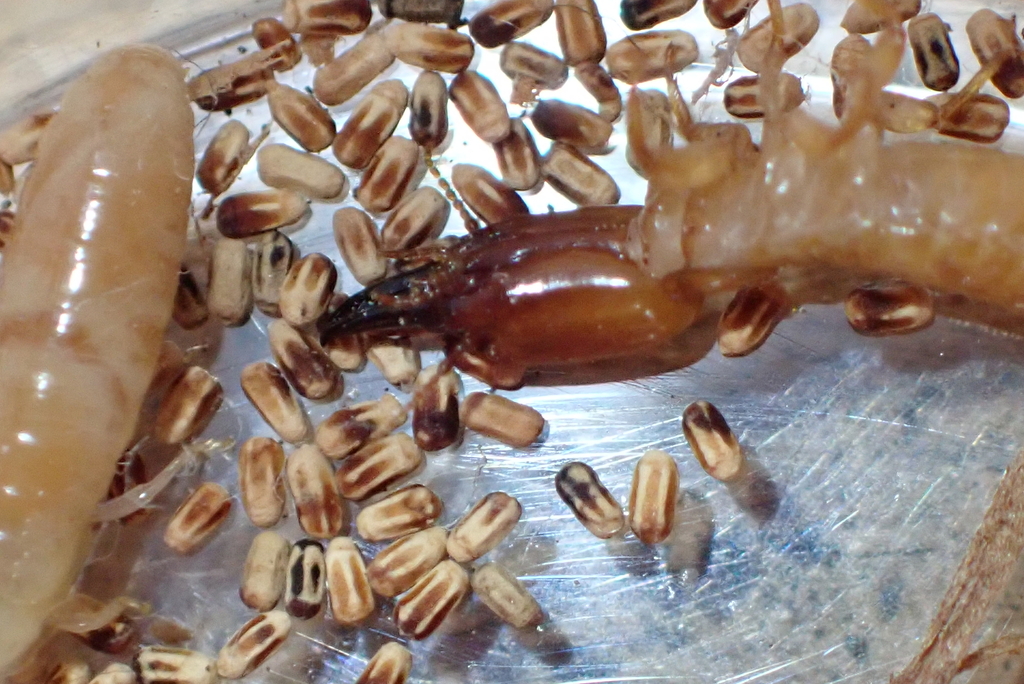
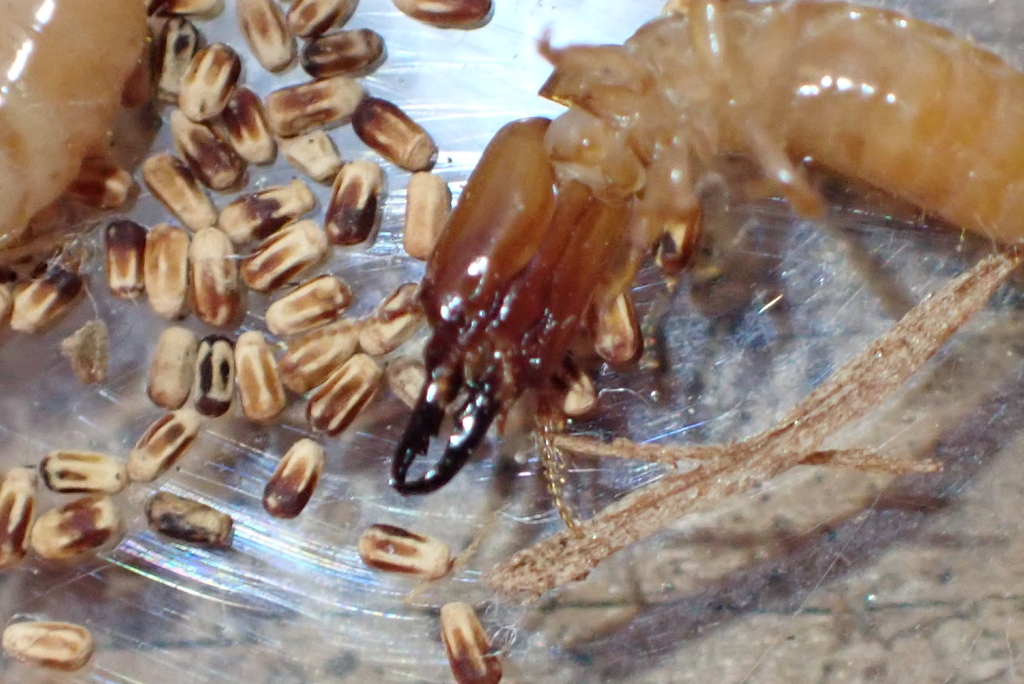
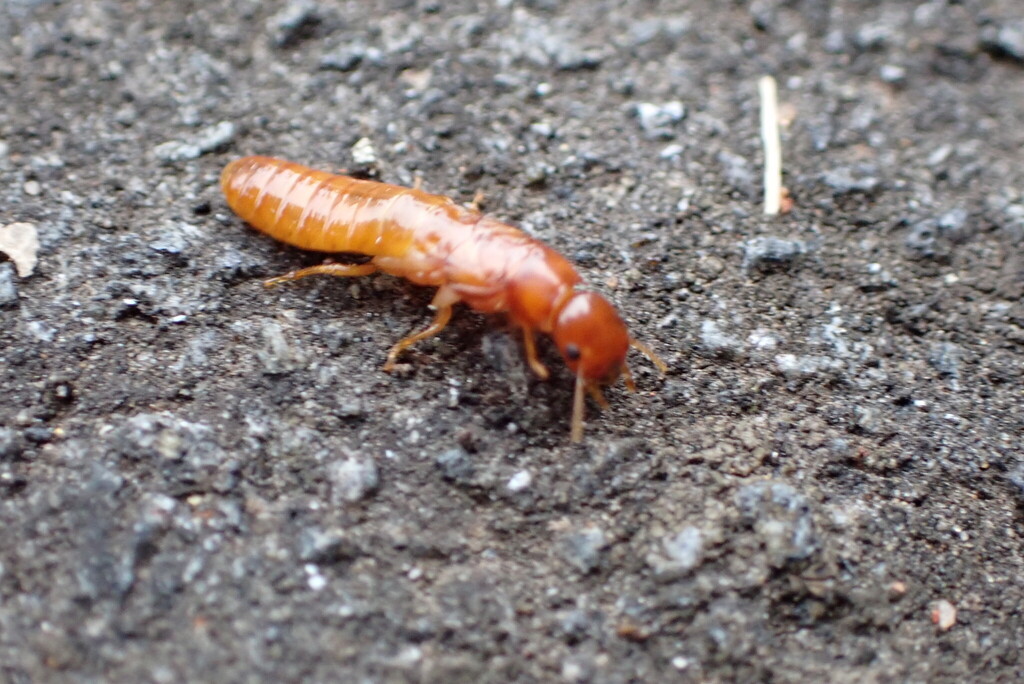
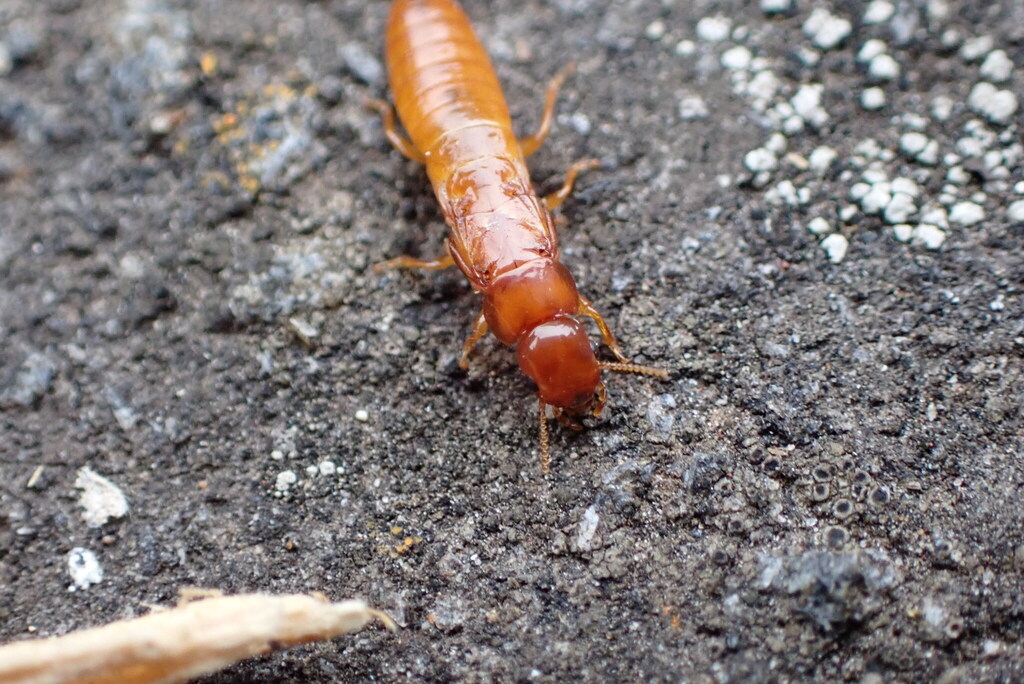
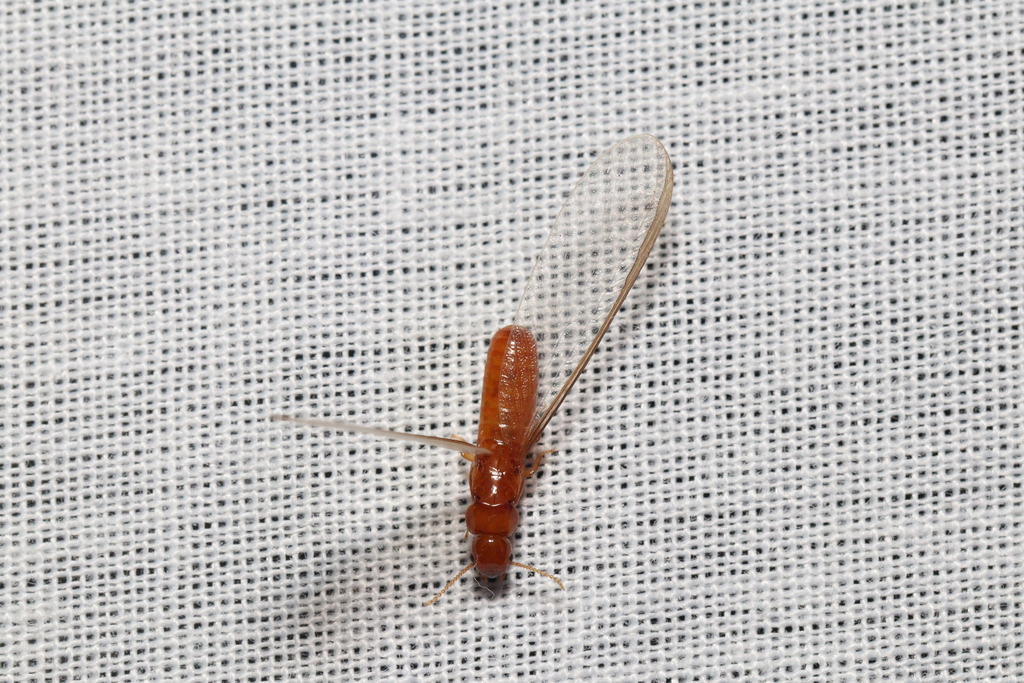
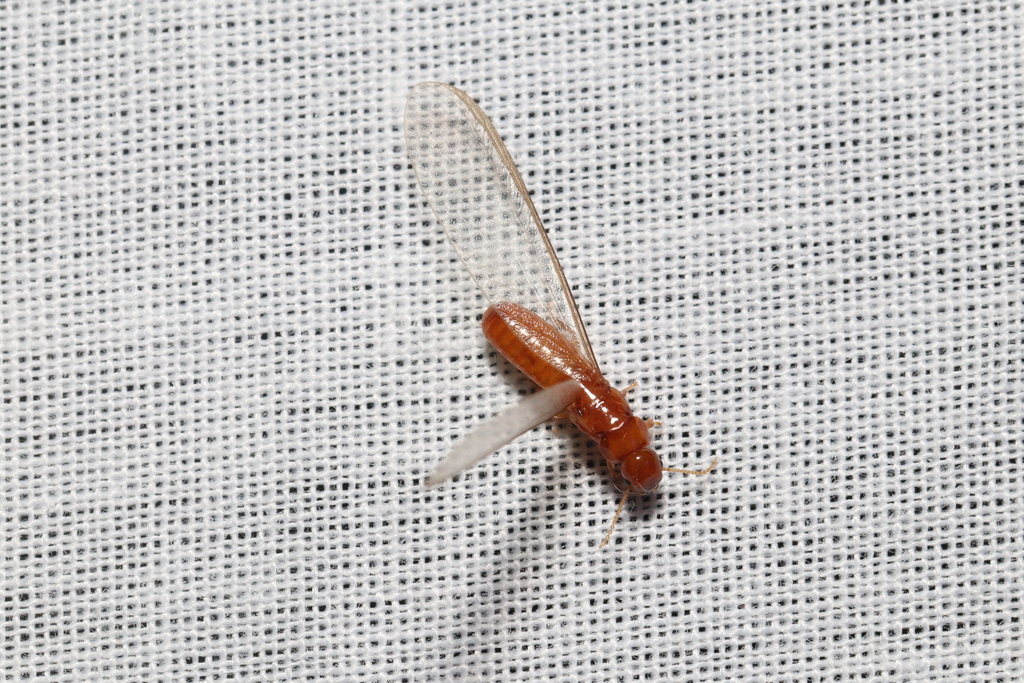
Photographs 566 photos · 44 species
Freely licensed photos; click to enlarge. This preview shows 6 photos; to browse by species, open “All photos”. Photos are hotlinked from iNaturalist / Wikimedia Commons; the rights stay with the photographers.
About the family
The family Kalotermitidae was established by Froggatt in 1897(16), with the type genus Kalotermes Hagen, 1853. The family name derives from the type genus, formed from the Greek kalos (beautiful) and termes. This checklist includes 23 genera and 480 species.
This family is commonly known as the 'drywood termites'. Most species build their nests and feed within dry wood, do not depend on the soil, and their nest is also their food source, so individuals do not leave the nest to forage over long distances. The family has no true worker caste, and nest labor is performed by pseudergates. The soldiers are of the mandibulate type, with the head roughly rectangular and lacking a fontanelle; the alates possess ocelli, by which they can be distinguished from groups that possess a fontanelle, such as the Rhinotermitidae and Termitidae. In distribution the family is pantropical to subtropical, extending into warm-temperate regions such as those with a Mediterranean climate, and it is especially diverse in dead branches and broken wood in the tropical forest canopy. Phylogenetically, this family is one of the earlier-diverging lineages among living termites (17), and it is the sister group of the Neoisoptera, so it is important for understanding the early evolution of eusociality in termites. With regard to invasion and dispersal, the drywood termites of this family are the most common wood-borne group in the tropical and subtropical world: Incisitermes minor, the western drywood termite (native to the western United States and northern Mexico, and introduced into Canada, China, Japan, Italy and Hawaii (United States)); Cryptotermes brevis, the West Indian drywood termite, is native to the desert regions of the Pacific coast of South America and has been spread by sea-borne timber to the southeastern United States, Hawaii, the Caribbean islands, South Africa, Madagascar and Australia, making it the most widely distributed invasive drywood termite species (18); Cryptotermes domesticus, the domestic drywood termite, is native to Southeast Asia and has been introduced into the coastal areas of South China, Taiwan, Japan, Australia and the Pacific islands; Cryptotermes dudleyi is native to the Oriental region and has established populations in the Neotropical Panama, Costa Rica, Colombia, Brazil and the West Indies; Cryptotermes havilandi is native to tropical Africa and has also established populations in Suriname, Guyana, Brazil and the West Indies. In addition, Cryptotermes cynocephalus Light is native to the Philippines and Southeast Asia and has been introduced into Sri Lanka, the area north of Cape York Peninsula in Australia, Rabaul in Papua New Guinea, and Hawaii (first recorded on Oahu); Glyptotermes breviconis of the genus Glyptotermes is native to the southeastern coast of Australia and has established local populations in natural trees in New Zealand and Fiji. In Sri Lanka, tea plantations are attacked by Postelectrotermes militaris and Glyptotermes dilatatus, which damage the tea plants (19); genera such as Bifiditermes, Eucryptotermes, Marginitermes, Paraneotermes, Procryptotermes and Rugitermes are minor timber pests (20).
This section is the standing account the site maintains for this rank and is updated on this page as the classification is revised; the checklist index is in the Checklist.
Fauna Sinica account
The account below is a reorganized and rewritten adaptation of the family-level description in Fauna Sinica, Insecta Vol. 17, Isoptera (2000) (original work, section on the family Kalotermitidae); the source keys and measurement tables are not reproduced here.
Morphology
Key characters
This family is a medium-sized, wood-dwelling primitive group, commonly called drywood termites. No caste has a fontanelle; the pronotum is flat, about as wide as the head or slightly wider; the tarsi are four-segmented and the tibiae bear two to four apical spurs; the cerci have only two segments. The soldier retains pale eye spots behind the antennae; the alate has ocelli, the forewing scale is much larger than the hindwing scale and overlies its base, the radial sector is well developed and branches several times, and the subcosta is weak. The family has no worker caste; feeding and brood care are carried out by the nymphs.
Biology and economic significance
In all groups of this family both nesting and feeding are confined to wood, and the galleries do not connect with the soil; seasoned timber, standing dead trees, structural timber and stored wooden articles may all be attacked. Because the colonies are small and concealed, they are often noticed only after the wood has been hollowed out; there are comparatively many records of damage to old buildings and old furniture in southern and coastal China.
Distribution
The book records five genera from China (Cryptotermes, Kalotermes, Incisitermes, Glyptotermes and Neotermes); the number of genera and species included here under the current classification has been slightly adjusted; see the list below.
Summary
Kalotermitids are moderate-sized, wood-dwelling termites often called drywood termites. No caste possesses a fontanelle; the flat pronotum equals or slightly exceeds head width, tarsi are four-segmented, tibial spurs number two to four, and cerci have only two segments. Soldiers show pale eye spots behind the antennae; alates carry ocelli, an enlarged forewing scale overlapping the hindwing scale, a branched radial sector and a slender subcosta. The family lacks a true worker caste, nymphs performing its tasks.
Sources cited: Huang Fusheng, Zhu Shimo, Ping Zhengming, Wang Zhiguo, Li Can and Xu Chungui, 2000. Fauna Sinica, Insecta Vol. 17, Isoptera. Beijing: Science Press. This text is a reorganized adaptation, not a verbatim transcription.
Morphological keys
Every key on this page states its source table by table. The world key to the genera of Kalotermitidae is translated from Krishna et al. (2013), Treatise on the Isoptera of the World, pp. 75–78, with separate keys for alates and soldiers; the fossil genera †Proelectrotermes and †Electrotermes are not treated on this site and are listed by name only, without links. Measurements and figure numbers are generally omitted. For the terminology used in the keys (mandible, fontanelle, tarsus, tibial spur, wing scale and so on), see Termite basics.
Key to the genera of Kalotermitidae (world)AlateKrishna et al. (2013)
World key to the genera, including the fossil genera †Proelectrotermes and †Electrotermes; this site covers only extant taxa, so the fossil genera are listed by name without links. The original key follows Krishna (1961) and does not include Longicaputermes and Roisinitermes, which are additionally included on this site.
- 1 Forewing veins M and Cu arising together beyond the wing scale; arolium absent → see couplet 2Forewing veins M and Cu arising within the wing scale; arolium present or absent → see couplet 3
- 2 Left mandible (alate or pseudergate) with the anterior margin of the 3rd marginal tooth more than 1.5 times the length of the posterior margin of the 1st+2nd marginal teeth → 上木白蚁属 EpicalotermesAnterior margin of the 3rd marginal tooth distinctly longer, but usually not more than 1.5 times the length of the posterior margin of the 1st+2nd marginal teeth → 双裂白蚁属 Bifiditermes, 双角白蚁属 Bicornitermes
- 3 Middle tibia with 3 apical spurs and additional spines → see couplet 4Middle tibia with only 3 apical spurs, without additional spines → see couplet 6
- 4 Middle tibia with 2 outer spines and 1 inner spine; fossil only → †ProelectrotermesMiddle tibia with 1–2 outer spines, without an inner spine → see couplet 5
- 5 Middle tibia with 2 outer spines; fossil only → †ElectrotermesMiddle tibia with 1 outer spine; extant → 后琥珀白蚁属 Postelectrotermes
- 6 Anterior margin of the 3rd marginal tooth of the left mandible equal to the posterior margin of the 1st+2nd marginal teeth → see couplet 7Anterior margin of the 3rd marginal tooth of the left mandible distinctly longer → see couplet 16
- 7 Forewing vein M not sclerotised, slender, running roughly midway between Rs and Cu and reaching the wing apex → see couplet 8Forewing vein M sclerotised → see couplet 9
- 8 Wings dark, with small nodular tubercles; arolium present → 木白蚁属 KalotermesWings transparent, without tubercles; arolium absent → 翅白蚁属 Pterotermes
- 9 Forewing vein M sclerotised, but less strongly than Rs → see couplet 10Forewing vein M sclerotised as strongly as Rs → see couplet 12
- 10 Head and pronotum densely covered with long, wavy hairs → 毛白蚁属 ComatermesHead and pronotum with short setae, without long hairs → see couplet 11
- 11 Posterior margin of the 1st+2nd marginal teeth of the left mandible with a distinct apical tooth, its posterior margin slightly longer than the anterior margin of the 3rd marginal tooth → 近新白蚁属 ParaneotermesPosterior margin of the 1st+2nd marginal teeth without an apical tooth, evenly rounded; posterior margin equal to the anterior margin of the 3rd marginal tooth → 角木白蚁属 Ceratokalotermes
- 12 Rs unbranched; vein M closely adjacent to Rs and reaching the wing apex → see couplet 13Rs branched → see couplet 14
- 13 Junction between the posterior margin of the 1st+2nd marginal teeth and the anterior margin of the 3rd marginal tooth of the left mandible with a distinct angular notch → 树白蚁属 GlyptotermesAbove junction of the left mandible without a distinct angular notch → 距白蚁属 Calcaritermes
- 14 Vein M very short, joining Rs near the wing suture → 皱白蚁属 RugitermesVein M closely adjacent and parallel to Rs, reaching the wing apex → see couplet 15
- 15 Anterior margin of the forewing scale convex; compound eye diameter 0.46–0.78 mm → 新白蚁属 NeotermesAnterior margin of the forewing scale nearly straight; compound eye diameter 0.43 mm → 真砂白蚁属 Eucryptotermes
- 16 Vein M slightly sclerotised, closer to Rs than to Cu → 前新白蚁属 ProneotermesVein M not sclerotised, running roughly midway between Rs and Cu → see couplet 17
- 17 Vein M curving upward at or beyond the middle of the wing and joining Rs → 前砂白蚁属 Procryptotermes, 堆砂白蚁属 CryptotermesVein M reaching the wing apex → see couplet 18
- 18 Arolium always absent → 边白蚁属 Marginitermes, 奇白蚁属 AllotermesArolium usually present, occasionally absent → 楹白蚁属 Incisitermes, 牛白蚁属 Tauritermes
Key to the genera of Kalotermitidae (world)SoldierKrishna et al. (2013)
World key to the genera, including the fossil genera †Proelectrotermes and †Electrotermes; this site covers only extant taxa, so the fossil genera are listed by name without links. The original key follows Krishna (1961) and does not include Longicaputermes and Roisinitermes, which are additionally included on this site.
- 1 Middle tibia with 1 outer spine → 后琥珀白蚁属 PostelectrotermesMiddle tibia without spines → see couplet 2
- 2 Outer side of the fore tibia near the apex with 1 large, conspicuous spur, much larger than the 2 apical spurs → 距白蚁属 CalcaritermesApical spurs of the fore tibia not enlarged → see couplet 3
- 3 Head short, strongly phragmotic (front of the head truncate, used to plug the nest opening) → see couplet 4Head long or short, not phragmotic, the front inclined at about 20°–45°; frontal lateral processes present or absent → see couplet 8
- 4 Anterior margin of the pronotum serrate → see couplet 5Anterior margin of the pronotum even, not serrate → see couplet 7
- 5 Anterior margin of the pronotum sharply serrate; head bilobed, the region between the lobes concave; no ridge between the vertex and the frons → 双角白蚁属 BicornitermesAnterior margin of the pronotum wavy, with weak or fine serrations; ridge present between the vertex and the frons → see couplet 6
- 6 Front of the head strongly concave (scoop-shaped); antennal sockets situated 1/3–1/2 head length from the front of the head → 真砂白蚁属 EucryptotermesFront of the head vertical, not strongly concave; antennal sockets near the lateral base of the mandibles → 堆砂白蚁属 Cryptotermes
- 7 Ridge between the vertex and the frons distinct; front of the head not vertical; 3rd antennal segment large, club-shaped → 前砂白蚁属 ProcryptotermesNo ridge between the vertex and the frons; front of the head vertical; 3rd antennal segment not large → 树白蚁属 Glyptotermes(部分种), 木白蚁属 Kalotermes(部分种)
- 8 Anterior margin of the pronotum without a deep concavity or deep notch → see couplet 9Anterior margin of the pronotum deeply concave or with a deep notch → see couplet 13
- 9 Front of the head with a distinct ridge formed by the dorsal margin of the antennae extending towards the centre → 皱白蚁属 RugitermesHead without a distinct ridge → see couplet 10
- 10 Head usually with distinct frontal lateral processes, sometimes phragmotic → 树白蚁属 GlyptotermesHead long, without distinct frontal lateral processes → see couplet 11
- 11 Mandibles short relative to the rest of the head capsule → see couplet 12Mandibles long, not short relative to the head capsule → 木白蚁属 Kalotermes, 新白蚁属 Neotermes
- 12 Anterior part of the postmentum very wide; pseudergate mandibles as in fig. 38B → 近新白蚁属 ParaneotermesAnterior part of the postmentum not very wide; frontal slope of the head concave → 毛白蚁属 Comatermes
- 13 Sides of the head distinctly rounded; base of the postmentum with a sclerotised swelling → 翅白蚁属 PterotermesSides of the head almost straight; base of the postmentum without a swelling → see couplet 14
- 14 3rd antennal segment very large, as long as the following 5–7 segments combined; ridge present between the vertex and the frons → 边白蚁属 Marginitermes3rd antennal segment shorter than the following 5–7 segments combined → see couplet 15
- 15 Head flattened dorsoventrally → see couplet 16Head thick → see couplet 17
- 16 Head inclined forward from near the middle; mandibles long relative to the head capsule and strongly curved; femora not swollen → 上木白蚁属 EpicalotermesHead not inclined forward from the middle; mandibles short relative to the head capsule; femora strongly swollen → 楹白蚁属 Incisitermes
- 17 Angular process present below and in front of the antennal socket → 奇白蚁属 AllotermesNo angular process → see couplet 18
- 18 Head with distinct frontal lateral processes → see couplet 19Frontal lateral processes of the head indistinct → see couplet 20
- 19 3rd antennal segment specialised, longer and darker than the 4th; anterior margin of the pronotum distinctly wavy → 牛白蚁属 Tauritermes3rd antennal segment not specialised, as long as the 4th; anterior margin of the pronotum weakly wavy → 角木白蚁属 Ceratokalotermes
- 20 Femora swollen; front of the head dark; weak ridge between the vertex and the frons → 前新白蚁属 ProneotermesFemora not swollen; no ridge between the vertex and the frons → 双裂白蚁属 Bifiditermes
Sources: Krishna K., Grimaldi D. A., Krishna V., Engel M. S. (2013) Treatise on the Isoptera of the World. Bulletin of the American Museum of Natural History 377: 75–78 (world key to the genera of Kalotermitidae, after Krishna, 1961); taxa are linked to the checklist as currently used on this site, and names recorded in the original keys but not in our checklist have been removed from the keys.
Genera (23)
- Allotermes 奇白蚁属 3 species
- Bicornitermes 双角白蚁属 4 species
- Bifiditermes 双裂白蚁属 12 species
- Calcaritermes 距白蚁属 12 species
- Ceratokalotermes 角木白蚁属 1 species
- Comatermes 毛白蚁属 1 species
- Cryptotermes 堆砂白蚁属 74 species
- Epicalotermes 上木白蚁属 6 species
- Eucryptotermes 真砂白蚁属 2 species
- Glyptotermes 树白蚁属 131 species
- Incisitermes 楹白蚁属 30 species
- Kalotermes 木白蚁属 21 species, 2 subspecies
- Longicaputermes 头长白蚁属 1 species
- Marginitermes 边白蚁属 3 species
- Neotermes 新白蚁属 121 species, 2 subspecies
- Paraneotermes 近新白蚁属 1 species
- Postelectrotermes 后琥珀白蚁属 15 species
- Procryptotermes 前砂白蚁属 14 species
- Proneotermes 前新白蚁属 4 species
- Pterotermes 翅白蚁属 1 species
- Roisinitermes 罗伊辛白蚁属 1 species
- Rugitermes 皱白蚁属 18 species
- Tauritermes 牛白蚁属 4 species
Parent level: Checklist index · Data & downloads