Family and subfamily accounts (English)
The English text of the family and subfamily accounts, including the illustrations, is collected here. The same texts also appear on each family and subfamily page of the English edition; for the species lists see those pages, and for the index see the taxonomic index.
- MASTOTERMITIDAE 澳白蚁科
- ARCHOTERMOPSIDAE 古白蚁科
- HODOTERMITIDAE 草白蚁科
- HODOTERMOPSIDAE 原白蚁科
- STOLOTERMITIDAE 胄白蚁科
- KALOTERMITIDAE 木白蚁科
- PSAMMOTERMITIDAE 沙白蚁科
- RHINOTERMITIDAE 鼻白蚁科
- SERRITERMITIDAE 齿白蚁科
- STYLOTERMITIDAE 杆白蚁科
- TERMITOGETONIDAE 寡脉白蚁科
- HETEROTERMITIDAE 异白蚁科
- TERMITIDAE 白蚁科
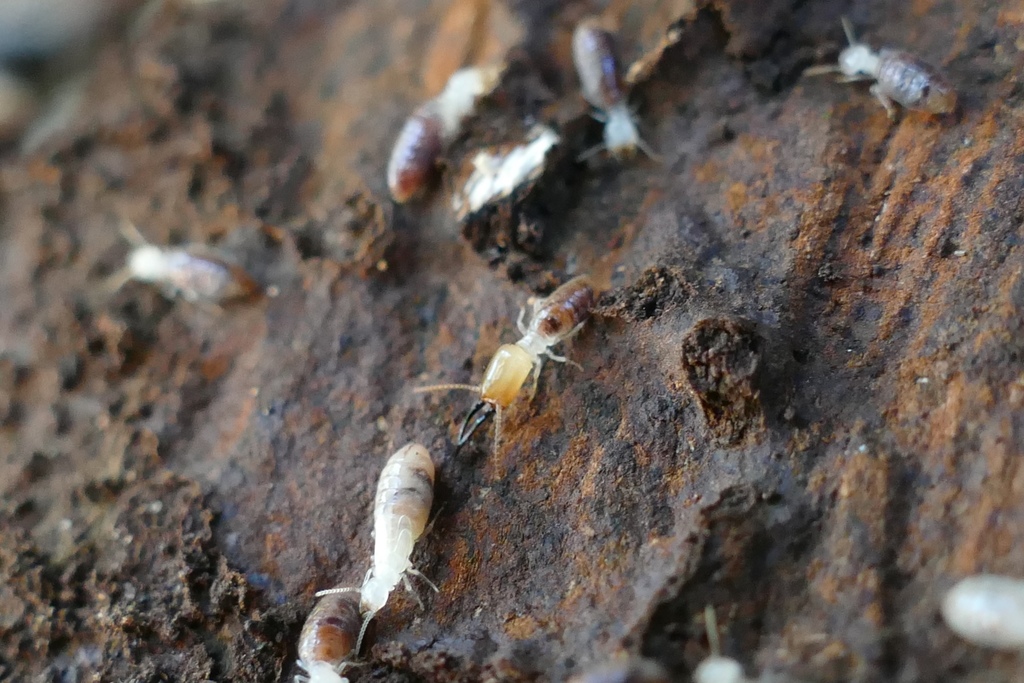
MASTOTERMITIDAE 澳白蚁科
The family Mastotermitidae was established by Desneux in 1904 (Desneux, 1904: 284) (1). The type genus is Mastotermes Froggatt, 1897, with the type species Mastotermes darwiniensis Froggatt, 1897 fixed by original designation and monotypy. The family name is formed from the type genus name plus the family-level suffix -idae; Mastotermes is generally interpreted as a combination of the Greek mastos ('breast-like protuberance') and termes, referring to the papilla-like structures on the queen's abdomen. In this family the soldiers and workers are similar in appearance and poorly differentiated; the mandibles bear an apical tooth and several marginal teeth, and the alates have reticulate wing venation with a well-developed anal field, making this one of the living termite groups that retains the greatest number of primitive characters. The soldier head capsule is rounded and reddish-brown, with short, stout mandibles and long apical teeth; on the right mandible both marginal teeth are well developed, whereas on the left mandible only the first marginal tooth is distinct and the rest are reduced (this tooth formula is diagnostic of, and unique to, the family). In both soldiers and workers each fore coxa bears a flap-like process, and the ventral surfaces of the femora and tibiae bear rows of small opposing teeth, an appendicular feature unique to the family. This checklist records 1 genera and 1 species.
The living species is distributed in the tropical regions of northern Australia (Northern Territory, northern Queensland and the Kimberley region of Western Australia) and has been introduced into Papua New Guinea. This family is the earliest-diverging lineage of extant termites(2); the hind wing has a broad anal area(3), the tarsi are 5-segmented, and eggs are laid in oothecae like those of cockroaches—features also found in the related wood-feeding cockroaches (e.g. Cryptocercus). Nests are built underground, in fallen logs and at the root collars of trees, without exposed mounds; colonies are of moderate size under natural conditions but can expand to the order of a hundred thousand or even larger in human-modified environments, and can spread by colony budding with supplementary reproductives. Economically, Mastotermes darwiniensis is an important pest in northern Australia that damages structural timber and living trees(4). The invasive population was introduced into Lae, Papua New Guinea, with transported goods around the 1950s (about 1959); an eradication program was carried out between 1962 and 1973 and the species was once thought to have been eradicated, but it reappeared in the early 1990s, and new infestation sites were discovered again in 2002. It has now spread to 42 native and exotic tree species there, with the affected area about six times larger than in 1973. The species has also spread southward within Australia to the Gold Coast (about 800 km south of the southern limit of its native range), representing a range expansion within its native distribution.
ARCHOTERMOPSIDAE 古白蚁科
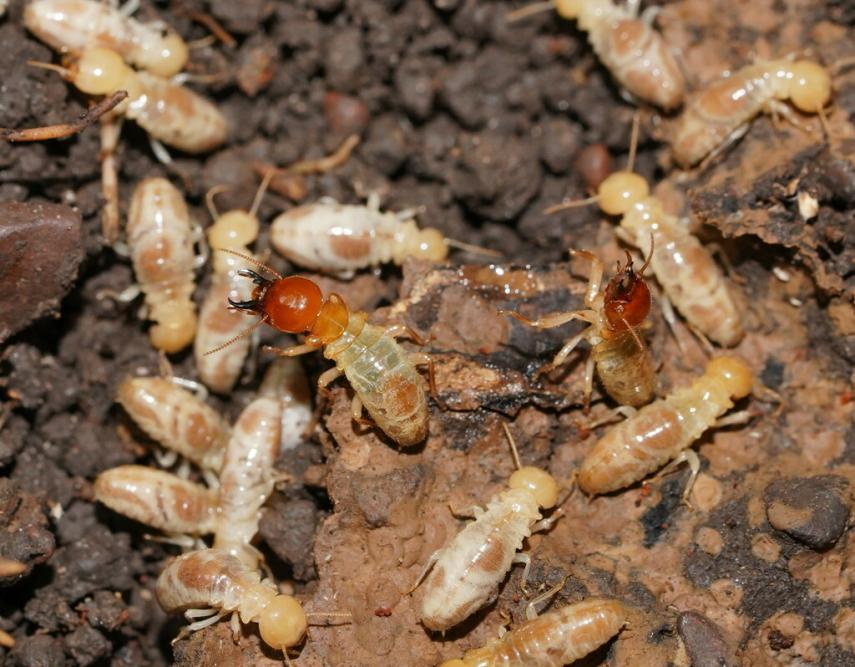
The family Archotermopsidae was established by Engel, Grimaldi and Krishna in 2009 (Engel, Grimaldi & Krishna, 2009: 11)(5), with the type genus Archotermopsis Desneux, 1904. The family name derives from the type genus: Archotermopsis is formed from the Greek archaios (ancient) combined with Termopsis (the genus name Termopsis). This family is one of the groups commonly known as the “dampwood termites”; the soldiers have robust mandibles with distinct apical and marginal teeth, a flattened head, no fontanelle, and a large body size. The soldiers have a visible Y-shaped suture on the dorsal surface of the head, reduced eyes, 19–27 antennal segments, three marginal teeth on the left mandible and two on the right, a flat pronotum narrower than the head, and 5-segmented tarsi; the winged adults have distinct ocelli and are large-bodied. This checklist includes 2 genera and 5 species.
The distribution of this family shows a disjunct north-temperate pattern: the genus Zootermopsis is restricted to western North America (from the west coast to the southwest), while the genus Archotermopsis is distributed in China, Vietnam, South Asia and adjacent regions. Both genera inhabit decaying fallen logs and stumps in humid environments, constructing their nest within a single piece of wood; the colony never leaves its food source throughout its life, and labor is performed by pseudergates. Zootermopsis angusticollis became established in Hawaii (at high elevation on Maui) around 1999, and Zootermopsis nevadensis was first recorded in Japan at Kawanishi in 2000 (4). This family has low tolerance for dry environments and generally does not damage dry structural timber, but in North America Zootermopsis attacks damp wooden structural members along the Pacific coast, where it is an important dampwood termite pest of buildings (6).
HODOTERMITIDAE 草白蚁科
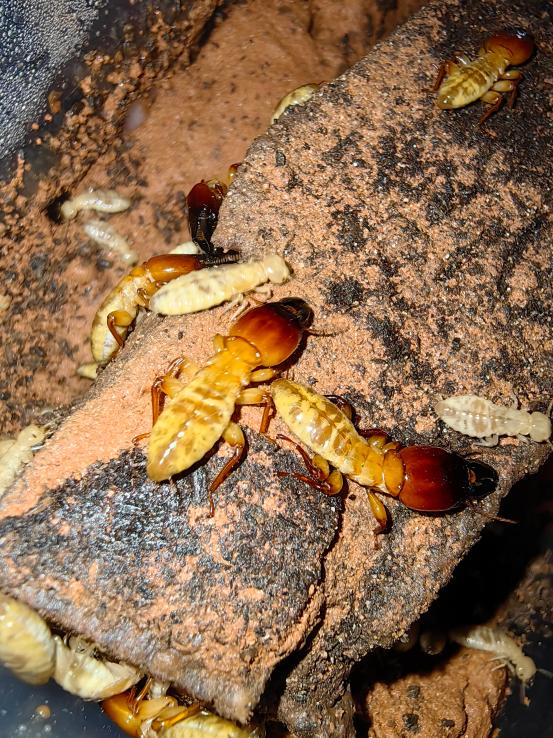
The family Hodotermitidae was established by Desneux in 1904 (Desneux, 1904: 284)(1), with the type genus Hodotermes Hagen, 1853. The family name derives from the type genus: Hodotermes is formed from the Greek hodos (road, wandering) and termes, referring to its habit of foraging above ground. This checklist includes 3 genera and 21 species.
This family comprises the “harvester” termites endemic to the arid zones of the Afrotropical and Palaearctic realms, with the three genera roughly partitioned as follows: Hodotermes Hagen, 1853 is distributed in southern and eastern Africa; Microhodotermes Sjöstedt, 1926 spans South Africa, Namibia and North Africa; Anacanthotermes Jacobson, 1905 is distributed in the deserts(7) and semi-deserts of North Africa, the Arabian Peninsula, the Middle East to Central Asia, and South Asia. Unlike most termites, both the workers and adults of this family have well-developed compound eyes; they forage openly on the ground at night or at dawn and dusk, feeding on grasses, dry grass and plant stems and leaves, with the serrated inner margins of the mandibles suited to cutting grass stems. They nest underground, connected by complex tunnel networks, and some species build low mounds. The soldiers of this family lack a fontanelle; the head capsule is subcircular to oval, strongly sclerotized and dark in color, with short, stout mandibles whose apical halves are strongly incurved. The large workers have a very large, flattened head (seen only in Hodotermes); the winged adults have ocelli. Economically, hodotermitids consume forage in African rangelands and their mounds interfere with farm machinery(8), and a few species feed on crops in agricultural areas. Among them, Anacanthotermes turkestanicus is a serious pest of the wooden components of dwellings and historic buildings in Central Asia(9), and Microhodotermes viator damages rangeland forage in the Karoo of South Africa(10).
HODOTERMOPSIDAE 原白蚁科
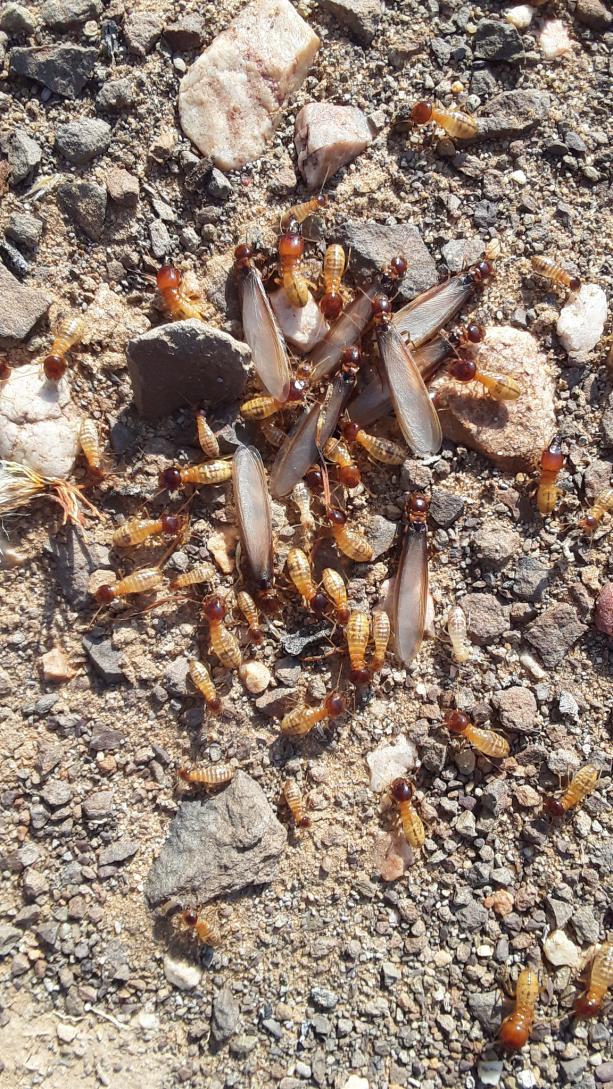
The family Hodotermopsidae was proposed by Engel in 2021(11). The type genus is Hodotermopsis Holmgren, 1911. The family name derives from the type genus: Hodotermopsis means “resembling Hodotermes”, formed from Hodotermes plus the Greek opsis (appearance). This checklist includes 1 genera and 1 species.
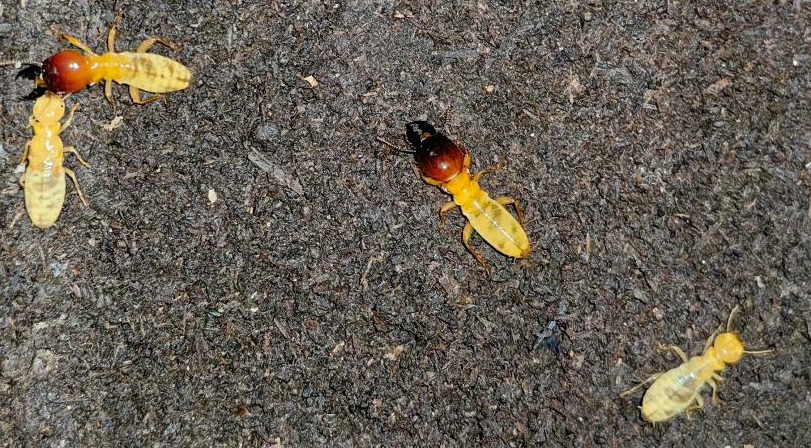
The living species Hodotermopsis sjostedti is distributed in Japan, Taiwan (China), southern China and Vietnam(12). Consistent with its close relatives, Hodotermopsis inhabits moist, decaying wood; the colony nests inside fallen logs and lives in a single-piece wood nest, with labor within the nest performed by pseudergates. The soldiers have a subquadrate-oval, flattened head with the anterior half darker; the vertex bears a central depression; the ocelli are distinct and kidney-shaped; the mandibles are robust and symmetrical, the left mandible bearing four and the right mandible two large marginal teeth; the antennae have 22–24 segments; the pronotum is crescent-shaped and slightly narrower than the head. The winged adults are 12–13.5 mm long, with 21–26 antennal segments and the forewing scale slightly larger than the hindwing scale. Economically, Hodotermopsis sjostedti damages living and felled trees in southern China and is a wood-boring pest(13)
STOLOTERMITIDAE 胄白蚁科
The family Stolotermitidae was established by Holmgren in 1910 (Holmgren, 1910a: 285)(14), with the type genus Stolotermes Hagen, 1858. The family name derives from the type genus Stolotermes (Greek stolos, column/expedition, popularly explained as referring to their marching activities). The soldiers of this family have a sclerotized, darkly pigmented head capsule, long, large mandibles, and 4-segmented tarsi. This checklist includes 2 genera and 10 species.
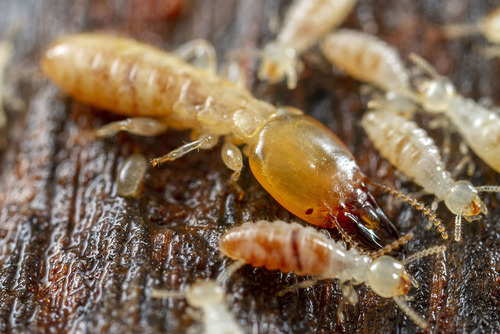
This family comprises the “dampwood termites” with a typical Gondwanan disjunct distribution: Porotermes is distributed in Australia, South Africa, Chile and southern South America; Stolotermes is distributed in Australia, New Zealand and South Africa. Both genera inhabit moist, decaying fallen logs and the area beneath the bark of standing dead trees; colonies nest inside the wood and live in single-piece wood nests. The historical biogeographic pattern of this family may have been influenced by both early land connections and subsequent transoceanic dispersal, and the distribution of the living genera cannot be explained solely by the breakup of Gondwana. Economically, Porotermes quadricollis occasionally damages moist wooden structures in Chile(15). According to Evans et al. (2013)(4), Porotermes adamsoni was introduced into New Zealand with wooden railway sleepers imported in 1941, and is now distributed at five sites on the North Island and one on the South Island, occurring in imported sawn timber and trees.
KALOTERMITIDAE 木白蚁科
The family Kalotermitidae was established by Froggatt in 1897(16), with the type genus Kalotermes Hagen, 1853. The family name derives from the type genus, formed from the Greek kalos (beautiful) and termes. This checklist includes 23 genera and 480 species.
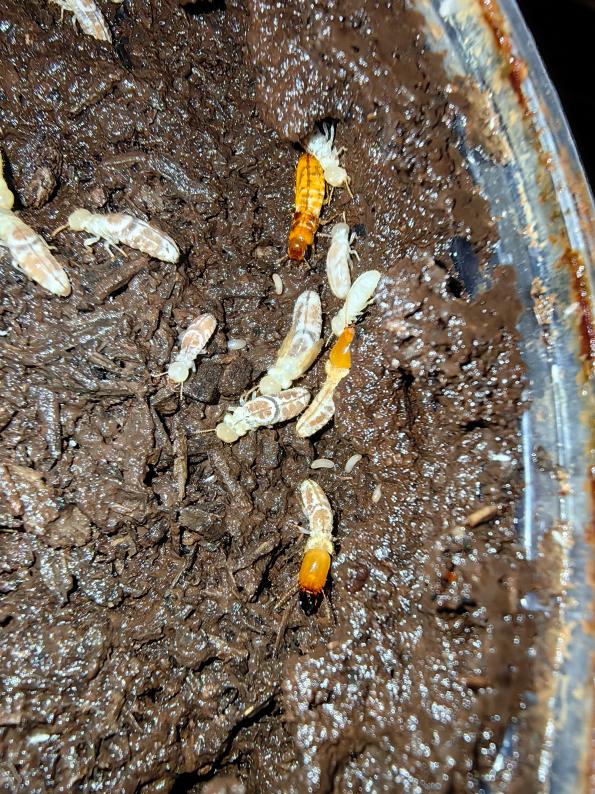
This family is commonly known as the 'drywood termites'. Most species build their nests and feed within dry wood, do not depend on the soil, and their nest is also their food source, so individuals do not leave the nest to forage over long distances. The family has no true worker caste, and nest labor is performed by pseudergates. The soldiers are of the mandibulate type, with the head roughly rectangular and lacking a fontanelle; the alates possess ocelli, by which they can be distinguished from groups that possess a fontanelle, such as the Rhinotermitidae and Termitidae. In distribution the family is pantropical to subtropical, extending into warm-temperate regions such as those with a Mediterranean climate, and it is especially diverse in dead branches and broken wood in the tropical forest canopy. Phylogenetically, this family is one of the earlier-diverging lineages among living termites (17), and it is the sister group of the Neoisoptera, so it is important for understanding the early evolution of eusociality in termites. With regard to invasion and dispersal, the drywood termites of this family are the most common wood-borne group in the tropical and subtropical world: Incisitermes minor, the western drywood termite (native to the western United States and northern Mexico, and introduced into Canada, China, Japan, Italy and Hawaii (United States)); Cryptotermes brevis, the West Indian drywood termite, is native to the desert regions of the Pacific coast of South America and has been spread by sea-borne timber to the southeastern United States, Hawaii, the Caribbean islands, South Africa, Madagascar and Australia, making it the most widely distributed invasive drywood termite species (18); Cryptotermes domesticus, the domestic drywood termite, is native to Southeast Asia and has been introduced into the coastal areas of South China, Taiwan, Japan, Australia and the Pacific islands; Cryptotermes dudleyi is native to the Oriental region and has established populations in the Neotropical Panama, Costa Rica, Colombia, Brazil and the West Indies; Cryptotermes havilandi is native to tropical Africa and has also established populations in Suriname, Guyana, Brazil and the West Indies. In addition, Cryptotermes cynocephalus Light is native to the Philippines and Southeast Asia and has been introduced into Sri Lanka, the area north of Cape York Peninsula in Australia, Rabaul in Papua New Guinea, and Hawaii (first recorded on Oahu); Glyptotermes breviconis of the genus Glyptotermes is native to the southeastern coast of Australia and has established local populations in natural trees in New Zealand and Fiji. In Sri Lanka, tea plantations are attacked by Postelectrotermes militaris and Glyptotermes dilatatus, which damage the tea plants (19); genera such as Bifiditermes, Eucryptotermes, Marginitermes, Paraneotermes, Procryptotermes and Rugitermes are minor timber pests (20).
PSAMMOTERMITIDAE 沙白蚁科
The subfamily Psammotermitinae was established by Holmgren in 1911, and was elevated to family rank (Psammotermitidae) by a 2024 phylogenetic study(21). The type genus is Psammotermes Desneux, 1902; the family name is formed from the Greek psammos (sand) and termes, referring to its habit of dwelling in sandy soil. This checklist includes 2 genera and 18 species.
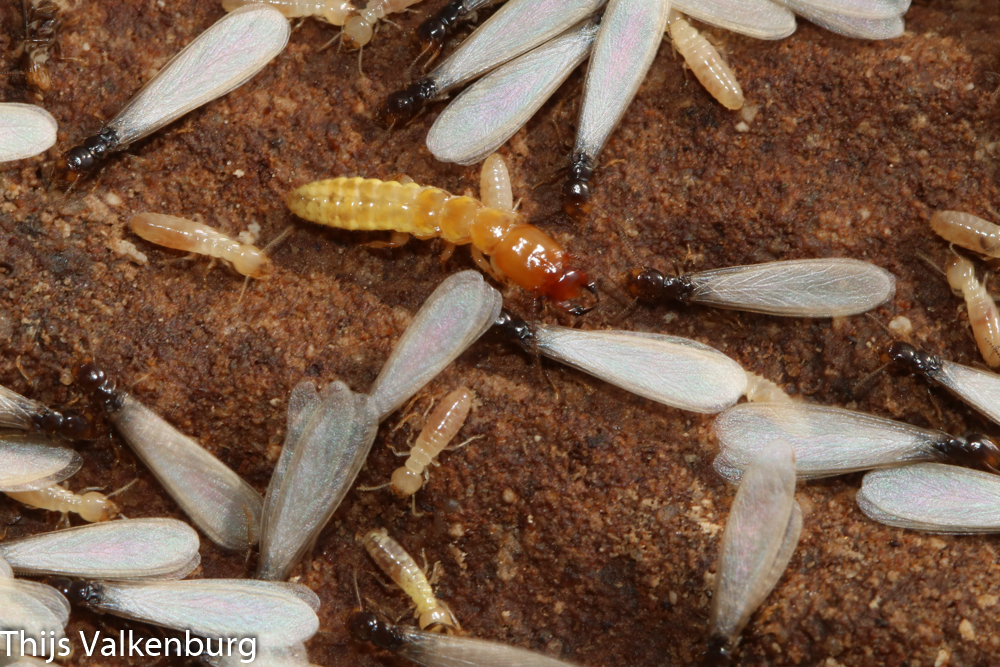
This family contains only two living genera, and the two genera contrast sharply in their ecological habits. Both lack a true worker caste (nest labor is performed by pseudergates). The soldiers are of the mandibulate type, with a sclerotized head capsule that is oval to slightly narrowed anteriorly; the frons bears a fontanelle, from which a longitudinal groove, either distinct or faint, extends toward the postclypeus; the tibial spur formula of the soldier's fore, mid and hind legs is 3:2:2. In the alates the pronotum is flat, the tarsi are four-segmented, the fontanelle is situated in the middle of the head, ocelli are present, and the antennae have 15-22 segments. Psammotermes is a typical desert termite, widely distributed from southern to West Africa, northeastern and northern Africa, through the Arabian Peninsula and Iran to northwestern India, and also occurring in Madagascar; it excavates its own nest chambers and tunnels in sandy soil, also occupies abandoned nests of other termites, and has extremely broad feeding habits, taking dry grass, leaf litter, animal dung and even wind-blown accumulations of organic debris. Prorhinotermes is an island-coastal type, widely distributed across the Indian Ocean islands, South Asia, Southeast Asia, southern China and Taiwan, northern Australia and the western Pacific islands, and also occurring in Central America and the Caribbean; its colonies are thought to disperse with ocean currents on driftwood, and it mostly inhabits damp, decaying wood near the intertidal zone, such as mangrove habitats (22). A few Psammotermes species damage crops and earth structures in arid regions. For example, Psammotermes hypostoma damages wooden structures and crops in North Africa and the Middle East (23), and Prorhinotermes simplex damages wooden buildings in Florida, United States (24).
RHINOTERMITIDAE 鼻白蚁科
The subfamily Rhinotermitinae was established by Froggatt in 1897; here the narrowly circumscribed Rhinotermitidae sensu novo, as redefined by the 2024 phylogenetic study, is adopted(21), containing 5 genera. The type genus is Rhinotermes Hagen, 1858; the family name is formed from the Greek rhis/rhinos (nose) and termes, referring to the raised, nose-like clypeus of the adults and the narrow groove running from the fontanelle to the clypeus. This checklist includes 5 genera and 62 species.
Acorhinotermes, Dolichorhinotermes and Rhinotermes are chiefly Neotropical (northern South America to the Caribbean); Parrhinotermes is chiefly Southeast Asian, extending west to northeastern India, north to Tibet and Yunnan of China, and east to Papua New Guinea, the Solomon Islands and Queensland, Australia; Schedorhinotermes is widely distributed in the Afrotropical and Oriental realms, Australia and the western Pacific islands. This family has a true worker caste, often nesting in the soil or in wood in contact with the soil, with the workers going out through tunnels to feed on wood; the soldiers are mostly dimorphic (a few trimorphic), with the labrum elongated and palp-like, brush-shaped at the tip and with a groove down the middle, along which the frontal-gland secretion flows to repel enemies—an important diagnostic character distinguishing this family from related families. In this family, the workers and winged adults bear three distinct, unequal marginal teeth behind the apical tooth of the left mandible; the anterior margin of the postclypeus is markedly arched in the winged adults, workers and soldiers; and the fontanelle of the soldiers lacks long setae around its margin. Economically, Schedorhinotermes commonly damages structural timber within its range, such as Schedorhinotermes intermedius in eastern Australia(25); Schedorhinotermes longirostris (native to India, Indonesia, Malaysia, Palau and Papua New Guinea, introduced to Guam, USA) was introduced into Guam in 2011 and damages the endemic cycads there.
SERRITERMITIDAE 齿白蚁科
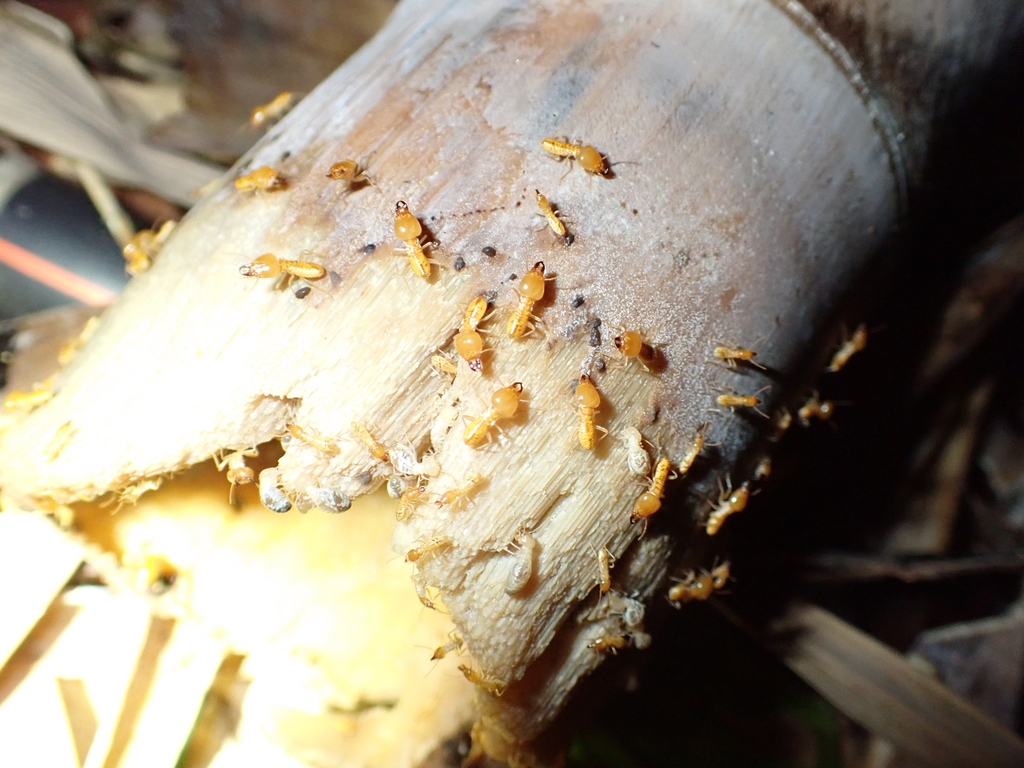
The family Serritermitidae was established by Holmgren in 1910 (Serritermitidae Holmgren, 1910) (14), with the type genus Serritermes Wasmann, 1897. The family name is derived from the type genus name, formed by combining the Latin serra (saw) with termes, referring to the conspicuously saw-like, many-toothed margins of the mandibles in the soldiers and reproductives of this family. This checklist records 2 genera and 3 species.
This family is a small family endemic to the Neotropical realm, occurring from northern South America (the Guiana Shield) to Brazil. It lacks a true worker caste. The two genera differ markedly in their way of life: Glossotermes is a wood-dwelling termite that lives inside dry, decaying fallen logs, whereas S. serrifer is a rare obligate inquiline among termites, spending its entire life within the epigeal mound nests of the termitid Cornitermes cumulans without building a nest of its own; its soldiers have sickle-shaped mandibles with serrate inner margins. In this family the soldier head is elongate with arcuate lateral margins, and bears a small, blind-ended fontanelle at the front of the head that does not communicate with the frontal gland; the antennae have 12–15 articles (12–13 in Serritermes, 13–15 in Glossotermes). The frontal gland of the soldier is extremely well developed, extending from the head into the anterior half of the thorax and abdomen; when defending, it releases the secretion through the back of the neck by self-rupture (autothysis) (26).
STYLOTERMITIDAE 杆白蚁科
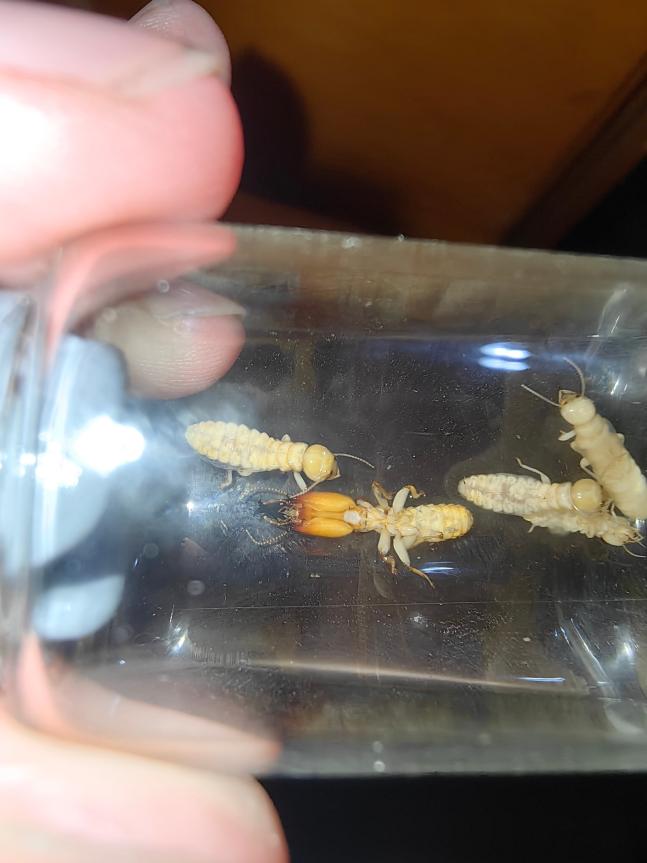
The family Stylotermitidae is a monotypic extant family, containing only the genus Stylotermes Holmgren & Holmgren, 1917. The group was established by Holmgren and Holmgren in 1917, with Stylotermes as the type genus. The family name is derived from the type genus, from the Greek stylos (column) plus termes. (3) This checklist records 1 genera and 45 species.
This family is endemic to the Oriental realm (southern and southeastern Asia). About 35 species are endemic to the mountains of southern China, and the family ranges westward to India and Bangladesh, eastward to Taiwan, China, and southward to Brunei and Malaysia; China is the modern center of diversification for the family, and there are also collecting records from the mountains of northeastern India. Unlike most wood-dwelling termites that inhabit dead fallen wood, Stylotermes lives inside the wood of living trees or very recently dead trees, being a concealed wood-dwelling termite; it has no true worker caste, labor being performed by pseudergates, and the soldiers have an elongate, narrow head capsule and scimitar-shaped mandibles. In this family the alates have a nearly round head, an extremely small fontanelle that is sometimes externally invisible, small ocelli, 16–22-segmented antennae, and a flat pronotum. In all castes of the family the tarsi are 3-segmented and the tibial spur formula is 3:2:2, a primitive character rarely seen among extant termites. The soldiers and workers possess a small but active frontal gland that secretes monoterpene compounds for defense (studied in S. faveolus and S. halumicus); trail-following pheromones have also been specifically reported in these two species (27). Phylogenetically, the family is the sister group of all other Neoisoptera, being the earliest-diverging extant lineage of the Neoisoptera, and is of great significance for understanding the evolution of the frontal gland and of caste differentiation. Economically, the family inhabits living trees and nests within living standing timber, being a rare tree-living group among termites that can weaken and even kill living trees (28).
TERMITOGETONIDAE 寡脉白蚁科
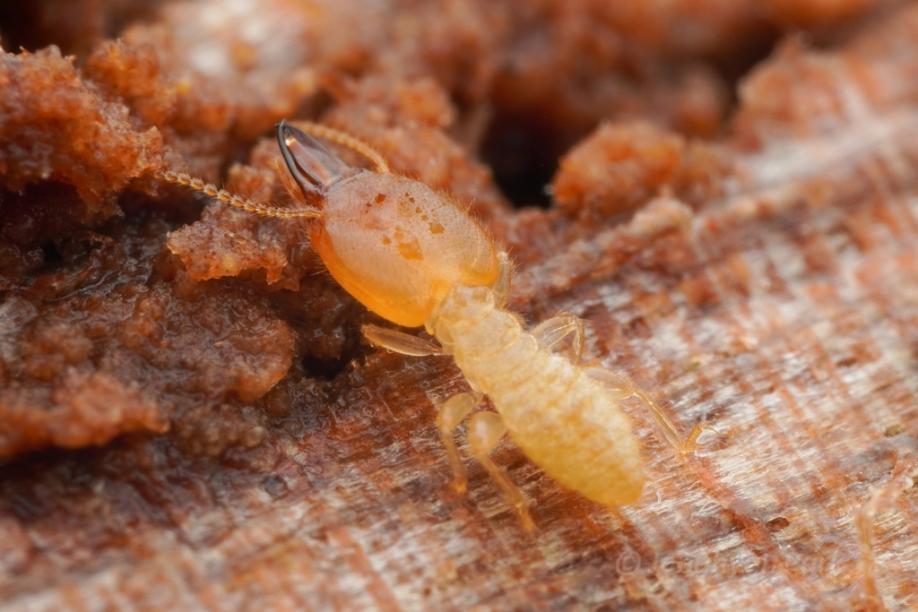
The subfamily Termitogetoninae was established by Holmgren in 1910 (1910a:286) (14); in 2024, a genomic phylogenetic study elevated it from subfamily to family rank (Termitogetonidae) (21). The family Termitogetonidae is monotypic, containing only the genus Termitogeton Desneux, 1904. The family name is based on the stem Termitogeton, formed from termes and the Greek geiton (neighbor), meaning "one close to the genus Termes". This checklist records 1 genera and 2 species.
In distribution, this is a small Oriental-realm family, occurring in Southeast Asia (Indonesia, Malaysia) and Sri Lanka, inhabiting dead or decayed wood in tropical rainforests. The family has no true workers; labor is performed by pseudergates. The soldiers possess a frontal gland capable of secreting defensive and alarm substances containing monoterpenes and other components (29); the sex ratio is close to 1:1 in all castes, except that females are somewhat more numerous among soldiers (30). The developmental pathway comprises 2 larval instars, 4 pseudergate instars (30), and 1 nymphal instar before reaching the adult; the wing buds appear at the second instar, regress in subsequent molts, and reappear at the nymphal stage, and a mature colony consists of only about a thousand individuals. The body is dorsoventrally flattened in all castes, an adaptation to living beneath bark. The alates have a nearly triangular head, small compound eyes with ocelli present, 15-segmented antennae, and a body densely covered with setae; the pronotum is narrower than the head and its anterior margin is produced into a lobe in the middle; the wings are densely covered with fine hairs, and the forewing scale does not overlap the hindwing scale. In the pseudergate, the left mandible bears an apical tooth and 3 marginal teeth, the second marginal tooth being longer than the apical tooth and the first marginal tooth; the tibial spur formula of all legs is 2:2:2. The soldier has a triangular head with a strongly undulating posterior margin that is produced in the middle, slender mandibles without marginal teeth (only a row of fine denticles at the base), 13–15-segmented antennae, and enlarged hind coxae.
HETEROTERMITIDAE 异白蚁科
The subfamily Heterotermitinae was established by Froggatt in 1897 and was long placed in the Rhinotermitidae; in 2024, a phylogenetic study elevated it to family rank (Heterotermitidae) (21), incorporating the genera Coptotermes and Reticulitermes, and it now contains 3 genera. The type genus is Heterotermes Froggatt, 1897, and the family name is formed from the Greek heteros (different) and termes. This checklist records 3 genera and 229 species.
This family is widely distributed from the pantropics to the northern temperate zone, and the three genera show markedly different distribution patterns: Coptotermes is pantropical, with its center of diversity in the Oriental realm and Australia, and also occurs in tropical Africa, the Neotropics, and the Indo-Pacific islands; Heterotermes occurs mainly in the Neotropical realm, and also in Australia, South Asia, the Middle East to northeastern Africa, and the islands of the western Indian Ocean; Reticulitermes is confined to the temperate Northern Hemisphere, with China as its center of diversity (over a hundred species endemic to China), and is also widely distributed in Japan, the Korean Peninsula, Taiwan, India, Mediterranean Europe, and North America. This family and the other Geoisoptera have a stable chromosome number of 2n=42, possess a true worker caste, and form huge colonies; in most species the mature colonies are ecologically highly dependent on soil, nesting in the soil or in carton nests built of wood fragments, saliva, and feces, with the workers constructing tunnels and mud sheeting to forage for wood outside, so that the nest is separated from the food source, although they can often still nest and survive within wood. In Coptotermes the soldier head is oval with a large, forward-facing fontanelle (31), from which a milky fluid is exuded when disturbed; in Heterotermes and Reticulitermes the soldier head is nearly rectangular with a small, inconspicuous fontanelle. The diagnostic characters shared by the soldiers of the three genera are the long, knife-shaped mandibles without distinct marginal teeth on the inner margin (only fine serrations at the base), a fontanelle ringed by setae, and more than 3 apical spurs on the foretibia. In the workers and alates the anterior margin of the postclypeus is flat or slightly concave; the alates possess a fontanelle and ocelli; the pronotum is flat and narrower than the head; the tarsi are 4-segmented; there is no arolium between the claws; and the worker hindgut lacks a mixed segment.
This family is the most economically important group of termites in the world: Coptotermes formosanus (the Formosan subterranean termite) and C. gestroi are together regarded as the two most destructive structural termites in the world, jointly accounting for more than half of the annual global economic losses caused by termites. The former has been listed by the ISSG among the "100 of the World's Worst Invasive Alien Species" (32), while the latter causes 80%–90% of the insect damage to man-made structures in Singapore and Malaysia. C. curvignathus is a dangerous pest of rubber, coconut, and oil-palm plantations in Southeast Asia, and is also a quarantine target for import into China (33). C. acinaciformis and C. frenchi have been introduced from Australia into New Zealand; C. curvignathus has been introduced from Southeast Asia into China, the Philippines, and South Africa; C. gestroi, native to Southeast Asia, has spread to dozens of tropical countries and regions; C. sjostedti has been introduced from West Africa into Guadeloupe (France); C. truncatus has been introduced from Madagascar into the Seychelles; and the North American R. flavipes has been introduced from eastern North America into Europe (France, Germany, Austria), Chile, Uruguay, the Bahamas, and Guatemala through trade. In the Neotropical realm, Heterotermes tenuis damages sugarcane and eucalyptus seedlings in Brazil (34).
TERMITIDAE 白蚁科
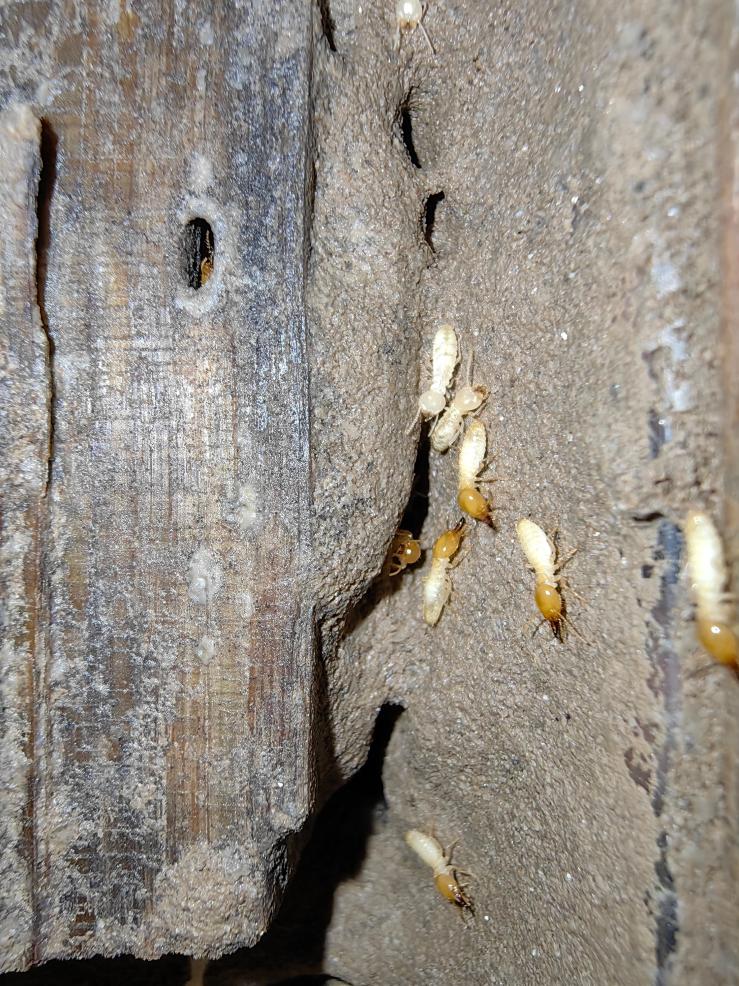
The family Termitidae was established by Latreille in 1802, with the type genus Termes Linnaeus, 1758. The family name is formed from the type genus stem Termit- plus the family-level suffix -idae. This checklist records 280 genera and 2144 species.
This family has a pantropical distribution, with representatives in all major zoogeographic regions of the tropics and subtropics, and a few species extending into warm-temperate zones. Its feeding habits are the most diverse among termite families, encompassing wood-feeding, grass-feeding, leaf-litter-feeding, humus-feeding and fungus-cultivating types; a few species feed on lichens and algae growing on bark (such as the genus Constrictotermes), while inquilinous species feed on the nest material and feces of their host nest (such as the genus Inquilinitermes); about sixty percent of species are specialized soil-humus feeders. Unlike other families, the hindgut of this family is highly compartmentalized, and its digestive symbionts are dominated by bacteria and archaea. The most conspicuous shared feature of termitid soldiers is the unpaired, sac-like frontal gland (35), whose external opening is the fontanelle, yet defensive strategies diverge along this structure. The Nasutitermitinae is the largest subfamily of the family; in it the front of the soldier's head is prolonged into a conical nasus, the mandibles are reduced, and the soldier relies entirely on the frontal gland to eject a sticky secretion through the fontanelle at the tip of the nasus to entangle enemies; the Syntermitinae, which also possess a nasus, retain well-developed mandibles and employ both mechanical and chemical defense. The other extreme is seen in the snapping-mandible groups of the Mirocapritermitinae, such as the genus Pericapritermes, which repel enemies by a sudden crosswise strike of the two mandibles, while the frontal gland is poorly developed; Globitermes sulphureus goes even further, using rupture of the frontal gland for suicidal defense. A few lineages of the family have lost the soldier caste, the Neotropical species of the Apicotermitinae being one example, in which defense is undertaken entirely by the workers. In the alates the pronotum is saddle-shaped, the hind wing lacks an anal lobe and has simplified venation, and a fontanelle and ocelli are present; in the workers the postclypeus is swollen into a globular form and the hindgut has a mixed segment, and the antennae usually have 13-15 segments, while those of the soldiers usually have 12-16 segments. The detailed diagnostic characters of the soldiers and workers of each subfamily are given in the following subfamily sections. Nesting patterns are diverse, including subterranean nests, surface mounds and arboreal carton nests, and the nests of this family are the most conspicuous ecological-engineering structures of tropical forests and savannas. The Termitidae is the most species-rich group within the Neoisoptera; it began to radiate around the end of the Eocene and underwent a rapid internal radiation during the Paleogene.
The family is currently divided into 18 subfamilies (21): Amitermitinae (14 genera, 194 species), Apicotermitinae (68 genera, 241 species), Crepititermitinae (1 genera, 1 species), Cubitermitinae (28 genera, 149 species), Cylindrotermitinae (2 genera, 9 species), Engelitermitinae (1 genera, 1 species), Foraminitermitinae (3 genera, 10 species), Forficulitermitinae (1 genera, 1 species), Macrotermitinae (12 genera, 373 species), Microcerotermitinae (2 genera, 150 species), Mirocapritermitinae (14 genera, 135 species), Nasutitermitinae (81 genera, 606 species), Neocapritermitinae (3 genera, 20 species), Promirotermitinae (2 genera, 39 species), Protohamitermitinae (2 genera, 2 species), Sphaerotermitinae (1 genera, 1 species), Syntermitinae (22 genera, 105 species), and Termitinae (23 genera, 107 species). The economic damage caused by this family is detailed under each subfamily.
Amitermitinae 弓白蚁亚科
The subfamily Amitermitinae was established by Kemner in 1934 (page 110 of the original work), with the type genus Amitermes Silvestri, 1901, from which the subfamily name is taken. Amitermes is probably derived from the Latin hami- "hook" plus termes, referring to the bow-like curved mandibles of the soldiers. This checklist records 14 genera and 194 species.
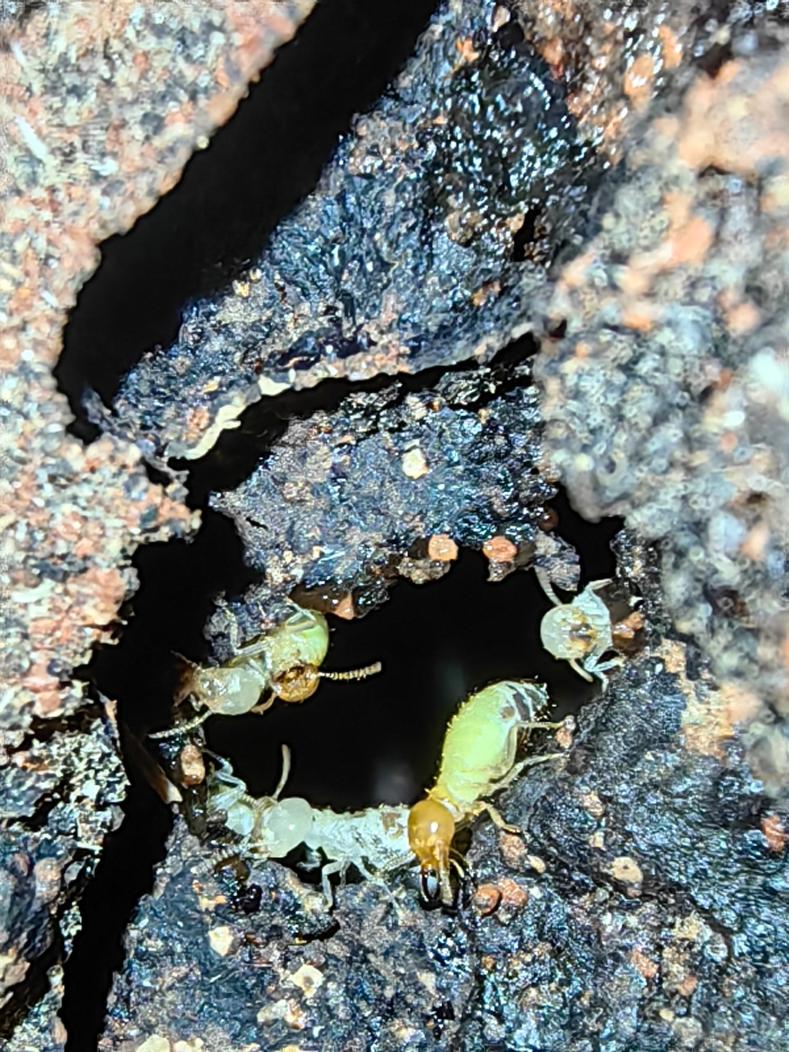
This subfamily is distributed mainly in Australia and the Afrotropical realm, and extends to the Neotropical realm, the Middle East, South Asia, and the southern United States. Its diet covers a variety of substrates, including rotten wood, dry grass, and the soil–wood interface. The soldier head is mostly pear-shaped and lacks a frontal projection, and the mandibles vary enormously among genera, exhibiting biting-crushing, piercing, slashing, and even symmetrical snapping types, making this one of the groups with the richest differentiation of mandibular defensive types in the family; among them, the genus Invasitermes lacks a soldier caste. In the worker, the apical tooth of the left mandible is generally shorter than the marginal tooth, except in Ahamitermes, Invasitermes, and Orthognathotermes; the worker ileum (P1) ranges from tubular to globularly swollen and does not form a ventral loop, and the Malpighian tubules are united two by two at a common basal nodule, except in Prohamitermes. Soldiers generally lack a frontal projection, except in Eremotermes and Dentispicotermes, whose soldiers possess one. As typified by the type genus Amitermes, the soldier fontanelle opens at the front of the head and the frontal gland is well developed; the antennae have 13–15 segments (mostly 15), and the inner margin of the mandible usually bears a single tooth. Nests are chiefly subterranean galleries, but some species build earthen mounds or dwell in old mounds. Economically, some species of this subfamily damage grasslands and crops: the North American desert termite Gnathamitermes tubiformans consumes large quantities of grasses and litter in arid grasslands (36); the Australian genus Drepanotermes is an important consumer of pasture grasses and litter (37); the Indian genus Eremotermes damages potatoes (38); and Globitermes sulphureus damages structural timber and coconut and oil palm plantations in Malaysia (39).
Economically, this subfamily has well-documented records of crop damage in West Africa: Amitermes evuncifer (occurring in West, Central, and East Africa) is one of the main crop termites named by farmers in Benin, is the most common damaging species in the complex community in sugarcane plantations in Ghana (40), is a major pest termite in Togo, and is also found in cacao plantations in Côte d'Ivoire and in rainfed rice fields in Benin.
Apicotermitinae 尖白蚁亚科
The subfamily Apicotermitinae was established by Grassé and Noirot in 1955 in their work on Apicotermes arquieri (41); the type genus is Apicotermes Holmgren, 1911, from which the subfamily name is derived. This checklist includes 68 genera and 241 species.
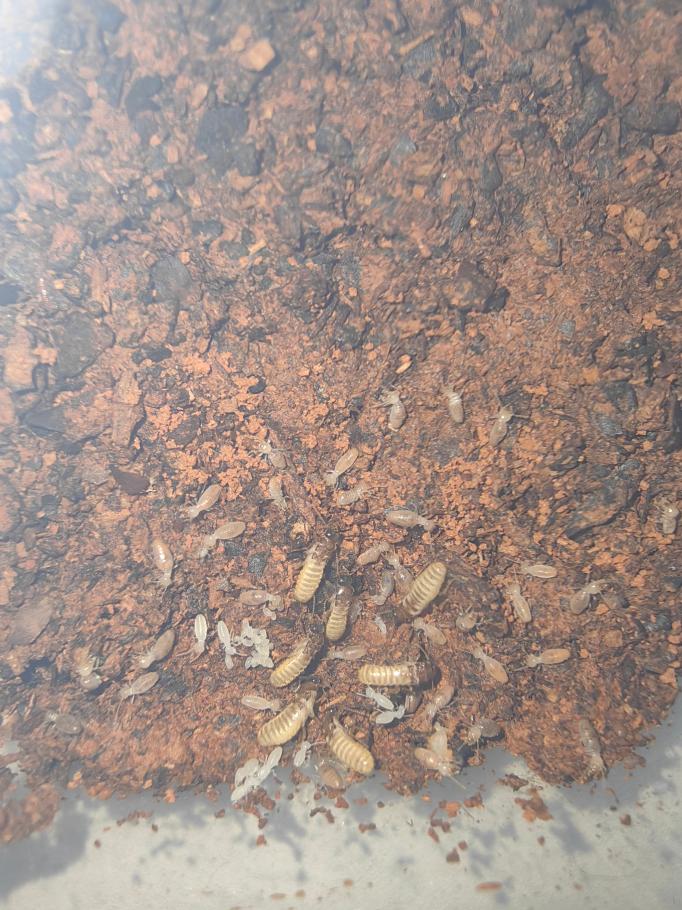
This subfamily is the principal home of the soldierless groups among the higher termites: the great majority of species independently lost the soldier caste in the course of evolution (in at least two independent events), with only a few relatively basal genera retaining soldiers. The few genera that retain soldiers are all restricted to the Afrotropical and Oriental realms: the Afrotropical realm has Machadotermes, Jugositermes, Phoxotermes, Rostrotermes, Coxotermes, Eburnitermes, and others, while the Oriental realm has Indotermes and Eurytermes; all known Neotropical species are soldierless. In those groups that retain soldiers, the soldier mandibles are short and stout, of the piercing–cutting type, and the mandibles of Machadotermes soldiers are the shortest in the whole subfamily; the abdomens of the soldiers of Eburnitermes, Indotermes, and Eurytermes are milky white because they are fed solely on worker saliva (white-gut soldiers). In the worker, the apical tooth and the first marginal tooth of the left mandible are large and project clearly above the line joining the third marginal tooth and the molar prominence, and an accessory (fourth) marginal tooth is visible above the molar prominence; the apical tooth of the right mandible is longer than the first marginal tooth — this is the common mandibular outline of workers of this subfamily, whereas generic identification still depends on details of the enteric valve. Feeding is mainly geophagous (on humus), although not all species are soil-feeders: for example, Ruptitermes arboreus of the genus Ruptitermes and Indotermes feed on a broader range of substrates (including leaf litter). This subfamily builds diffuse subterranean nests and leads a concealed existence, and taxonomic identification has long relied on worker enteric-valve morphology and molecular sequences. Three faunal regions are clearly recognizable: the Afrotropical realm (West, Central, East, and southern Africa) has the most species, followed by the Oriental realm, and the Neotropical realm also has representatives. Mitochondrial phylogenetic and biogeographic studies confirm that this subfamily is monophyletic, originated in the Afrotropical realm, and subsequently dispersed separately into the Oriental and Neotropical realms (21). Economically, damage has been recorded for the Neotropical genus Anoplotermes in this subfamily: Anoplotermes in the rhizosphere of upland rice in Brazil was identified for the first time as a pest of upland rice (42); Anoplotermes pacificus in Minas Gerais damages eucalyptus seedlings (43); and Aparatermes abbreviatus damages pasture and eucalyptus roots (44).
Crepititermitinae 响白蚁亚科
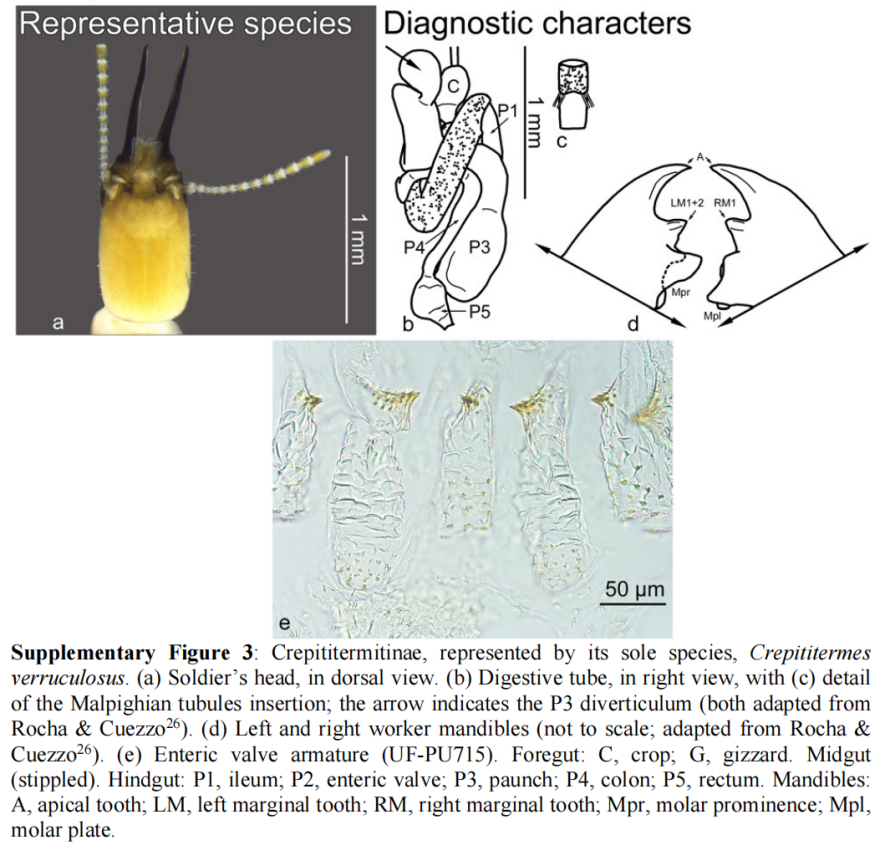
The subfamily Crepititermitinae was established by Hellemans, Engel, and Bourguignon in 2024 (21), with the type genus Crepititermes Emerson, 1925. The subfamily name is derived from the type genus name (Latin crepitus, a cracking sound). This checklist records 1 genera and 1 species.
Because it contains only one genus and one species, its characters are those of the subfamily. The single species is distributed in South America: Brazil, Colombia, French Guiana, Guyana, Bolivia, Ecuador, Paraguay, Peru, and Trinidad and Tobago. Its diet is humus (soil). The soldier head is nearly rectangular with a flat frons; the labrum has a concave apical margin and sharp lateral angles, and the mandibles are symmetrical snapping mandibles. Its workers defend themselves by autothysis (21): when disturbed, the dorsal body wall ruptures at the junction of the thorax and abdomen, exposing the sticky gut contents to repel enemies. Characters such as a hindgut P3 with a caecum and a gizzard with a columnar belt place it between the Cubitermitinae and related groups, making it one of the representative early-branching groups of the higher termites.
Rocha & Cuezzo (2015) (45) first systematically described the morphology and in situ coiling of the worker digestive tract of this species; the alate was previously described by Emerson (1925) from the holotype from Kartabo, Guyana (the holotype of Crepititermes verruculosus is itself an imago), and Roonwal & Verma (1980) (46) further described the fine microsculpture of its wing surface. The worker gut metagenome of the Petit Saut population in French Guiana has also been sequenced (Mikaelyan et al., 2015) (47), providing material for the study of gut symbionts of soil-dwelling higher termites.
Cubitermitinae 方白蚁亚科
The subfamily Cubitermitinae was established by Weidner in 1956, with the type genus Cubitermes Wasmann, 1902, from which the subfamily name is taken. This checklist records 28 genera and 149 species.
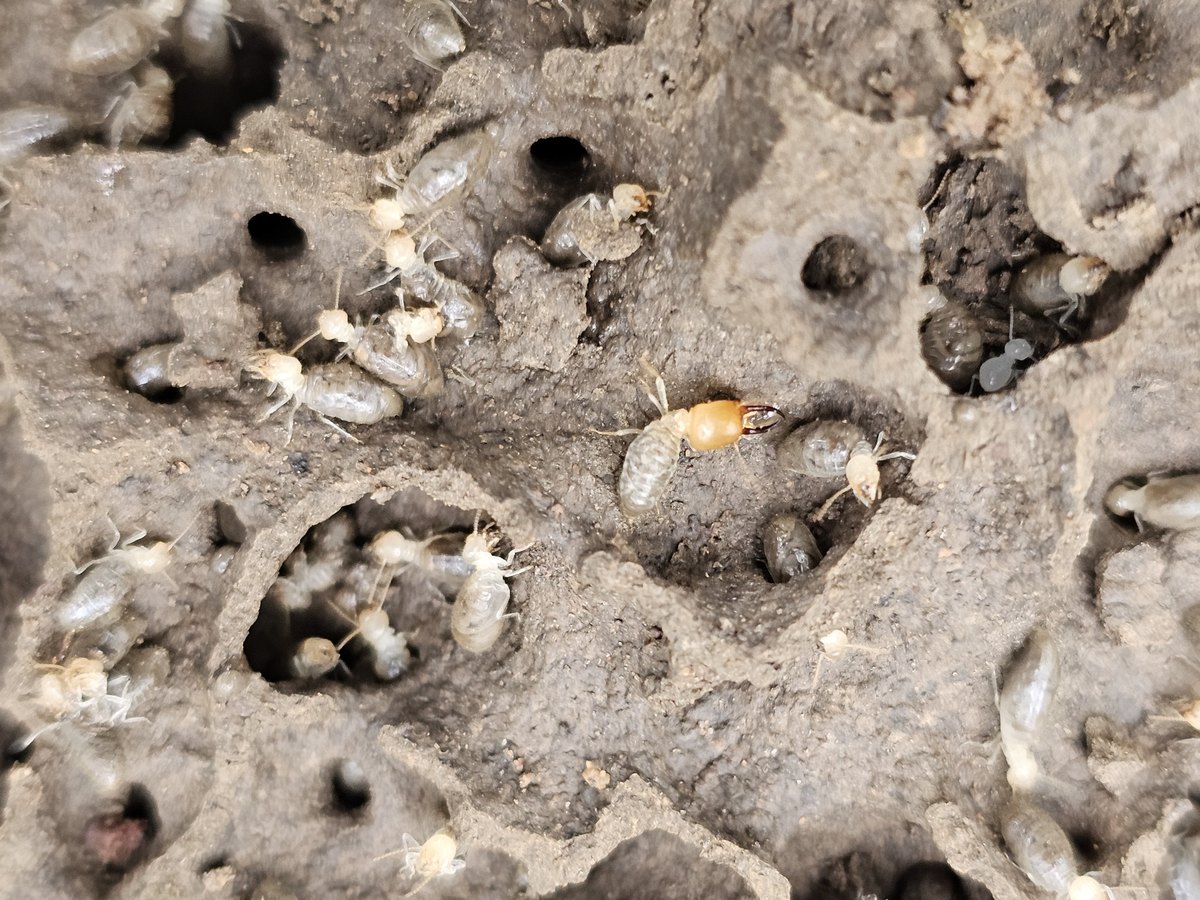
All known genera and species of this subfamily are distributed in sub-Saharan Africa — West Africa (Côte d'Ivoire, Nigeria, Guinea, Senegal, Gambia, Togo, etc.), Central Africa and the Congo Basin (Cameroon, Congo, Democratic Republic of the Congo, Gabon, Central African Republic), East Africa (Kenya, Tanzania, Uganda, Rwanda), and southern Africa (South Africa, Zimbabwe, Zambia, Namibia, Angola, etc.). The diet is mainly soil (humus). Nesting is its most distinctive feature — many genera build columnar, umbrella-shaped, or mushroom-shaped mounds on the ground surface, the nest walls being constructed of soil and feces, which can markedly concentrate soil clay and nutrients and modify soil structure (in Ugandan grassland, the density of Cubitermes testaceus mounds can reach more than a hundred per hectare (48)); they are often used as bioindicator groups of soil health. The soldiers have biting-type mandibles and defend at the nest entrance. As represented by the type genus Cubitermes, the soldier head is nearly rectangular with the fontanelle on the frons, the antennae have about 14–15 articles, and the mandibles are short, stout, and incurved. In the genera Procubitermes, Noditermes, Basidentitermes, Unguitermes, Unicornitermes, etc., the soldier abdomen is milky white (white-gutted type), the soldiers being fed purely on worker saliva. The worker ileum (P1) is inflated into a sac, the enteric valve has a median pad, the hindgut P3 bears a caecum ventrally, and the gizzard lacks a columnar belt. Taxonomically, this subfamily is a well-supported monophyletic group; the hindgut of Cubitermes is a classic material for studying the anaerobic fermentation and methanogenic microflora of the higher-termite gut (49).
Economically, all members of this subfamily are soil-feeding groups, and where their mounds occur densely along the edges of moist pastures they may occupy and cover land (50).
Cylindrotermitinae 圆筒白蚁亚科
The subfamily Cylindrotermitinae was established by Hellemans, Engel and Bourguignon in 2024 (21), with the type genus Cylindrotermes Holmgren, 1906; the subfamily name is derived from the type genus, referring to the elongate, cylindrical head and body (Greek kylindros, cylinder). This catalogue includes 2 genera and 9 species.
The two genera show a transatlantic disjunct distribution: the genus Cephalotermes Silvestri is an Afrotropical genus, with the rectangular-headed termite widespread from West and Central Africa to East Africa; the genus Cylindrotermes Holmgren is a Neotropical genus, all 8 of its species occurring in the Neotropical realm. Both genera are wood-feeders, and the worker mandibles are of the typical wood-feeding type: Cephalotermes builds mound nests with large colonies, the nest often containing a pair of primary reproductives and a queen with a greatly swollen abdomen; Cylindrotermes lives in dead wood and forms smaller colonies. Morphologically, the soldier head is long and subrectangular, without a frontal projection, the body surface is covered with short setae, and the mandibles are short and stout, of the biting–hacking type; the worker ileum (P1) is a long tube that forms a ventral loop beneath the rectum, and the enteric valve bears six unequal pads, by which these taxa can be distinguished from related groups. The apical tooth of the worker left mandible is about equal to or shorter than the first and second marginal teeth, and the third marginal tooth is well developed; in Cephalotermes the queen with the greatly swollen abdomen gradually loses the ability to walk as the colony matures (known only from mound colonies of Cephalotermes). Phylogenomic evidence from 2024 shows that the two form an independent monophyletic clade, representing a narrowly distributed relict group within the family that is non-basal in position yet highly disjunct in distribution. Economically, Cylindrotermes nordenskioeldi has been judged harmful in sugarcane fields of northeastern Brazil (51).
Engelitermitinae 恩格尔白蚁亚科
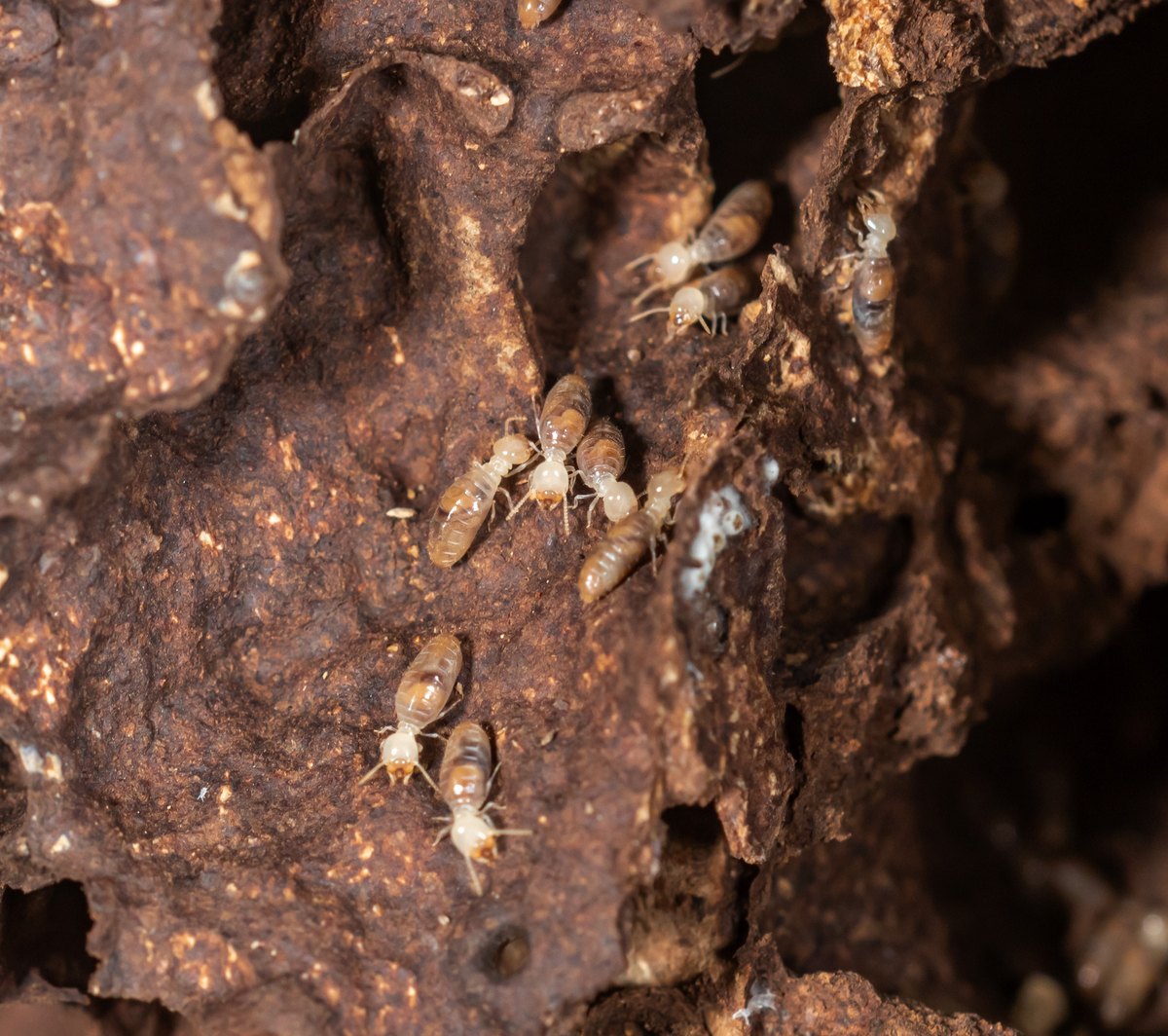
The subfamily Engelitermitinae was established by Romero-Arias, Roisin and Scheffrahn in 2024 (52), with the type genus Engelitermes and the type species E. zambo; the genus name honours the termite taxonomist Michael S. Engel. This catalogue includes 1 genera and 1 species.
Because it contains a single genus with a single species, its characters are those of the subfamily: the type colony (52) was collected in lowland tropical rainforest along the Nyong River in southern Cameroon, where it lived in a cavity of about 50 × 60 cm between the bark and a standing dead tree, constructing the nest chamber of soft black faecal material; the colony numbered more than ten thousand individuals, but soldiers were extremely scarce — in two of the four known samples only workers were collected. The worker mandibles are of the soil-feeding (humus-feeding) type, and the enteric-valve pads bear only a single spine with an unsculptured cuticle, a combination unique among termites; soldiers are rare, with a transparent abdomen containing no solid food, the head yellow-orange and rectangular, the mandibles short and stout, each bearing a triangular tooth near the base, and the tibial spur formula 2:2:2. Alates have not yet been collected. The subfamily is known from only four collecting localities, and its discovery shows that distinctive deep lineages of the family remain to be discovered in African tropical rainforests.
Foraminitermitinae 孔白蚁亚科
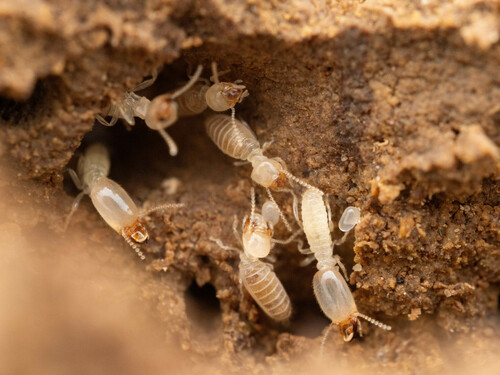
The subfamily Foraminitermitinae was established by Holmgren in 1912, with the type genus Foraminitermes Holmgren, 1912; the subfamily name is derived from the type genus (Latin foramen, referring to the fontanelle structure). This catalogue includes 3 genera and 10 species.
Its distribution spans both the Afrotropical realm (West and Central Africa to East Africa) and the Oriental realm (the Malay Peninsula and Southeast Asia). It is mainly soil-feeding (humus-feeding), living underground and often active at the base of old mounds of other termites, and is very rare. Morphologically, the soldier head is nearly rectangular and slightly flattened dorsoventrally, with a distinct, slightly depressed fontanelle in the frontal region; the mandibles are of the robust large-mandible type, gently curved with clear marginal teeth, and are used for chewing rather than snapping; the worker mandibles are of the soil-feeding type, and the enteric valve bears spinose armature, an important diagnostic character for distinguishing this subfamily from its close relatives. Its taxonomic and evolutionary position is distinctive: some transcriptomic and mitochondrial phylogenetic analyses place this subfamily among the most basal divergences within the family (21), where it forms an early branch allied with the Sphaerotermitinae and the fungus-growing Macrotermitinae, and it is a key narrowly distributed relict lineage for studying the early evolution of the family (especially dietary shifts and the origin of the gut symbiotic microbiota).
Forficulitermitinae 剪白蚁亚科
The subfamily Forficulitermitinae was established by Hellemans, Engel and Bourguignon in 2024 (21), with the type genus Forficulitermes Emerson, 1960; the subfamily name is derived from the type genus (Latin forfex, scissors, referring to the elongate, forceps-like curved mandibles). This catalogue includes 1 genera and 1 species.
Because it contains a single genus with a single species, its characters are those of the subfamily: the workers are soil-feeders (humus-feeders); the soldier head is nearly square, the fontanelle lies in a shallow depression with, on each side in front of it, a flat longitudinal ridge that forms a shallow groove running to the base of the clypeus, and there is additionally a small tubercle on each side between the fontanelle and the antennal socket; the mandibles are slender and toothless, used for biting rather than snapping, and the labrum bears a median projection and sharp apicolateral angles on its distal margin. In the worker, the second marginal tooth of the right mandible is well developed, and the four Malpighian tubules open in pairs together at the junction of the mixed segment — characters that distinguish this subfamily from the snapping-type soldiers common in the family and from the Termitinae. In the 2024 analysis its position was unstable in most analyses (21) (it was treated as a rogue taxon), but topology tests did not reject the hypothesis that it is closely related to the Engelitermitinae; its unique morphological combination is sufficient to establish a separate subfamily, representing another narrowly distributed relict monotypic lineage of the family that is non-basal and of uncertain phylogenetic position.
Macrotermitinae 大白蚁亚科
The subfamily Macrotermitinae was established by Kemner in 1934 (53), with the type genus Macrotermes Holmgren, 1909 (Greek makros, large, combined with Termes). This catalogue includes 12 genera and 373 species.
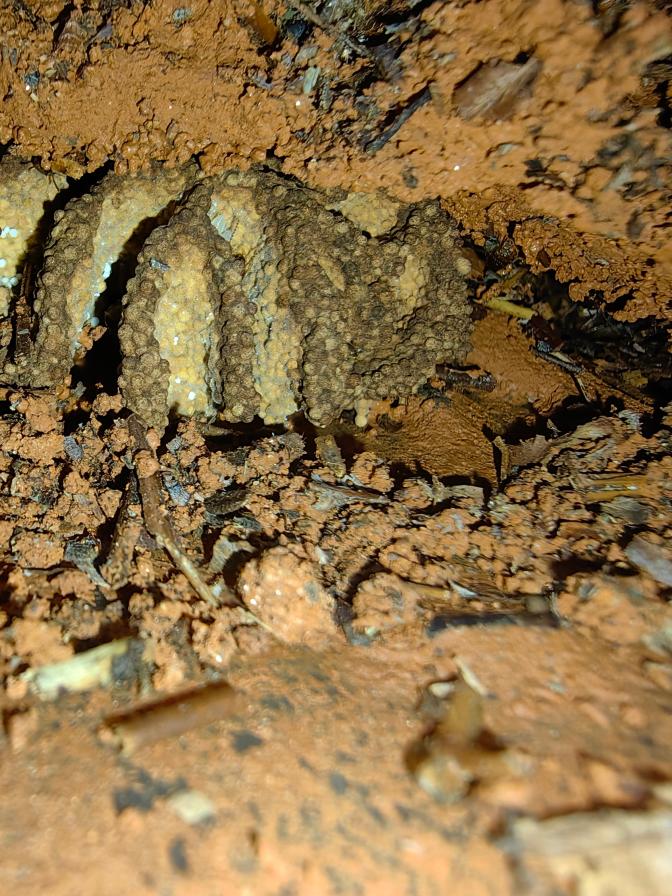
This subfamily is the only group within the Termitidae that is obligately symbiotic with the basidiomycete fungus Termitomyces, cultivating 'fungus combs' within its nests, a symbiosis that originated about 30 million years ago (54). Young workers mix comminuted plant material with spores in the gut, deposit the mixture to build the comb, and feed on the fungal conidia and the mature fungus comb, thereby making use of old, highly lignified plant debris. Its distribution is Old World tropical–subtropical: Africa has the richest fauna, followed by the Oriental realm (southern China has many endemic species), and there are a few representatives in Madagascar (the genus Microtermes) and the Arabian Peninsula (Yemen, Saudi Arabia, Oman); there is no natural occurrence in the Neotropical or Australian realms. Most species of this subfamily build subterranean nests or above-ground earthen mounds, in which the fungus-comb chambers and the tunnel system together serve in ventilation and in regulating temperature and humidity; the Macrotermes mounds of the African savanna can reach several metres in height and are among the most conspicuous ecosystem-engineering structures in the tropical landscape. The soldiers of this subfamily have well-developed frontal glands whose reservoirs are visible within the head capsule, a distinct fontanelle in front, and robust large mandibles with hooked apical margins, the left mandible usually bearing a tooth (most pronounced in the genus Odontotermes, from which the genus name derives); in the mature queen the abdomen swells into a giant physogastrium owing to extreme ovarian development, the queens of Macrotermes being the largest, and she lives in the royal chamber where she specializes in egg-laying. Both alates and workers have a sclerotized transverse band at the posterior part of the labrum, separated in the middle by a transparent membrane, and four lobes at the midgut–hindgut junction (anterior to the mixed segment), which are stable diagnostic characters of this subfamily.
Economically, this subfamily is the most important pest group of Old World agriculture and forestry: Macrotermes bellicosus and Macrotermes subhyalinus are the major termite pests of farmland, cacao plantations and coconut plantations in Africa, and their large mounds also hinder mechanized cultivation and harvesting; in southern China the black-winged soil termite Odontotermes formosanus is a major pest of reservoirs and river embankments (55), capable of causing seepage, piping, cave-in collapse and even breaching of the embankment, and it attacks more than a hundred kinds of plants including tea, citrus, eucalyptus and sugarcane, while in the sugarcane areas of Yunnan it damages sugarcane together with Macrotermes barneyi, causing significant yield reduction (56); in India Odontotermes obesus and Microtermes obesi attack wheat, maize, sugarcane, tea and various other crops, causing serious yield reduction and even total crop failure (57, 58). On the other hand, the Termitomyces mushrooms cultivated by this subfamily are famous edible fungi in Asia and Africa. In addition, genera such as Ancistrotermes, Hypotermes, Pseudacanthotermes and Allodontermes are crop pests in Africa and South Asia (10).
Microcerotermitinae 锯白蚁亚科
The subfamily Microcerotermitinae was established by Holmgren in 1910 (Microcerotermitinae Holmgren, 1910) (14), with the type genus Microcerotermes Silvestri, 1901; the subfamily name is derived from the type genus (Greek mikros, small, and cero, horn). It is closely related to the Syntermitinae, but the two cannot be fully confirmed as sister groups. This catalogue includes 2 genera and 150 species.
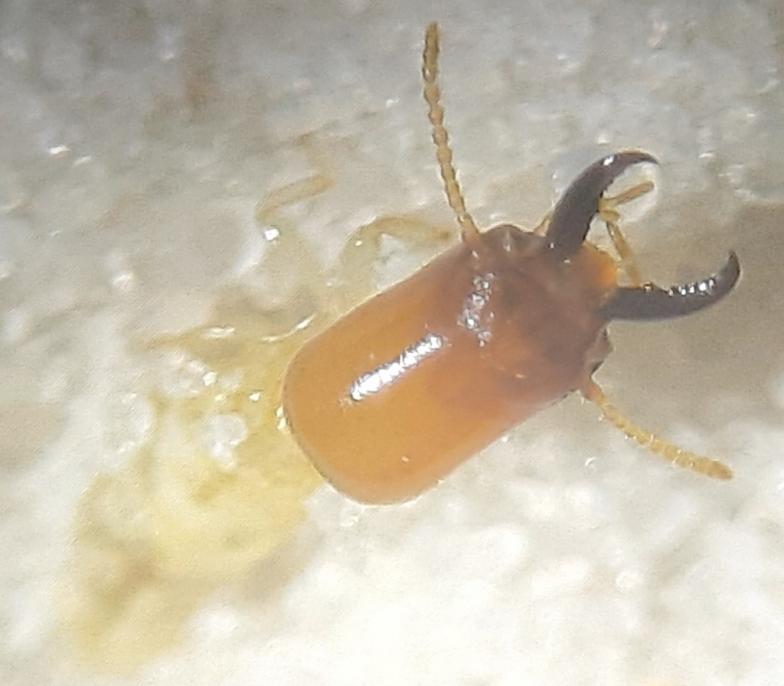
This subfamily is pantropical in distribution, widespread across the Oriental realm, tropical Africa and the Australian realm among other major regions, while the barb-hook termite genus occurs mainly in the Southern Cone of the Neotropical realm. Its diet is a broad wood-feeding and grass-feeding spectrum, feeding mostly on decayed wood and dry grass at the soil–wood interface; the soldier head is narrow and elongate, without a frontal projection, and the mandibles are of the piercing–hacking type; the soldier bears a small punctiform or slit-like fontanelle at the front of the frons; the mandibles are short and stout, with the apical margin curved inward into a hook, the left mandible bearing a small tooth and the right mandible almost toothless, the antennae 13–14-segmented, and the tibial spur formula 2:2:2; the workers are monomorphic. The nests are mostly small subterranean or surface nests, generally without large conspicuous mounds. (3)
Economically, this subfamily contains several important pests: Microcerotermes diversus is the most destructive pest of structural timber in Iran (59) (Khuzestan Province), Iraq and Oman, and is a major pest of date palm (Phoenix dactylifera) in Iran, Iraq and Saudi Arabia; in South America Microcerotermes strunckii is a minor pest of fruit orchards (60), and Microcerotermes arboreus is a minor pest of passion fruit.
Mirocapritermitinae 瘤白蚁亚科
The subfamily Mirocapritermitinae was established by Kemner in 1934 (Mirocapritermitinae Kemner, 1934), with the type genus Mirocapritermes Holmgren, 1914. This catalogue includes 14 genera and 135 species.
This subfamily has its centre of diversity in the Oriental realm, and most of its genera are restricted to the Oriental realm; the genus Pericapritermes is the most widely distributed, occurring outside the Oriental realm also in tropical Africa, the Australian realm and the southern margin of the Palaearctic (Japan, Korea).
Its diet is soil-feeding (humus-feeding) or feeding at the soil–wood interface, belonging to the typical soil-dwelling organic-matter-degrading group among the higher termites. In defence it is a typical asymmetrical-snapping group: the soldier head is rectangular, and the mandibles are generally asymmetric left and right (the left mandible is twisted in the middle and the right mandible is blade-like), the elastic energy stored when the mandibles are deformed being released to snap at high speed for defence; high-speed photographic studies of Pericapritermes nitobei (61) show that its asymmetric snapping mandibles exceed those of the symmetric snapping types in both strike speed and force, while in some species of the anterior-twisting termite genus the mandibles are nearly symmetric. The soldier head usually has no frontal projection dorsally, and the fontanelle is small and inconspicuous, the type genus Mirocapritermes being the exception in bearing a projection on the frons. In the worker–alate morph, the posterior margin of the second marginal tooth of the right mandible is concave and the molar area is smooth or only weakly sculptured; in the hindgut the two pairs of Malpighian tubules fuse proximally into groups, there is no Malpighian knot, and the enteric valve is composed of six rows of folds — common diagnostic characters of the worker hindgut in this subfamily. Economically, damage records are scattered: in oil-palm nurseries of Karnataka, India (62), Pericapritermes sp. damages the roots of bagged seedlings, causing stunted seedling growth.
Nasutitermitinae 象白蚁亚科
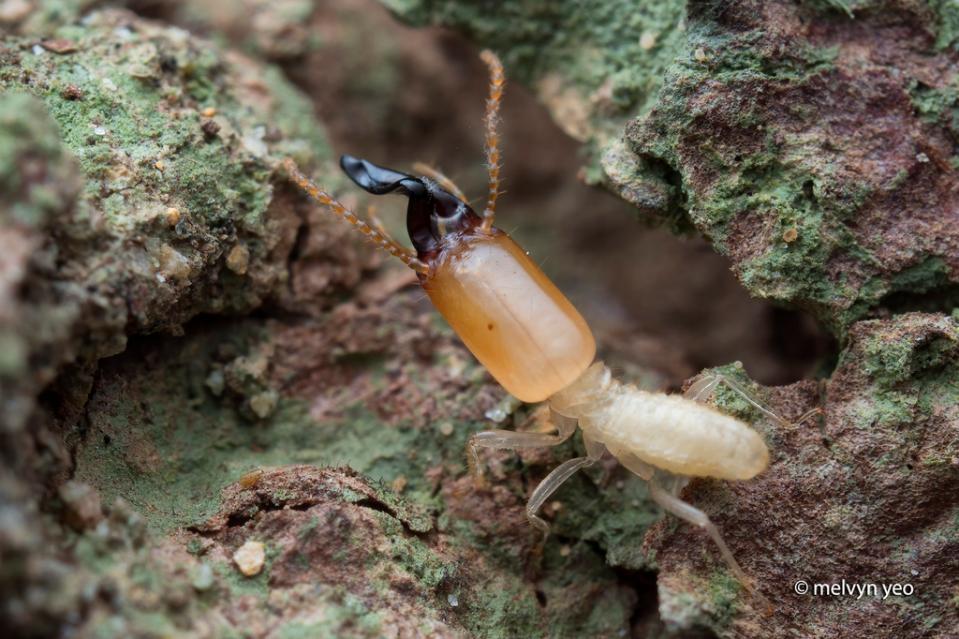
The subfamily Nasutitermitinae was established by Hare in 1937 ('Termite phylogeny as evidenced by soldier mandible development', p. 462) (63), with the type genus Nasutitermes Dudley, 1890; the subfamily name is derived from the type genus, Nasutitermes being a combination of the Latin nasus (nose) and termes, referring to the conical nasus into which the front of the soldier head is prolonged. This catalogue includes 81 genera and 606 species.
This subfamily has the nasute soldier as a synapomorphy: the front of the head capsule is prolonged into a conical nasus, through which the frontal-gland secretion is ejected for defence, while the mandibles are markedly reduced and no longer used for biting, making this a lineage with highly specialized defence within the family. The frontal-gland secretion consists mainly of monoterpene resins, which are ejected through the nasus and congeal into a sticky substance on contact with air, also serving as an alarm pheromone; its detailed composition varies among genera and species, for example the secretion of Tenuirostritermes tenuirostris contains about 62% pinene, 27% myrcene and 11% limonene (64). The workers are monomorphic, with a distinctly raised postclypeus; the sclerotized structure of the enteric valve varies among genera, and in the genus Nasutitermes the enteric valve is composed of three pairs of pad-like folds whose surface is covered with circular scales. The alates have distinct ocelli and large compound eyes. The diet includes wood-feeding, leaf-litter feeding, soil-humus feeding and feeding on epiphytic algae, among others; nests include arboreal carton nests, subterranean nests and hard surface mounds. The subfamily is pantropical in distribution, with the highest diversity in the Neotropical and Afrotropical realms.
Economically, this subfamily is an important pest group of tropical timber structures and economic forest trees: the Ceylon nasute termite N. ceylonicus damages coconut trunks in Sri Lanka (65), and N. matangensis damages the timber of traditional residential buildings in Indonesia. Among them, Nasutitermes corniger is naturally distributed in Mexico, Central America, northern South America, and the islands of the West Indies, and introduction records document its entry into the Bahamas, Palau, Papua New Guinea, and the United States; in 2001 this species established in Florida the first non-native field population of a termitid (Termitidae) in the United States (4, 66), with a diet spanning crops, orchards, garden plants, and structural timber. Sinonasutitermes and Xiaitermes damage structural timber in China (67); Trinervitermes damages pasture and eucalyptus seedlings in Africa and India (10, 68); Tumulitermes damages pasture in Australia; and Hospitalitermes monoceros is a major pest of sugarcane in India and Sri Lanka (69).
Neocapritermitinae 新扭白蚁亚科
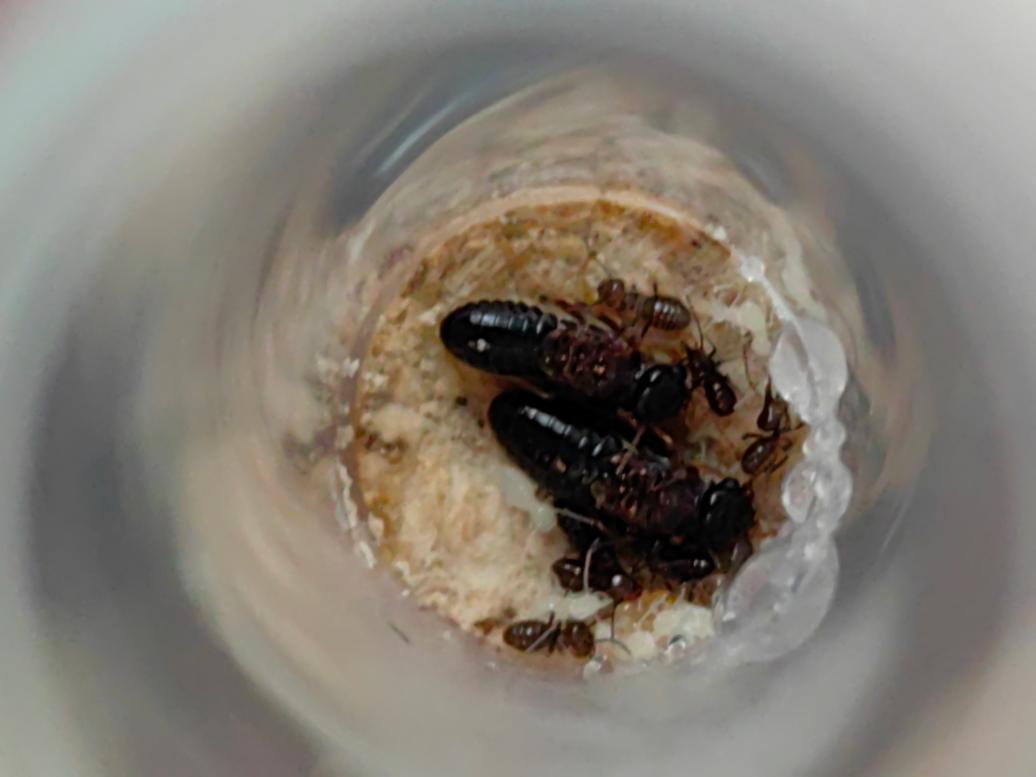
The subfamily Neocapritermitinae was established by Hellemans, Engel and Bourguignon in 2024 (21), with the type genus Neocapritermes Holmgren, 1912; the subfamily name is derived from the type genus name (neo-, “new” + Capritermes). This catalogue includes 3 genera and 20 species.
This subfamily is a group endemic to the Neotropical realm, with a distribution centered on Brazil, reaching north to Central America (Panama, Costa Rica), south to northern Argentina and Paraguay, west to Peru, Ecuador, Colombia and Bolivia, and east to the Guianas, Venezuela and Trinidad and Tobago; the genus Schievitermes is so far known only from a single species in French Guiana. No introduced or invasive records are known for this subfamily. In feeding habits, it feeds on decayed wood or at the wood–soil interface. In defense, the soldiers have asymmetrical twisted mandibles, a rectangular head, and no frontal process; compared with the Old World Mirocapritermitinae, the posterior margin of the second marginal tooth of the right mandible is straight, the molar region bears distinct ridges, and the enteric valve is composed of three folds (the latter has six), by which they can be distinguished. In the worker–alate mandible type, the apical tooth of the left mandible is shorter than the combined length of the first and second marginal teeth, a diagnostic point in the dentition of this subfamily; the mixed segment of the hindgut is long, with the distal portion expanded into a pair of mesenteric caeca (present only in Neocapritermes and Schievitermes), and the wall of the dilated chamber (P3) is densely covered with fine spines; the two pairs of Malpighian tubules are fused into a single point anteriorly, without a node. The most celebrated biological record of this subfamily comes from Neocapritermes: the aged workers of N. taracua form a sac containing blue protein crystals at the junction of the thorax and abdomen, and when defending against enemies the body wall ruptures and the contents mix with the salivary gland secretion, producing autothysis (70), one of the most complex worker defense mechanisms among termites. Economically, Neocapritermes opacus is the most common termite species in sugarcane fields in the State of São Paulo, Brazil (71).
Promirotermitinae 前奇白蚁亚科
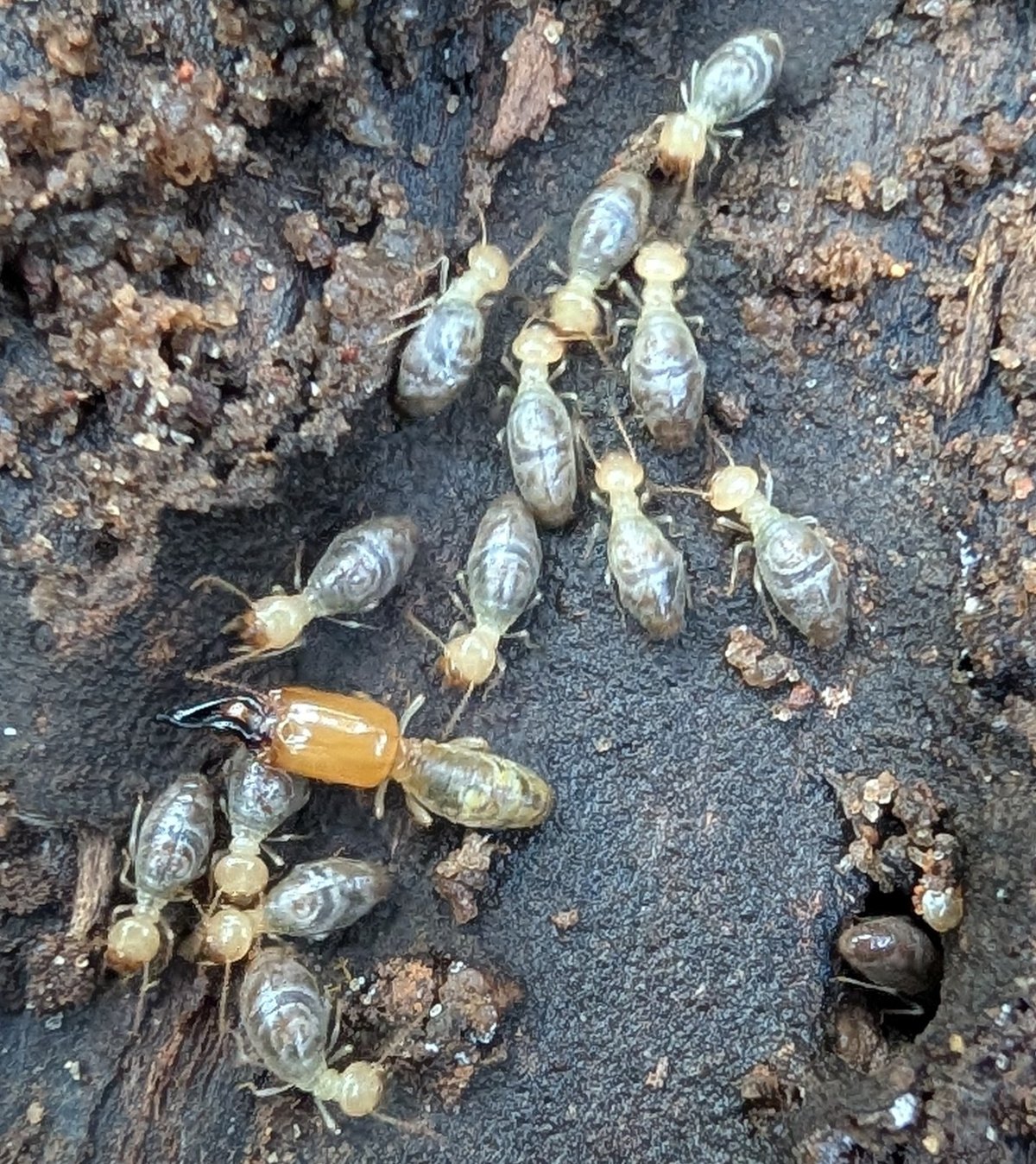
The subfamily Promirotermitinae was established by Hellemans, Engel and Bourguignon in 2024 (21), with the type genus Promirotermes Silvestri, 1914; the subfamily name is derived from the type genus name. This catalogue includes 2 genera and 39 species.
Its diet is humus (soil) feeding; an environmental gradient survey in Kruger National Park, South Africa, assigned Promirotermes to the soil–humus feeding group (72). This subfamily is widely distributed across the Afrotropical and Oriental realms, with Angulitermes extending westward to the Middle East and constituting the main diversified element within the subfamily. The soldiers have a rectangular to oval head, symmetrical snapping mandibles, and a distinct frontal process — pointed in Angulitermes and a blunt mound in Promirotermes — accompanied by a bifurcate labrum, these being important features distinguishing them from the similar Amitermitinae; the hindgut ileum (P1) is often expanded into a sac. In the worker–alate mandible type, the second marginal tooth of the right mandible is well developed, distinguishing them from related groups in which the second marginal tooth of the right mandible is reduced or absent; the two pairs of Malpighian tubules of the hindgut are fused at a common base, a stable diagnostic feature of the worker hindgut.
Protohamitermitinae 始钩白蚁亚科
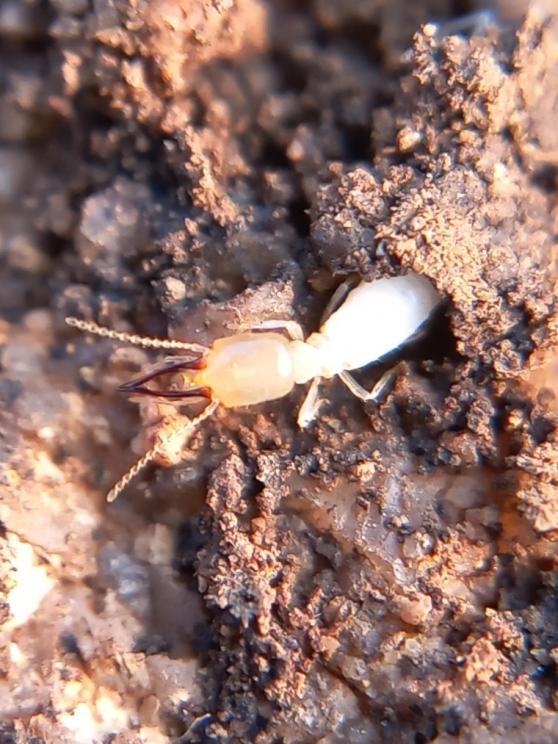
The subfamily Protohamitermitinae was established by Hellemans, Engel and Bourguignon in 2024 (21), with the type genus Protohamitermes Holmgren, 1912; the subfamily name is derived from the type genus name (proto-, “primitive” + Hamitermes, the latter containing the Latin hamus, “hook”). This catalogue includes 2 genera and 2 species.
This subfamily is an oligotypic group endemic to the Oriental realm. Both genera occur in Southeast Asia (Brunei, Malaysia, Indonesia). Both genera lack soldiers, and the workers feed on decayed wood; their long, tubular ileum (P1) is coiled in a ring on the ventral side of the rectum, similar to Cylindrotermitinae and part of Apicotermitinae, and the Malpighian tubules of the hindgut are attached to the mixed segment by two pairs of knots. In the worker, the first and second marginal teeth of the right mandible each bear a well-developed subsidiary tooth at the base, with the anterior margin of the subsidiary tooth angular and the posterior margin arcuate, the most critical diagnostic feature of the worker of this subfamily; by this it can be distinguished from the soldier-bearing Cylindrotermitinae. Because it lacks a soldier caste and is morphologically specialized, the taxonomic position of this subfamily long remained unresolved; molecular analysis shows that the two genera form a monophyletic group (21). As an Oriental representative of the soldierless higher termites, this subfamily is of some significance for understanding the parallel evolution of the loss of the soldier caste.
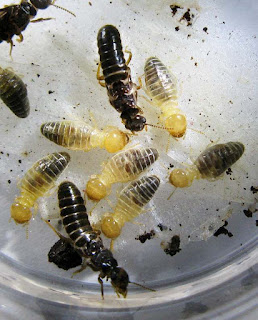
Sphaerotermitinae 圆球白蚁亚科
The subfamily Sphaerotermitinae was established by Engel and Krishna in 2004 (73), with the type genus Sphaerotermes Holmgren, 1911; the subfamily name is derived from the type genus name (Greek sphaira, “ball”); the specific name of its only species, S. sphaerothorax (Sjöstedt, 1911), also refers to its globular thorax. This catalogue includes 1 genera and 1 species.
This subfamily is endemic to the Afrotropical realm (West–Central Africa), and its only species ranges across the Republic of the Congo, Cameroon, the Central African Republic, Angola, the Democratic Republic of the Congo, Gabon, Guinea and Nigeria, with field sampling concentrated in the lowland rainforests of Cameroon. Biologically it is extremely distinctive: the species builds epigeal mound nests, but instead of cultivating the fungus combs seen in Macrotermitinae, it cultivates a bacteria-rich “comb” as food; the nest is built from a mixture of clay and fine sand and is compact in structure. Morphologically, the soldier has a broadly rounded head on both sides, a small and inconspicuous fontanelle located in the middle of the head capsule; the labrum is rounded on the sides with a hyaline tip at the front; the left mandible bears several fine teeth and one blunt tooth near the base, while the inner margin of the right mandible is smooth and toothless; the pronotum is much narrower than the head, with straight anterior and lateral margins lacking protruding spines. In the worker, the molar plate of the right mandible bears 6–7 ridges, the labrum is wholly sclerotized without the transverse sclerotized band seen in Macrotermitinae, and the postclypeus is strongly elevated with a median longitudinal line; at the junction of its P3 (paunch) and P4 (colon) there are conspicuous posteriorly directed setae, a condition unique among termites. In the alate, the fontanelle is pale and small, like a dot. Phylogenetically, several molecular analyses show that this subfamily is the sister group of Macrotermitinae, occupying a key position in the early diversification of the higher termites and being of great significance for understanding the evolution of feeding habits in the higher termites. Ecologically, its mounds are one of the main resources exploited by the “termite-fishing” behavior of chimpanzees in the rainforests of Cameroon (74).
Syntermitinae 聚白蚁亚科
The subfamily Syntermitinae was established by Engel and Krishna in 2004 (73), with the type genus Syntermes Holmgren, 1909; the subfamily name is derived from the type genus name. This catalogue includes 22 genera and 105 species.
In this subfamily, the soldiers of many species possess both a nasus similar to that of Nasutitermitinae (but without the ability to spray) and well-developed chewing–slashing mandibles, a unique intermediate defensive morphology within the family, while the remaining species have only powerful mandibles and no nasus. This subfamily is endemic to the Neotropical realm: its northern limit reaches Mexico (Cahuallitermes) and Central America (Costa Rica, Panama, Guatemala, Belize, Honduras, Nicaragua), and it extends south to northern Argentina and Uruguay, with Brazil as the center of distribution; Bolivia, Peru, Ecuador, Colombia, Venezuela and the countries of the Guiana Shield all have representatives. Most genera lead a subterranean life, and many species build conspicuous epigeal mounds, being a dominant termite group in the South American savannas; their diet consists mainly of organic matter at the soil–wood interface, humus and dead grass. In the worker, the mixed segment of the hindgut is bilobed and overlaps outside the ileum (P1) (reduced to a single lobe only in Procornitermes), and the scale membrane of the inner wall of the enteric valve bears spines (reduced only in Syntermes). The soldier has a well-developed nasus with a truncate apex, a broad and distinct frontal pore, and a narrow, simple labrum with a hyaline tip. The alate has a large, round fontanelle that is slightly concave or shaped like a convex plate, a moderately to strongly elevated postclypeus with a median longitudinal line, a short forewing costal vein (R1), and tarsi lacking an arolium. (3)
Economically, this subfamily is an important group of subterranean pests of agriculture and forestry in Brazil: S. molestus damages pineapple, cotton, rice, maize and eucalyptus plantation seedlings, and there is a first record of serious damage to potato roots (75); Cornitermes cumulans is the famous “cupim-de-montículo” of South American pastures, occurring densely in pastures, roadsides and eucalyptus forests, and it causes stem damage to teak (Tectona grandis) plantations in Mato Grosso State, Brazil (76); Procornitermes has occurrence records in maize fields in Argentina. Procornitermes and Labiotermes damage upland rice and maize in Brazil (42).
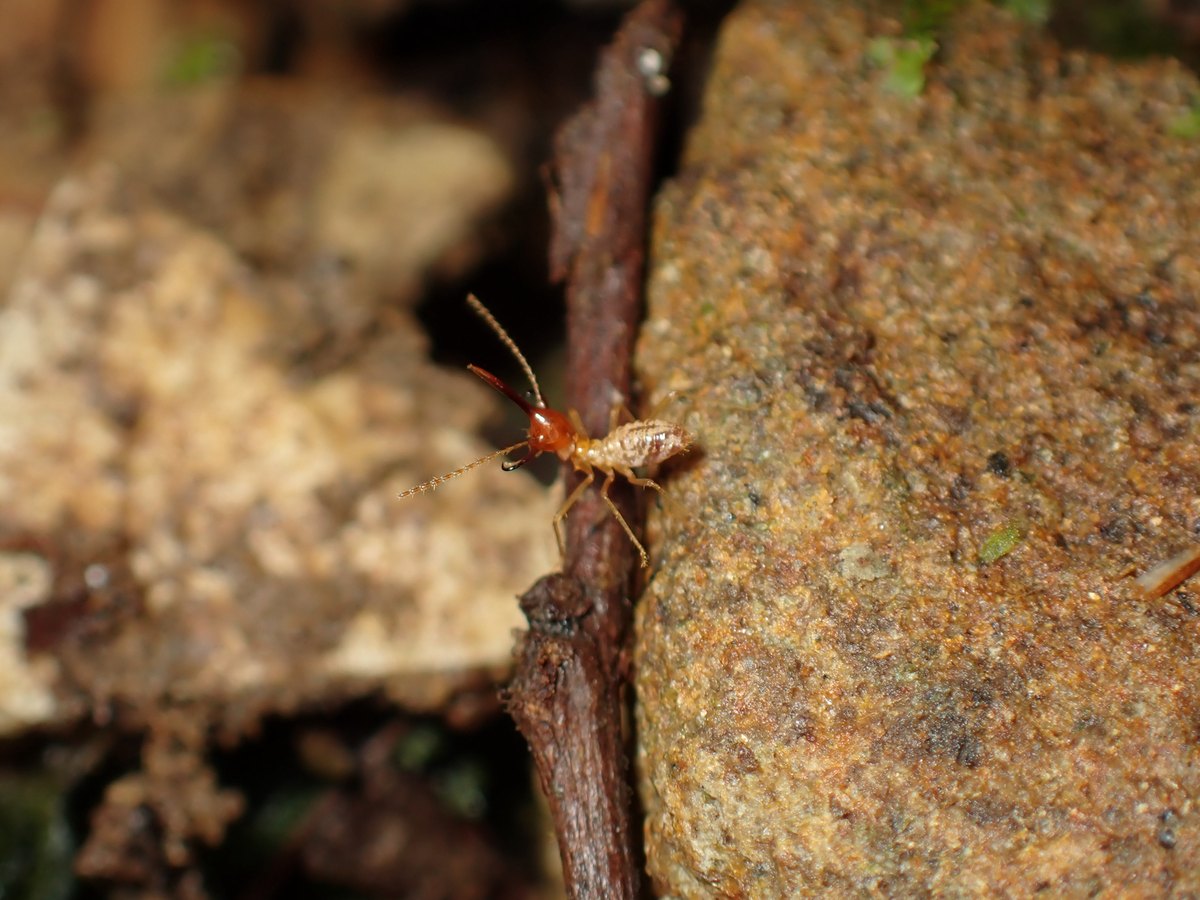
Termitinae 白蚁亚科
The subfamily Termitinae was established by Latreille in 1802, at the same time as the family Termitidae, with the type genus Termes Linnaeus, 1758. This catalogue includes 23 genera and 107 species.
In this subfamily, the soldiers of most species are of the chewing type: the soldier mandibles are elongated with few but large teeth, defending by biting and cutting; among them, Capritermes and others have asymmetrical left and right mandibles, using a “snapping” mechanism to strike intruders at high speed; there are also types with symmetrical snapping mandibles, such as the pincer termite Termes marjoriae. The distribution is summarized into four major faunal regions: the Australian realm is one major distribution region, with more than ten genera occurring mainly in Australia (some extending to Papua New Guinea and the Solomon Islands); the Neotropical realm is another major distribution region, ranging widely from Mexico to South America; there are also representatives in the Afrotropical realm; in the Oriental realm there are only a few species of Termes (Malaysia, Indonesia, Thailand, Vietnam, Singapore, and Guangdong and Jinghong in Yunnan, China). The diet is mainly wood feeding and soil-humus feeding; the genus Inquilinitermes is an inquiline group, dwelling in the nests of other termite genera. In the worker, the apical tooth of the mandible is longer than or slightly shorter than the combined length of the first and second marginal teeth, and the second marginal tooth of the right mandible is reduced or absent with a straight posterior margin; the two pairs of Malpighian tubules are united into a common node attached to the mixed segment, and the enteric valve (P2) is located on the left side of the abdomen (Cornicapritermes alone is an exception, with the ileum coiled in a ring on the ventral side and the enteric valve on the right side). The soldier has a nearly rectangular head, and the frontal process varies in size among genera. (3)
Economically, in a survey of pastures in Paraguay, the mounds of Termes sp. reduced the effective usable area of pasture (77). Termes hispaniolae has a record of introduction to the Bahamas.