Anacanthotermes viarum 小径无刺白蚁
- Type locality
- India: Tamil Nadu: Coimbatore
- Distribution
- India, Sri Lanka
List: English (genus page) · 中文 · Español
Summary
Anacanthotermes viarum is a species of the genus Anacanthotermes, in the family HODOTERMITIDAE. The species was described by König in 1779; the type locality is India: Tamil Nadu: Coimbatore. Distribution: India, Sri Lanka. This site records 2 junior synonyms for the species.
Etymology
Genus name Anacanthotermes: From Greek an- (without) + akantha (thorn) + Latin termes, ‘thornless termite’.
Specific epithet viarum: Latin viarum (of roads)
Taxonomic position
- Family: HODOTERMITIDAE — 3 genera, 21 species
- Genus: Anacanthotermes — 16 species
- Type species of the genus: Anacanthotermes ochraceus
Distribution
- Distribution records: India, Sri Lanka
The record above follows the wording of the original data; no geocoding or standardized place names have been applied.
Junior synonyms
This site records 2 junior synonyms for the species, listed by their original literature source:
- Hodotermes (Anacanthotermes) koenigi Holmgren & Holmgren, 1917: 138-139 — type locality: India: Coimbatore
- Anacanthotermes rugifrons Mathur & Sen-Sarma, 1958: 231-241 — type locality: India: Tamil Nadu: Tinnevelly District: Pallayamcottah
In older literature, regional checklists and database searches, this species may appear under the synonyms above (Hodotermes (Anacanthotermes) koenigi, Anacanthotermes rugifrons); this site treats them all under Anacanthotermes viarum.
Morphology
A species-level description from the original literature has not yet been compiled for this page. Original description: König, 1779. See the genus page for the genus-level description; this page will be updated after the original text is checked.
Photos 5 photos
Freely licensed photos, click to enlarge. Hotlinked from iNaturalist / Wikimedia Commons; the rights stay with the photographers — author, licence and source page are shown under each photo.
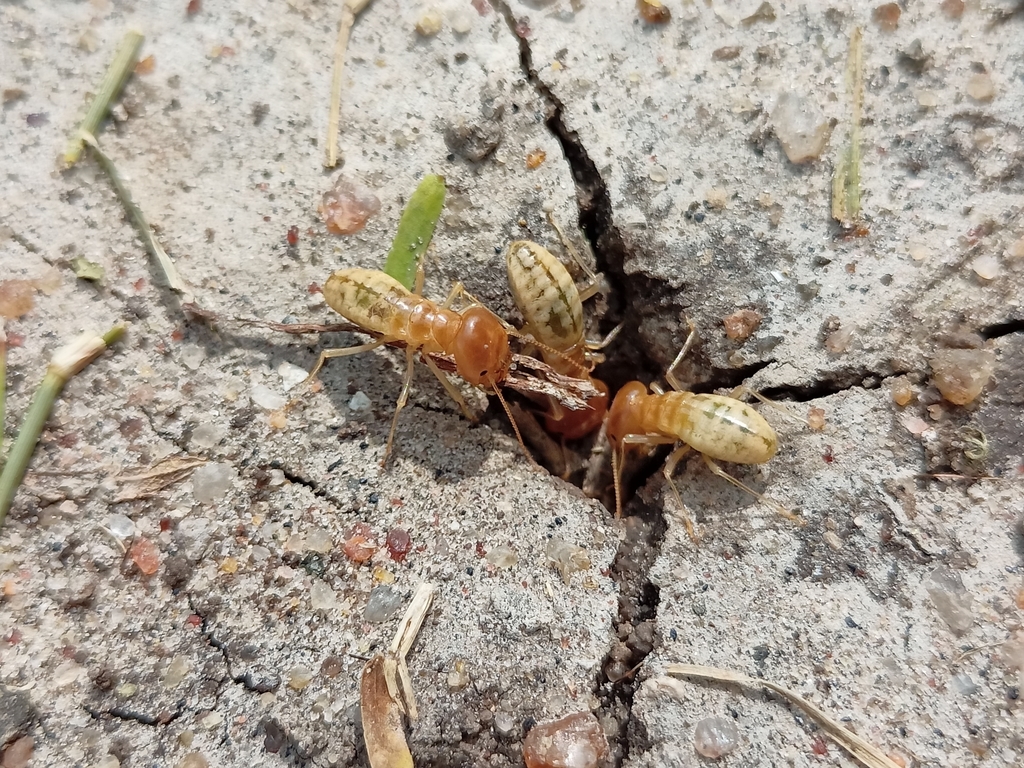
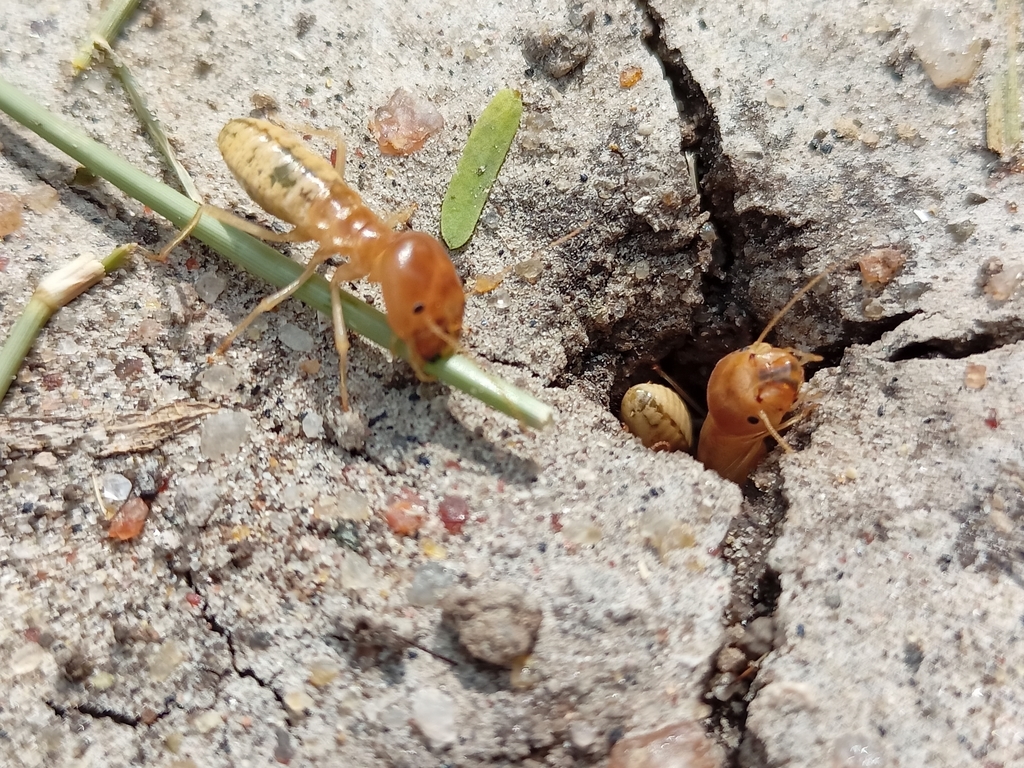
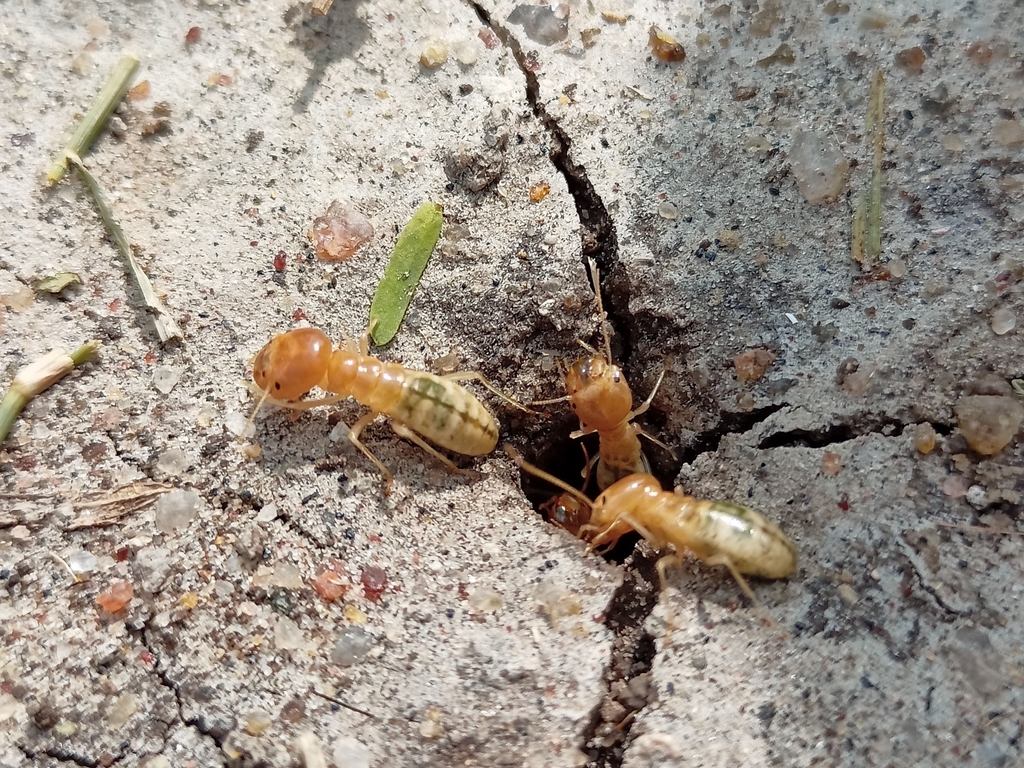
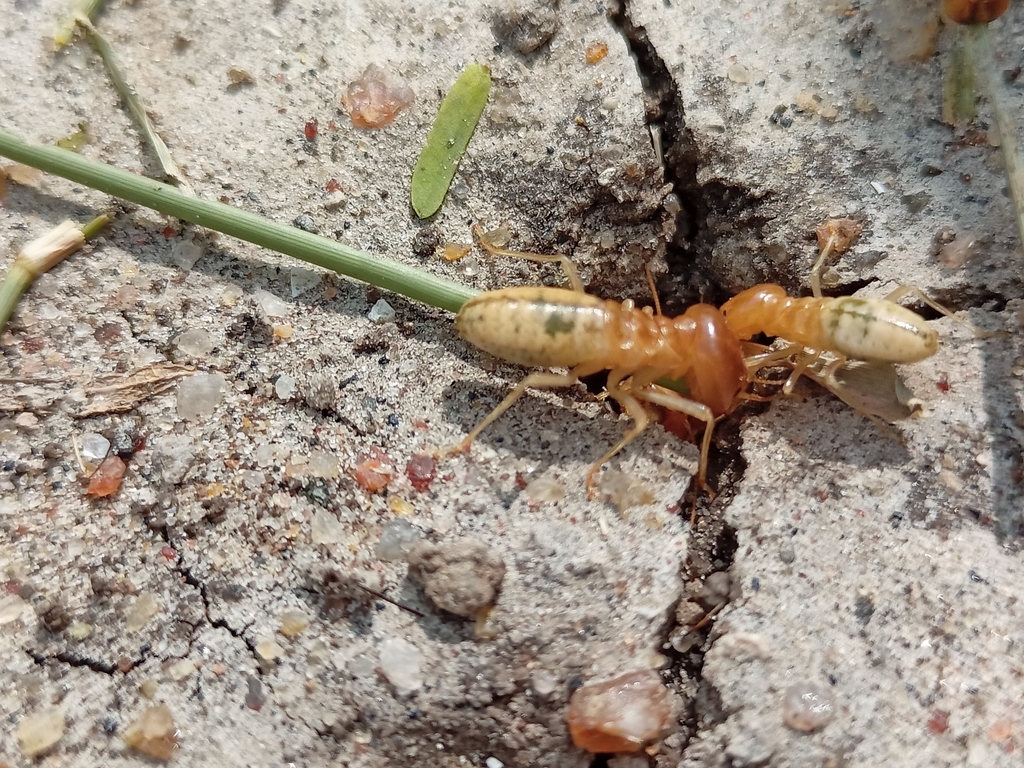

Distribution map
Aggregated from GBIF occurrence records on a 1° grid; only extant taxa of this checklist are used, so fossil records are excluded. Dot size and shade show the number of records inside a cell.
Related papers
Cached papers for this genus (matched automatically, for reference); to search this species with its junior synonyms merged in, use the literature search.
- TERMITES OF THE GENUS ANACANTHOTERMES
Abstract
Termites are eusocial insects with a wide Old World distribution, notable for their dual role as ecosystem engineers and structural pests. In arid and semi-arid ecosystems, termites accelerate decomposition and nutrient cycling, yet can also damage wooden structures and crops. The genus Anacanthotermes (Family Hodotermitidae) comprises so-called “harvester termites” found in the deserts and semi-deserts of North Africa, the Middle East, and Southwest Asia. These termites forage on dry grasses and plant debris, storing material in extensive underground nests. In Central Asia (e.g. Uzbekistan’s Khorezm region), Anacanthotermes species infest dry landscapes as well as irrigated oases and even urban settlements. This thesis reviews up-to-date knowledge of Anacanthotermes biology (morphology and life cycle), distribution and habitat preferences, ecological significance (feeding behavior and effects on soil fertility), and economic importance (both beneficial effects and damage caused). The objective is to synthesize recent scientific findings on this genus, highlighting its roles in ecosystems and impacts on human environments.
- TERMITES OF THE GENUS ANACANTHOTERMES
Abstract
Termites are eusocial insects with a wide Old World distribution, notable for their dual role as ecosystem engineers and structural pests[1][2]. In arid and semi-arid ecosystems, termites accelerate decomposition and nutrient cycling, yet can also damage wooden structures and crops. The genus Anacanthotermes (Family Hodotermitidae) comprises so-called “harvester termites” found in the deserts and semi-deserts of North Africa, the Middle East, and Southwest Asia[2]. These termites forage on dry grasses and plant debris, storing material in extensive underground nests[3]. In Central Asia (e.g. Uzbekistan’s Khorezm region), Anacanthotermes species infest dry landscapes as well as irrigated oases and even urban settlements[4][5]. This thesis reviews up-to-date knowledge of Anacanthotermes biology (morphology and life cycle), distribution and habitat preferences, ecological significance (feeding behavior and effects on soil fertility), and economic importance (both beneficial effects and damage caused). The objective is to synthesize recent scientific findings on this genus, highlighting its roles in ecosystems and impacts on human environments.
- Lipofuscin in the termite Anacanthotermes ahngerianus
Abstract
Papers on this species, synonyms included → OpenAlex Google Scholar CNKI
Abstracts come from open metadata; copyright remains with the original authors/publishers. For reference only — please check the original.
Literature notes
Edited notes based on the original literature, not transcriptions. The source markers in each paragraph point to archived records in .sources; full citations are listed below.
Taxonomic history
According to Roonwal and Bose (1988), Anacanthotermes viarum is one of the four species of Anacanthotermes recorded from the Indian region; the genus then contained 12 species worldwide and ranges from North Africa, western Asia, the Arabian Peninsula and Central Asia to western and southern India.
References
Other species in Anacanthotermes (15 species)
- Anacanthotermes ahngerianus
- Anacanthotermes baeckmannianus
- Anacanthotermes baluchistanicus
- Anacanthotermes esmailii
- Anacanthotermes gurganiensis
- Anacanthotermes iranicus
- Anacanthotermes macrocephalus
- Anacanthotermes murgabicus
- Anacanthotermes ochraceus
- Anacanthotermes saudiensis
- Anacanthotermes sawensis
- Anacanthotermes septentrionalis
- Anacanthotermes turkestanicus
- Anacanthotermes ubachi
- Anacanthotermes vagans
Cite this species
Citation strings are generated from the fields of this page; please keep the DOI and the version number when citing.
GB/T 7714
班奈特格林. Extant Isoptera (termites): a checklist of Latin and Chinese names: Anacanthotermes viarum 小径无刺白蚁[EB/OL]. Version 2026.10.30. https://termite-extant-isoptera.org/en/species/anacanthotermes-viarum/. DOI: 10.5281/zenodo.23646836.
BibTeX
@misc{isoptera_anacanthotermes_viarum_2026,
  author       = {班奈特格林},
  title        = {Anacanthotermes viarum: a checklist of extant Isoptera (termites)},
  year         = {2026},
  version      = {2026.10.30},
  howpublished = {https://termite-extant-isoptera.org/en/species/anacanthotermes-viarum/},
  note         = {HODOTERMITIDAE; version 2026.10.30; DOI: 10.5281/zenodo.23646836},
  doi          = {10.5281/zenodo.23646836}
}
RIS
TY  - ELEC
TI  - Anacanthotermes viarum: a checklist of extant Isoptera (termites)
AU  - 班奈特格林
PY  - 2026
UR  - https://termite-extant-isoptera.org/en/species/anacanthotermes-viarum/
DO  - 10.5281/zenodo.23646836
ER  -