Cortaritermes fulviceps 栗头利颚白蚁
- Type locality
- Argentina: Córdoba: Cernadas (old train station) [34.2264S 62.878W]; Entre Ríos: Chajarí [30.7667S 57.9833W]; Entre Ríos: Concordia [31.4S 58.0333W]; Misiones: Posadas [27.37S 55.9W]; San Luis: San Luis [33.3S 66.35W]; Santa Fé: Sunchales [30.9333S 61.5667W]; Paraguay: Guairá: Villa Rica [25.75S 56.4333W]; Itapúa: Encarnación [27.252S 55.914W]; Uruguay: Canelones: Francisco Soca (formerly Mosquitos) [34.6833S 55.6833W]; Maldonado: La Sierra [34.7667S 55.4167W]
- Distribution
- Argentina, Uruguay, Brazil, Paraguay
List: English (genus page) · 中文 · Español
Summary
Cortaritermes fulviceps is a species of the genus Cortaritermes, in the family TERMITIDAE (subfamily Nasutitermitinae). The species was described by Silvestri in 1901; the type locality is Argentina: Córdoba: Cernadas (old train station) [34.2264S 62.878W]; Entre Ríos: Chajarí [30.7667S 57.9833W]; Entre Ríos: Concordia [31.4S 58.0333W]; Misiones: Posadas [27.37S 55.9W]; San Luis: San Luis [33.3S 66.35W]; Santa Fé: Sunchales [30.9333S 61.5667W]; Paraguay: Guairá: Villa Rica [25.75S 56.4333W]; Itapúa: Encarnación [27.252S 55.914W]; Uruguay: Canelones: Francisco Soca (formerly Mosquitos) [34.6833S 55.6833W]; Maldonado: La Sierra [34.7667S 55.4167W]. Distribution: Argentina, Uruguay, Brazil, Paraguay. This site records 3 junior synonyms for the species.
Etymology
Genus name Cortaritermes: Etymology uncertain; -termes from Latin termes.
Specific epithet fulviceps: From fulvi + ceps
Taxonomic position
- Family: TERMITIDAE — 280 genera, 2144 species
- Subfamily: Nasutitermitinae — 81 genera, 606 species
- Genus: Cortaritermes — 5 species
- Type species of the genus: Cortaritermes silvestrii
Distribution
- Distribution records: Argentina, Uruguay, Brazil, Paraguay
The record above follows the wording of the original data; no geocoding or standardized place names have been applied.
Junior synonyms
This site records 3 junior synonyms for the species, listed by their original literature source:
- Eutermes burmeisteri Czerwinski, 1901: 8 — type locality: Brasil: Rio Grande do Sul: Lagoa dos Patos, mouth of Camaquã River [31.285S 51.752W]
- Eutermes (Eutermes) brasiliensis Holmgren, 1910: 273-274 — type locality: Brasil: Rio Grande do Sul
- Eutermes ellenriederi Rosen, 1912: 224 — type locality: Brasil: Rio Grande do Sul: São José do Norte [32.0156S 52.0335W]
In older literature, regional checklists and database searches, this species may appear under the synonyms above (Eutermes burmeisteri, Eutermes (Eutermes) brasiliensis, Eutermes ellenriederi); this site treats them all under Cortaritermes fulviceps.
Morphology
A species-level description from the original literature has not yet been compiled for this page. Original description: Silvestri, 1901. See the genus page for the genus-level description; this page will be updated after the original text is checked.
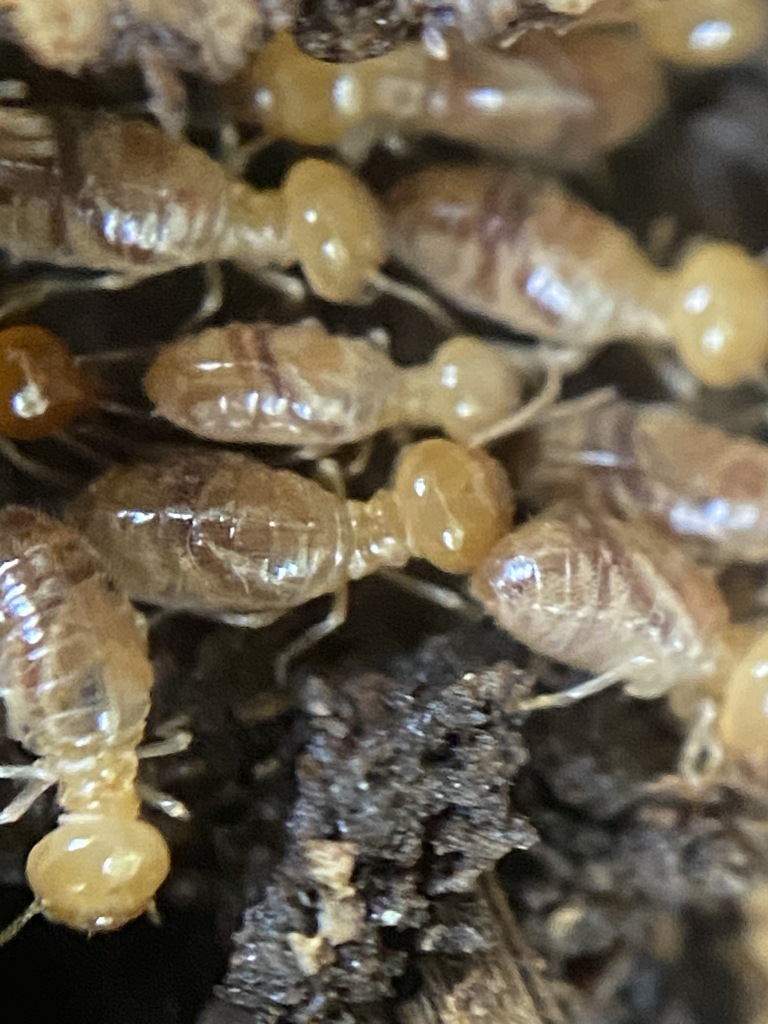
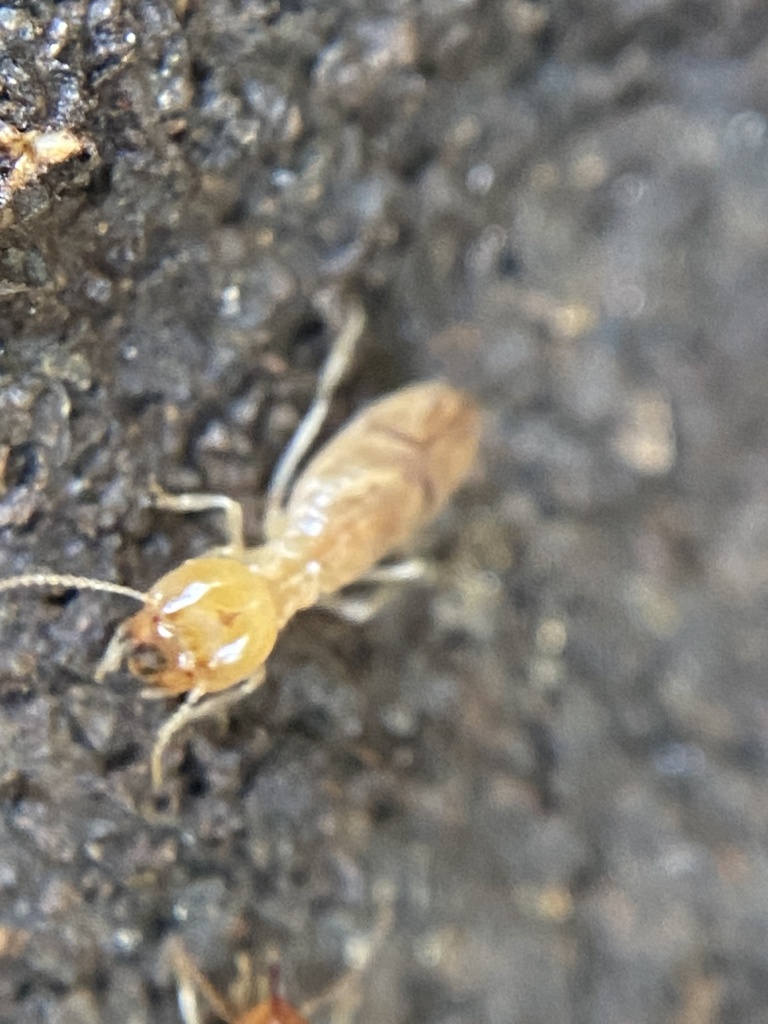
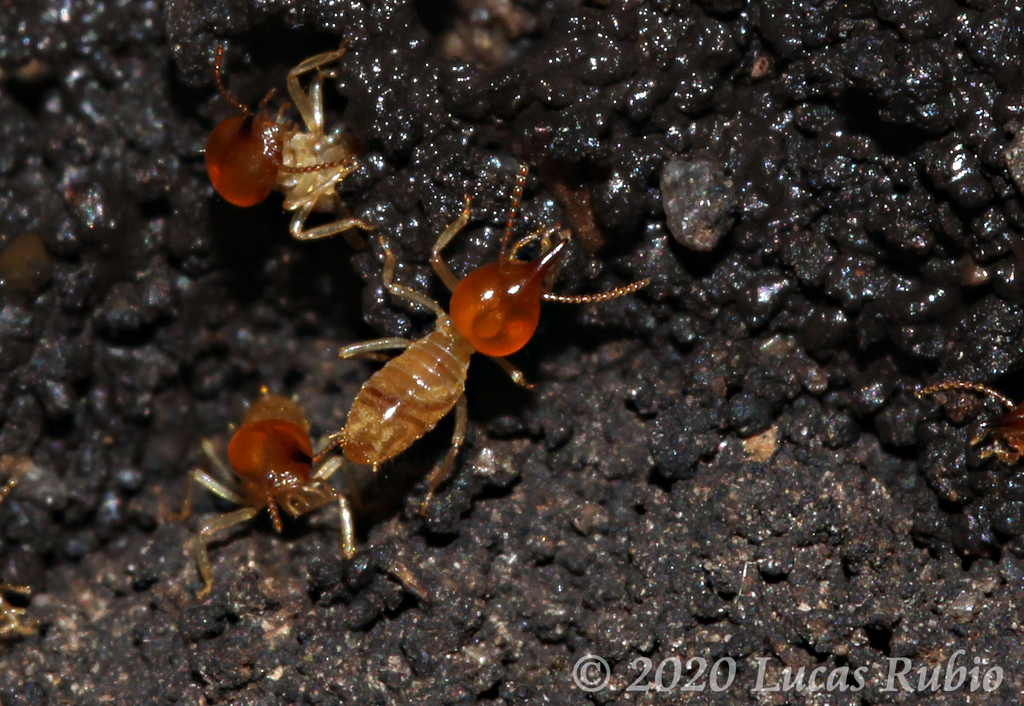
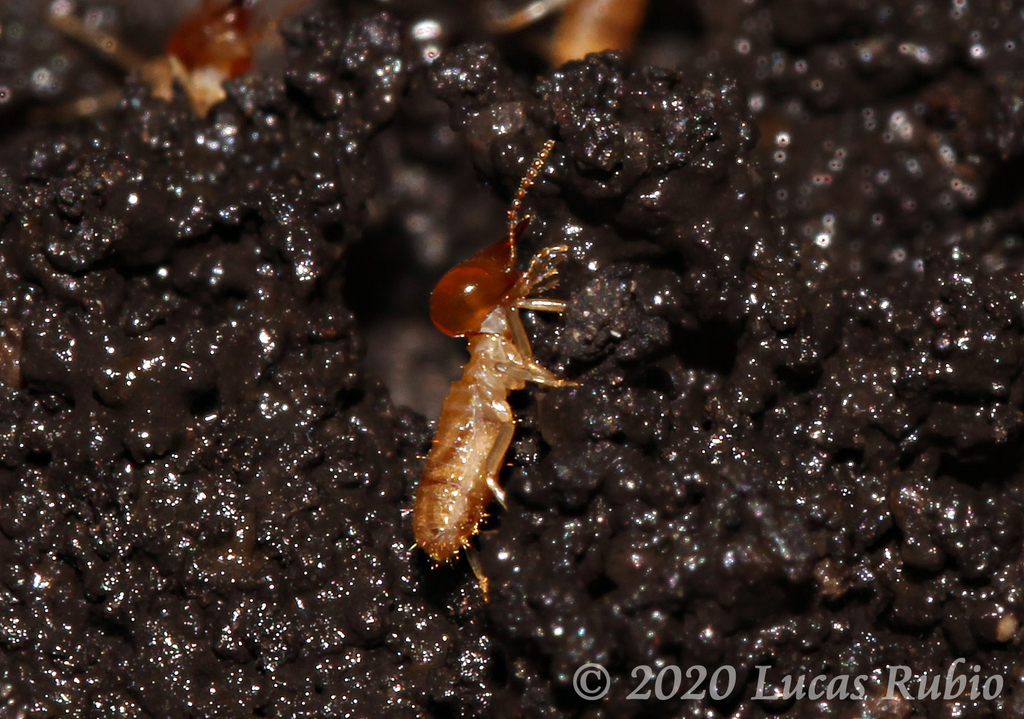
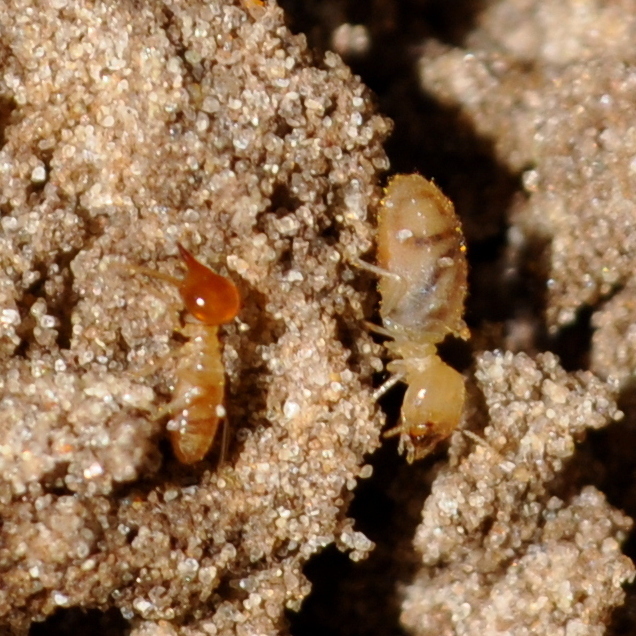
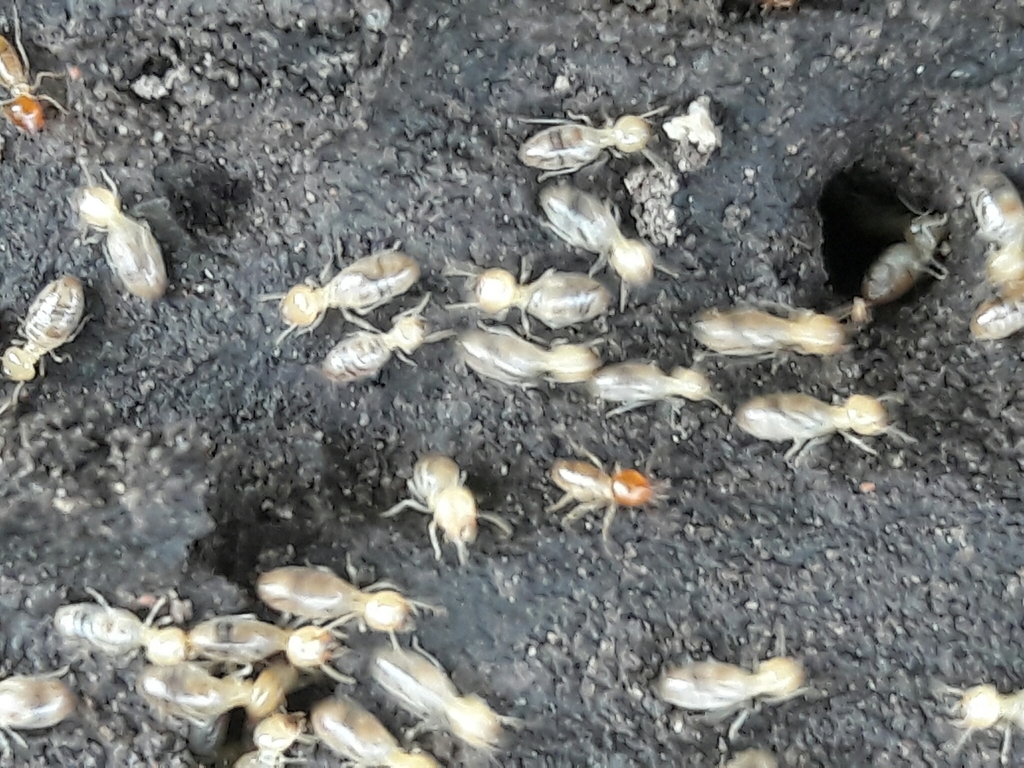
Photos 11 photos
Freely licensed photos, click to enlarge. Hotlinked from iNaturalist / Wikimedia Commons; the rights stay with the photographers — author, licence and source page are shown under each photo. Only the first 6 are shown here; the rest are under “All photos” at the end of the page.
Distribution map
Aggregated from GBIF occurrence records on a 1° grid; only extant taxa of this checklist are used, so fossil records are excluded. Dot size and shade show the number of records inside a cell.
Related papers
Cached papers for this genus (matched automatically, for reference); to search this species with its junior synonyms merged in, use the literature search.
- CASTE DEVELOPMENTAL PATHWAYS OF Cortaritermes fulviceps (BLATTODEA, TERMITIDAE).
Abstract
The study of the developmental pathways in termites contributes to the understanding of caste evolution and resources utilization, as well as other ecological aspects. In this paper, the caste developmental pathways of Cortaritermes fulviceps (Silvestri) were analyzed in natural colonies from the Province of Corrientes, Argentina. Five measurements were taken of different body parts of larvae (L), workers (W), pre-soldiers (PS), soldiers (S), nymphs (N) and alates (A) for morphometric analyses. Dissections were also performed to determine the sex of workers and soldiers. The collected data were analyzed using principal component analysis, analysis of variance and Tukey test. In the nymphal line, four nymphal instars and alates were identified. The apterous line included two larval instars. Major workers were females and minor workers, pre- soldiers and soldiers were males. The results suggest that the developmental pathways of C. fulviceps is similar to the one of the genus Nasutitermes Dudley.
- Nest micromorphology of the termite Cortaritermes fulviceps in different types of soil (Isoptera: Termitidae)
Abstract
The micromorphology of nests of Cortaritermes fulviceps (Isoptera, Termitidae) located in different types of soils is described using thin sections, following the methodology for studying soil micromorphology. In all these cases, the nest microstructure is remarkably different from that of the surrounding soil, indicating that workers modify the soil microstructure when building. In sandy soils, with scarce organic matter, workers employ single sand grains cemented with fecal material to build the nest. In loamy clay soils, very rich in organic matter, single sand grains and soil crumbs are also cemented with fecal material, whereas in silty soils, the nests are constructed with soil pellets molded in the buccal cavity of the workers, loaded and piled without any kind of mortar. The fecal origin of the cement was determined by a comparative analysis of its constituents with those of the workers' hindgut content.
- DINÁMICA POBLACIONAL DE Cortaritermes fulviceps (SILVESTRI, 1901) (ISOPTERA: TERMITIDAE)
Abstract
Se analizaron las poblaciones de 16 nidos de Cortaritermes fulviceps procedentes de diferentes localidades de la Provincia de Corrientes (Argentina) en las cuatro estaciones del año. Se extrajeron 4 nidos por cada estación. Se registró la presencia de reproductores en 7 de los nidos analizados. Las castas obreras, soldados e inmaduros blancos estuvieron presentes en todas las estaciones, no así los soldados blancos y pre-alados. La razón del total de obreras: soldados se mantuvo constante durante todo el año con una proporción de 6:1, excepto en primavera donde se registró un descenso a 3:1. Se registraron correlaciones positivas entre el total de obreras y soldados y entre inmaduros blancos y pre-alados, mientras que las correlaciones resultaron negativas entre los inmaduros blancos con las obreras y soldados, y entre pre-alados con obreras y soldados. Los pre-alados fueron encontrados en las 4 estaciones del año. Hubo diferencias significativas entre las estaciones en las proporciones de todas las castas, a excepción de las obreras menores. No se registraron diferencias significativas entre estaciones en el volumen de las poblaciones analizadas, al igual que entre el número de individuos estimados por termiteros.
Papers on this species, synonyms included → OpenAlex Google Scholar CNKI
Abstracts come from open metadata; copyright remains with the original authors/publishers. For reference only — please check the original.
Other species in Cortaritermes (4 species)
Cite this species
Citation strings are generated from the fields of this page; please keep the DOI and the version number when citing.
GB/T 7714
班奈特格林. Extant Isoptera (termites): a checklist of Latin and Chinese names: Cortaritermes fulviceps 栗头利颚白蚁[EB/OL]. Version 2026.10.30. https://termite-extant-isoptera.org/en/species/cortaritermes-fulviceps/. DOI: 10.5281/zenodo.23646836.
BibTeX
@misc{isoptera_cortaritermes_fulviceps_2026,
  author       = {班奈特格林},
  title        = {Cortaritermes fulviceps: a checklist of extant Isoptera (termites)},
  year         = {2026},
  version      = {2026.10.30},
  howpublished = {https://termite-extant-isoptera.org/en/species/cortaritermes-fulviceps/},
  note         = {TERMITIDAE; version 2026.10.30; DOI: 10.5281/zenodo.23646836},
  doi          = {10.5281/zenodo.23646836}
}
RIS
TY  - ELEC
TI  - Cortaritermes fulviceps: a checklist of extant Isoptera (termites)
AU  - 班奈特格林
PY  - 2026
UR  - https://termite-extant-isoptera.org/en/species/cortaritermes-fulviceps/
DO  - 10.5281/zenodo.23646836
ER  -