Embiratermes heterotypus 异型生白蚁
- Type locality
- Paraguay: Alto Paraná: Hernandarias (formerly Tacurú Pucú) [25.3667S 54.6833W]
- Distribution
- Brazil, Argentina, Paraguay
List: English (genus page) · 中文 · Español
Summary
Embiratermes heterotypus is a species of the genus Embiratermes, in the family TERMITIDAE (subfamily Syntermitinae). The species was described by Silvestri in 1901; the type locality is Paraguay: Alto Paraná: Hernandarias (formerly Tacurú Pucú) [25.3667S 54.6833W]. Distribution: Brazil, Argentina, Paraguay. This site records 1 junior synonym for the species.
Etymology
Genus name Embiratermes: From Tupi Embirá (a tree) + -termes.
Specific epithet heterotypus: From the descriptive term ‘heter’ (different)
Taxonomic position
- Family: TERMITIDAE — 280 genera, 2144 species
- Subfamily: Syntermitinae — 22 genera, 105 species
- Genus: Embiratermes — 9 species
- Type species of the genus: Embiratermes festivellus
Distribution
- Distribution records: Brazil, Argentina, Paraguay
The record above follows the wording of the original data; no geocoding or standardized place names have been applied.
Junior synonyms
This site records 1 junior synonym for the species, listed by its original literature source:
- Armitermes parvidens Emerson & Banks, 1957: 6-11 — type locality: Brasil: Rio de Janeiro: Mendes [22.5174S 43.7215W]
In older literature, regional checklists and database searches, this species may appear under the synonym Armitermes parvidens; this site treats it under Embiratermes heterotypus.
Morphology
A species-level description from the original literature has not yet been compiled for this page. Original description: Silvestri, 1901. See the genus page for the genus-level description; this page will be updated after the original text is checked.
Photos 4 photos
Freely licensed photos, click to enlarge. Hotlinked from iNaturalist / Wikimedia Commons; the rights stay with the photographers — author, licence and source page are shown under each photo.
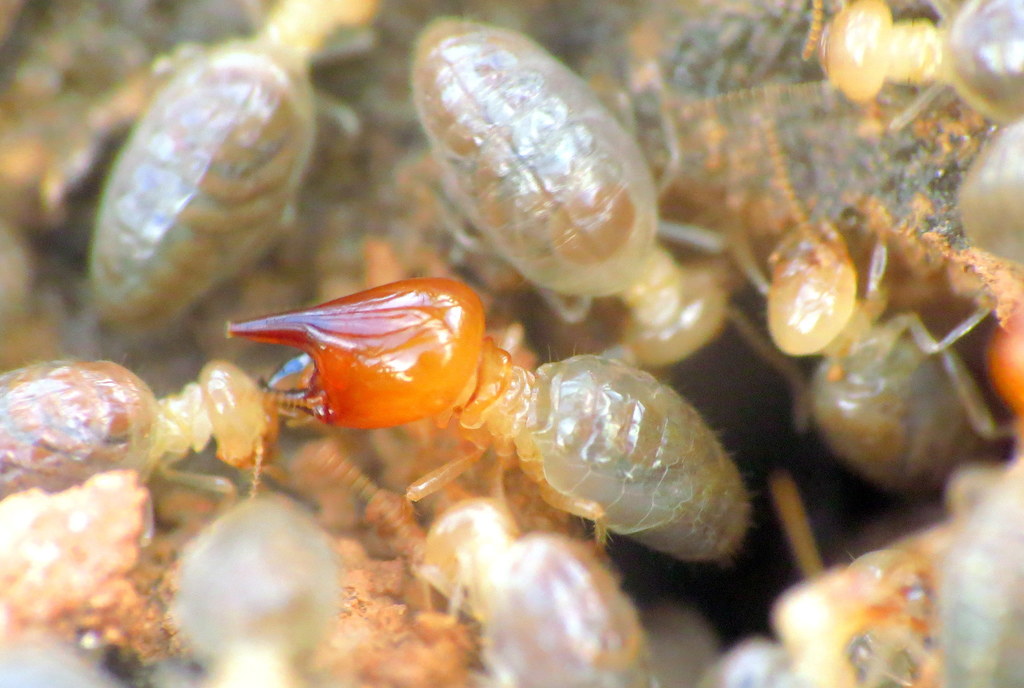
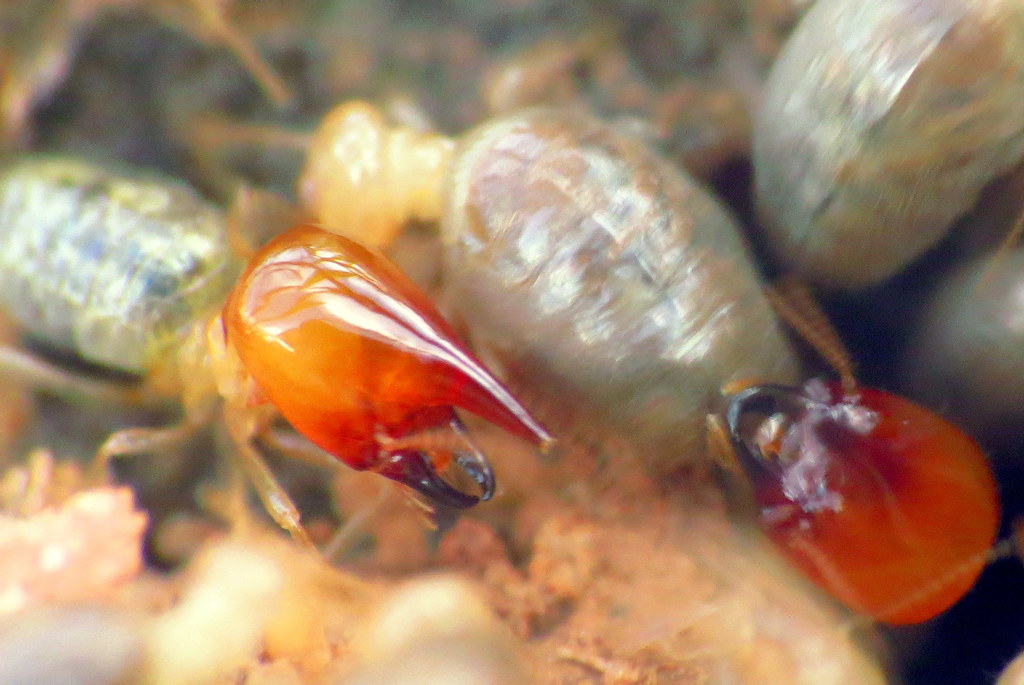
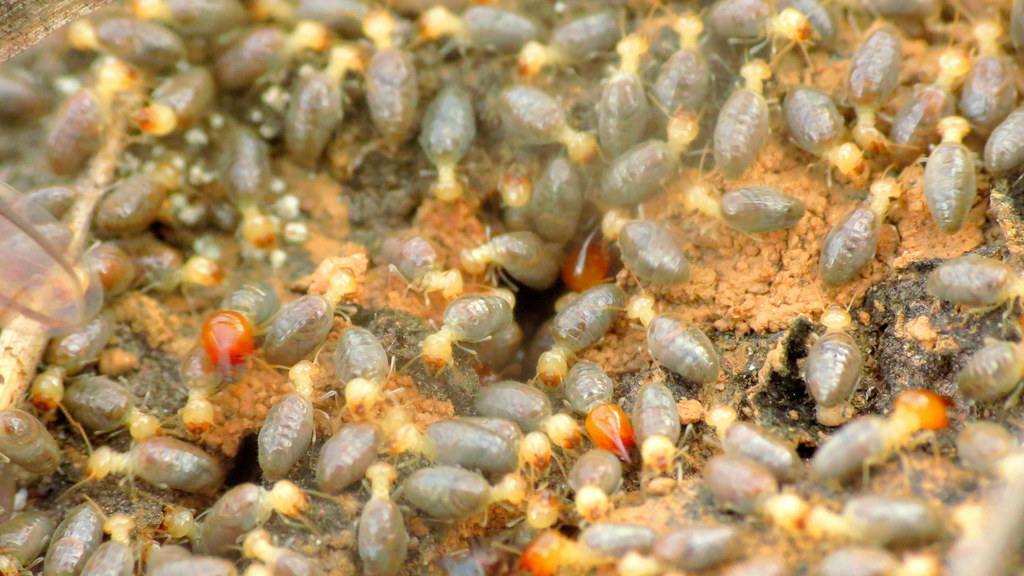
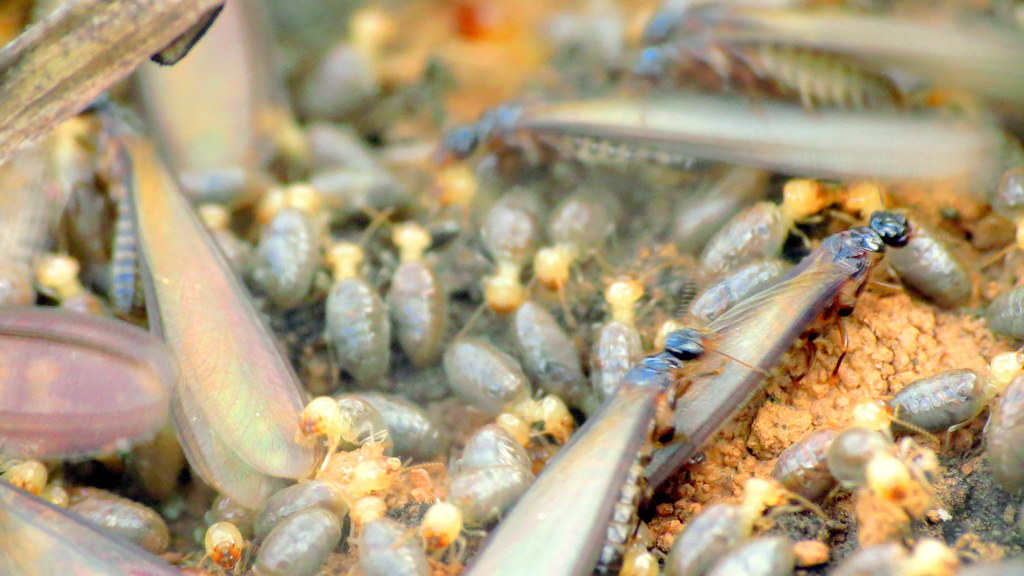
Distribution map
Aggregated from GBIF occurrence records on a 1° grid; only extant taxa of this checklist are used, so fossil records are excluded. Dot size and shade show the number of records inside a cell.
Related papers
Cached papers for this genus (matched automatically, for reference); to search this species with its junior synonyms merged in, use the literature search.
- Asexual queen succession in the higher termite Embiratermes neotenicus
Abstract
Asexual queen succession (AQS), in which workers, soldiers and dispersing reproductives are produced sexually while numerous non-dispersing queens arise through thelytokous parthenogenesis, has recently been described in three species of lower termites of the genus Reticulitermes. Here, we show that AQS is not an oddity restricted to a single genus of lower termites, but a more widespread strategy occurring also in the most advanced termite group, the higher termites (Termitidae). We analysed the genetic structure in 10 colonies of the Neotropical higher termite Embiratermes neotenicus (Syntermitinae) using five newly developed polymorphic microsatellite loci. The colonies contained one primary king accompanied either by a single primary queen or by up to almost 200 neotenic queens. While the workers, the soldiers and most future dispersing reproductives were produced sexually, the non-dispersing neotenic queens originated through thelytokous parthenogenesis of the founding primary queen. Surprisingly, the mode of thelytoky observed in E. neotenicus is most probably automixis with central fusion, contrasting with the automixis with terminal fusion documented in Reticulitermes. The occurrence of AQS based on different mechanisms of ploidy restoration raises the hypothesis of an independent evolutionary origin of this unique reproductive strategy in individual lineages of lower and higher termites.
- Development of non-reproductive castes in the neotropical termite generaCornitermes, Embiratermes andRhynchotermes (Isoptera, Nasutitermitinae)
Abstract
- Response to orphaning in two Neotropical termites: Armitermes euamignathus and Embiratermes festivellus
Abstract
In this paper we examine the potential of the termites Armitermes euamignathus Silvestri: 1901 and Embiratermes festivellus (Silvestri, 1901) (Isoptera, Termitidae, Nasutitermitinae) to produce neotenics experimentally. Three nests of the mound‐building termite A. euamignathus, from the Brazilian cerrado, had their primary queens removed in August 1994. After 12 months, only one mound survived; it had a normal appearance. In this healthy, orphaned colony we found the primary king, six physogastric nymphoid female replacement reproductives, two ergatoid female replacement reproductives, 46 nymphs, several presoldiers, soldiers, workers, larvae and many eggs. These data show that neotenics in A. euamignathus may originate from both workers and nymphs, but nymphoids are produced in larger numbers. The biometric study of nymphs and nymphoids suggests that these brachypterous neotenics were derived from third instar nymphs after a single moult or from four instar nymphs after a reduction of wing bud length. A piece of an E. festivellus nest with some third instar nymphs, soldiers and workers was kept under laboratory conditions. After 12 months, the whole experimental subcolony was examined and appeared to contain two pigmented nymphoid females, two pigmented nymphoid males, only one larva, seven nymphs of the same instar, 148 workers, five soldiers and many eggs. These results also indicate the capacity of the termite E. festivellus to produce nymphoid neotenics. These neotenic females were laying eggs, but they were not physogastric after a year, unlike some nymphoids of the same species collected from natural colonies.
Papers on this species, synonyms included → OpenAlex Google Scholar CNKI
Abstracts come from open metadata; copyright remains with the original authors/publishers. For reference only — please check the original.
Other species in Embiratermes (8 species)
Cite this species
Citation strings are generated from the fields of this page; please keep the DOI and the version number when citing.
GB/T 7714
班奈特格林. Extant Isoptera (termites): a checklist of Latin and Chinese names: Embiratermes heterotypus 异型生白蚁[EB/OL]. Version 2026.10.30. https://termite-extant-isoptera.org/en/species/embiratermes-heterotypus/. DOI: 10.5281/zenodo.23646836.
BibTeX
@misc{isoptera_embiratermes_heterotypus_2026,
  author       = {班奈特格林},
  title        = {Embiratermes heterotypus: a checklist of extant Isoptera (termites)},
  year         = {2026},
  version      = {2026.10.30},
  howpublished = {https://termite-extant-isoptera.org/en/species/embiratermes-heterotypus/},
  note         = {TERMITIDAE; version 2026.10.30; DOI: 10.5281/zenodo.23646836},
  doi          = {10.5281/zenodo.23646836}
}
RIS
TY  - ELEC
TI  - Embiratermes heterotypus: a checklist of extant Isoptera (termites)
AU  - 班奈特格林
PY  - 2026
UR  - https://termite-extant-isoptera.org/en/species/embiratermes-heterotypus/
DO  - 10.5281/zenodo.23646836
ER  -