Pseudacanthotermes spiniger 具刺伪刺白蚁
- Type locality
- Democratic Republic of the Congo: Umangi
- Distribution
- Old World tropics, West Africa, Central Africa, East Africa, southern Africa, Angola, Cameroon, Central African Republic, Congo, Democratic Republic of the Congo, Gabon, Ghana, Guinea, Côte d'Ivoire, Kenya, Nigeria, Sudan, Tanzania, Uganda, Zambia
List: English (genus page) · 中文 · Español
Summary
Pseudacanthotermes spiniger is a species of the genus Pseudacanthotermes, in the family TERMITIDAE (subfamily Macrotermitinae). The species was described by Sjöstedt in 1900; the type locality is Democratic Republic of the Congo: Umangi. Distribution: Old World tropics, West Africa, Central Africa, East Africa, southern Africa, Angola, Cameroon, Central African Republic, Congo, Democratic Republic of the Congo, Gabon, Ghana, Guinea, Côte d’Ivoire, Kenya, Nigeria, Sudan, Tanzania, Uganda, Zambia. This site records 4 junior synonyms for the species.
Etymology
Genus name Pseudacanthotermes: From Greek pseudēs (false) + akantha (thorn) + Latin termes.
Specific epithet spiniger: From spini + ger
Taxonomic position
- Family: TERMITIDAE — 280 genera, 2144 species
- Subfamily: Macrotermitinae — 12 genera, 373 species
- Genus: Pseudacanthotermes — 6 species
- Type species of the genus: Pseudacanthotermes militaris
Distribution
- Distribution records: Old World tropics, West Africa, Central Africa, East Africa, southern Africa, Angola, Cameroon, Central African Republic, Congo, Democratic Republic of the Congo, Gabon, Ghana, Guinea, Côte d’Ivoire, Kenya, Nigeria, Sudan, Tanzania, Uganda, Zambia
The record above follows the wording of the original data; no geocoding or standardized place names have been applied.
Junior synonyms
This site records 4 junior synonyms for the species, listed by their original literature source:
- Acanthotermes spiniger lujae Wasmann, 1904: 673 — type locality: Democratic Republic of the Congo: Sankuru (Kassai)
- Acanthotermes spiniger kohli Wasmann, 1911: 110-111 — type locality: Democratic Republic of the Congo: Romé, near Kisangani (Stanleyville)
- Pseudacanthotermes unsgaardi Sjöstedt, 1926: 71-72 — type locality: Congo: Indo
- Pseudacanthotermes spiniger maynei Sjöstedt, 1926: 70-71 — type locality: Democratic Republic of the Congo: Eala, Hemptienne-St. Benuit, Moto (Uélè)
In older literature, regional checklists and database searches, this species may appear under the synonyms above (Acanthotermes spiniger lujae, Acanthotermes spiniger kohli, Pseudacanthotermes unsgaardi, Pseudacanthotermes spiniger maynei); this site treats them all under Pseudacanthotermes spiniger.
Morphology
A species-level description from the original literature has not yet been compiled for this page. Original description: Sjöstedt, 1900. See the genus page for the genus-level description; this page will be updated after the original text is checked.
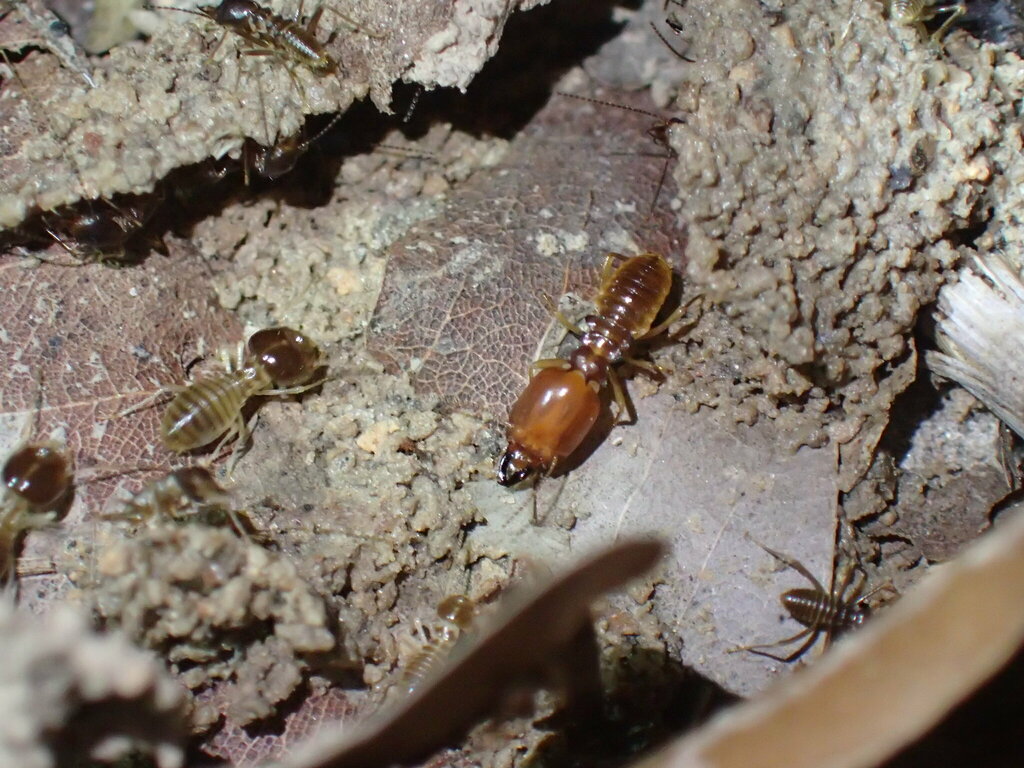
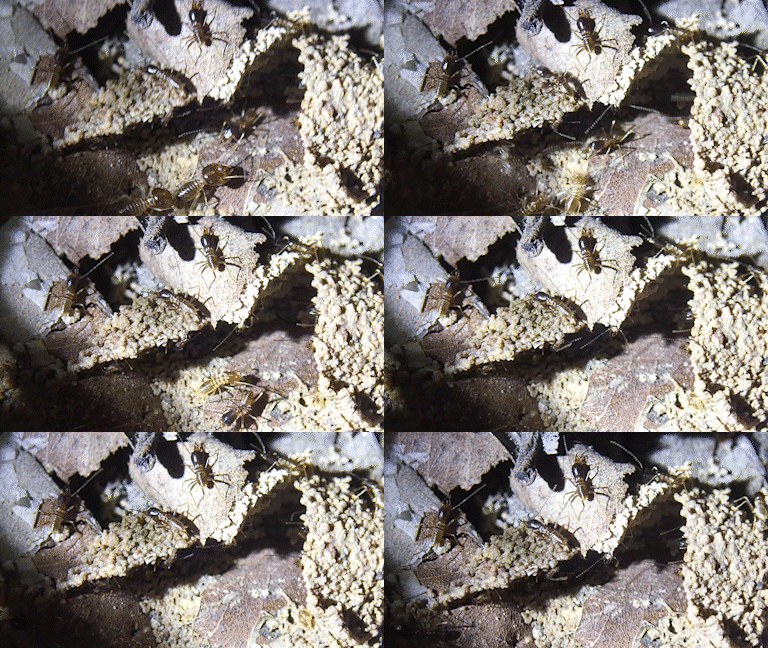
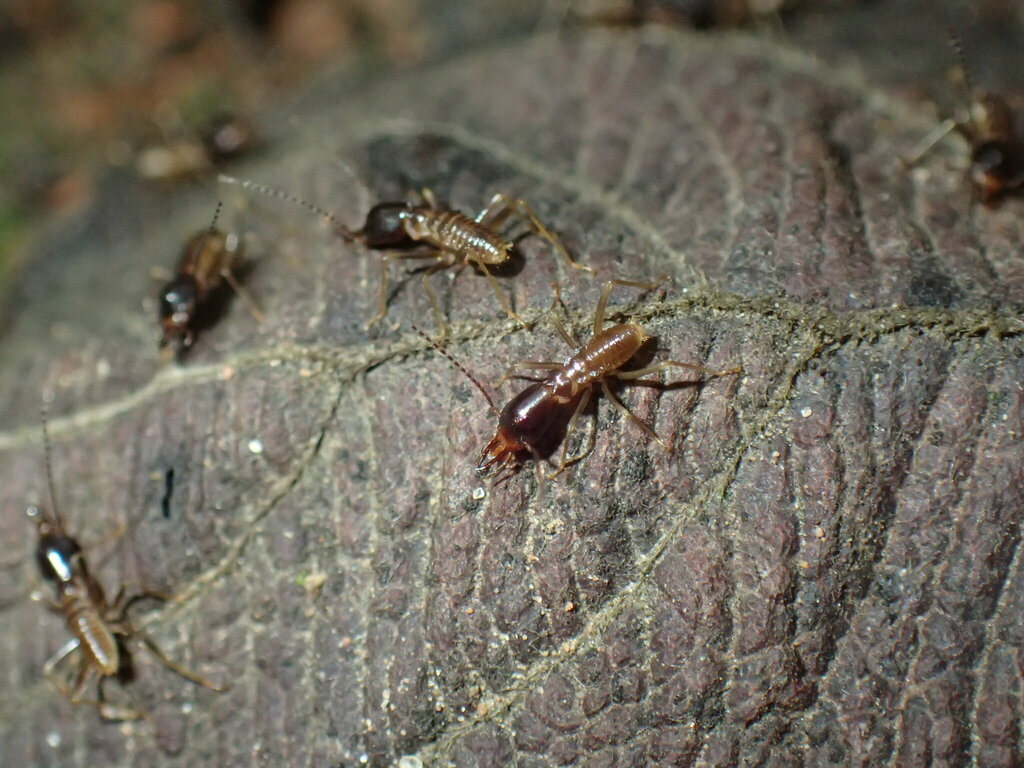
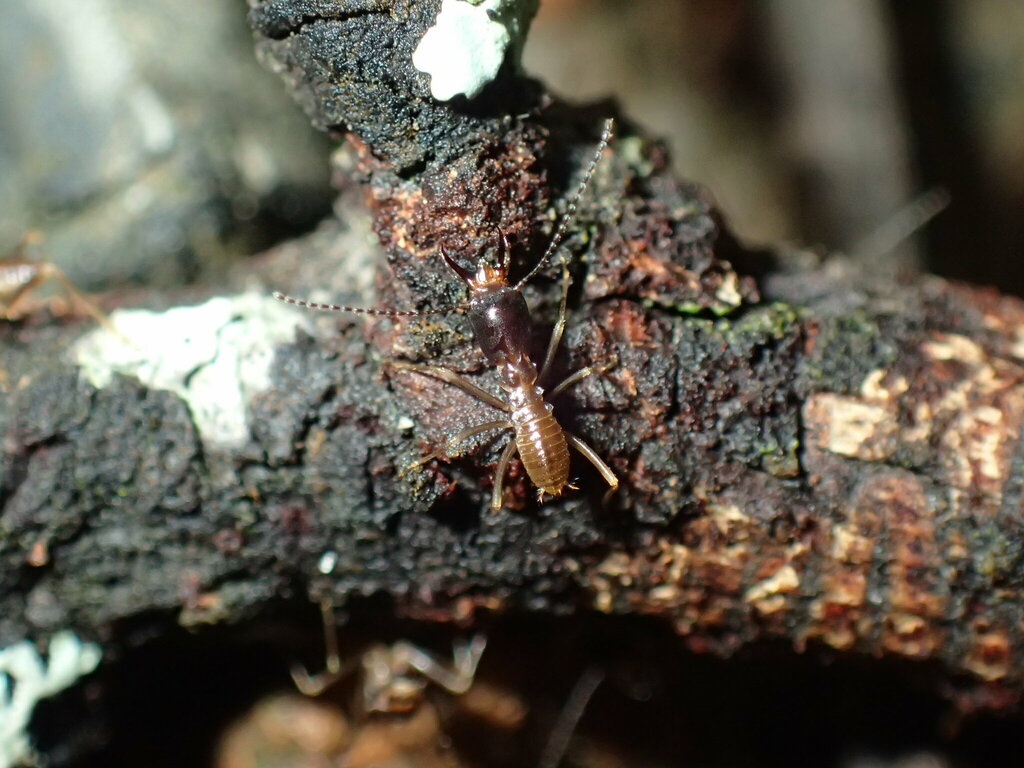
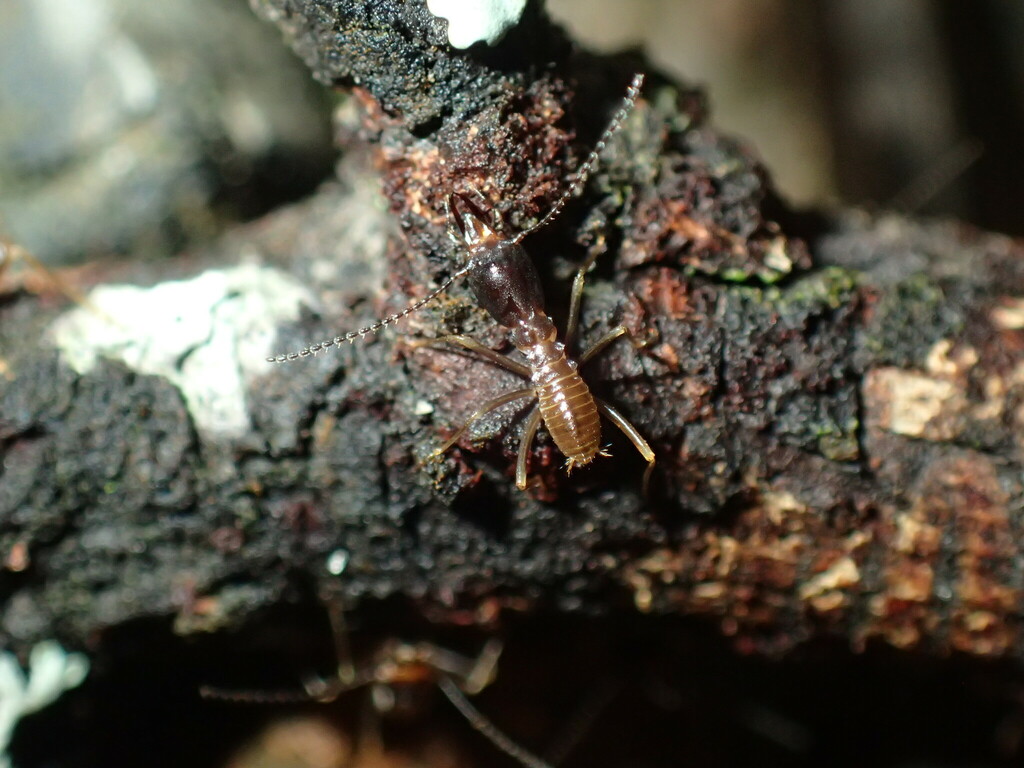
Photos 5 photos
Freely licensed photos, click to enlarge. Hotlinked from iNaturalist / Wikimedia Commons; the rights stay with the photographers — author, licence and source page are shown under each photo.
Distribution map
Aggregated from GBIF occurrence records on a 1° grid; only extant taxa of this checklist are used, so fossil records are excluded. Dot size and shade show the number of records inside a cell.
Related papers
Cached papers for this genus (matched automatically, for reference); to search this species with its junior synonyms merged in, use the literature search.
- Solution structure of termicin, an antimicrobial peptide from the termite Pseudacanthotermes spiniger
Abstract
The solution structure of termicin from hemocytes of the termite Pseudacanthotermes spiniger was determined by proton two-dimensional nuclear magnetic resonance spectroscopy and molecular modeling techniques. Termicin is a cysteine-rich antifungal peptide also exhibiting a weak antibacterial activity. The global fold of termicin consists of an alpha-helical segment (Phe4-Gln14) and a two-stranded (Phe19-Asp25 and Gln28-Phe33) antiparallel beta-sheet forming a "cysteine stabilized alphabeta motif" (CSalphabeta) also found in antibacterial and antifungal defensins from insects and from plants. Interestingly, termicin shares more structural similarities with the antibacterial insect defensins and with MGD-1, a mussel defensin, than with the insect antifungal defensins such as drosomycin and heliomicin. These structural comparisons suggest that global fold alone does not explain the difference between antifungals and antibacterials. The antifungal properties of termicin may be related to its marked hydrophobicity and its amphipatic structure as compared to the antibacterial defensins. [SWISS-PROT accession number: Termicin (P82321); PDB accession number: 1MM0.]
- [ON THE DISCOVERY OF PSEUDACANTHOTERMES IN TANGANYIKA (ISOPTERA, TERMITIDAE)].
Abstract
- Mining for hemicellulases in the fungus-growing termite Pseudacanthotermes militaris using functional metagenomics
Abstract
BACKGROUND: The metagenomic analysis of gut microbiomes has emerged as a powerful strategy for the identification of biomass-degrading enzymes, which will be no doubt useful for the development of advanced biorefining processes. In the present study, we have performed a functional metagenomic analysis on comb and gut microbiomes associated with the fungus-growing termite, Pseudacanthotermes militaris. RESULTS: Using whole termite abdomens and fungal-comb material respectively, two fosmid-based metagenomic libraries were created and screened for the presence of xylan-degrading enzymes. This revealed 101 positive clones, corresponding to an extremely high global hit rate of 0.49%. Many clones displayed either β-d-xylosidase (EC 3.2.1.37) or α-l-arabinofuranosidase (EC 3.2.1.55) activity, while others displayed the ability to degrade AZCL-xylan or AZCL-β-(1,3)-β-(1,4)-glucan. Using secondary screening it was possible to pinpoint clones of interest that were used to prepare fosmid DNA. Sequencing of fosmid DNA generated 1.46 Mbp of sequence data, and bioinformatics analysis revealed 63 sequences encoding putative carbohydrate-active enzymes, with many of these forming parts of sequence clusters, probably having carbohydrate degradation and metabolic functions. Taxonomic assignment of the different sequences revealed that Firmicutes and Bacteroidetes were predominant phyla in the gut sample, while microbial diversity in the comb sample resembled that of typical soil samples. Cloning and expression in E. coli of six enzyme candidates identified in the libraries provided access to individual enzyme activities, which all proved to be coherent with the primary and secondary functional screens. CONCLUSIONS: This study shows that the gut microbiome of P. militaris possesses the potential to degrade biomass components, such as arabinoxylans and arabinans. Moreover, the data presented suggests that prokaryotic microorganisms present in the comb could also play a part in the degradation of biomass within the termite mound, although further investigation will be needed to clarify the complex synergies that might exist between the different microbiomes that constitute the termitosphere of fungus-growing termites. This study exemplifies the power of functional metagenomics for the discovery of biomass-active enzymes and has provided a collection of potentially interesting biocatalysts for further study.
Papers on this species, synonyms included → OpenAlex Google Scholar CNKI
Abstracts come from open metadata; copyright remains with the original authors/publishers. For reference only — please check the original.
Literature notes
Edited notes based on the original literature, not transcriptions. The source markers in each paragraph point to archived records in .sources; full citations are listed below.
Chimpanzee feeding and geophagy
According to the abstract, Uehara (1982) observed the wild chimpanzee K group in the Mahale Mountains, Tanzania, and found that over a short period they used a variety of techniques, including tools, to feed on Pseudacanthotermes spiniger and adjusted their techniques to the activity phenology of the prey; the chimpanzees fed year-round on small amounts of soil from the mound towers of this termite (geophagy), possibly using it to judge its reproductive cycle visually and by touch; faecal analysis showed that the amount consumed fluctuated between years.
References
Other species in Pseudacanthotermes (5 species)
Cite this species
Citation strings are generated from the fields of this page; please keep the DOI and the version number when citing.
GB/T 7714
班奈特格林. Extant Isoptera (termites): a checklist of Latin and Chinese names: Pseudacanthotermes spiniger 具刺伪刺白蚁[EB/OL]. Version 2026.10.30. https://termite-extant-isoptera.org/en/species/pseudacanthotermes-spiniger/. DOI: 10.5281/zenodo.23646836.
BibTeX
@misc{isoptera_pseudacanthotermes_spiniger_2026,
  author       = {班奈特格林},
  title        = {Pseudacanthotermes spiniger: a checklist of extant Isoptera (termites)},
  year         = {2026},
  version      = {2026.10.30},
  howpublished = {https://termite-extant-isoptera.org/en/species/pseudacanthotermes-spiniger/},
  note         = {TERMITIDAE; version 2026.10.30; DOI: 10.5281/zenodo.23646836},
  doi          = {10.5281/zenodo.23646836}
}
RIS
TY  - ELEC
TI  - Pseudacanthotermes spiniger: a checklist of extant Isoptera (termites)
AU  - 班奈特格林
PY  - 2026
UR  - https://termite-extant-isoptera.org/en/species/pseudacanthotermes-spiniger/
DO  - 10.5281/zenodo.23646836
ER  -