Genus Anoplotermes · 解甲白蚁属
Filter the taxa recorded under this genus by name and locality; for the whole site use the full-text search.
Distribution map
Photographs 14 photos · 3 species
Freely licensed photos; click to enlarge. This preview shows 6 photos; to browse by species, open “All photos”. Photos are hotlinked from iNaturalist / Wikimedia Commons; the rights stay with the photographers.


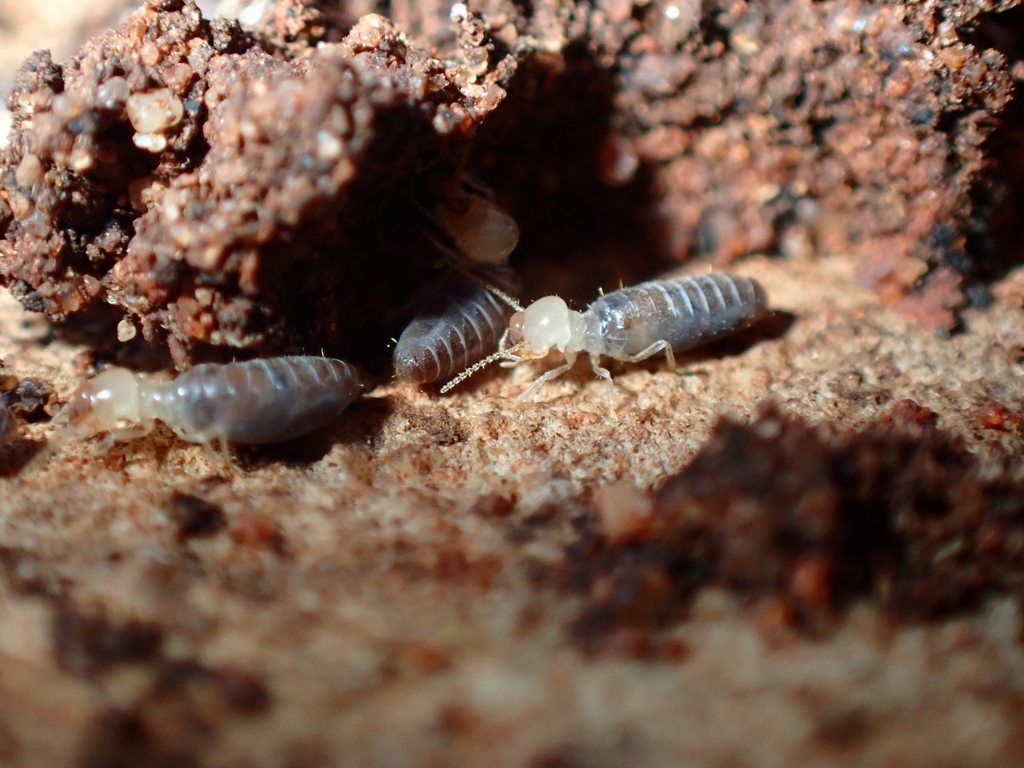
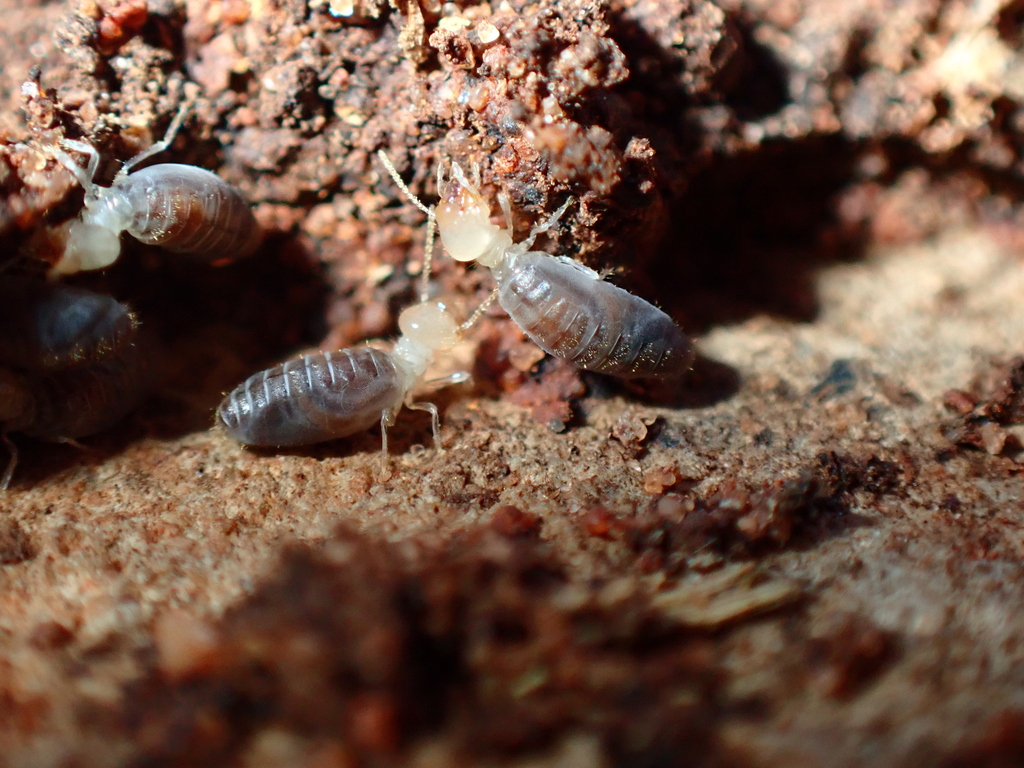
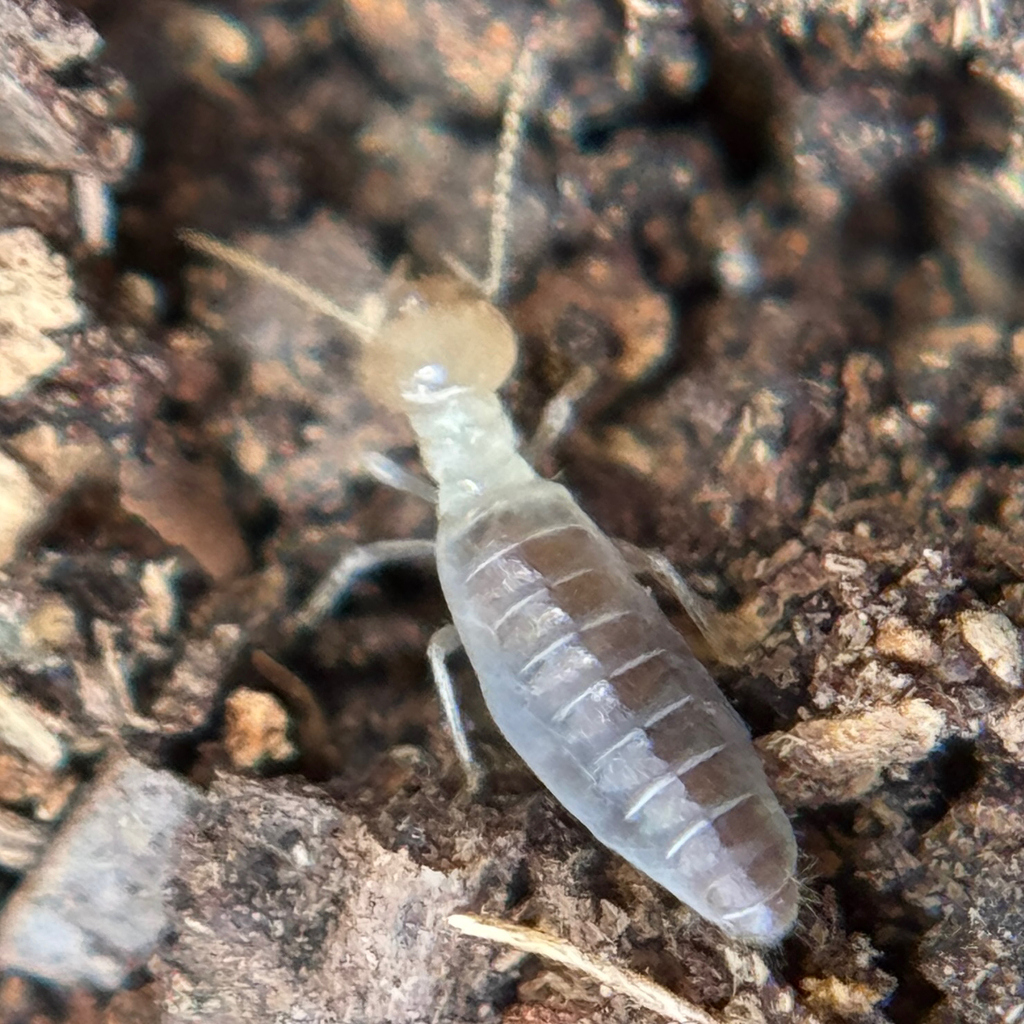
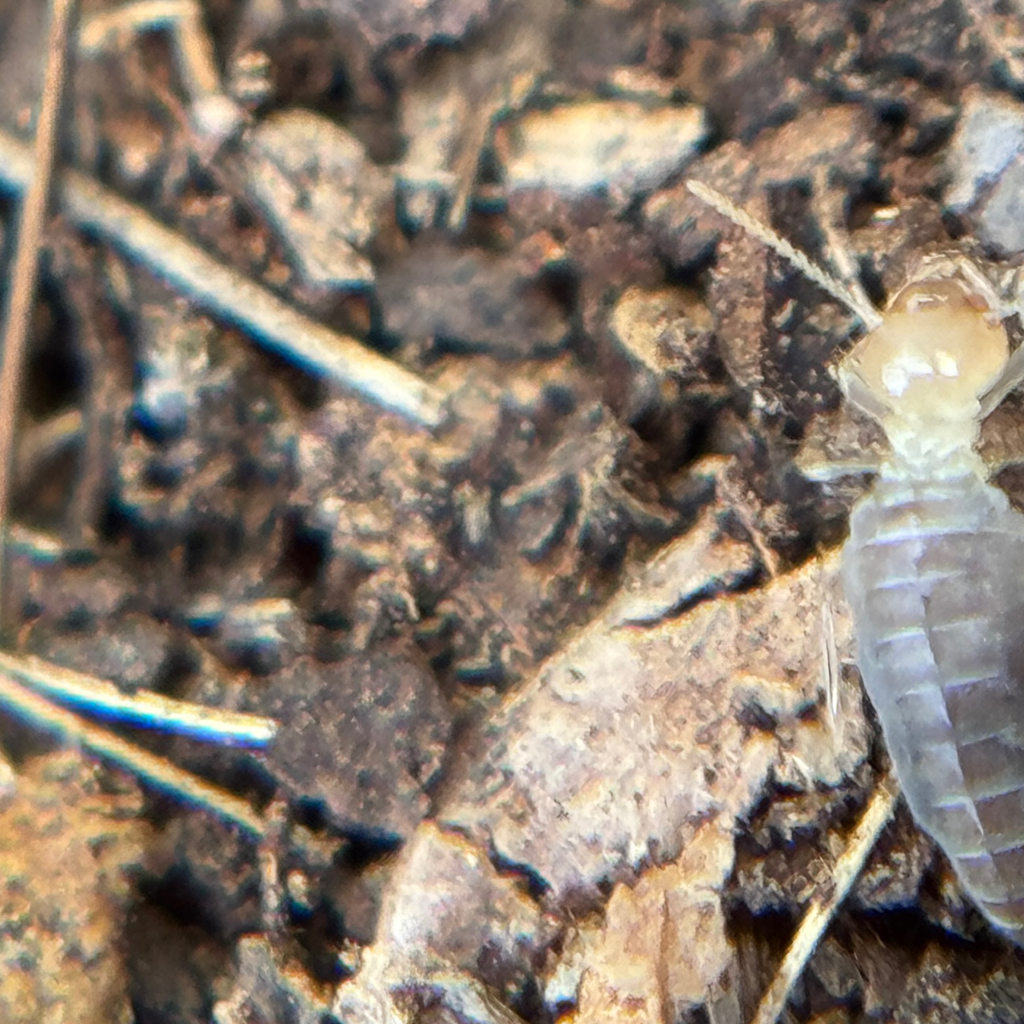
About the genus
This genus belongs to the family Termitidae 白蚁科, in the subfamily Apicotermitinae 尖白蚁亚科; the site records 23 species.
Type species: Anoplotermes pacificus.
This page includes a distribution map for the genus (GBIF records aggregated on a 1° grid); open a species entry to see its type locality, distribution, and references.
Etymology
From Greek an- (without) + hoplon (weapon) + Latin termes, 'unarmed termite'.
The etymologies in this section are analytical breakdowns; the roots follow Brown (1956).
Morphology
The descriptions below are an adaptation of the original genus-level accounts; terms follow the meaning of the source, and the original is not transcribed verbatim.
Diagnostic characters
Soldiers entirely absent. Alate head very broad, usually densely hairy, compound eyes small and prominent, the fontanelle situated far back or at the middle of the head; antennae constantly 15-segmented, segment 3 much shorter; wings dark, hairy and spinose; tibiae with 2 apical spurs. Worker similar to the worker of Eutermes, postclypeus strongly arched, antennae constantly 14-segmented, head mostly pale, fontanelle indistinct.
Alate
Head very broad, usually densely hairy, compound eyes small and prominent; fontanelle either far back or at the middle of the head; ocelli medium-sized, their distance from the compound eyes variable; basal piece of the postclypeus almost always at least half as long as its width (except A. iheringi), usually strongly arched; transverse band longer in the middle than at the sides; mandibles with 1 large apical tooth, slightly elongate; antennae constantly 15-segmented, segment 3 usually far shorter than the adjacent segments; brain large. Pronotum as in Eutermes; posterior margins of the mesonotum and metanotum more or less deeply concave; wings dark, hairy and spinose, venation as in Eutermes; tibiae with 2 apical spurs; abdomen elongate, the sides of the female with glandular hairs.
Worker
Similar to the worker of Eutermes; postclypeus strongly arched, as long as or even longer than half its width; antennae constantly 14-segmented, segment 3 mostly shorter than the adjacent segments; head mostly pale, fontanelle indistinct.
Sources: Holmgren N. 1912. Termitenstudien. 3. Systematik der Termiten. Die Familie Metatermitidae. Kungliga Svenska Vetenskapsakademiens Handlingar 48(4): 1–166., pp. 73–74(Gattung Anoplotermes;Imago、Soldat、Arbeiter) This text is an adaptation, not a verbatim transcription of the original.
Literature notes
Edited notes based on the original literature, not transcriptions. The source markers in each paragraph point to archived records in .sources; full citations are listed below.
The 1972 revision of the African soldierless termites
According to Sands's (1972) revision of the African soldierless termites, the 11 species previously known from Africa were all placed in Anoplotermes; the revision confirmed that these species belong to Apicotermitinae rather than to Amitermitinae, where they had been placed before. The African soldierless group was thereby divided into 16 new genera and 60 species (51 of them new), and seven species names were synonymized.
Among them, Microcerotermes lateralis was transferred from Anoplotermes to Microcerotermes, and Pericapritermes pallidipes from Anoplotermes to Pericapritermes; three other old names became synonyms.
That revision at the time reduced Amitermitinae to a synonym of Termitinae; in 2024 Hellemans et al. restored Amitermitinae, so when citing Sands (1972) it must be noted that this was the treatment at the time.
References
Species (23)
- Anoplotermes ater Hagen, 1858 暗黑解甲白蚁
- Anoplotermes bahamensis Scheffrahn & Krecek, 2006 巴哈马解甲白蚁
- Anoplotermes banksi Emerson, 1925 班克斯解甲白蚁
- Anoplotermes bolivianus Snyder, 1926 玻利维亚解甲白蚁
- Anoplotermes brucei Snyder, 1955 布鲁斯解甲白蚁
- Anoplotermes distans Snyder, 1926 遥远解甲白蚁
- Anoplotermes fumosus Hagen, 1860 烟色解甲白蚁
- Anoplotermes gracilis Snyder, 1922 细瘦解甲白蚁
- Anoplotermes grandifrons Snyder, 1926 大囟解甲白蚁
- Anoplotermes hondurensis Snyder, 1924 洪都拉斯解甲白蚁
- Anoplotermes howardi Snyder, 1926 霍华德解甲白蚁
- Anoplotermes inopinatus Scheffrahn & Krecek, 2006 意外解甲白蚁
- Anoplotermes janus Bourguignon & Roisin, 2010 门神解甲白蚁
- Anoplotermes meridianus Emerson, 1925 南方解甲白蚁
- Anoplotermes pacificus Müller, 1873 太平洋解甲白蚁 ★ Type species
- Anoplotermes parvus Snyder, 1923 小解甲白蚁
- Anoplotermes punctatus Snyder, 1926 具点解甲白蚁
- Anoplotermes pyriformis Snyder, 1934 梨形解甲白蚁
- Anoplotermes rotundus Snyder, 1926 球形解甲白蚁
- Anoplotermes schwarzi Banks, 1919 施瓦茨解甲白蚁
- Anoplotermes subterraneus Emerson, 1925 地下解甲白蚁
- Anoplotermes susanae Scheffrahn, Carrijo & Castro, 2023 苏珊解甲白蚁
- Anoplotermes tenebrosus Hagen, 1858 黑暗解甲白蚁
Parent level: Checklist index · Apicotermitinae 尖白蚁亚科 · Data & downloads