Genus Grallatotermes · 高跷白蚁属
Filter the taxa recorded under this genus by name and locality; for the whole site use the full-text search.
Distribution map
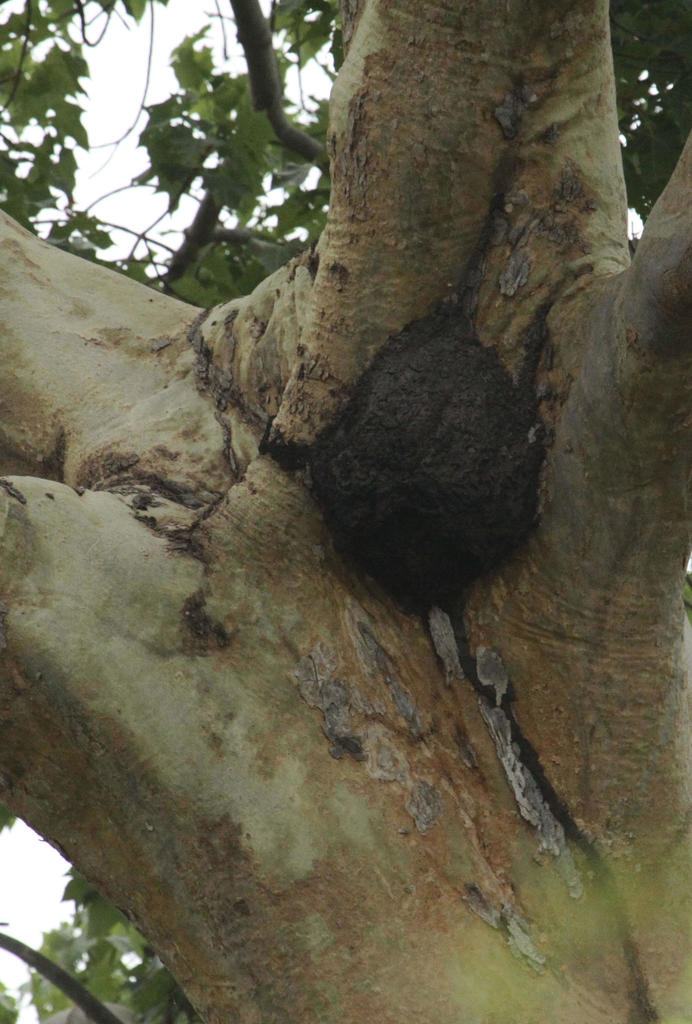
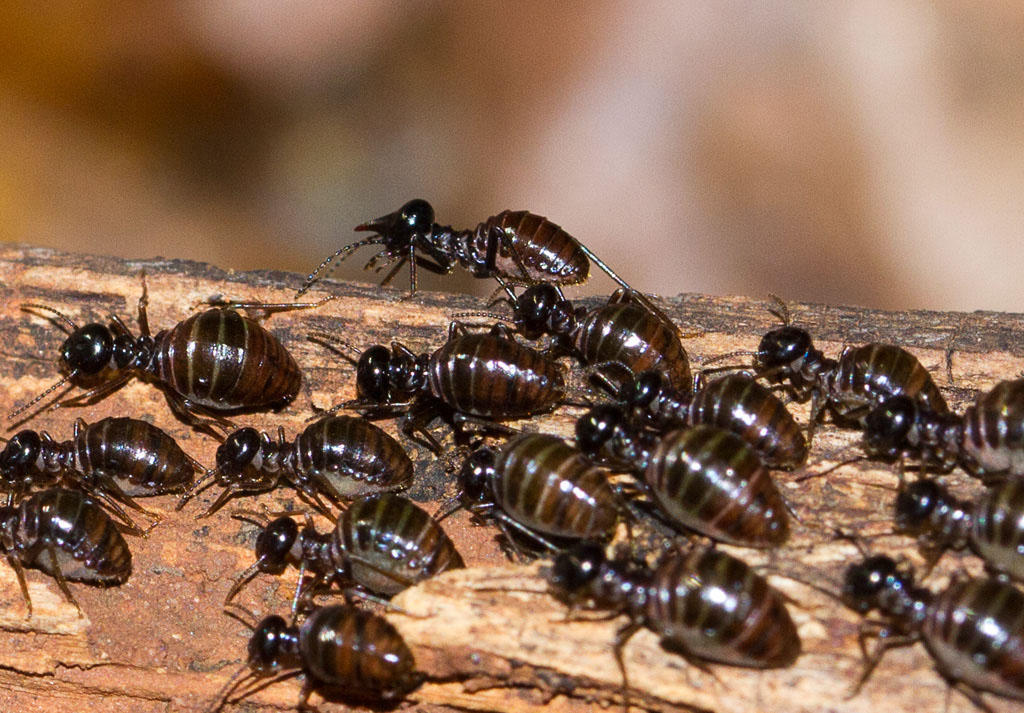
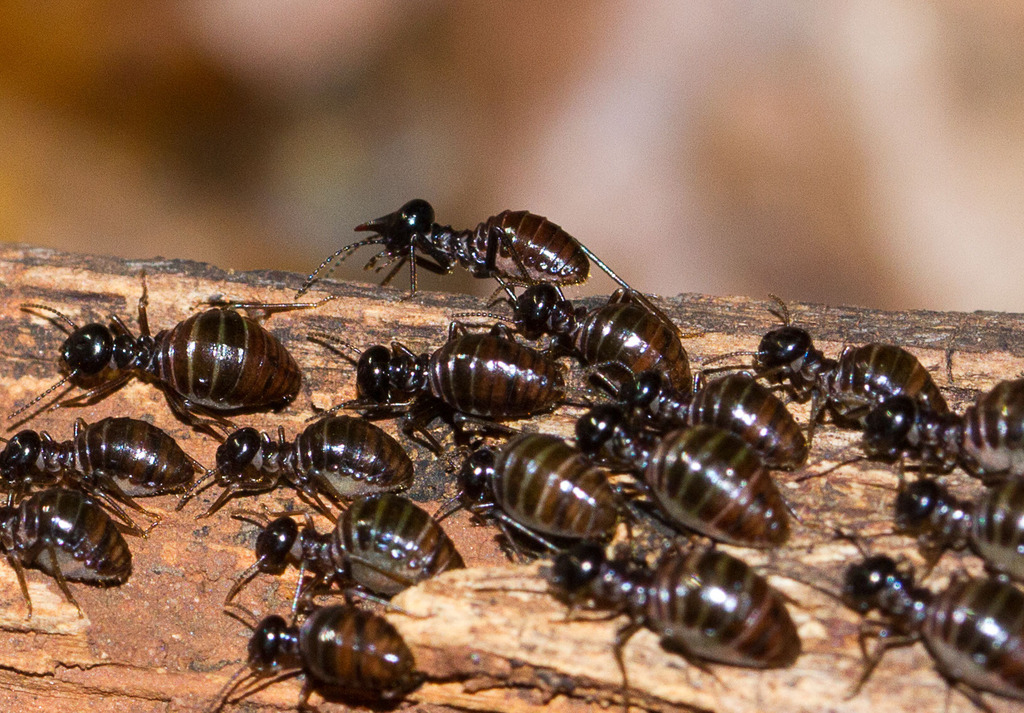
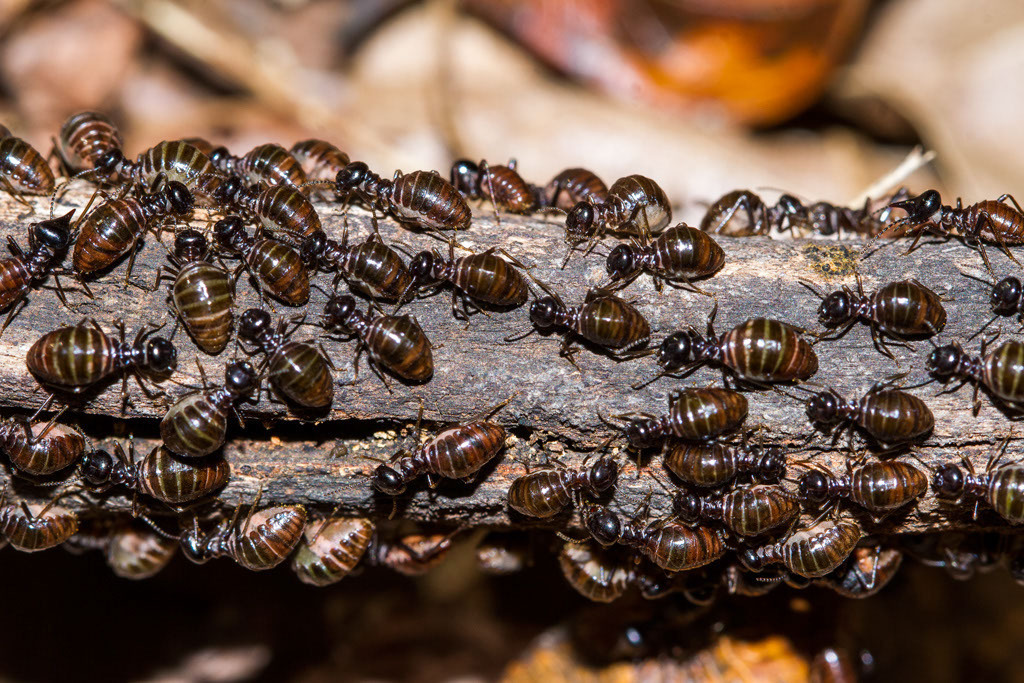
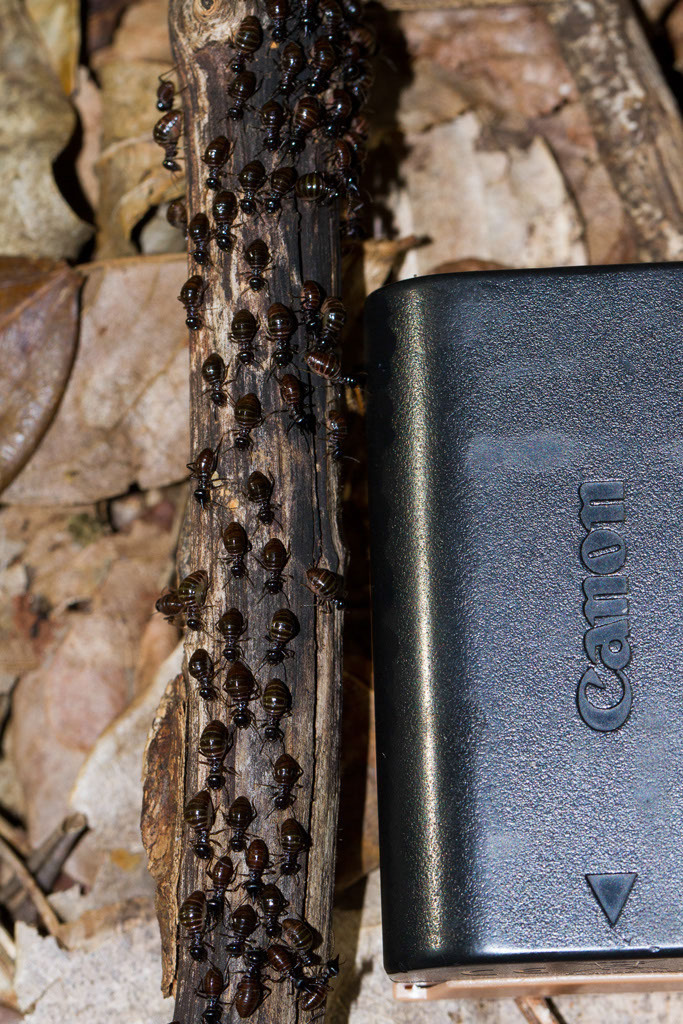
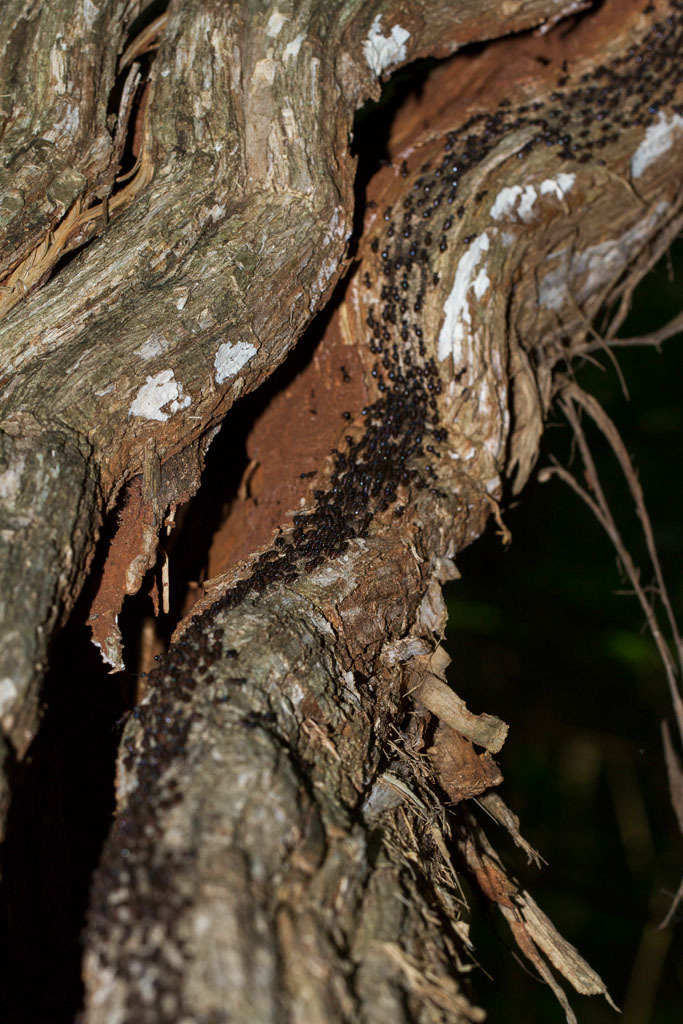
Photographs 7 photos · 1 species
Freely licensed photos; click to enlarge. This preview shows 6 photos; to browse by species, open “All photos”. Photos are hotlinked from iNaturalist / Wikimedia Commons; the rights stay with the photographers.
About the genus
This genus belongs to the family Termitidae 白蚁科, in the subfamily Nasutitermitinae 象白蚁亚科; the site records 7 species.
Type species: Grallatotermes grallator.
This page includes a distribution map for the genus (GBIF records aggregated on a 1° grid); open a species entry to see its type locality, distribution, and references.
Etymology
From Latin grallator (stilt-walker) + termes.
The etymologies in this section are analytical breakdowns; the roots follow Brown (1956).
Morphology
The descriptions below are an adaptation of the original genus-level accounts; terms follow the meaning of the source, and the original is not transcribed verbatim.
Diagnostic characters
Sands regarded its alate mandibles as a unique combination among the African species: the cutting edge of the left mandible has a deep incision between the 1st and 3rd marginal teeth, and the right molar plate has 13–14 ridges with no obvious irregularity in surface outline. The incision is shared with Fulleritermes and Leptomyxotermes, but this genus has the most molar ridges (Fulleritermes 7–9, with a concavity on the anterior edge of the molar plate near the base; Leptomyxotermes 6–7, with very large compound eyes and ocelli). The soldier is monomorphic, the nasus thick but only weakly conical, sharply tapering at the tip, the head slightly constricted behind the antennae, and the setae confined to 4 at the tip of the nasus and paired hairs on the postclypeus and vertex.
Alate
The apical tooth of the left mandible is slightly shorter than the 1st marginal tooth, the distance between them being about one-quarter of that between the 1st and 3rd marginal teeth (left mandible index about 25); the 2nd marginal tooth is delimited by a deep incision in front of the 3rd marginal tooth, and the small subsidiary tooth connecting the 3rd marginal tooth with the molar prominence lies, seen from above, behind the gap between the two. In the right mandible the apical tooth and 1st marginal tooth are nearly equal in length, the posterior cutting edge of the 1st marginal tooth is shorter than that of the 2nd and does not overlap the anterior edge of the 2nd marginal tooth (the surface overlap being buried in a smooth, shining fused surface); the outline of the molar plate in surface view shows no obvious irregularity, with 13–14 ridges diminishing posteriorly. Postclypeus short, slightly convex, about one-third as long as wide. Fontanelle pale, slightly T-shaped. Pronotum with an almost non-convex anterior margin. Cephalic pilosity sparse, fine and uniform, with only a few more conspicuous setae.
Soldier
Monomorphic. Nasus thick but only weakly conical, sharply tapering at the tip. Vestigial mandibles with a point. Head capsule slightly constricted behind the antennae; setae only 4 at the tip of the nasus, plus those arranged in pairs on the postclypeus and the two sides of the vertex.
Sources: Sands W.A. 1965. A revision of the termite subfamily Nasutitermitinae (Isoptera, Termitidae) from the Ethiopian Region. Bulletin of the British Museum (Natural History), Entomology, Supplement 4: 1–172. https://doi.org/10.5962/p.193228, p. 55(Genus Grallatotermes Holmgren:Imago / Soldier;Remarks) This text is an adaptation, not a verbatim transcription of the original.
Species (7)
- Grallatotermes admirabilus Light, 1930 奇妙高跷白蚁
- Grallatotermes africanus Harris, 1954 非洲高跷白蚁
- Grallatotermes grallator Desneux, 1905 高跷高跷白蚁 ★ Type species
- Grallatotermes grallatoriformis Holmgren & Holmgren, 1917 似高跷高跷白蚁
- Grallatotermes niger Chatterjee & Thapa, 1964 黑色高跷白蚁
- Grallatotermes splendidus Light & Wilson, 1936 华美高跷白蚁
- Grallatotermes weyeri Kemner, 1931 韦耶高跷白蚁
Parent level: Checklist index · Nasutitermitinae 象白蚁亚科 · Data & downloads