Genus Parvitermes · 微白蚁属
Filter the taxa recorded under this genus by name and locality; for the whole site use the full-text search.
Distribution map
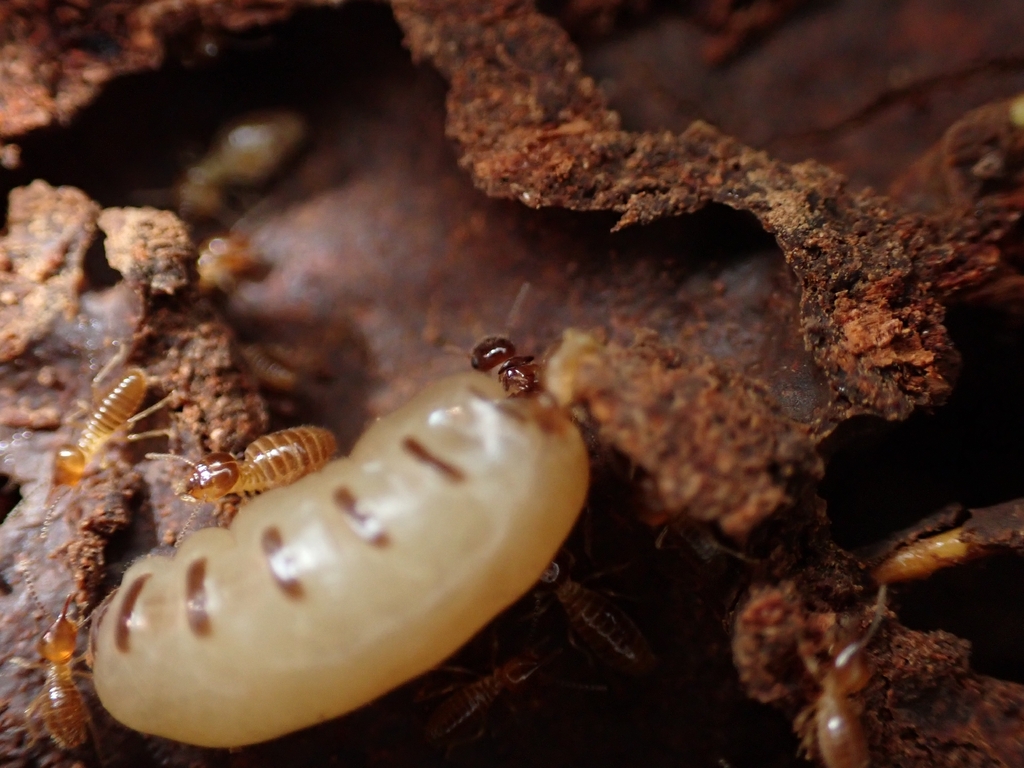
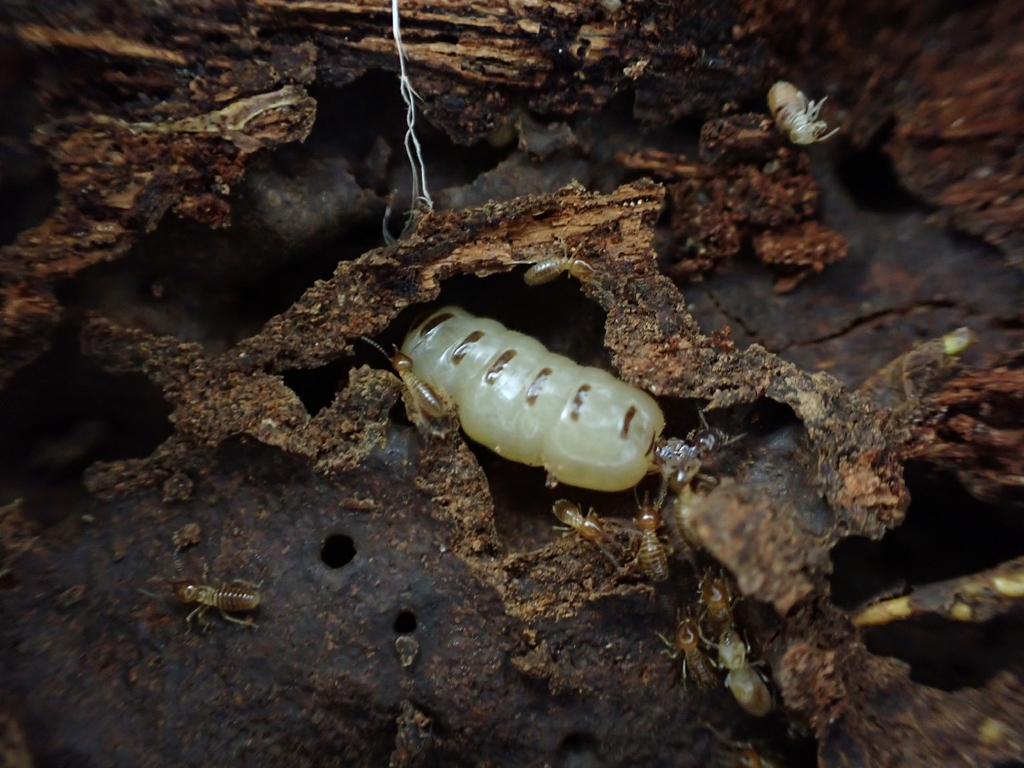
Photographs 6 photos · 1 species
Freely licensed photos; click to enlarge. This preview shows 6 photos; to browse by species, open “All photos”. Photos are hotlinked from iNaturalist / Wikimedia Commons; the rights stay with the photographers.
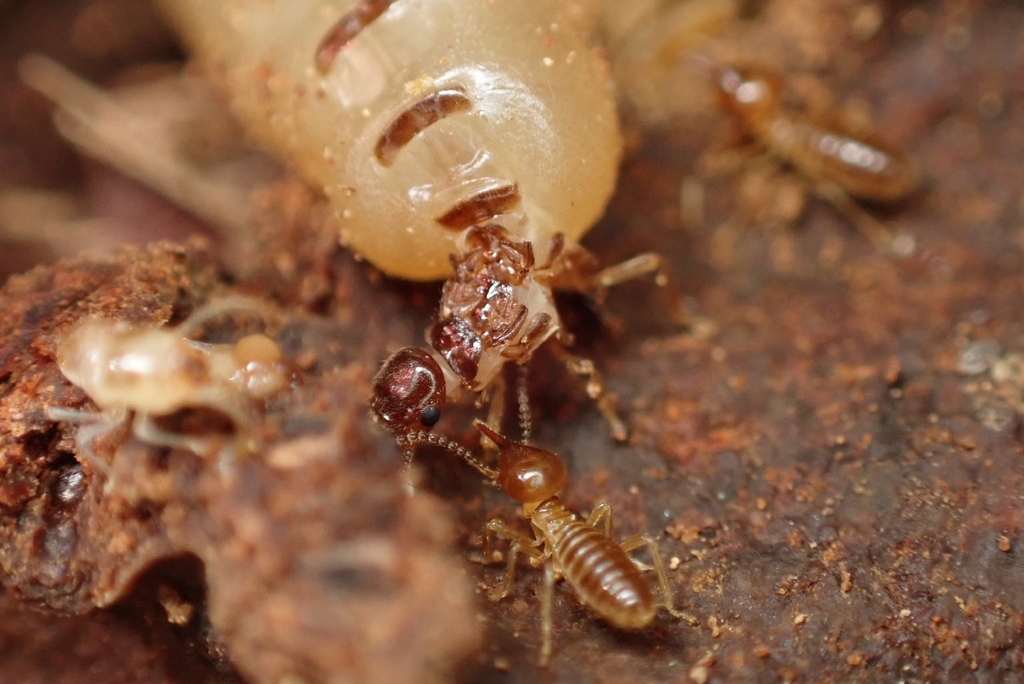
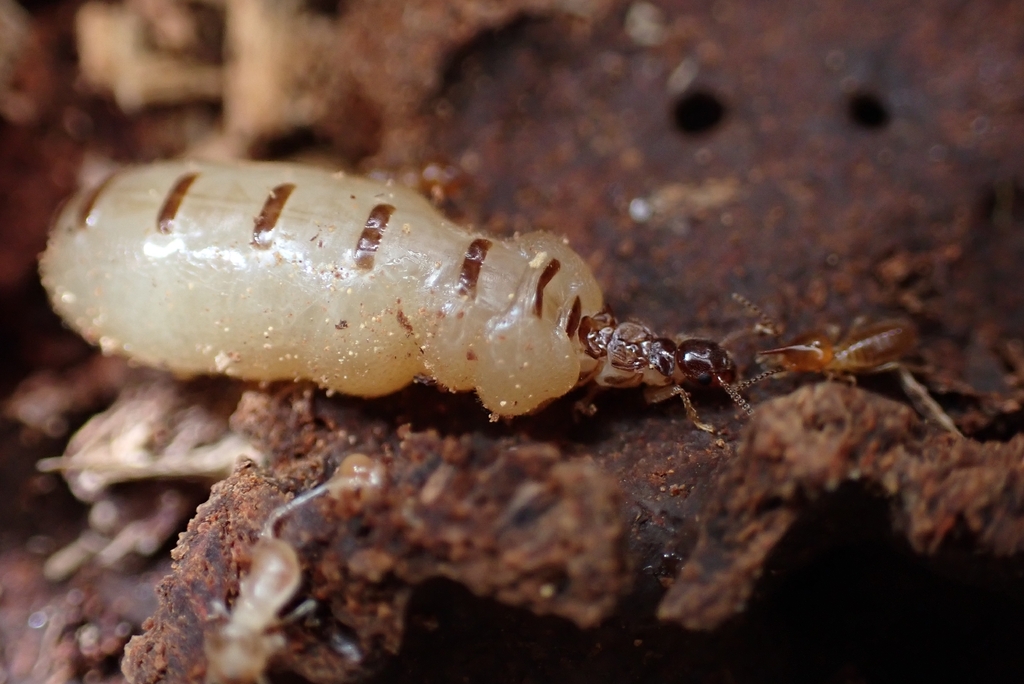
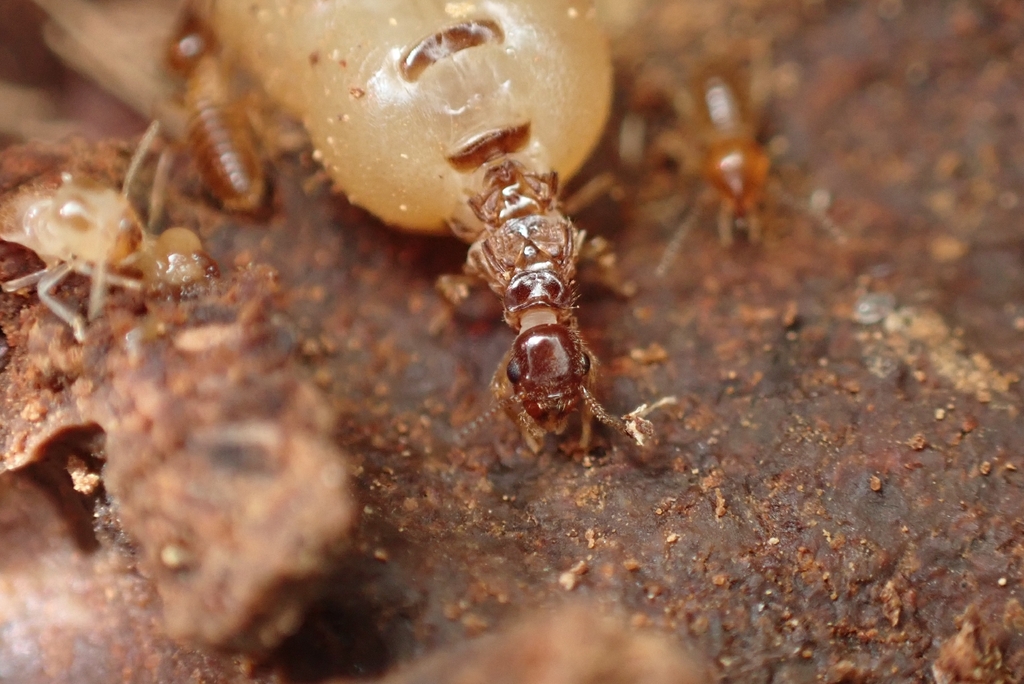
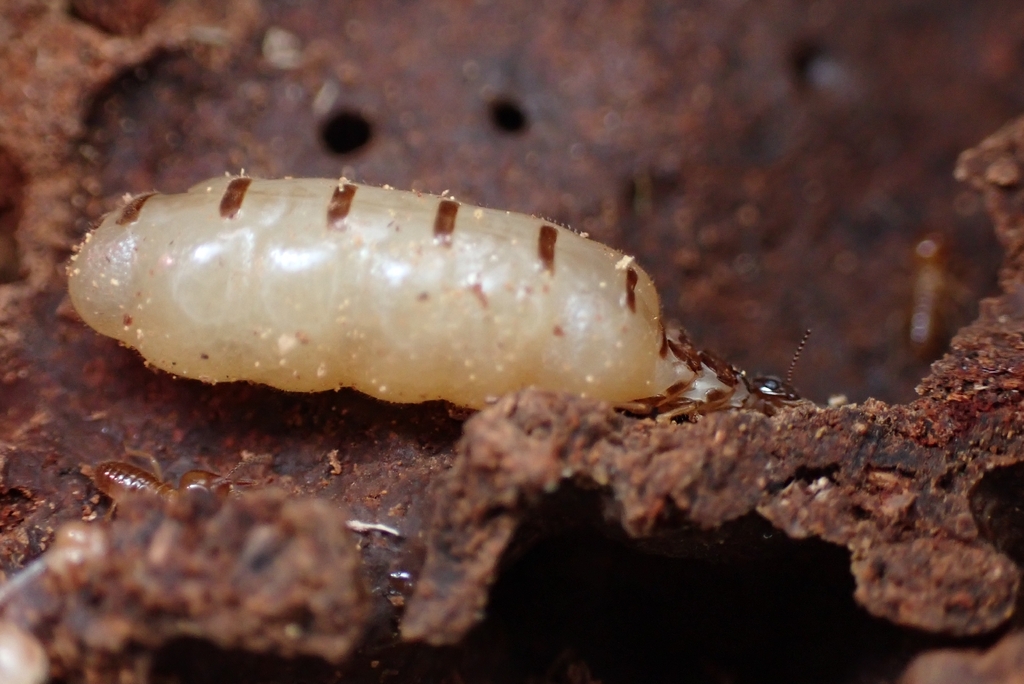
About the genus
This genus belongs to the family Termitidae 白蚁科, in the subfamily Nasutitermitinae 象白蚁亚科; the site records 11 species.
Type species: Parvitermes brooksi.
This page includes a distribution map for the genus (GBIF records aggregated on a 1° grid); open a species entry to see its type locality, distribution, and references.
Etymology
From Latin parvus (small) + termes.
The etymologies in this section are analytical breakdowns; the roots follow Brown (1956).
Morphology
The descriptions below are an adaptation of the original genus-level accounts; terms follow the meaning of the source, and the original is not transcribed verbatim.
Diagnostic characters
A small, pale nasute termite. Generic diagnosis rests mainly on the enteric valve (EVA): the spinose ring behind it consists of 3 keel-like pads, each bearing about 7–15 long spines that curve in the direction opposite to the food flow (“against the current”), in both worker and soldier—unique among termite genera except Antillitermes. P1 long and U-shaped (shorter and stouter in P. mexicanus), P2 constricted into a pyriform shape near P3. Compared with its Central American congeners, the soldier head capsule is smaller and paler than in Nasutitermes, the nasus distinctly narrower than in Subulitermes, and the head capsule is not so strongly constricted at the middle as in Tenuirostritermes.
Soldier
The narrowest point of the head capsule lies in the posterior third (P. mexicanus) or at the middle (P. mesoamericanus, P. yucatanus); the inclination of the nasus relative to the plane of the vertex is of specific diagnostic value: slightly upturned in mexicanus, coplanar with it or directed downwards in mesoamericanus and yucatanus; in lateral view the apical two-thirds of the nasus is nearly cylindrical in mesoamericanus and conical in yucatanus. EVA as in the worker.
Worker
P1 of the hindgut long and U-shaped; P2 constricted into a pyriform shape near P3; the spinose ring of the EVA consists of 3 keel-like pads, each with 7–15 long spines curving against the direction of the food flow, with or without patches of small conical teeth between the pads; in slide preparations the spines are often embedded in coagulated bacterial masses.
Sources: Scheffrahn, R. H. 2016. Parvitermes (Isoptera, Termitidae, Nasutitermitinae) in Central America: Two new termite species and reassignment of Nasutitermes mexicanus. ZooKeys 617: 47–63., pp. 49–51 This text is an adaptation, not a verbatim transcription of the original.
Literature notes
Edited notes based on the original literature, not transcriptions. The source markers in each paragraph point to archived records in .sources; full citations are listed below.
Species in Central America
According to Scheffrahn's (2016) study, three species of Parvitermes are known from mainland Central America: Parvitermes mexicanus, transferred from Nasutitermes mexicanus, and the new species Parvitermes mesoamericanus and Parvitermes yucatanus; these three species share with the nine West Indian species of Parvitermes and with Antillitermes subtilis the character of enteric valve spines directed against the gut flow, and all are subterranean-nesting, cellulose-feeding termites.
References
Species (11)
- Parvitermes aequalis Snyder, 1924 类似微白蚁
- Parvitermes antillarum Holmgren, 1910 安的列斯微白蚁
- Parvitermes brooksi Snyder, 1925 布鲁克斯微白蚁 ★ Type species
- Parvitermes collinsae Scheffrahn & Roisin, 1995 柯林斯微白蚁
- Parvitermes dominicanae Scheffrahn, Roisin & Su, 1998 多米尼加微白蚁
- Parvitermes flaveolus Banks, 1919 微黄微白蚁
- Parvitermes mesoamericanus Scheffrahn, 2016 中美洲微白蚁
- Parvitermes pallidiceps Banks, 1919 灰头微白蚁
- Parvitermes toussainti Banks, 1919 图森特微白蚁
- Parvitermes wolcotti Snyder, 1924 沃尔科特微白蚁
- Parvitermes yucatanus Scheffrahn, 2016 尤卡坦微白蚁
Parent level: Checklist index · Nasutitermitinae 象白蚁亚科 · Data & downloads