Genus Syntermes · 聚白蚁属
Filter the taxa recorded under this genus by name and locality; for the whole site use the full-text search.
Distribution map
Photographs 160 photos · 10 species
Freely licensed photos; click to enlarge. This preview shows 6 photos; to browse by species, open “All photos”. Photos are hotlinked from iNaturalist / Wikimedia Commons; the rights stay with the photographers.
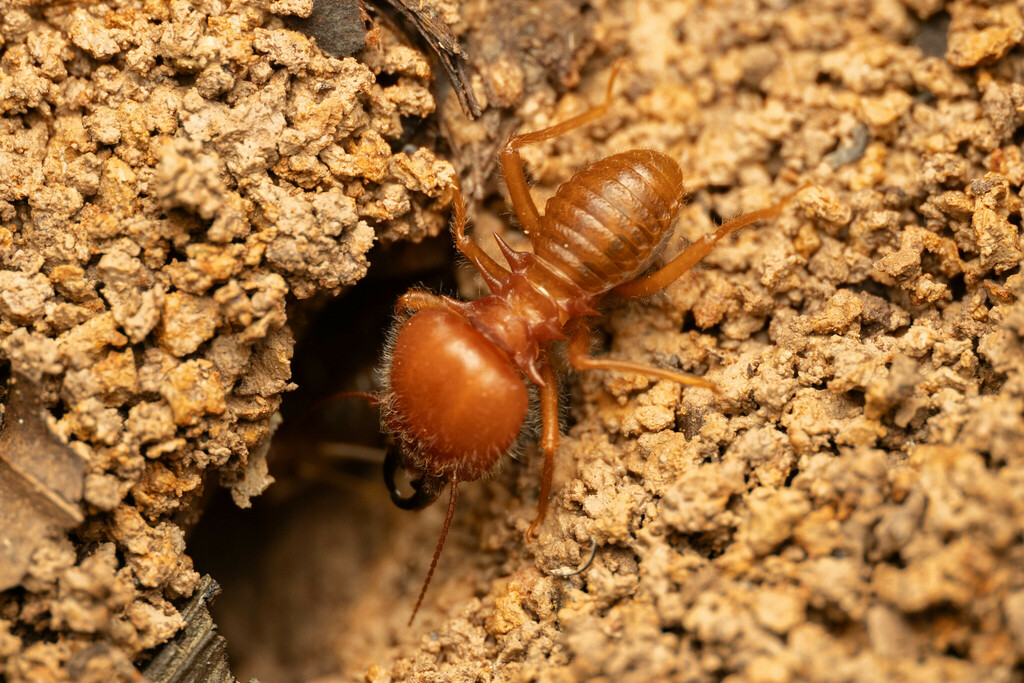
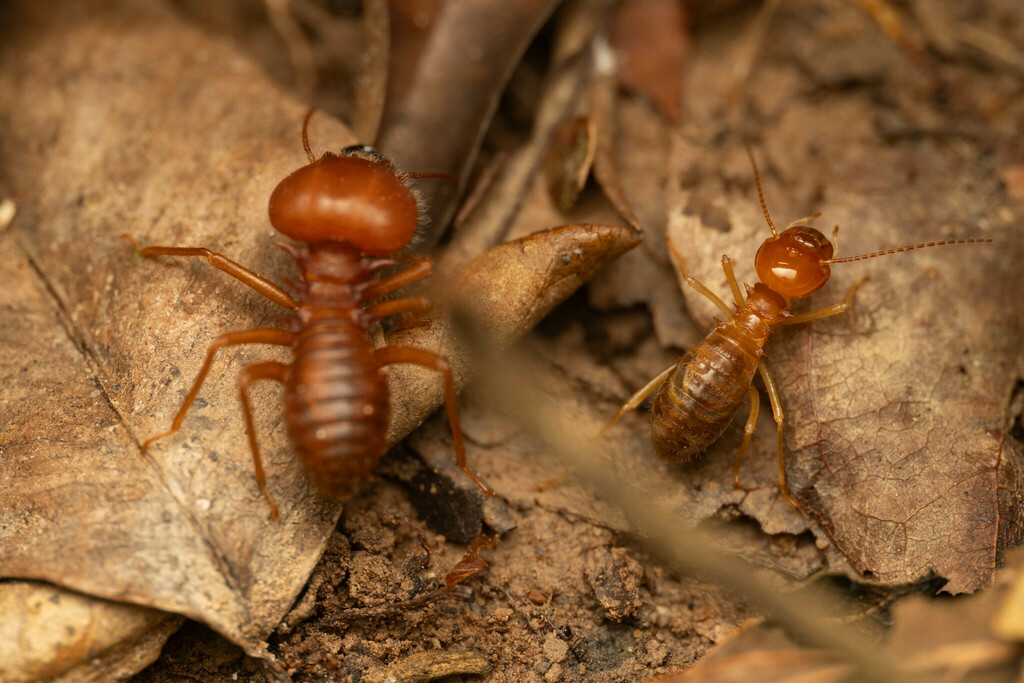


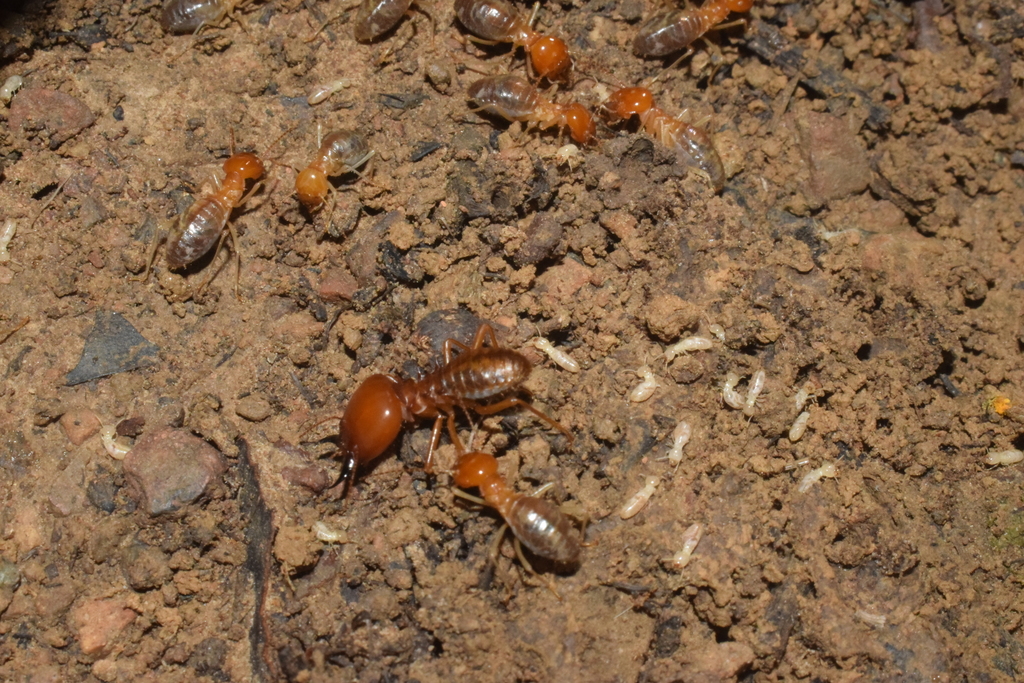

About the genus
This genus belongs to the family Termitidae 白蚁科, in the subfamily Syntermitinae 聚白蚁亚科; the site records 23 species.
Type species: Syntermes dirus.
This page includes a distribution map for the genus (GBIF records aggregated on a 1° grid); open a species entry to see its type locality, distribution, and references.
Etymology
From Greek syn- (together) + Latin termes.
The etymologies in this section are analytical breakdowns; the roots follow Brown (1956).
Morphology
The descriptions below are an adaptation of the original genus-level accounts; terms follow the meaning of the source, and the original is not transcribed verbatim.
Diagnostic characters
Soldier monotypic, antennae 19–20 segments, the segments long and elongate; pronotum strongly saddle-shaped, anterior lobe large, anterior corners produced, often spine-like. Alate antennae 20–21 segments, labrum broader than long, without a transverse band, frontal gland opening large, circular to oval, ocelli far from the compound eyes; cerci short, styli absent. All the species listed by Holmgren 1912 are from South America.
Alate
Head broadly oval. Frontal gland opening large, circular to oval. Compound eyes relatively small, strongly projecting; ocelli very far from the compound eyes. Base of clypeus about as long as half its width, more or less strongly arched, apex hyaline. Labrum broader than long, without a transverse band. Mandibles with Termes-type dentition. Antennae 20–21 segments, rather long. Pronotum broad, shorter than half its width, anterior corners often acute; posterior margins of meso- and metanotum weakly arcuate. Wings long, hyaline, costa brown; radius very short; media of forewing arising beyond the wing scale, media of hindwing arising at the base of the radial sector, weakly branched; cubitus many-branched. Fore tibia with 3 apical spurs, mid and hind tibiae with only 2. Cerci short, styli absent. Female abdomen without exudatory hairs, longitudinally finely wrinkled.
Soldier
Monotypic. Head large and rather broad, narrowing anteriorly, flattened and arched. Frontal gland opening and frontal gland present, opening at the apex of a very short frontal tube; frons depressed. Clypeus very short. Labrum short and broad, apex trilobed, the median lobe usually hyaline. Mandibles stout, rather strongly curved; left mandible with the base of the apex slightly expanded, then abruptly narrowing, often with a very strong tooth beyond the apex, with 2 smaller teeth inside this tooth and usually a stout basal tooth; right mandible with a slightly nodular basal tooth. Antennal segments long and elongate, 19–20 in total. Pronotum strongly saddle-shaped, anterior lobe large, anterior corners produced, often spine-like; meso- and metanotum either with spine-like elongated anterior corners or with angular sides. Legs long; fore tibia with 3 apical spurs, mid and hind tibiae with only 2.
Worker
Two forms. Head pentagonal, rounded, widest at the level of the antennae. Frontal gland opening large, circular; head sutures visible. Base of clypeus almost as long as half its width, arched, apex relatively small and hyaline. Labrum broader than long, without a transverse band. Mandibles of Termes type. Antennae long, 19–20 segments. Pronotum saddle-shaped, with a large anterior lobe; lateral angles of the thoracic nota with or without lateral spines. Legs long; tibial spurs and cerci as in the soldier.
Sources: Holmgren, N. 1912. Termitenstudien 3. Systematik der Termiten. Die Familien Mastotermitidae, Protermitidae und Mesotermitidae. Kungliga Svenska Vetenskapsakademiens Handlingar 48(4): 1–166, Taf. 1–4., pp. 46—47(archive.org 项 biostor-184513 页面图像) This text is an adaptation, not a verbatim transcription of the original.
Literature notes
Edited notes based on the original literature, not transcriptions. The source markers in each paragraph point to archived records in .sources; full citations are listed below.
Mode of action of the defensive secretion
According to the abstract, Mill (1983) bioassayed the defensive secretions of ten Neotropical termite species on two predatory ants and found that the secretion of Syntermes calvus acts as a wound-active poison with little topical activity, that of Armitermes repels ants and shows topical toxicity, and that of Nasutitermes combines adhesive, entangling properties with topical toxicity and repellency, whereas the tacky secretions of Coptotermes and Ruptitermes are merely adhesive entangling agents with no apparent toxic or pheromonal properties.
References
Species (23)
- Syntermes aculeosus Emerson, 1945 胸刺聚白蚁
- Syntermes barbatus Constantino, 1995 倒钩聚白蚁
- Syntermes bolivianus Holmgren, 1911 玻利维亚聚白蚁
- Syntermes brevimalatus Emerson, 1945 短颚聚白蚁
- Syntermes calvus Emerson, 1945 无毛聚白蚁
- Syntermes cearensis Constantino, 1995 塞阿腊聚白蚁
- Syntermes chaquimayensis Holmgren, 1906 查基马约聚白蚁
- Syntermes crassilabrum Constantino, 1995 厚唇聚白蚁
- Syntermes dirus Burmeister, 1839 可怕聚白蚁 ★ Type species
- Syntermes grandis Rambur, 1842 大聚白蚁
- Syntermes insidians Silvestri, 1945 隐蔽聚白蚁
- Syntermes longiceps Constantino, 1995 长头聚白蚁
- Syntermes magnoculus Snyder, 1924 大眼聚白蚁
- Syntermes molestus Burmeister, 1839 讨厌聚白蚁
- Syntermes nanus Constantino, 1995 侏儒聚白蚁
- Syntermes obtusus Holmgren, 1911 迟钝聚白蚁
- Syntermes parallelus Silvestri, 1923 平行聚白蚁
- Syntermes peruanus Holmgren, 1911 秘鲁聚白蚁
- Syntermes praecellens Silvestri, 1945 优越聚白蚁
- Syntermes spinosus Latreille, 1804 多刺聚白蚁
- Syntermes tanygnathus Constantino, 1995 长颚聚白蚁
- Syntermes territus Emerson, 1924 受惊聚白蚁
- Syntermes wheeleri Emerson, 1945 惠勒聚白蚁
Parent level: Checklist index · Syntermitinae 聚白蚁亚科 · Data & downloads