Genus Trinervitermes · 三脉白蚁属
Filter the taxa recorded under this genus by name and locality; for the whole site use the full-text search.
Distribution map
Photographs 30 photos · 1 species
Freely licensed photos; click to enlarge. This preview shows 6 photos; to browse by species, open “All photos”. Photos are hotlinked from iNaturalist / Wikimedia Commons; the rights stay with the photographers.
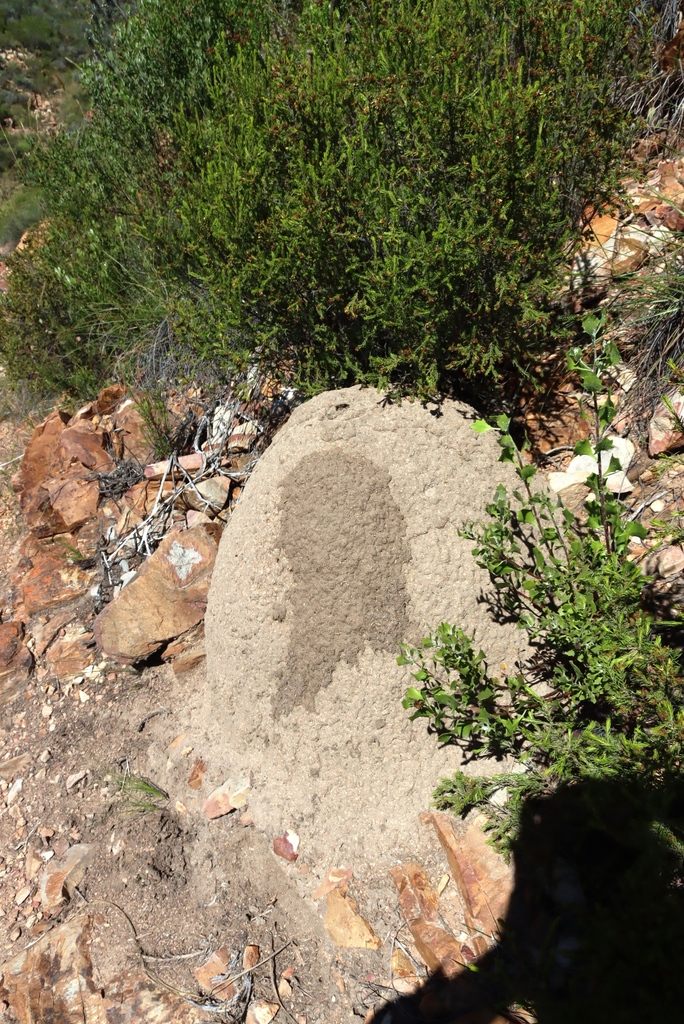
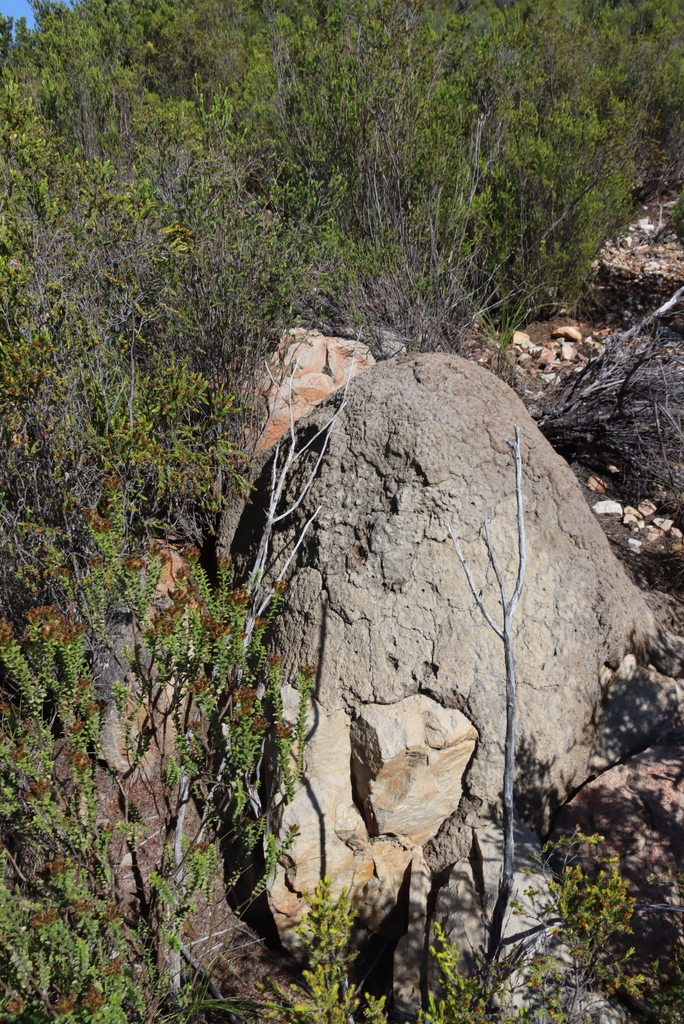
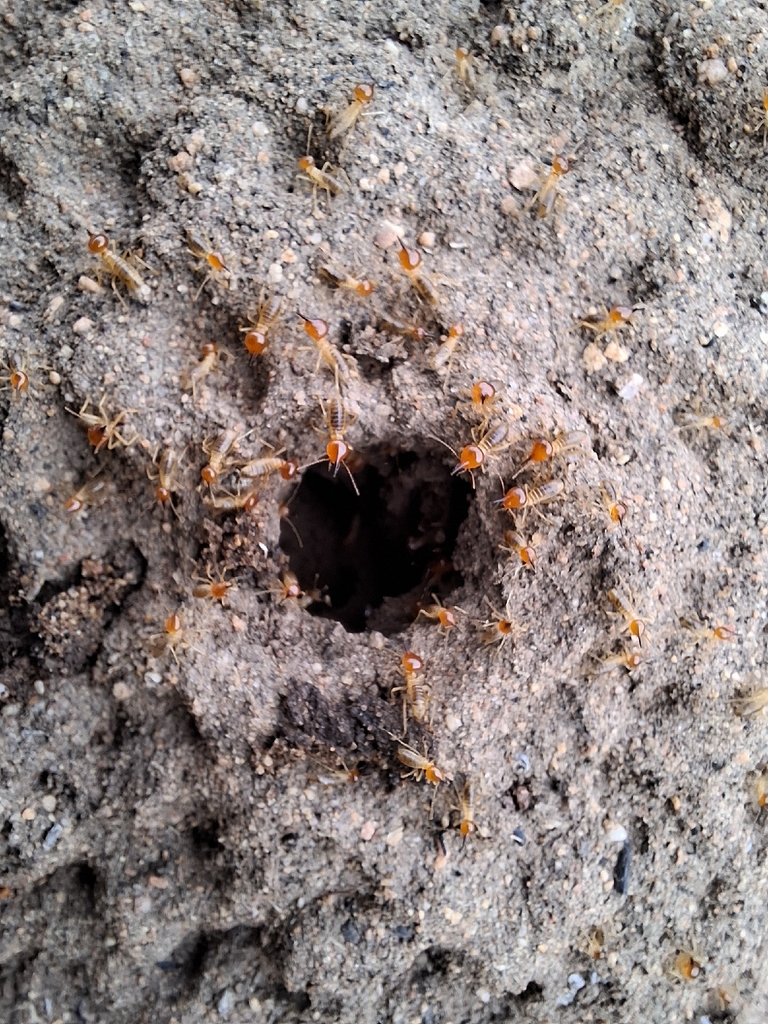
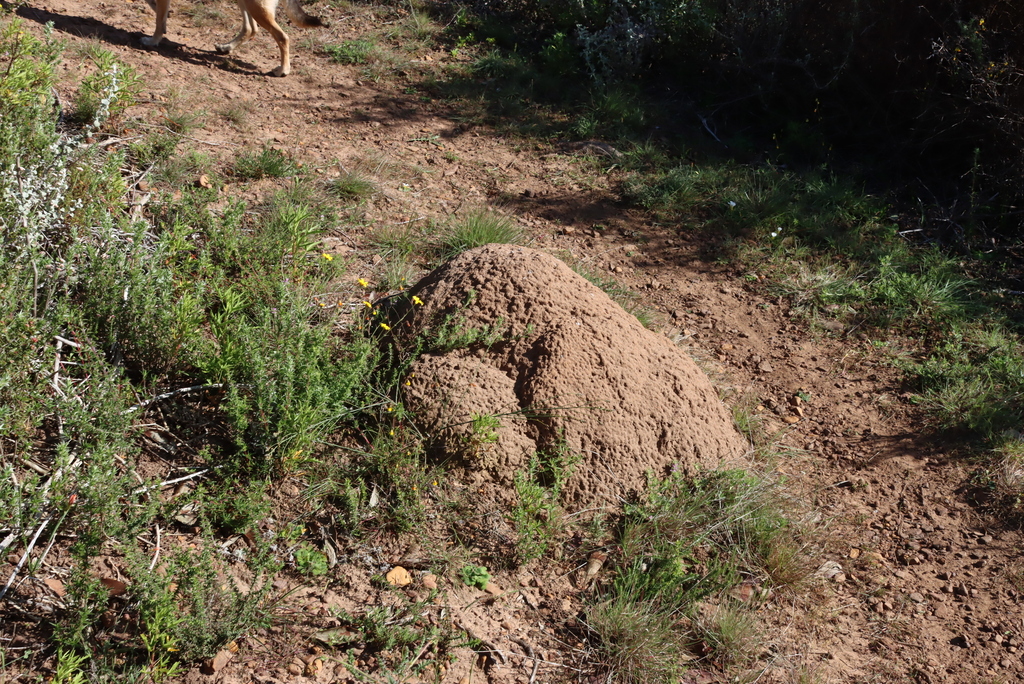
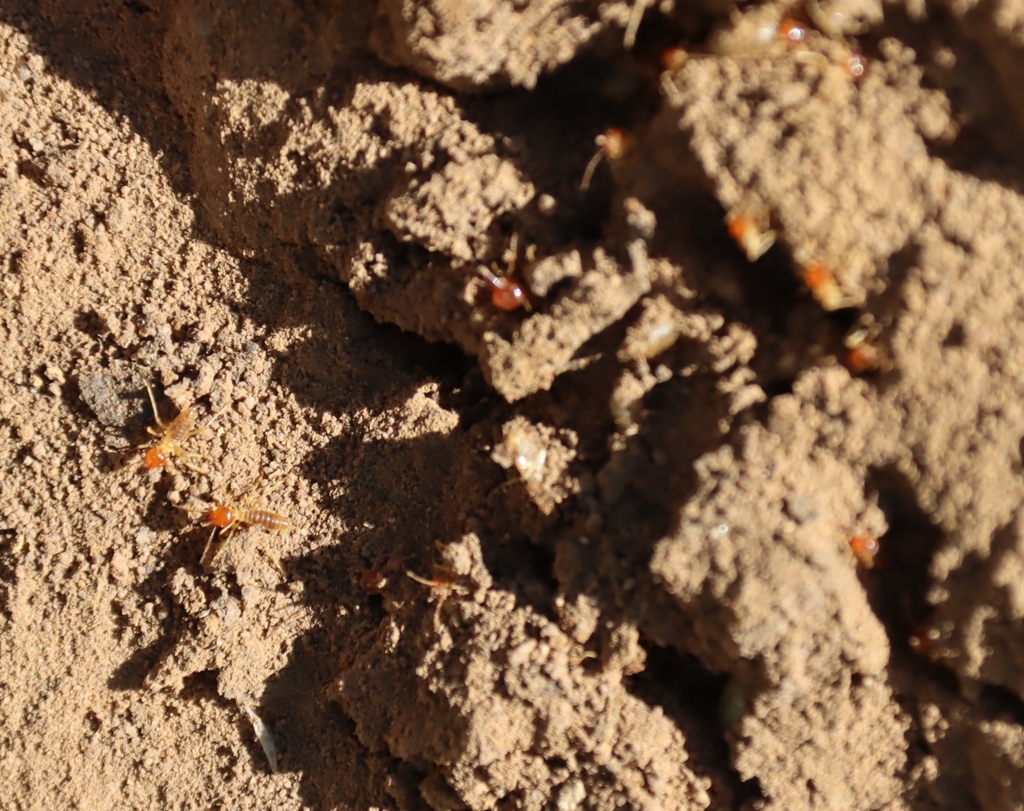
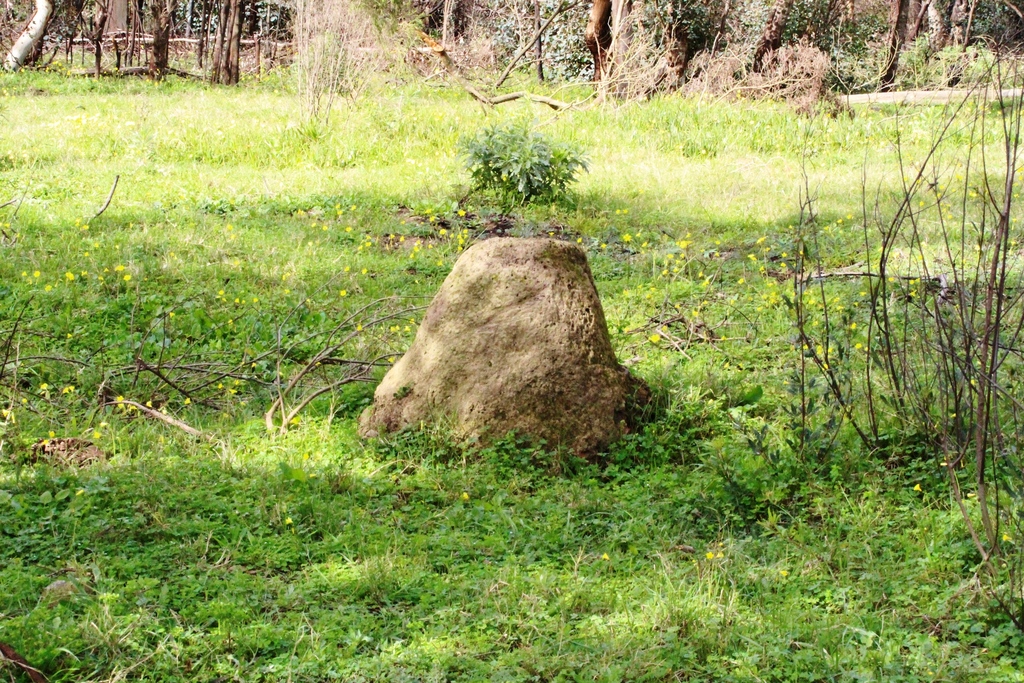
About the genus
This genus belongs to the family Termitidae 白蚁科, in the subfamily Nasutitermitinae 象白蚁亚科; the site records 21 species.
Type species: Trinervitermes trinervius.
This page includes a distribution map for the genus (GBIF records aggregated on a 1° grid); open a species entry to see its type locality, distribution, and references.
Etymology
From Latin tri- (three) + nervus (vein) + termes.
The etymologies in this section are analytical breakdowns; the roots follow Brown (1956).
Morphology
The descriptions below are an adaptation of the original genus-level accounts; terms follow the meaning of the source, and the original is not transcribed verbatim.
Diagnostic characters
In the alate, the first marginal tooth of the left mandible is about as long as the second (rather than distinctly longer), the left mandibular index is 0.29–0.41, the second marginal tooth is absent, and the cutting edge between the first and third marginal teeth is straight; the cutting edge behind the first marginal tooth of the right mandible is distinctly longer than that behind the second marginal tooth; the surface contour of the right molar plate shows no marked irregularity, bearing 5–9 transverse ridges, the first much larger than the rest and blunt-toothed in form, the posterior ridges weaker. The postclypeus is about equal to or slightly more than half as long as wide; the fontanelle is pale, slit-like, forked anteriorly into an almost triangular shape, the two arms enlarged or tapering at their ends; the cephalic pilosity is uniformly fine and dense, the hair pits regular in size, interspersed with a few larger pits; in large species the antennae have 15–16 segments and the pronotum is broad. The soldier is dimorphic in most species, showing traces of a major/minor differentiation or an almost continuous series; the nasus is cylindrical to broadly conical, the apical process of the mandibles is usually lost, the head capsule is not at all constricted behind the antennal fossae and bears no conspicuous setae except on the nasus (major soldier; the head capsule of the minor soldier is often constricted). It is distinguished from Nasutitermes by the longer mandibular cutting edges of the alate and by the structure of the right molar plate; its closest relative is the monomorphic-soldier genus Baucaliotermes. Sands described it as the most difficult genus in the subfamily and indeed in the Isoptera.
Alate
The apical tooth of the left mandible is equal to or slightly shorter than the first marginal tooth, the distance from the apical tooth to the first marginal tooth being slightly less to slightly more than one-third of the distance between the first and third marginal teeth (left mandibular index 0.29–0.41); the second marginal tooth is absent; the cutting edge between the first and third marginal teeth is straight; the apical and first marginal teeth of the right mandible are as in the left, and the cutting edge behind the first marginal tooth is distinctly longer than that behind the second marginal tooth; the surface contour of the molar plate shows no marked irregularity, bearing 5–9 transverse ridges, the first much larger than the rest and blunt-toothed in form, the more posterior ridges weaker. The postclypeus is slightly less to slightly more than half as long as wide. The fontanelle is pale, slit-like, forked anteriorly into a nearly triangular shape, the two arms enlarged or tapering at their ends. The cephalic pilosity is fairly uniform and fine, arising from small hair pits of regular size, with a few larger pits scattered among them.
Soldier
Dimorphic in most species, with traces of a major/minor differentiation, or in some colonies and local populations almost completely continuous. The nasus is cylindrical to broadly conical. The apical process of the mandibles is usually lost. The head capsule is not at all constricted behind the antennal fossae and bears no conspicuous setae except on the nasus (major soldier; the head capsule of the minor soldier is often constricted).
Sources: Sands, W.A. 1965. A revision of the termite subfamily Nasutitermitinae (Isoptera, Termitidae) from the Ethiopian Region. Bulletin of the British Museum (Natural History), Entomology, Supplement 4: 1–172., p. 76–77(Genus Trinervitermes: Imago, Soldier) This text is an adaptation, not a verbatim transcription of the original.
Literature notes
Edited notes based on the original literature, not transcriptions. The source markers in each paragraph point to archived records in .sources; full citations are listed below.
Foraging and coexistence of five West African species
According to the abstract, Sands (1961) studied the foraging behaviour and feeding habits of five West African Trinervitermes species: Trinervitermes ebenerianus, Trinervitermes carbonarius and Trinervitermes suspensus store grass fragments in the nest, whereas Trinervitermes oeconomus and Trinervitermes aurilerrae do not; the three storing species store grass fragments of different sizes; experiments showed selective harvesting of particular grass species, and survival on different foods indicated that each species is adapted to different conditions; the author concluded that coexistence of the five species depends on a mosaic of small-scale conditions and noted that Trinervitermes aurilerrae comes closest to a Nasutitermes-like ancestor.
Colony fission (sociotomy)
According to the abstract, Grassé and Noirot (1951) termed sociotomy the fission of societies in two African termites: in daylight, columns of Trinervitermes bettonianus and of a species of Anoplotermes leave the nest, one column including the royal couple, and each column later breaks into several portions that excavate or build a nest and found a new society.
The same observations note that replacement reproductives arise frequently by neoteny in both species; all castes take part in the migration, including functional reproductives and alates, the latter creeping on the ground and carrying larvae, while workers of Anoplotermes even adopt soldier behaviour; on this evidence the authors establish for the first time, by direct observation, the defensive role of the nasuti.
References
- Sands, W. A. 1961. Foraging behaviour and feeding habits in five species of Trinervitermes in West Africa. Entomologia Experimentalis et Applicata 4: 277–288.
- Grassé, P.-P. & Noirot, C. (1951). La sociotomie: migration et fragmentation de la termitière chez les Anoplotermes et les Trinervitermes. Behaviour.
Species (21)
- Trinervitermes arabiae Harris, 1957 阿拉伯三脉白蚁
- Trinervitermes bettonianus Sjöstedt, 1905 贝顿三脉白蚁
- Trinervitermes biformis Wasmann, 1902 二型三脉白蚁
- Trinervitermes dispar Sjöstedt, 1902 不同三脉白蚁
- Trinervitermes disparatus Bathellier, 1927 分离三脉白蚁
- Trinervitermes fletcheri Chatterjee & Thakur, 1965 弗莱彻三脉白蚁
- Trinervitermes geminatus Wasmann, 1897 成对三脉白蚁
- Trinervitermes gratiosus Sjöstedt, 1924 常见三脉白蚁
- Trinervitermes indicus Snyder, 1934 印度三脉白蚁
- Trinervitermes nigrirostris Mathur & Sen-Sarma, 1959 黑鼻三脉白蚁
- Trinervitermes occidentalis Sjöstedt, 1904 西部三脉白蚁
- Trinervitermes oeconomus Trägårdh, 1904 根三脉白蚁
- Trinervitermes rabidus Hagen, 1859 狂猛三脉白蚁
- Trinervitermes rapulum Sjöstedt, 1904 蔓菁三脉白蚁
- Trinervitermes rhodesiensis Sjöstedt, 1911 罗得西亚三脉白蚁
- Trinervitermes saudiensis Sands, 1965 沙特三脉白蚁
- Trinervitermes sensarmai Bose, 1984 森萨尔马三脉白蚁
- Trinervitermes sudanicus Sjöstedt, 1904 苏丹三脉白蚁
- Trinervitermes togoensis Sjöstedt, 1899 多哥兰三脉白蚁
- Trinervitermes trinervius Rambur, 1842 三脉三脉白蚁 ★ Type species
- Trinervitermes trinervoides Sjöstedt, 1911 似三脉三脉白蚁
Parent level: Checklist index · Nasutitermitinae 象白蚁亚科 · Data & downloads