Cornitermes cumulans 成堆角象白蚁
- Type locality
- Brasil: São Paulo: Iperó, Ipanema [23.4265S 47.5921W]
- Distribution
- Brazil, Argentina, Paraguay, Colombia, Bolivia, Ecuador
List: English (genus page) · 中文 · Español
Summary
Cornitermes cumulans is a species and the type species of the genus Cornitermes, in the family TERMITIDAE (subfamily Syntermitinae). The species was described by Kollar in 1832; the type locality is Brasil: São Paulo: Iperó, Ipanema [23.4265S 47.5921W]. Distribution: Brazil, Argentina, Paraguay, Colombia, Bolivia, Ecuador. This site records 4 junior synonyms for the species.
Etymology
Genus name Cornitermes: From Latin cornu (horn) + termes.
Specific epithet cumulans: Latin cumulans (heaping)
Taxonomic position
- Family: TERMITIDAE — 280 genera, 2144 species
- Subfamily: Syntermitinae — 22 genera, 105 species
- Genus: Cornitermes — 14 species
Distribution
- Distribution records: Brazil, Argentina, Paraguay, Colombia, Bolivia, Ecuador
The record above follows the wording of the original data; no geocoding or standardized place names have been applied.
Junior synonyms
This site records 4 junior synonyms for the species, listed by their original literature source:
- Termes americana Rengger, 1835: 267 — type locality: Paraguay: ?
- Termes dubius Rambur, 1842: 309 — type locality: Brasil: ?
- Termes (Termes) similis Hagen, 1858: 167-171, 243 — type locality: Brasil: Minas Gerais: Congonhas [20.4997S 43.8578W]
- Termes christiersoni Sörensen, 1884: 20-22 — type locality: Argentina: Chaco: Río de Oro [27.0422S 58.5667W]
In older literature, regional checklists and database searches, this species may appear under the synonyms above (Termes americana, Termes dubius, Termes (Termes) similis, Termes christiersoni); this site treats them all under Cornitermes cumulans.
Morphology
A species-level description from the original literature has not yet been compiled for this page. Original description: Kollar, 1832. See the genus page for the genus-level description; this page will be updated after the original text is checked.
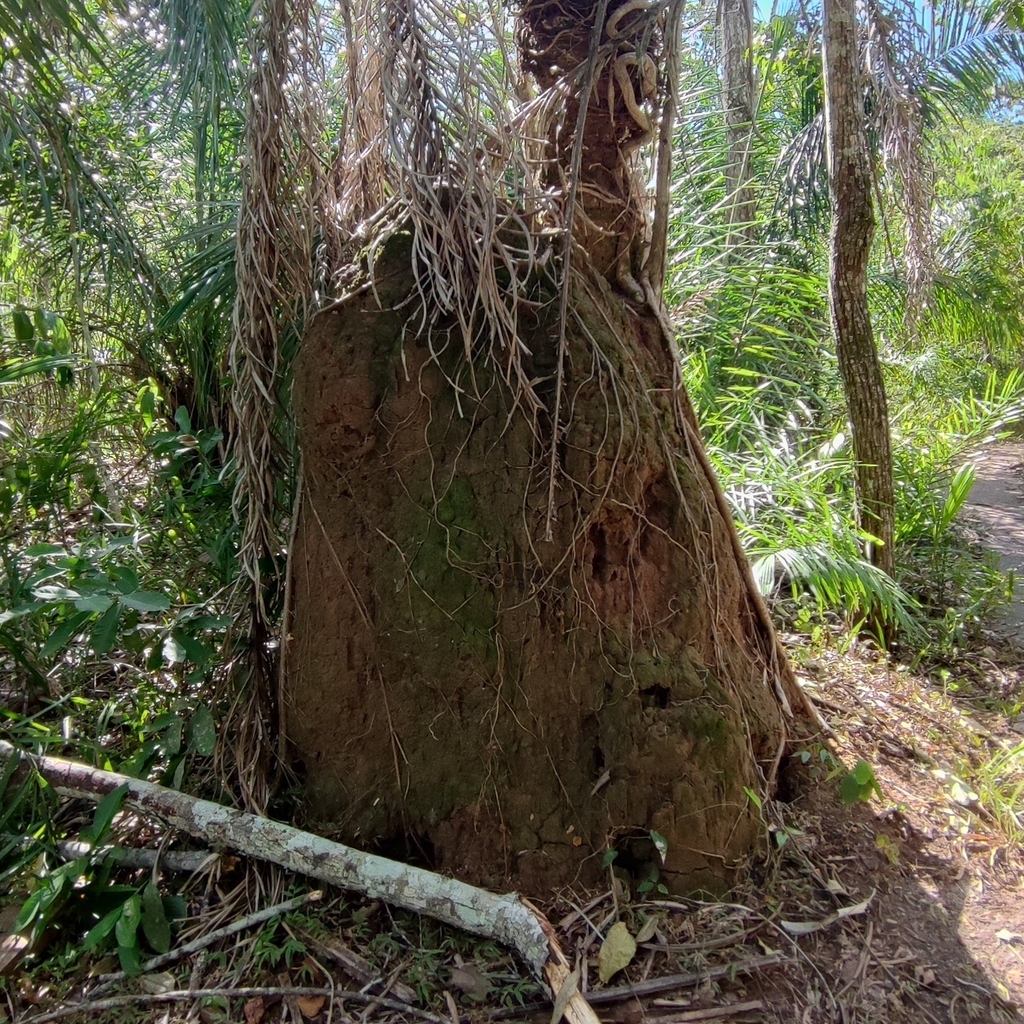
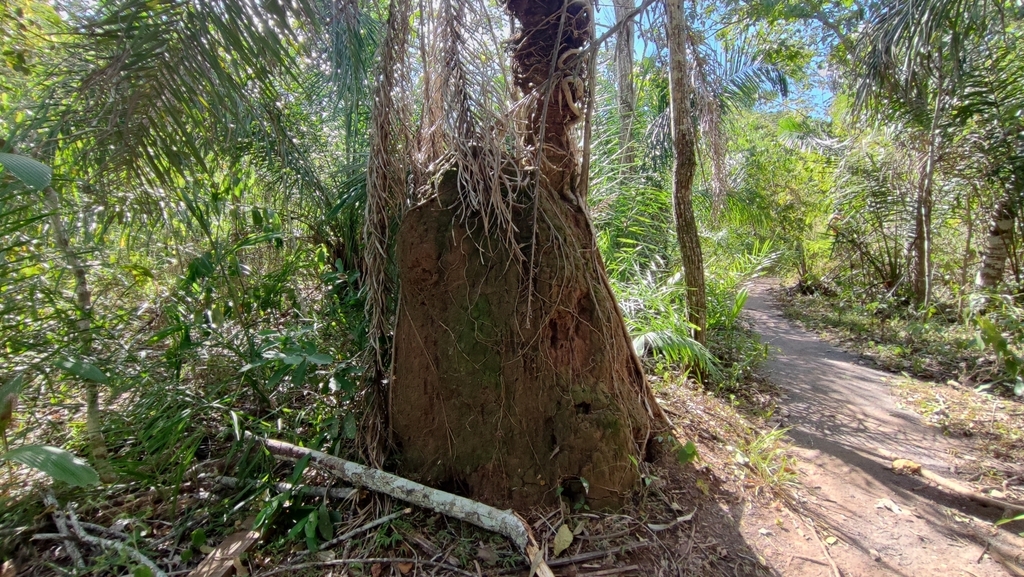
Photos 27 photos
Freely licensed photos, click to enlarge. Hotlinked from iNaturalist / Wikimedia Commons; the rights stay with the photographers — author, licence and source page are shown under each photo. Only the first 6 are shown here; the rest are under “All photos” at the end of the page.
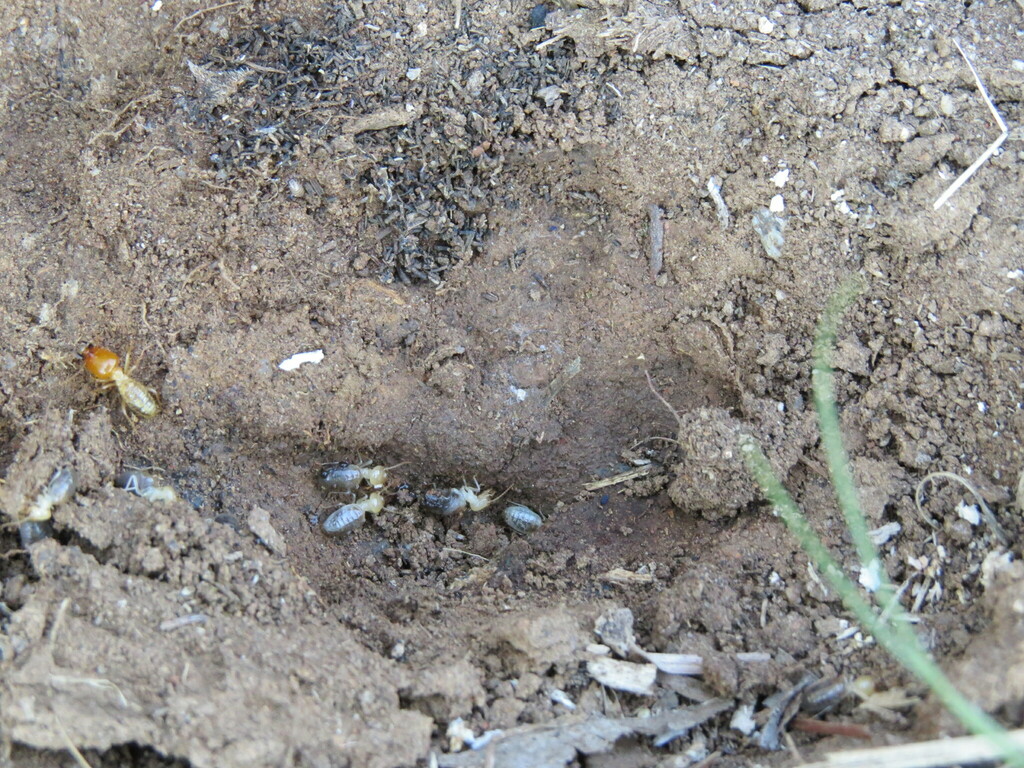
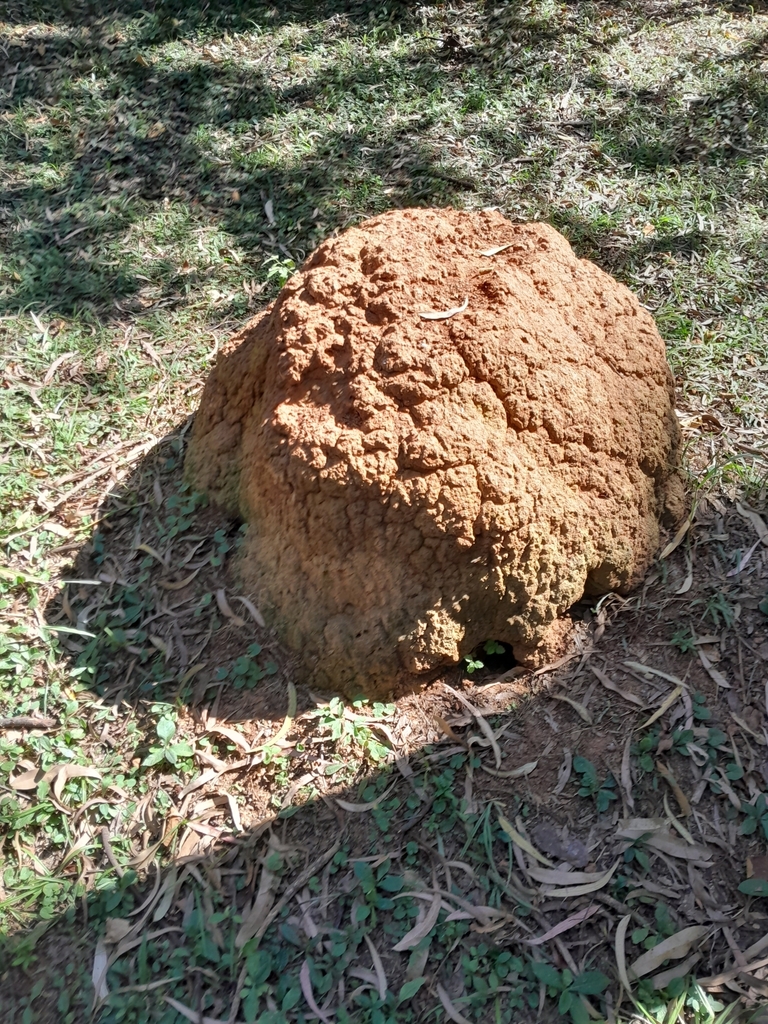
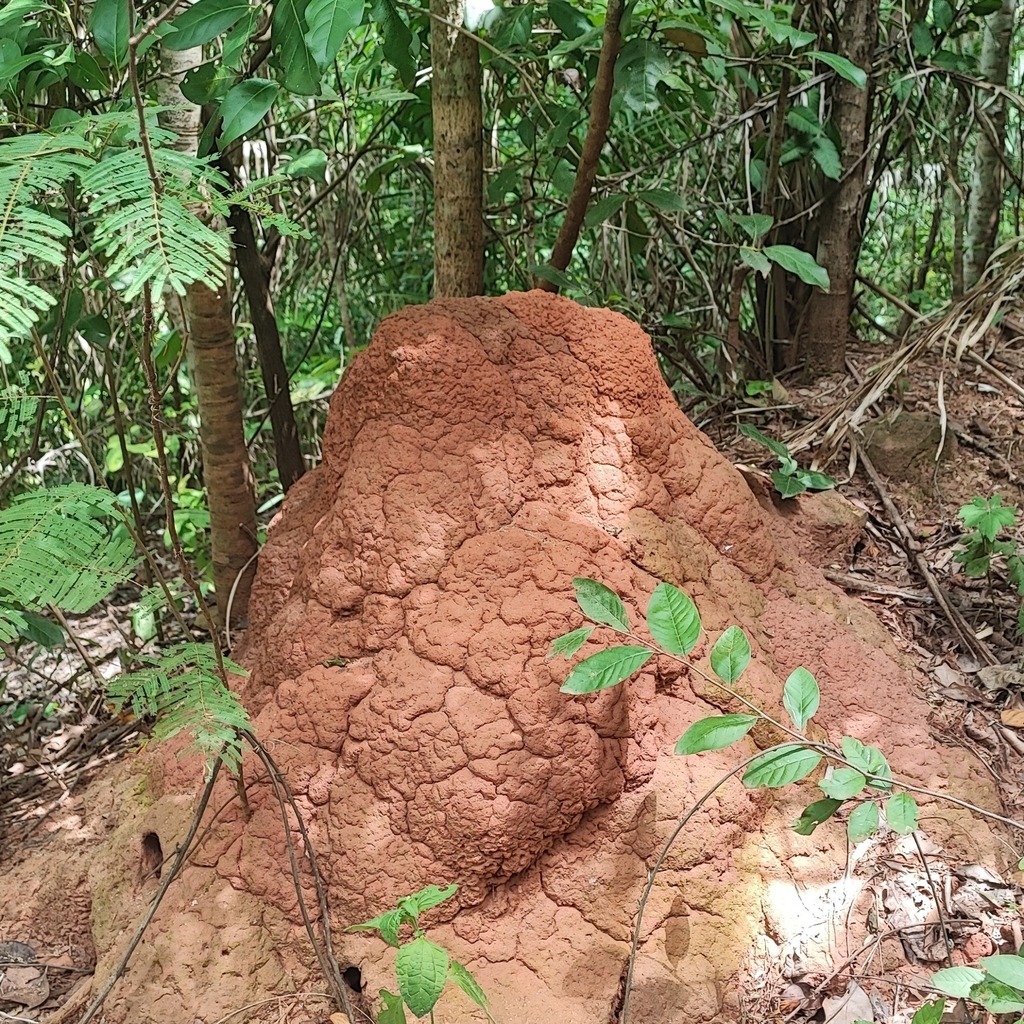
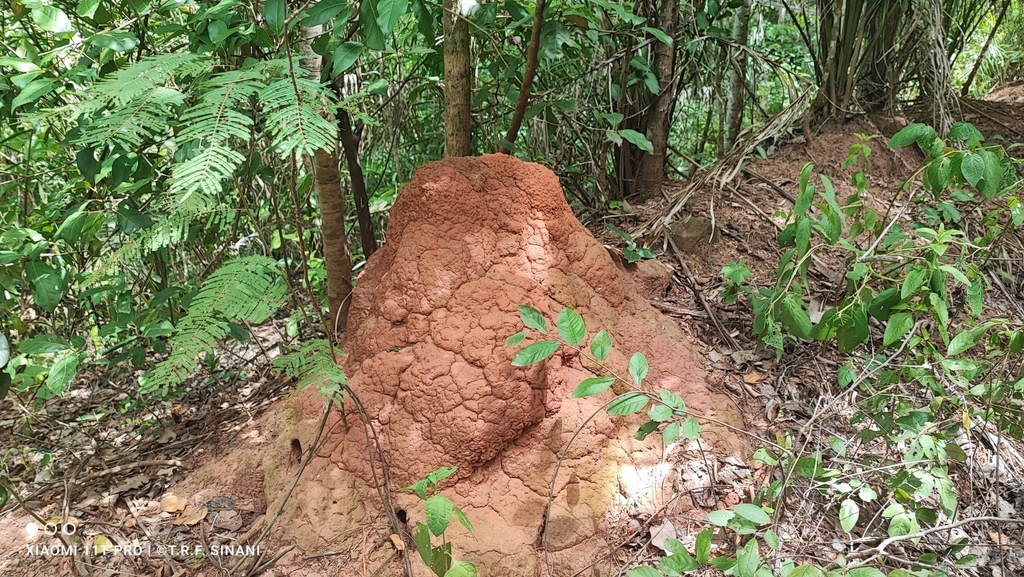
Distribution map
Aggregated from GBIF occurrence records on a 1° grid; only extant taxa of this checklist are used, so fossil records are excluded. Dot size and shade show the number of records inside a cell.
Related papers
Cached papers for this genus (matched automatically, for reference); to search this species with its junior synonyms merged in, use the literature search.
- Biochemistry of termite defenses: Coptotermes, rhinotermes and Cornitermes species
Abstract
- The Termitaria of Cornitermes cumulans (Isoptera, Termitidae) and Their Role in Determining a Potential Keystone Species
Abstract
Role des termitieres de C.c. dans l'ecologie du cerrado bresilien. Densite des termitieres; description de celles-ci; leur abandon; commensaux; predation et attaque des termitieres
- Individual Basis for Collective Behaviour in the Termite,Cornitermes cumulans
Abstract
Interactions among individuals in social groups lead to the emergence of collective behaviour at large scales by means of multiplicative non-linear effects. Group foraging, nest building and task allocation are just some well-known examples present in social insects. However the precise mechanisms at the individual level that trigger and amplify social phenomena are not fully understood. Here we show evidence of complex dynamics in groups of the termite, Cornitermes cumulans (Kollar) (Isoptera: Termitidae), of different sizes and qualitatively compare the behaviour observed with that exhibited by agent-based computer models. It is then concluded that certain aspects of social behaviour in insects have a universal basis common to interconnected systems and that this may be useful for understanding the temporal dynamics of systems displaying social behaviour in general.
Papers on this species, synonyms included → OpenAlex Google Scholar CNKI
Abstracts come from open metadata; copyright remains with the original authors/publishers. For reference only — please check the original.
Literature notes
Edited notes based on the original literature, not transcriptions. The source markers in each paragraph point to archived records in .sources; full citations are listed below.
Nest growth stages and micromorphology
According to Cosarinsky's (2011) micromorphological study of three nests of Cornitermes cumulans in the humid eastern Chaco of Reserva Ecológica El Bagual, Formosa, Argentina, the nests fall into three stages: in the small nest the main body is subterranean and pear-shaped, 33 cm high including the mound (mound 10 cm high, 20 cm wide), the outer wall is pale and 3 cm thick, and the subterranean wall is dark brown, 0.5–1 cm thick and pierced by 3 mm perforations; the medium nest has a mound 63 cm high and 60 cm in basal diameter, with the hive at the mound base extending 30 cm below ground; the large nest has a mound 128 cm high and 110 cm in basal diameter, walls 3–5 cm thick, and a large ovoid hive.
The micromorphology of the nest walls differs among the three stages: the subterranean wall of the small nest is built of stacked lenticular pellets 1–1.5 mm long (lenticular microstructure), the outer wall of the medium nest alternates intergrain microaggregate and diffuse lenticular structure, and the outer wall of the large nest shows a vughy microstructure in which sand grains are cemented by fine organic matter and clay; the porosity of the subterranean wall falls from 10–20% in the small and medium nests to 2% in the large nest, whereas the surrounding soil is about 50% porous.
The author classified Cornitermes cumulans and Macrotermes bellicosus as growing by reorganization, continually remodelling old structures as the colony grows, whereas a species of Cubitermes grows by addition; birefringent clay fabrics in the nest walls indicate that clay moistened with saliva was added during construction, the layered structure of the organic linings points to a faecal origin, and the organic strands in the large nest are remnants of old linings infilled with soil.
Scale dependence of collective activity
In laboratory experiments by Miramontes and DeSouza (2008), colonies of adult workers of Cornitermes cumulans were kept at eight group sizes from 1 to 30 individuals; the number of spontaneously active individuals decreased nonlinearly with group size, whereas activity induced by body-to-body contact increased nonlinearly with group size; the Kolmogorov–Shannon entropy of the activity time series rose nonlinearly with density and showed a self-similar structure consistent with the qualitative predictions of a mobile cellular automaton model, and no order–disorder transition was detected, indicating that this species is less readily excited than some Nasutitermes species.
Thermal buffering by the mound
According to the abstract, Santos et al. (2026) combined measurements of critical thermal maximum (CTmax), field observations of mound microclimate, and mechanistic estimates of operative body temperature along a climatic gradient, and found that at the Campinas site temperatures inside the mound varied markedly less than ambient conditions and that modelled operative temperatures indicated positive thermal safety margins across the gradient; nevertheless, CTmax remained associated with regional climate, increasing with annual precipitation and decreasing with mean diurnal temperature range; worker morphology also varied strongly with climate, while β-glucanase activity and gut bacterial richness were driven by different climatic factors; under future SSP2–4.5 and SSP5–8.5 scenarios thermal safety margins shrink substantially, with greater losses at lower latitudes.
References
- Cosarinsky, M. I. 2011. The Nest Growth of the Neotropical Mound-Building Termite, Cornitermes cumulans: A Micromorphological Analysis. Journal of Insect Science 11: 122.
- Miramontes, O.; DeSouza, O. 2008. Individual Basis for Collective Behaviour in the Termite, Cornitermes cumulans. Journal of Insect Science 8: 22.
- Santos, M. D.; da Costa Barreto, I.; Damasio, A.; Faria, A. F.; Cavieres, G.; Aguilera-Olivares, D.; Haifig, I.; Carrijo, T. F.; Arab, A. 2026. Thermal buffering by termite mounds maintains safety margins while worker traits track climate. Insectes Sociaux.
Other species in Cornitermes (13 species)
Cite this species
Citation strings are generated from the fields of this page; please keep the DOI and the version number when citing.
GB/T 7714
班奈特格林. Extant Isoptera (termites): a checklist of Latin and Chinese names: Cornitermes cumulans 成堆角象白蚁[EB/OL]. Version 2026.10.30. https://termite-extant-isoptera.org/en/species/cornitermes-cumulans/. DOI: 10.5281/zenodo.23646836.
BibTeX
@misc{isoptera_cornitermes_cumulans_2026,
  author       = {班奈特格林},
  title        = {Cornitermes cumulans: a checklist of extant Isoptera (termites)},
  year         = {2026},
  version      = {2026.10.30},
  howpublished = {https://termite-extant-isoptera.org/en/species/cornitermes-cumulans/},
  note         = {TERMITIDAE; version 2026.10.30; DOI: 10.5281/zenodo.23646836},
  doi          = {10.5281/zenodo.23646836}
}
RIS
TY  - ELEC
TI  - Cornitermes cumulans: a checklist of extant Isoptera (termites)
AU  - 班奈特格林
PY  - 2026
UR  - https://termite-extant-isoptera.org/en/species/cornitermes-cumulans/
DO  - 10.5281/zenodo.23646836
ER  -