Genus Cornitermes · 角象白蚁属
Filter the taxa recorded under this genus by name and locality; for the whole site use the full-text search.
Distribution map
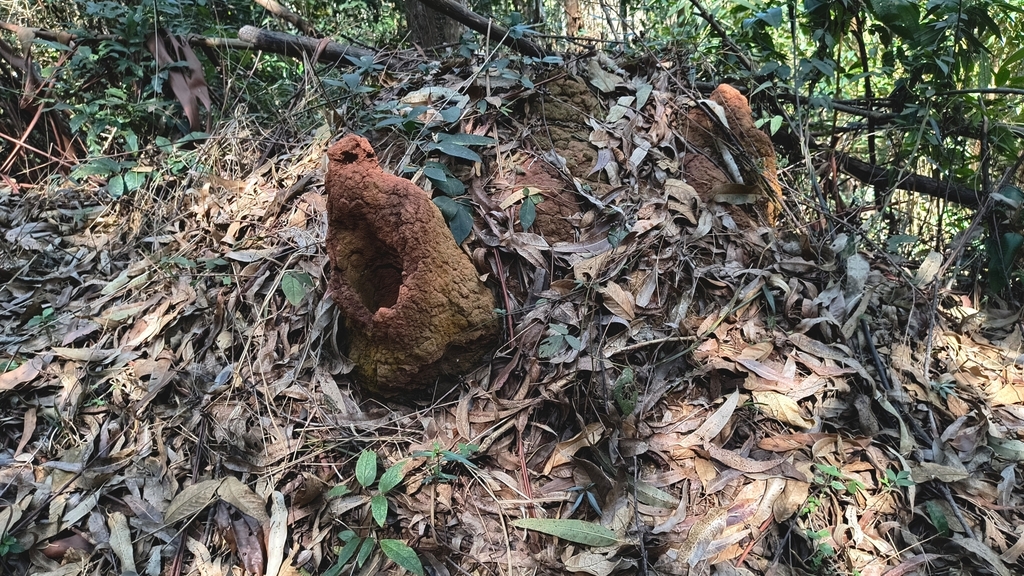
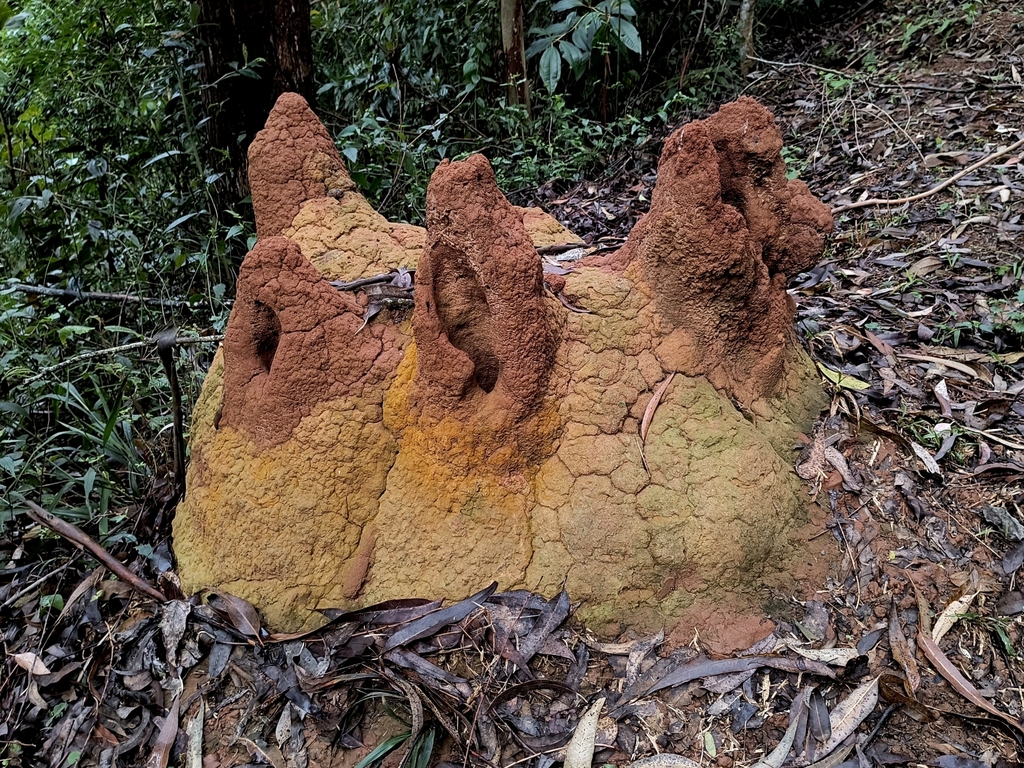
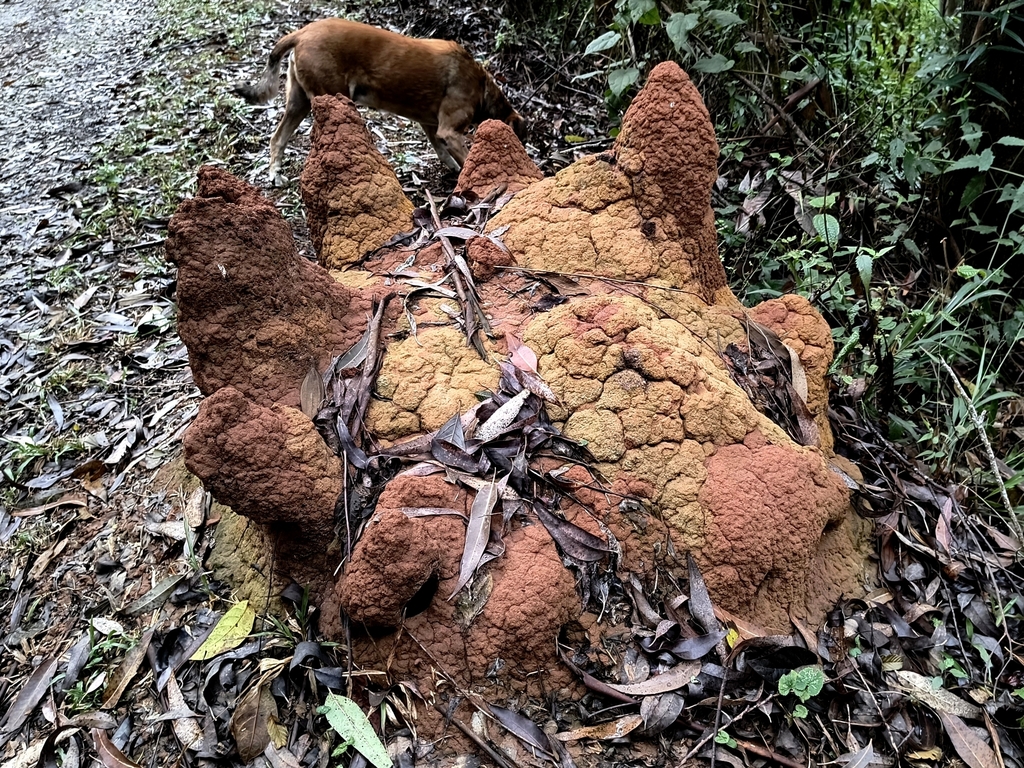
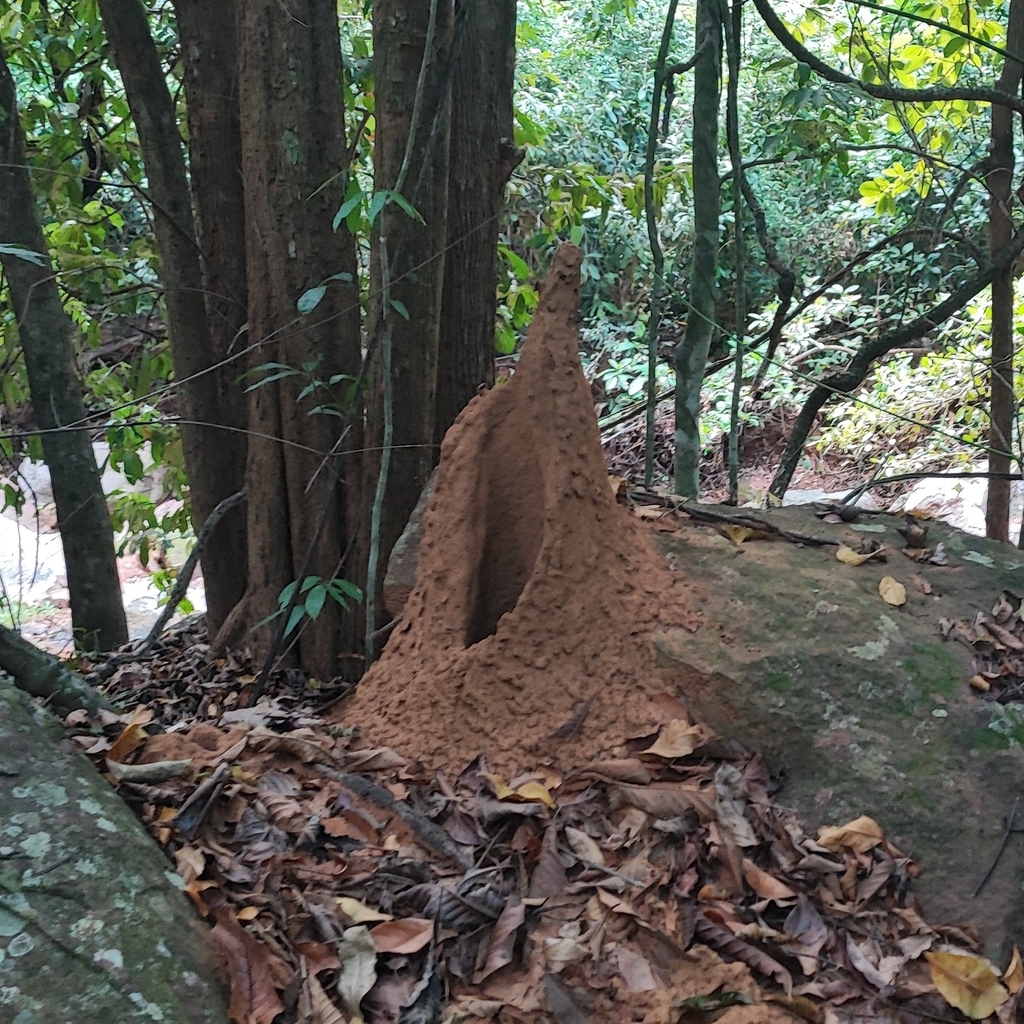
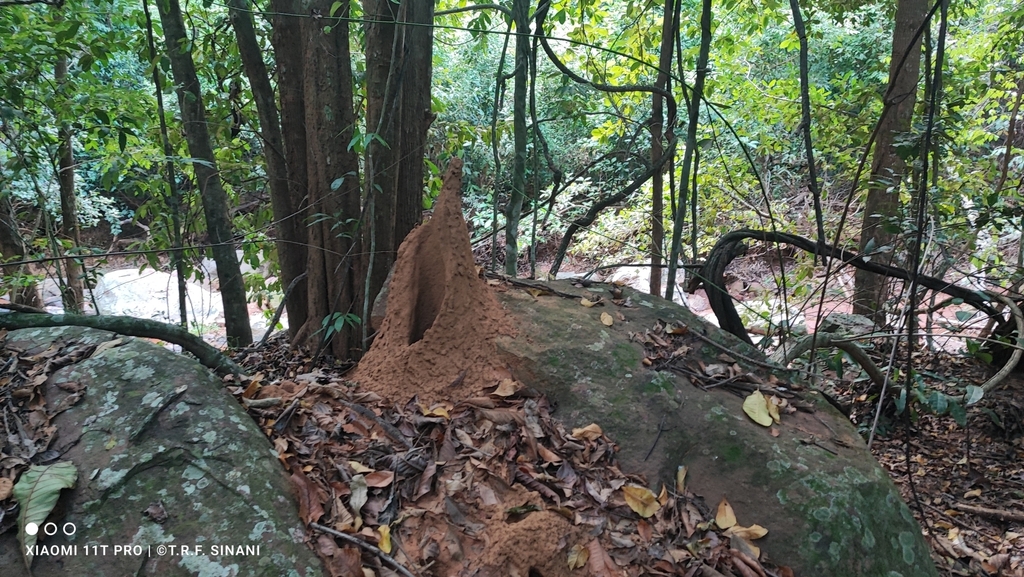
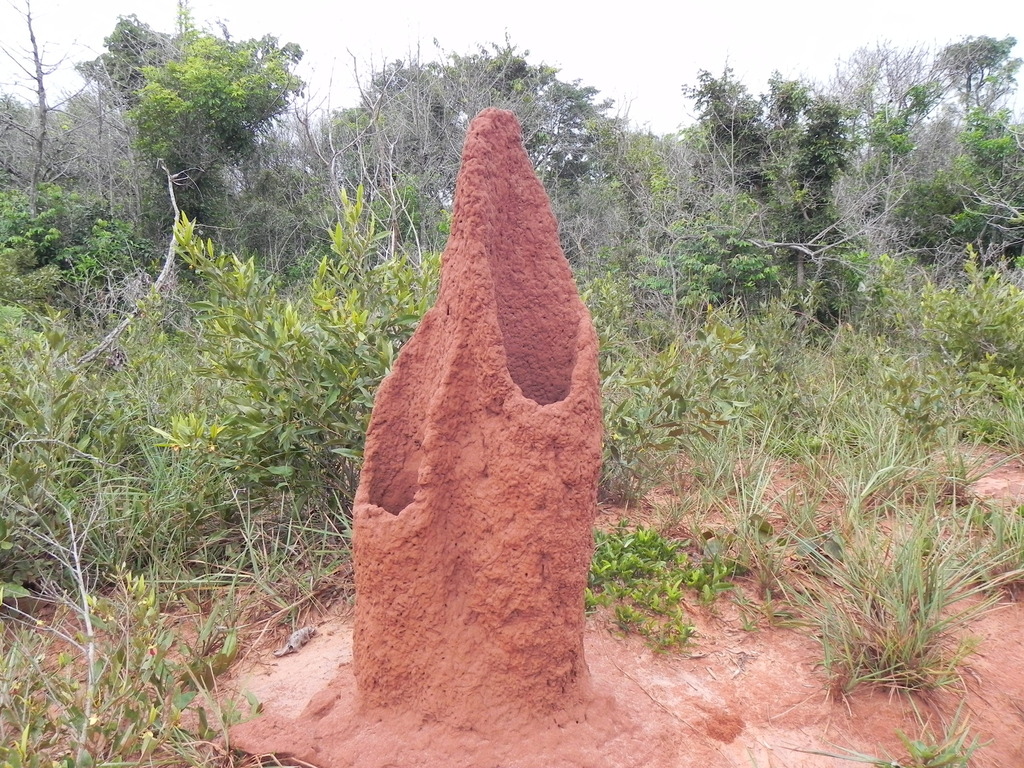
Photographs 49 photos · 3 species
Freely licensed photos; click to enlarge. This preview shows 6 photos; to browse by species, open “All photos”. Photos are hotlinked from iNaturalist / Wikimedia Commons; the rights stay with the photographers.
About the genus
This genus belongs to the family Termitidae 白蚁科, in the subfamily Syntermitinae 聚白蚁亚科; the site records 14 species.
Type species: Cornitermes cumulans.
This page includes a distribution map for the genus (GBIF records aggregated on a 1° grid); open a species entry to see its type locality, distribution, and references.
Etymology
From Latin cornu (horn) + termes.
The etymologies in this section are analytical breakdowns; the roots follow Brown (1956).
Morphology
The descriptions below are an adaptation of the original genus-level accounts; terms follow the meaning of the source, and the original is not transcribed verbatim.
Diagnostic characters
Alate relatively large, wings hyaline; antennae 15–17 segments; base of clypeus strongly arched, as long as half its width; mandibular first tooth sometimes larger than the second, third tooth of the left mandible stepped. Soldier head more or less rectangular, frontal gland opening large, at the apex of a long or short frontal tube, antennae 13–15 segments, third segment usually shorter than the second; all tibiae with only 2 apical spurs, styli absent. Holmgren 1912 divided the genus into two subgenera, Labiotermes and Cornitermes s. str.
Alate
Relatively large, wings hyaline. Head broadly oval, narrowing anteriorly; compound eyes projecting; ocelli lateral, medium-sized to very large, close to the compound eyes or fairly far from them. Frontal gland opening large and distinct. Base of clypeus as long as half its width, strongly arched, posterior margin strongly convex, anterior margin mostly straight, labrum broader than long. Mandibular first tooth sometimes larger than the second, third tooth of the left mandible stepped, molar region rather well developed. Antennae 15–17 segments, third segment shorter to longer than the second. Pronotum narrower than the head, flat, anterior corners only slightly deflexed; posterior margins of meso- and metanotum broad, more or less broadly rounded. Wings hyaline, only the costa and the radial sector dark and distinct, the remaining veins hyaline and weak; wing membrane rather densely covered with fine hairs; radius reduced, hardly extending beyond the wing scale; radial sector somewhat distant from the anterior margin; media of forewing arising beyond the wing scale, media of hindwing arising at the base of the radial sector, sometimes branching at or before the middle of the wing; cubitus without a thickened basal vein, or only very weakly so. All tibiae with only 2 apical spurs. Cerci short, styli absent.
Soldier
Head more or less rectangular, rather thick. Frontal gland opening large, at the apex of a long or short frontal tube; the frons in front of the tube slopes gradually towards the mouthparts. Clypeus almost indistinguishable from the transverse band, apex often corneous, always supported by two anteriorly diverging chitinous bands. Labrum either elongate and narrowing anteriorly, or shorter, widest at the middle, apex hyaline. Mandibles stout, sickle-shaped: left mandible with 2 to several incisor teeth, sometimes with a large base; right mandible often with its middle and base fused into a large masticatory part. Antennae 13–15 segments, third segment usually shorter than the second, sometimes equal or longer. Pronotum narrower than the head, weakly saddle-shaped, anterior lobe very large, reaching the neck. Tibiae with 2 apical spurs; cerci short; styli absent.
Worker
Head pale yellow to white, subcircular to pentagonal and rounded, widest at the level of the antennae, flattened and arched. Clypeus large and arched. Mandibular first tooth either not larger than the second or distinctly larger. Antennae 14–16 segments, mostly 15. Pronotum as in the soldier; meso- and metanotum strongly compressed by the strongly arched abdomen.
Sources: Holmgren, N. 1912. Termitenstudien 3. Systematik der Termiten. Die Familien Mastotermitidae, Protermitidae und Mesotermitidae. Kungliga Svenska Vetenskapsakademiens Handlingar 48(4): 1–166, Taf. 1–4., pp. 49—50(archive.org 项 biostor-184513 页面图像) This text is an adaptation, not a verbatim transcription of the original.
Literature notes
Edited notes based on the original literature, not transcriptions. The source markers in each paragraph point to archived records in .sources; full citations are listed below.
Distribution, diet and nest commensals
According to the literature reviewed in the introduction of Miramontes and DeSouza (2008), Cornitermes occurs in forests, cerrado, pastures and even urban gardens and feeds on living and dead grasses; several species of the genus (including Cornitermes cumulans) build large epigeal nests that frequently harbour commensals — termites of other genera as well as ants, beetles, birds and snakes.
References
Species (14)
- Cornitermes acignathus Silvestri, 1901 尖颚角象白蚁
- Cornitermes bequaerti Emerson, 1952 贝奎特角象白蚁
- Cornitermes bolivianus Snyder, 1926 玻利维亚角象白蚁
- Cornitermes cumulans Kollar, 1832 成堆角象白蚁 ★ Type species
- Cornitermes falcatus Emerson, 1952 弯钩角象白蚁
- Cornitermes incisus Emerson, 1952 切割角象白蚁
- Cornitermes ovatus Emerson, 1952 卵形角象白蚁
- Cornitermes pilosus Holmgren, 1906 多毛角象白蚁
- Cornitermes pugnax Emerson, 1925 好斗角象白蚁
- Cornitermes silvestrii Emerson, 1949 西尔韦斯特里角象白蚁
- Cornitermes snyderi Emerson, 1952 斯奈德角象白蚁
- Cornitermes villosus Emerson, 1952 密毛角象白蚁
- Cornitermes walkeri Snyder, 1929 沃克角象白蚁
- Cornitermes weberi Emerson, 1952 韦伯角象白蚁
Parent level: Checklist index · Syntermitinae 聚白蚁亚科 · Data & downloads