Pericapritermes nitobei 新渡户近扭白蚁
- Type locality
- Taiwan: Maruyama
- Distribution
- South Korea, Japan, Taiwan, China, China, Indonesia, Malaysia, Thailand, Vietnam
List: English (genus page) · 中文 · Español
Summary
Pericapritermes nitobei is a species of the genus Pericapritermes, in the family TERMITIDAE (subfamily Mirocapritermitinae). The species was described by Shiraki in 1909; the type locality is Taiwan: Maruyama. Distribution: South Korea, Japan, Taiwan, China, China, Indonesia, Malaysia, Thailand, Vietnam. This site records 3 junior synonyms for the species.
Etymology
Genus name Pericapritermes: From Greek peri- (around) + Latin caper (goat) + termes.
Specific epithet nitobei: Named after Nitobe (Japanese agronomist and educator Inazō Nitobe)
Taxonomic position
- Family: TERMITIDAE — 280 genera, 2144 species
- Subfamily: Mirocapritermitinae — 14 genera, 135 species
- Genus: Pericapritermes — 40 species
- Type species of the genus: Pericapritermes urgens
Distribution
- Distribution records: South Korea, Japan, Taiwan, China, China, Indonesia, Malaysia, Thailand, Vietnam
The record above follows the wording of the original data; no geocoding or standardized place names have been applied.
Junior synonyms
This site records 3 junior synonyms for the species, listed by their original literature source:
- Capritermes sulcatus Holmgren, 1912: 130-132 — type locality: Taiwan: ?
- Capritermes jangtsekiangensis Kemner, 1925: 4-5 — type locality: China: Jiangsu Province: Tschingkiang
- Capritermes laevulobliquus Zhu & Chen, 1983: 29-34 — type locality: China: Guangdong Province: Meixian County: Yaoshan-Tiekeng reservoir
In older literature, regional checklists and database searches, this species may appear under the synonyms above (Capritermes sulcatus, Capritermes jangtsekiangensis, Capritermes laevulobliquus); this site treats them all under Pericapritermes nitobei.
Recorded in Fauna Sinica
The morphological and biological accounts below are taken from Fauna Sinica and related literature; only structure and punctuation have been standardized here.
Morphology
Soldier
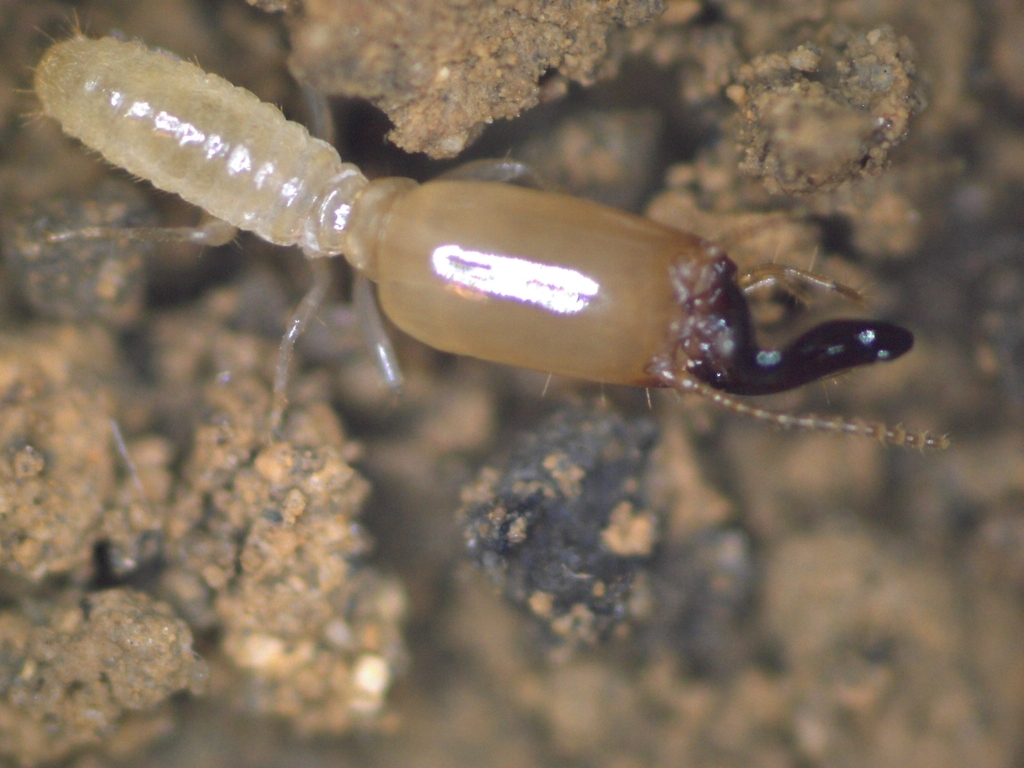
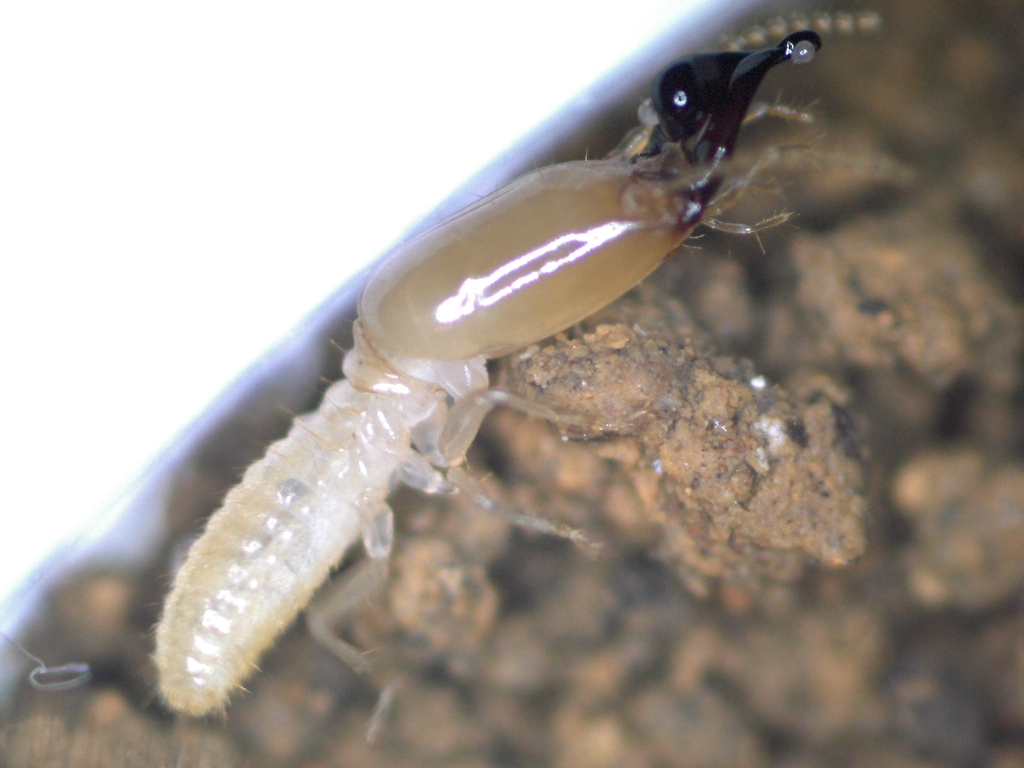
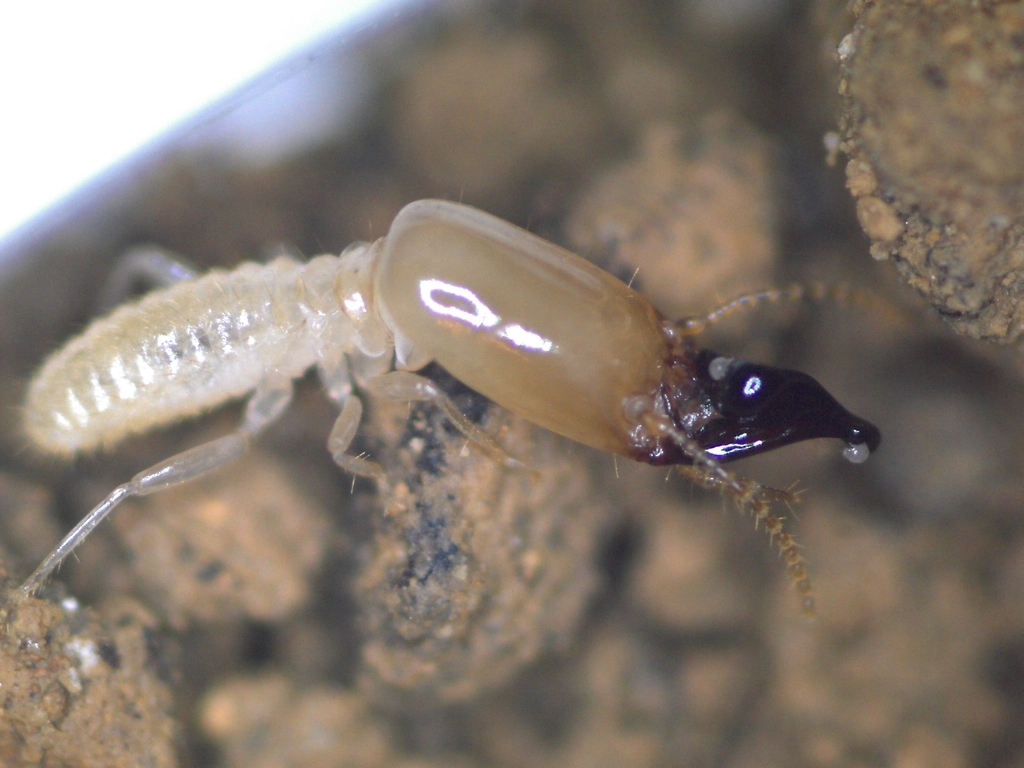
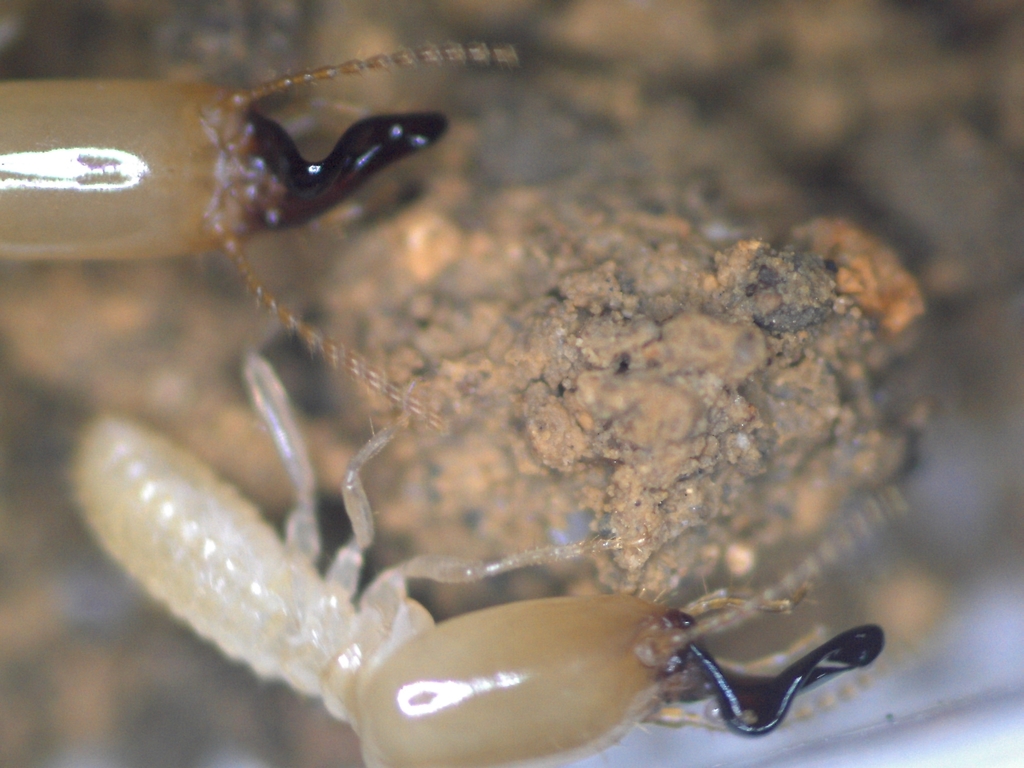
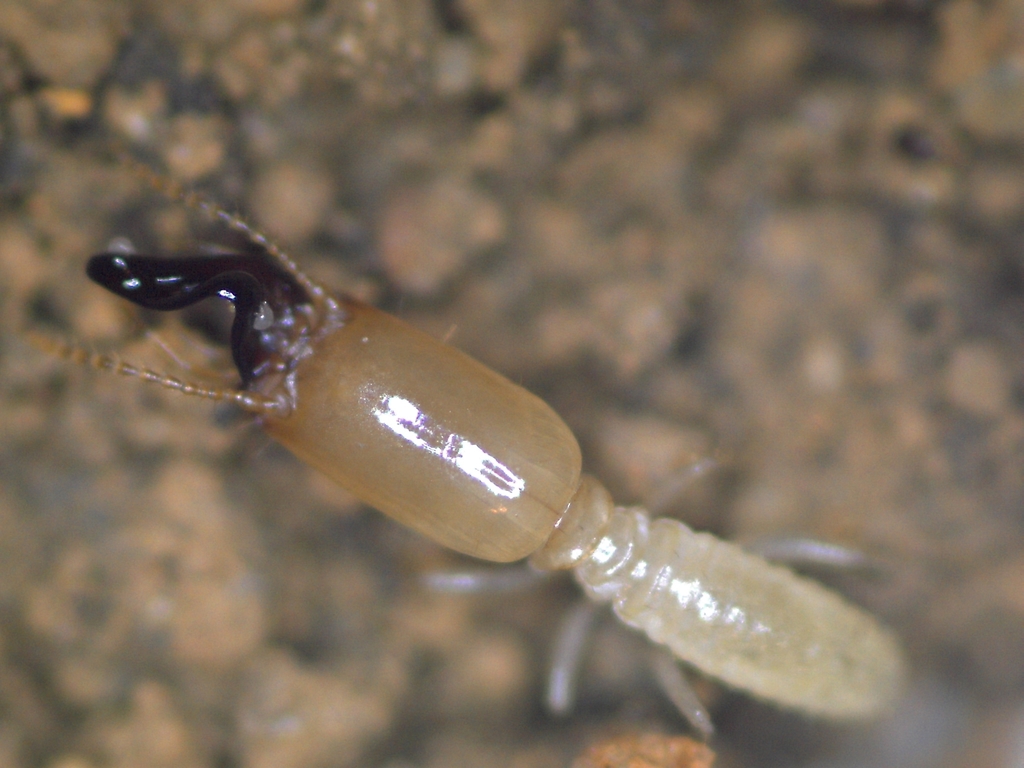
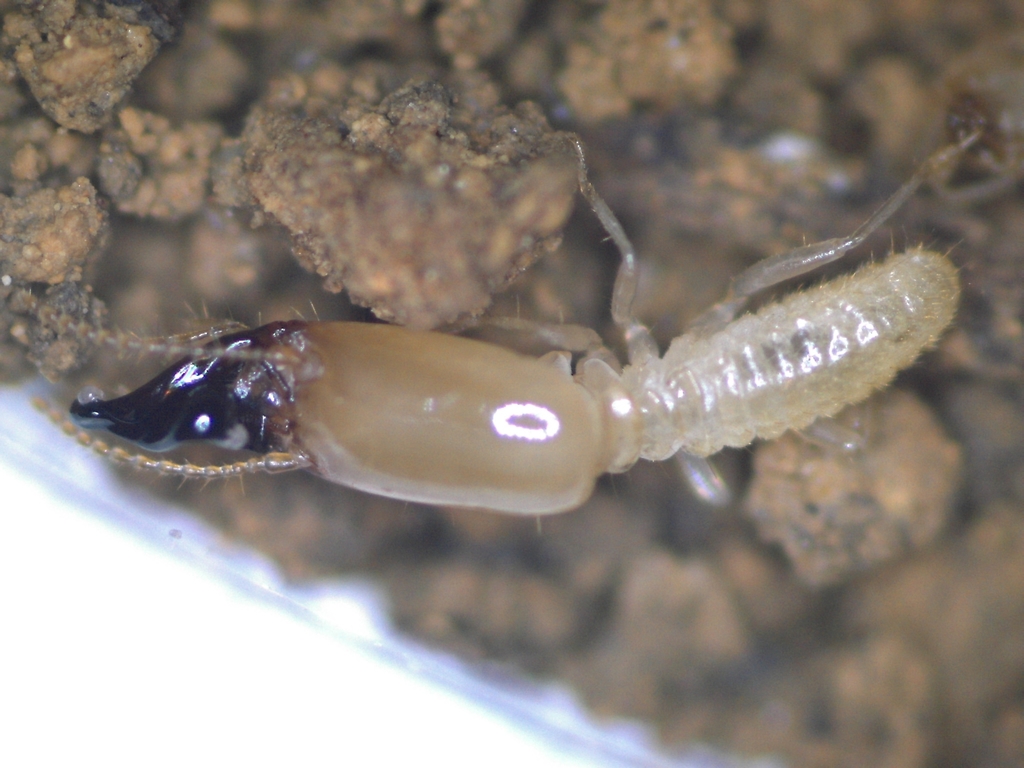
Head orange-yellow or deep orange-red. Apart from several bristles on the anterior margin of the labrum, the body is almost entirely without hairs. Head rectangular, the sides slightly parallel, the two posterolateral margins and the posterior margin forming an arc; the brown median line of the head capsule is very conspicuous and extends forwards to about one-quarter of the length. The left mandible is strongly twisted, obliquely truncate on its anterior right side, the apex blunt; the right mandible slightly shorter and sabre-like. Labrum longer than wide, the anterior margin straight, the anterolateral corners shortly pointed. Antennae with 14 segments. The pronotum is narrower than the head, its anterior half vertically upturned, typically saddle-shaped.
Alate
Alate head width including the compound eyes about 1.25 mm, pronotum width 0.90–1.04 mm.
Worker
Nymph
Abstract (from the source)
Soldiers are orange-yellow to deep orange-red and almost glabrous apart from a few setae on the anterior labral margin. The head is rectangular with subparallel sides, its posterior corners and hind margin forming an arc, and a conspicuous brown midline extending forward about a quarter of the length. The left mandible is strongly twisted, obliquely cut and blunt at the apex, the right shorter and sword-shaped. The labrum is longer than wide with a straight anterior margin and shortly pointed corners. Antennae are 14-segmented, and the saddle-shaped pronotum is narrower than the head, its front half tilted upright.
Biology
Distribution and locality
Sichuan, Henan, Anhui, Jiangsu, Zhejiang, Hubei, Hunan, Jiangxi, Guizhou, Fujian, Taiwan, Yunnan, Guangdong and Guangxi.
Taxonomic notes
Recorded in the original work as Pericapritermes jangtsekiangensis, now merged as a synonym into P. nitobei.
Source: Huang Fusheng et al. (2000), Fauna Sinica, Insecta vol. 17, Isoptera, Science Press. (entry no. 375 in the original work) Entries are cited by their number in the original work.
Photos 17 photos
Freely licensed photos, click to enlarge. Hotlinked from iNaturalist / Wikimedia Commons; the rights stay with the photographers — author, licence and source page are shown under each photo. Only the first 6 are shown here; the rest are under “All photos” at the end of the page.
Distribution map
Aggregated from GBIF occurrence records on a 1° grid; only extant taxa of this checklist are used, so fossil records are excluded. Dot size and shade show the number of records inside a cell.
Related papers
Cached papers for this genus (matched automatically, for reference); to search this species with its junior synonyms merged in, use the literature search.
- Internal Armature of the Hindgut of Pericapritermes nitobei (Shiraki)
Abstract
The internal armature of the hindgut of Pericapritermes nitobei was examined under a light microscope. Termites were obtained from Iriomote Island, Okinawa Prefecture, Japan, identified based on the typological characters of soldiers and 12S (mitochondrial) ribosomal RNA sequencing, and dissected to examine hindgut morphology. The hindgut of P. nitobei could be separated into four parts, P1-P4, and P1-P3 had cuticular spines on the inner surface. P1 bore small triangular spines. P2 formed an enteric valve, composed of six finger-shaped enteric pads with triangular spines, and six marginal regions with small dot-like spines. P3 bore three different types of spines: relatively large star-shaped spines; thorn-like small spines, and long curved spines with brush-like tips.
- The complete mitochondrial genome of Pericapritermes nitobei (Isoptera: Termitidae)
Abstract
The complete circular mitochondrial genome of a higher termite Pericapritermes nitobei has a length of 15,224bp and encodes 37 genes including 13 protein-coding genes (PCGs), 22 transfer RNA (tRNA), 2 ribosomal RNA (rRNA) and a non-coding control region (D-loop). Protein coding genes (PCGs) in this circular mitogenome start with standard ATN initiation codons and end with complete termination codons TAN except for cox2 and nad5 genes with an incomplete stop codon T. The percentage of A and T (67.49%) is higher than that of G and C (32.51%). The phylogenetic tree revealed that mitogenomes of Pericapritermes formed one clade. The tree also revealed that Pericapritermes dolichocephalus and Pericapritermes latignathus constituted a sister group to P. nitobei. The date here provide a resource for genetics and evolution analysis within termites especially Pericapritermes genus.
- A NEW SPECIES AND NEW RECORD OF PERICAPRITERMES(ISOPTERA: TERMITIDAE: TERMITINAE)
Abstract
Pericapritermes gutianensis sp. nov. soldier (figs. 1-6) Imago (figs. 7-10).Body medium. Soldier and Imago resemble to Pericapritermes jangtsekiangensis (Kemner), but the soldier with body larger in size, and head comparatively wider and thicker; also resemble to Pericapritermes fetraphilus (Silvestri), but its imago is black brown vs. reddish brown; the imago and soldiers of the new species are much smaller than P. tetraphilus(Silvestri), Imago: width of head with eyes 1.21-1.26 (1.24) vs. 1.33-1.40 (1.38); width of pronotum 0.98-1.09 (1.02) vs. 1.13-1.17 (1.15). Soldier: width of head 1.40-1.51 (1.46) vs. 1.53-1.78 (1.69); width of pronotum 0.80-0.92 (0.85) vs. 0.97-1.17 (1.13).Pericapritermes latignathus (Holmgren), new record. The soldiers resemble to P. tetraphilus (Silvestri), but its abdomen densely pilose, each tergite with many Jong bristles vs. abdomen scantily hairly, each tergite with four-five long bristles.All specimens are deposited in the Guangdong Institute of Entomology.
Papers on this species, synonyms included → OpenAlex Google Scholar CNKI
Abstracts come from open metadata; copyright remains with the original authors/publishers. For reference only — please check the original.
Other species in Pericapritermes (39 species)
- Pericapritermes appellans
- Pericapritermes assamensis
- Pericapritermes beibengensis
- Pericapritermes brachygnathus
- Pericapritermes buitenzorgi
- Pericapritermes ceylonicus
- Pericapritermes chiasognathus
- Pericapritermes desaegeri
- Pericapritermes dolichocephalus
- Pericapritermes dumicola
- Pericapritermes dunensis
- Pericapritermes durga
- Pericapritermes fuscotibialis
- Pericapritermes gloveri
- Pericapritermes gutianensis
- Pericapritermes hepuensis
- Pericapritermes heteronotus
- Pericapritermes latignathus
- Pericapritermes machadoi
- Pericapritermes magnificus
- Pericapritermes minimus
- Pericapritermes modiglianii
- Pericapritermes mohri
- Pericapritermes nigerianus
- Pericapritermes paetensis
- Pericapritermes pallidipes
- Pericapritermes papuanus
- Pericapritermes parvus
- Pericapritermes pilosus
- Pericapritermes planiusculus
- Pericapritermes schultzei
- Pericapritermes semarangi
- Pericapritermes silvestrianus
- Pericapritermes speciosus
- Pericapritermes tetraphilus
- Pericapritermes topslipensis
- Pericapritermes urgens
- Pericapritermes vermai
- Pericapritermes wuzhishanensis
Cite this species
Citation strings are generated from the fields of this page; please keep the DOI and the version number when citing.
GB/T 7714
班奈特格林. Extant Isoptera (termites): a checklist of Latin and Chinese names: Pericapritermes nitobei 新渡户近扭白蚁[EB/OL]. Version 2026.10.30. https://termite-extant-isoptera.org/en/species/pericapritermes-nitobei/. DOI: 10.5281/zenodo.23646836.
BibTeX
@misc{isoptera_pericapritermes_nitobei_2026,
  author       = {班奈特格林},
  title        = {Pericapritermes nitobei: a checklist of extant Isoptera (termites)},
  year         = {2026},
  version      = {2026.10.30},
  howpublished = {https://termite-extant-isoptera.org/en/species/pericapritermes-nitobei/},
  note         = {TERMITIDAE; version 2026.10.30; DOI: 10.5281/zenodo.23646836},
  doi          = {10.5281/zenodo.23646836}
}
RIS
TY  - ELEC
TI  - Pericapritermes nitobei: a checklist of extant Isoptera (termites)
AU  - 班奈特格林
PY  - 2026
UR  - https://termite-extant-isoptera.org/en/species/pericapritermes-nitobei/
DO  - 10.5281/zenodo.23646836
ER  -