Subfamily Mirocapritermitinae · 瘤白蚁亚科
Filter the taxa recorded under this subfamily by name and locality; for the whole site use the full-text search.
Distribution map
Photographs 18 photos · 2 species
Freely licensed photos; click to enlarge. This preview shows 6 photos; to browse by species, open “All photos”. Photos are hotlinked from iNaturalist / Wikimedia Commons; the rights stay with the photographers.
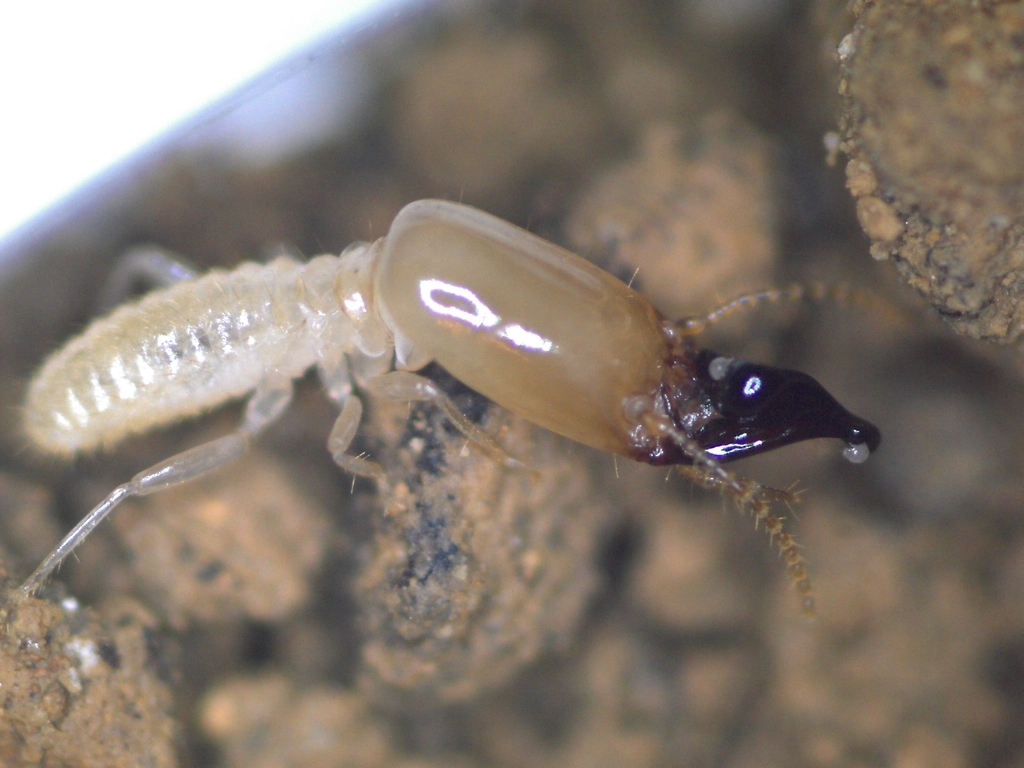
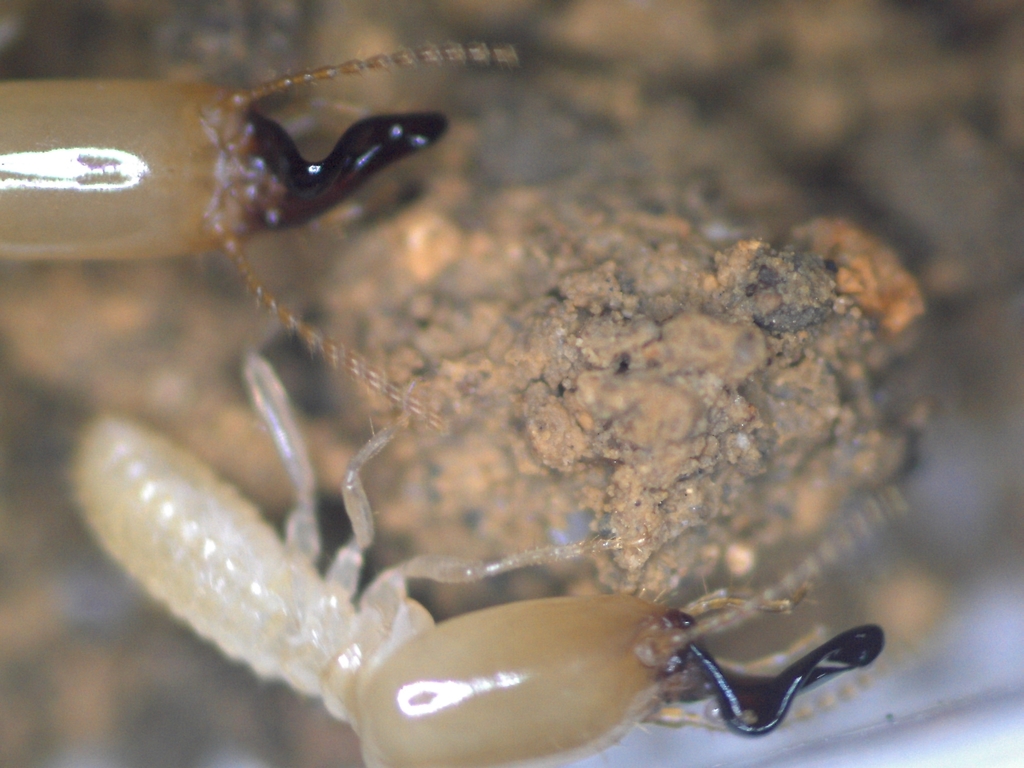
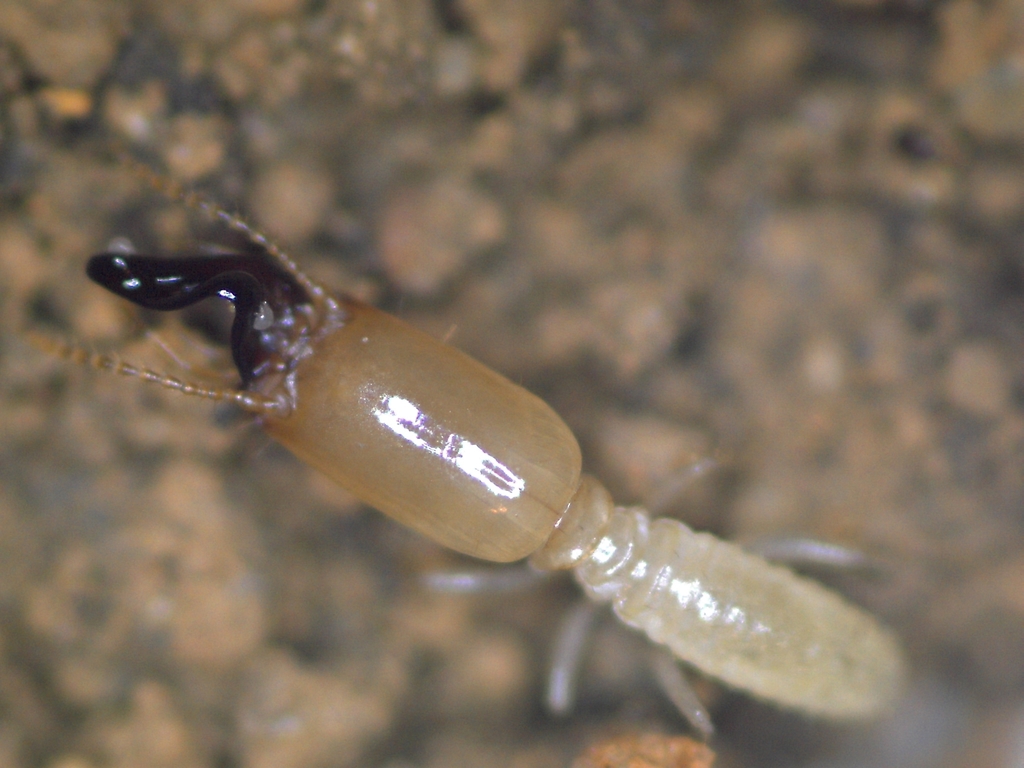
About the subfamily
The subfamily Mirocapritermitinae was established by Kemner in 1934 (Mirocapritermitinae Kemner, 1934), with the type genus Mirocapritermes Holmgren, 1914. This catalogue includes 14 genera and 135 species.
This subfamily has its centre of diversity in the Oriental realm, and most of its genera are restricted to the Oriental realm; the genus Pericapritermes is the most widely distributed, occurring outside the Oriental realm also in tropical Africa, the Australian realm and the southern margin of the Palaearctic (Japan, Korea).
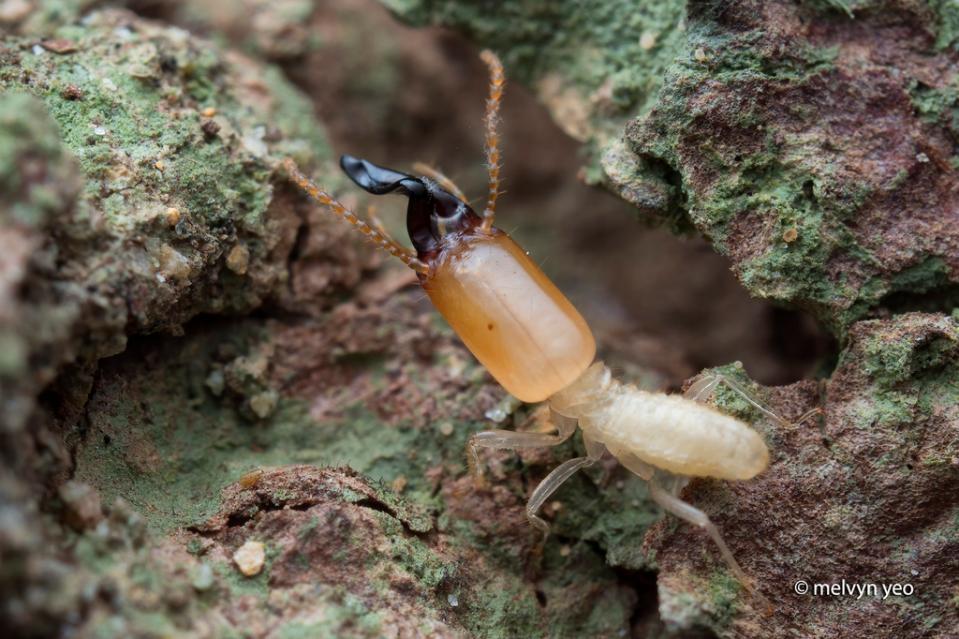
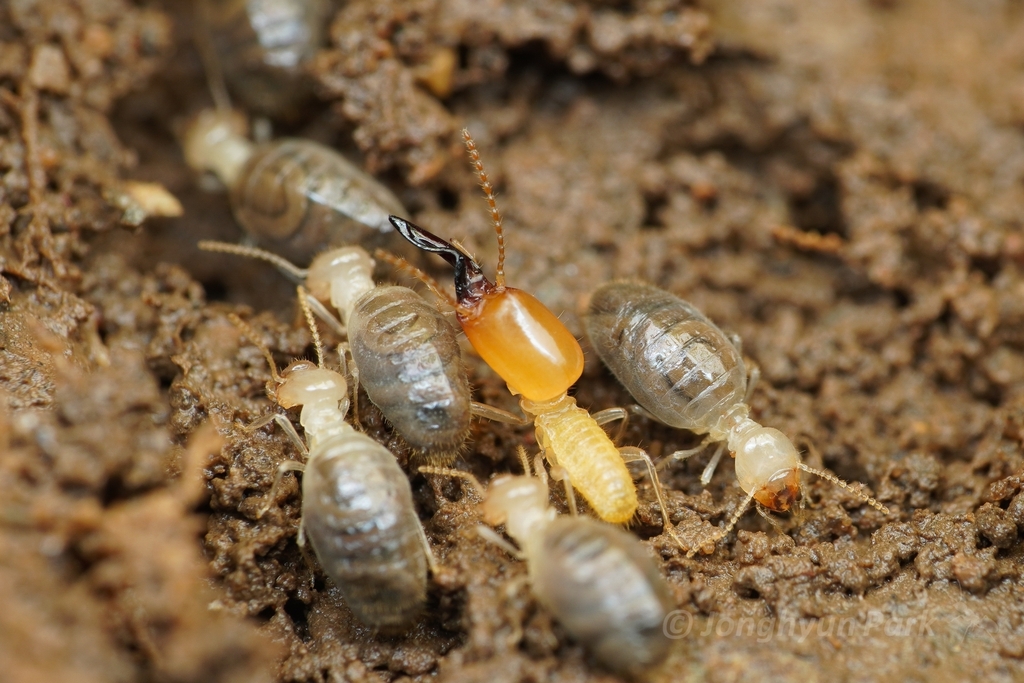
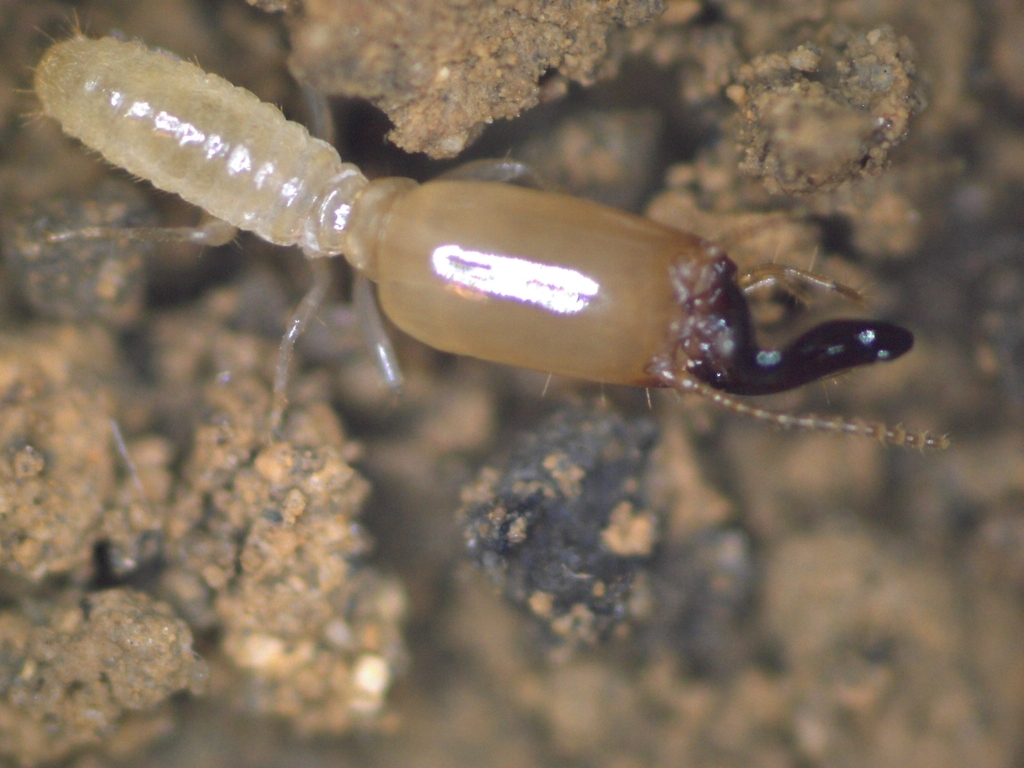
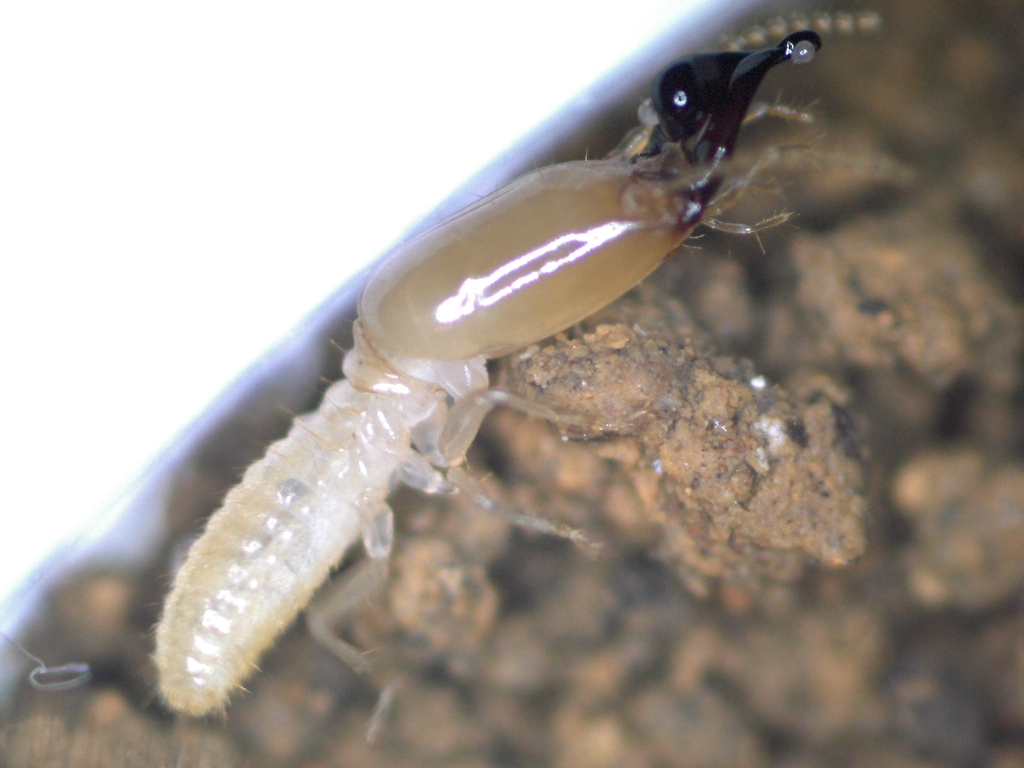
Its diet is soil-feeding (humus-feeding) or feeding at the soil–wood interface, belonging to the typical soil-dwelling organic-matter-degrading group among the higher termites. In defence it is a typical asymmetrical-snapping group: the soldier head is rectangular, and the mandibles are generally asymmetric left and right (the left mandible is twisted in the middle and the right mandible is blade-like), the elastic energy stored when the mandibles are deformed being released to snap at high speed for defence; high-speed photographic studies of Pericapritermes nitobei (61) show that its asymmetric snapping mandibles exceed those of the symmetric snapping types in both strike speed and force, while in some species of the anterior-twisting termite genus the mandibles are nearly symmetric. The soldier head usually has no frontal projection dorsally, and the fontanelle is small and inconspicuous, the type genus Mirocapritermes being the exception in bearing a projection on the frons. In the worker–alate morph, the posterior margin of the second marginal tooth of the right mandible is concave and the molar area is smooth or only weakly sculptured; in the hindgut the two pairs of Malpighian tubules fuse proximally into groups, there is no Malpighian knot, and the enteric valve is composed of six rows of folds — common diagnostic characters of the worker hindgut in this subfamily. Economically, damage records are scattered: in oil-palm nurseries of Karnataka, India (62), Pericapritermes sp. damages the roots of bagged seedlings, causing stunted seedling growth.
This section is the standing account the site maintains for this rank and is updated on this page as the classification is revised; the checklist index is in the Checklist.
Genera (14)
- Dicuspiditermes 突扭白蚁属 21 species
- Homallotermes 平白蚁属 4 species
- Indocapritermes 印扭白蚁属 1 species
- Kemneritermes 凯姆勒白蚁属 1 species
- Krishnacapritermes 克里希纳扭白蚁属 4 species
- Labiocapritermes 唇扭白蚁属 4 species
- Mirocapritermes 瘤白蚁属 8 species
- Oriencapritermes 东扭白蚁属 1 species
- Pericapritermes 近扭白蚁属 40 species, 3 subspecies
- Procapritermes 前扭白蚁属 13 species
- Pseudocapritermes 伪扭白蚁属 19 species
- Rinacapritermes 丽娜扭白蚁属 2 species
- Sinocapritermes 华扭白蚁属 16 species
- Syncapritermes 聚扭白蚁属 1 species
Parent level: Checklist index · Termitidae 白蚁科 · Data & downloads