Genus Pericapritermes · 近扭白蚁属
Filter the taxa recorded under this genus by name and locality; for the whole site use the full-text search.
Distribution map
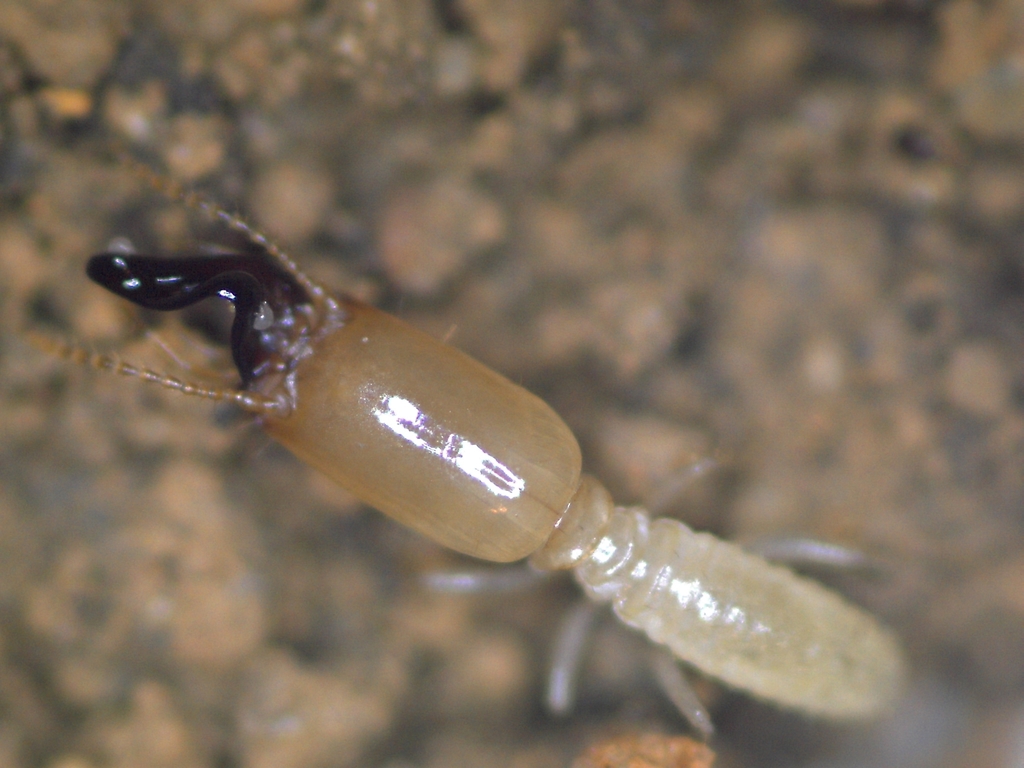
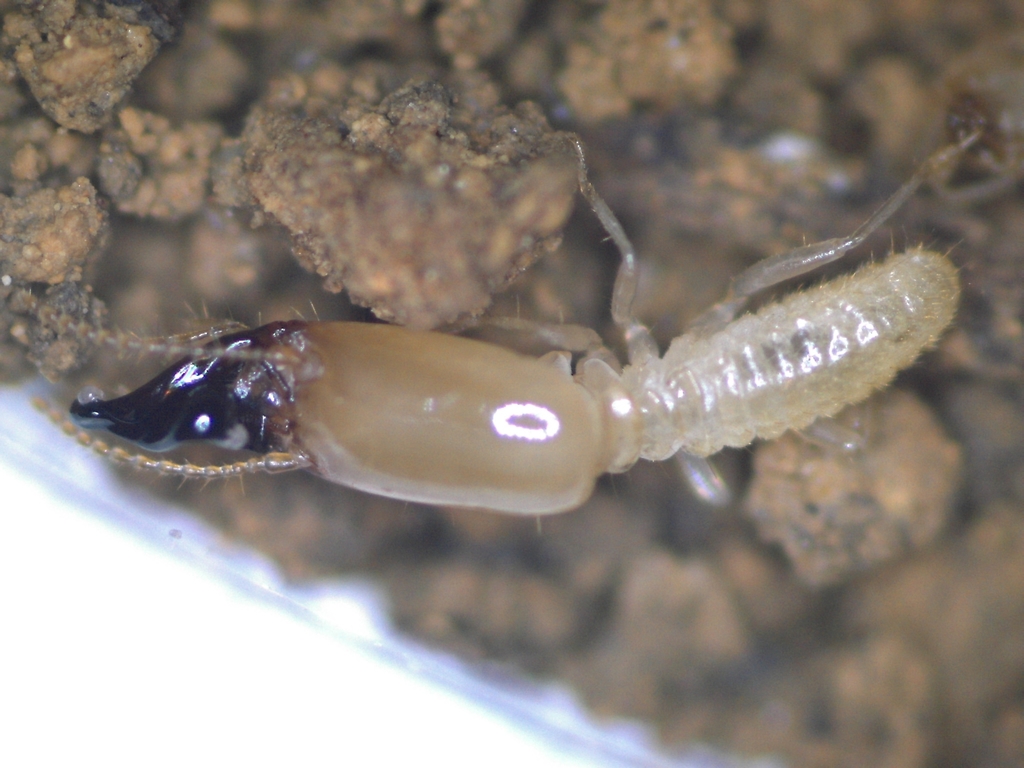
Photographs 17 photos · 1 species
Freely licensed photos; click to enlarge. This preview shows 6 photos; to browse by species, open “All photos”. Photos are hotlinked from iNaturalist / Wikimedia Commons; the rights stay with the photographers.
About the genus
This genus belongs to the family Termitidae 白蚁科, in the subfamily Mirocapritermitinae 瘤白蚁亚科; the site records 40 species, 3 subspecies.
Type species: Pericapritermes urgens.
This page includes a distribution map for the genus (GBIF records aggregated on a 1° grid); open a species entry to see its type locality, distribution, and references.
Etymology
From Greek peri- (around) + Latin caper (goat) + termes.
The etymologies in this section are analytical breakdowns; the roots follow Brown (1956).
Fauna Sinica account
The account below is a reorganized and rewritten adaptation of the genus-level description in Fauna Sinica, Insecta Vol. 17, Isoptera (2000) (the genus-level account of Pericapritermes in the original book, reorganised and rewritten); the source keys and measurement tables are not reproduced here.
Morphology
Key characters
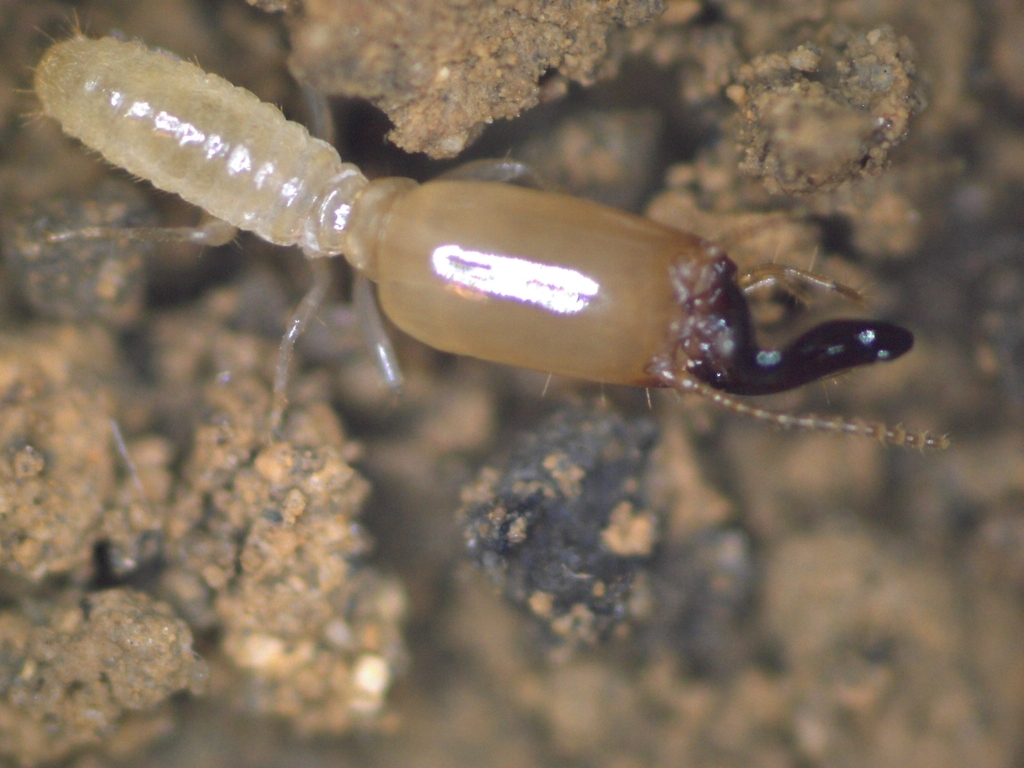
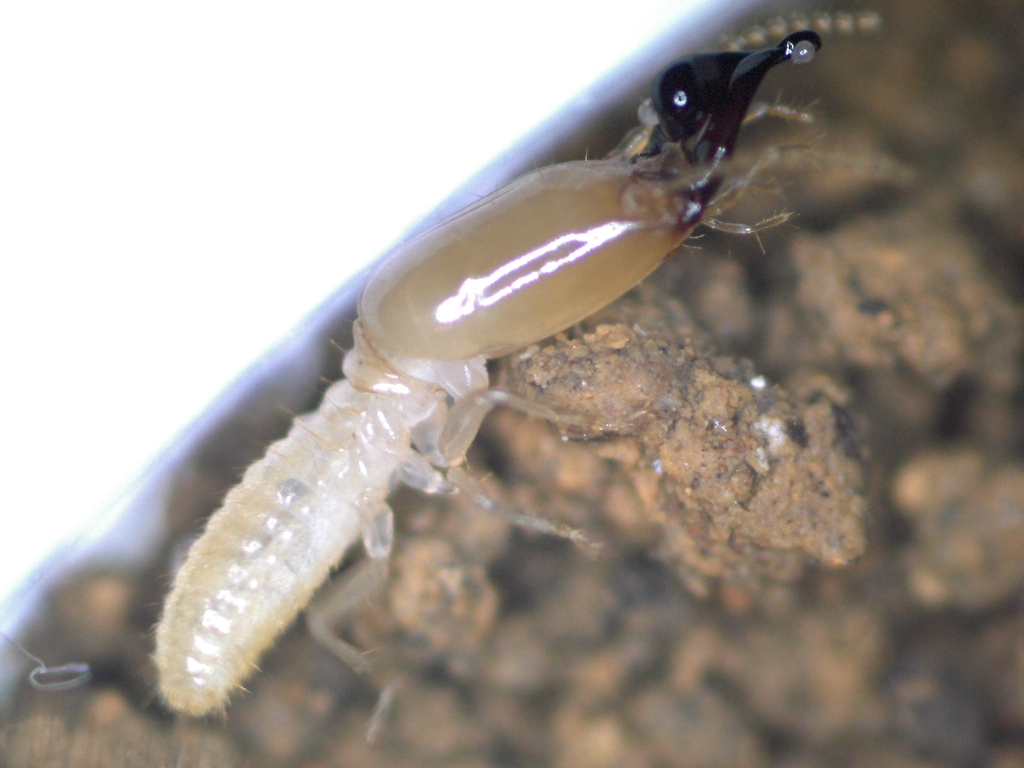
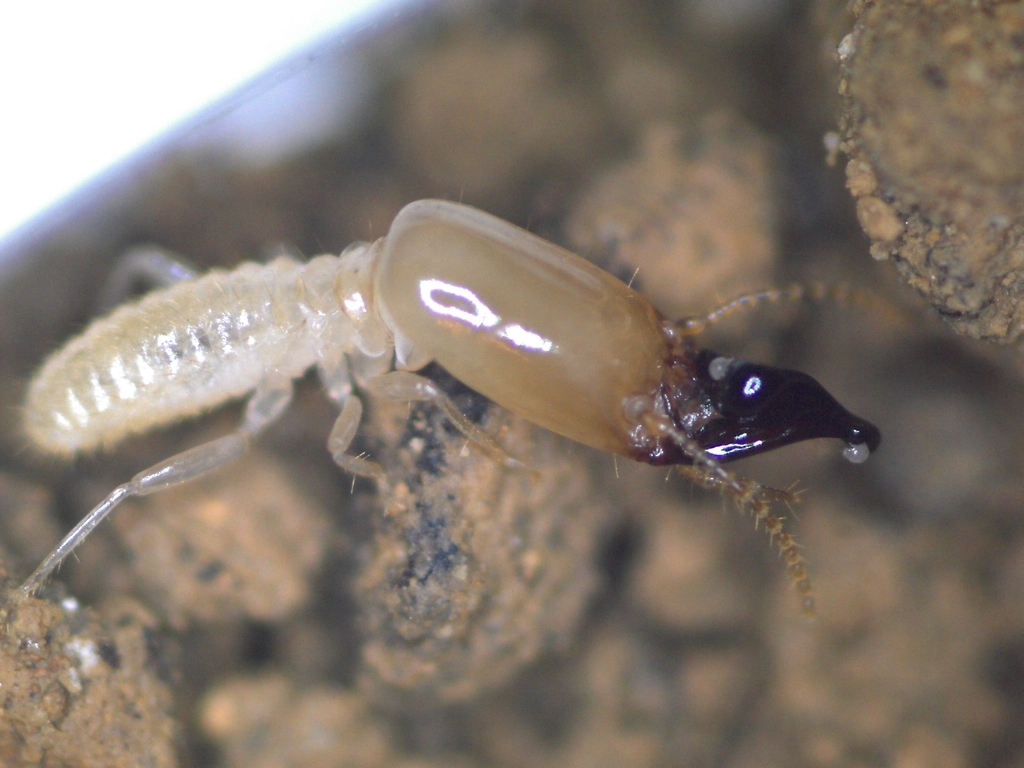
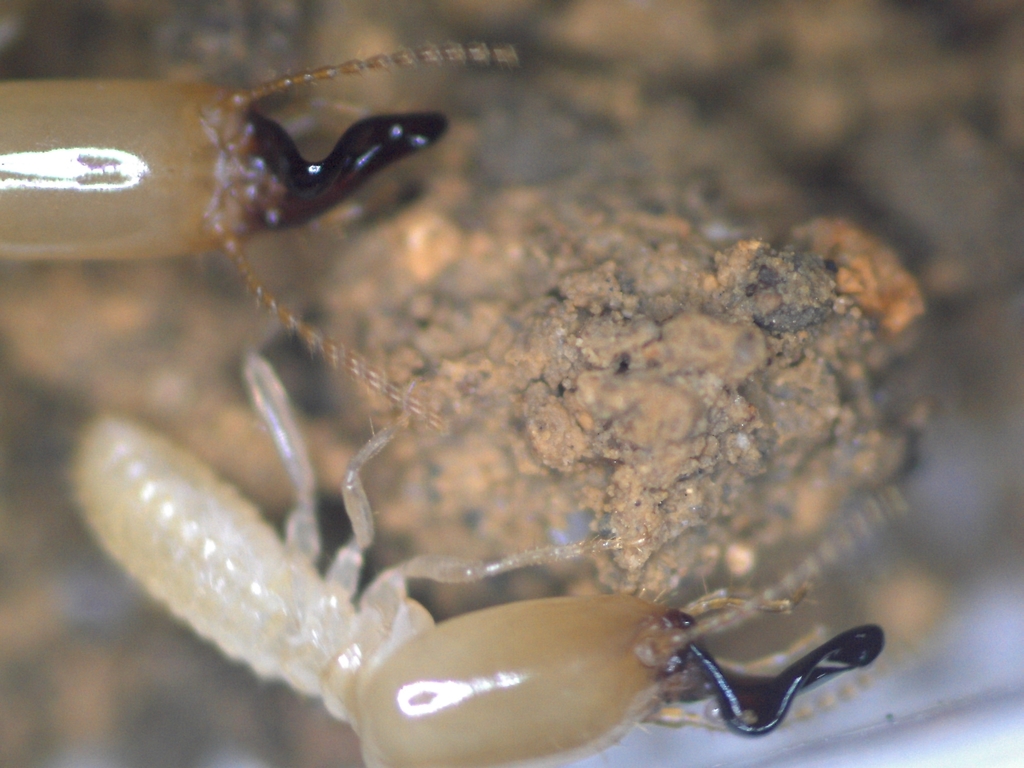
Soldier head rectangular with a rather flat dorsal margin, the frons sloping; the apex of the left mandible blunt and not hooked, the inner cutting edge slightly concave at the middle; labrum about as long as wide; antennae 13–16-segmented, tibial spur formula 3:2:2, tarsi 4-segmented.
Soldier
Soldier head rectangular, the lateral margins nearly parallel, the dorsal margin fairly straight. Frons sloping or slightly steep, fontanelle dot-like. The cephalic suture is fairly distinct, extending forwards to before the middle. Mandibles strongly asymmetrical: the apex of the left mandible is blunt or curved inwards, its tip slightly flattened and not hooked, the inner cutting edge slightly concave at the middle; the right mandible is straighter, or its anterior part slightly curved outwards. Labrum about as long as wide, the anterior margin straight, the lateral corners pointed and shortly projecting; postclypeus very narrow. Antennae 13–16-segmented. Pronotum saddle-shaped, narrower than the head. Tibial spur formula 3:2:2, tarsi 4-segmented.
Alate
Alate head broadly oval, slightly narrowed anteriorly; postclypeus slightly convex, less than half as long as wide, with or without a median suture. Antennae 14–15-segmented; fontanelle oval. The inner margin of the apical tooth of the left mandible is as long as or slightly longer than the anterior margin of the first marginal tooth, while its apical distance is shorter than the distance between the first and third marginal teeth; the second marginal tooth of the right mandible is well developed, its posterior curved margin arcuate; the apical distance between the second and first marginal teeth is shorter than that between the first marginal tooth and the apical tooth. The anterior margin of the pronotum is slightly concave at the middle.
Biology and economic significance
The mandibles of these termites are particularly well developed and strongly twisted, enabling the insects to spring by means of them while emitting a clicking sound. Nests are mostly built in the soil and consist of several chambers and passages; they feed on plant rootlets and decaying parts, and can also bore into the surface of living trees and into sugar cane. One species of the genus is recorded as feeding on fungal spores and water in the soil.
Distribution
Oriental region; mainly tropical and subtropical, common in the provinces of south-western and south-eastern coastal China.
Summary
Pericapritermes soldiers have a long rectangular head with nearly parallel sides and a rather flat dorsum; the frons slopes and the fontanelle is punctiform. The mandibles are strongly asymmetric, the left blunt or bent inward with a flat, non-hooked apex, the right straighter. The labrum is about as long as broad, antennae are 13 to 16 segmented, and there are four tarsal segments. Alates have 14- to 15-segmented antennae. The genus is tropical and subtropical in distribution.
Sources cited: Huang Fusheng, Zhu Shimo, Ping Zhengming, Wang Zhiguo, Li Can and Xu Chungui, 2000. Fauna Sinica, Insecta Vol. 17, Isoptera. Beijing: Science Press. This text is a reorganized adaptation, not a verbatim transcription.
Literature notes
Edited notes based on the original literature, not transcriptions. The source markers in each paragraph point to archived records in .sources; full citations are listed below.
Soil-feeding populations in the Javanese highlands
In the survey by Pribadi et al. (2011) across five land-use types on the eastern slopes of Mount Slamet, Central Java, Pericapritermes semarangi was the most abundant of the seven termite species recorded, with 31 individuals, and soil-feeding termites were absent from settlements and occurred mainly in protected and production forest.
According to the abstract of Ratiknyo et al. (2018), an altitudinal survey on four slopes of Mount Slamet between 700 and 1300 m assigned Pericapritermes dolichocephalus and a second Pericapritermes species to the soil-feeding group, counted separately from wood feeders and humus feeders; 7349 individuals of 11 species, 9 genera, 5 subfamilies and 2 families were recorded, diversity was highest on the western slope, and canonical correspondence analysis identified canopy cover and light intensity as the environmental factors most correlated with community structure.
References
- Pribadi, T. I.; Raffiudin, R.; Harahap, I. S. 2011. Termites community as environmental bioindicators in highlands: a case study in eastern slopes of Mount Slamet, Central Java. Biodiversitas 12(3): 235–240.
- Ratiknyo, H.; Ahmad, I.; Budianto, B. H. 2018. Diversity and abundance of termites along altitudinal gradient and slopes in Mount Slamet, Central Java, Indonesia. Biodiversitas 19(5).
Species (40 species, 3 subspecies)
- Pericapritermes appellans Silvestri, 1914 定名近扭白蚁
- Pericapritermes assamensis Mathur & Thapa, 1965 阿萨姆近扭白蚁
- Pericapritermes beibengensis Huang & Han, 1987 背崩近扭白蚁
- Pericapritermes brachygnathus John, 1925 短颚近扭白蚁
- Pericapritermes buitenzorgi Holmgren, 1914 比特恩佐格近扭白蚁
- Pericapritermes ceylonicus Holmgren, 1911 锡兰近扭白蚁
- Pericapritermes chiasognathus Sjöstedt, 1904 隐颚近扭白蚁
- Pericapritermes desaegeri Harris, 1963 德埃吉近扭白蚁
- Pericapritermes dolichocephalus John, 1925 长头近扭白蚁
- Pericapritermes dumicola Harris, 1954 栖丛近扭白蚁
- Pericapritermes dunensis Roonwal & Sen-Sarma, 1960 德拉敦近扭白蚁
- Pericapritermes durga Roonwal & Chhotani, 1962 杜尔加近扭白蚁
- Pericapritermes fuscotibialis Light, 1931 灰胫近扭白蚁
- Pericapritermes gloveri Harris, 1951 格洛弗近扭白蚁
- Pericapritermes gutianensis Li & Ma, 1983 古田近扭白蚁
- Pericapritermes hepuensis Gao & Yang, 1990 合浦近扭白蚁
- Pericapritermes heteronotus Silvestri, 1914 异背近扭白蚁
- Pericapritermes latignathus Holmgren, 1914 多毛近扭白蚁
- Pericapritermes machadoi Noirot, 1955 马查多近扭白蚁
- Pericapritermes magnificus Silvestri, 1912 非凡近扭白蚁
- Pericapritermes minimus Weidner, 1956 最小近扭白蚁
- Pericapritermes modiglianii Silvestri, 1922 莫迪利亚尼近扭白蚁
- Pericapritermes mohri Kemner, 1934 莫尔近扭白蚁
- Pericapritermes nigerianus Silvestri, 1914 尼日利亚近扭白蚁
- Pericapritermes nitobei Shiraki, 1909 新渡户近扭白蚁
- Pericapritermes paetensis Oshima, 1920 帕埃特近扭白蚁
- Pericapritermes pallidipes Sjöstedt, 1898 灰足近扭白蚁
- Pericapritermes papuanus Bourguignon & Roisin, 2008 巴布亚近扭白蚁
- Pericapritermes parvus Bourguignon & Roisin, 2008 小型近扭白蚁
- Pericapritermes pilosus Bourguignon & Roisin, 2008 毛多近扭白蚁
- Pericapritermes planiusculus Ping & Xu, 1988 平扁近扭白蚁
- Pericapritermes schultzei Holmgren, 1911 舒尔茨近扭白蚁
- Pericapritermes semarangi Holmgren, 1913 三宝近扭白蚁
- Pericapritermes silvestrianus Emerson, 1928 西尔韦斯特里近扭白蚁
- Pericapritermes speciosus Haviland, 1898 美丽近扭白蚁
- Pericapritermes tetraphilus Silvestri, 1922 大近扭白蚁
- Pericapritermes topslipensis Thakur, 1976 托普斯利普近扭白蚁
- Pericapritermes urgens Silvestri, 1914 催促近扭白蚁 ★ Type species
- Pericapritermes vermai Kumar & Thakur, 2011 维尔马近扭白蚁
- Pericapritermes wuzhishanensis Li, 1982 五指山近扭白蚁
- Pericapritermes appellans metata Silvestri, 1914 丈量亚种
- Pericapritermes urgens confinis Silvestri, 1914 近邻亚种
- Pericapritermes urgens urgens Silvestri, 1914 指名亚种
Parent level: Checklist index · Mirocapritermitinae 瘤白蚁亚科 · Data & downloads