Genus Acanthotermes · 刺白蚁属
Filter the taxa recorded under this genus by name and locality; for the whole site use the full-text search.
Distribution map
Photographs 2 photos · 1 species
Freely licensed photos; click to enlarge. This preview shows 6 photos; to browse by species, open “All photos”. Photos are hotlinked from iNaturalist / Wikimedia Commons; the rights stay with the photographers.
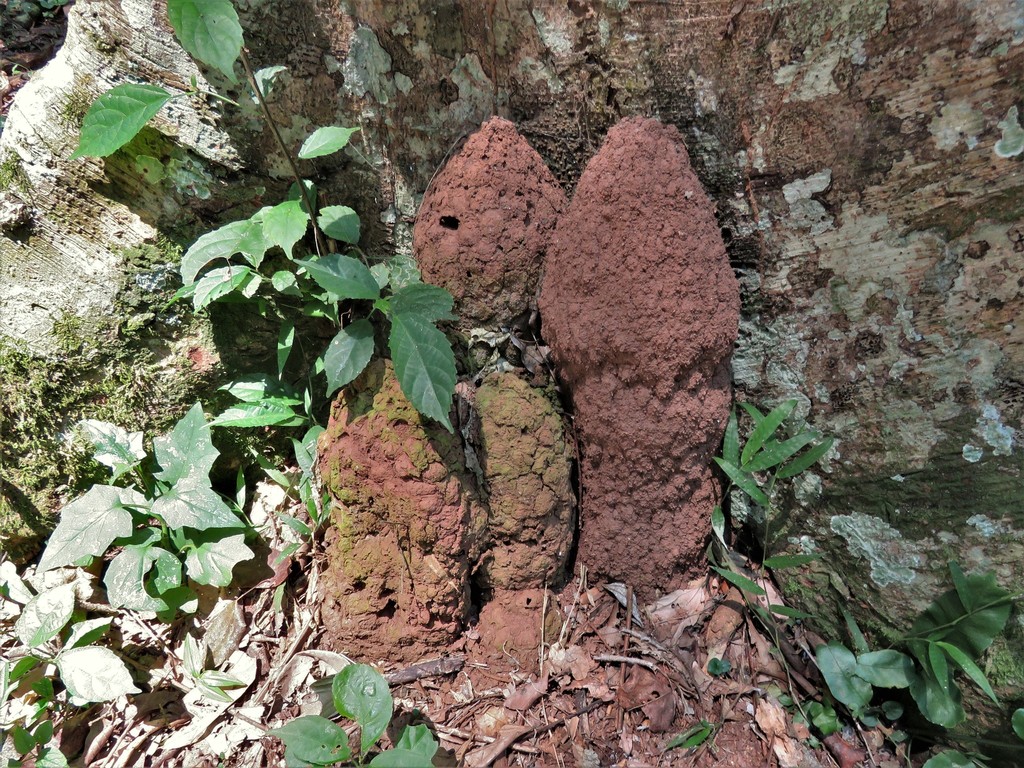
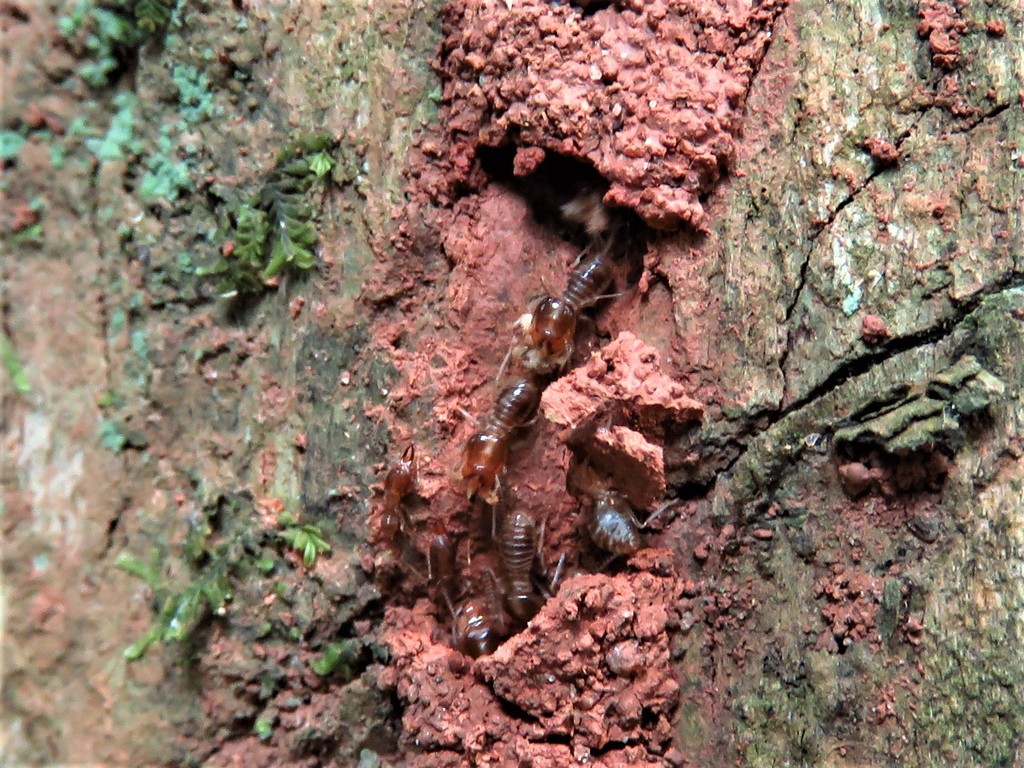
About the genus
This genus belongs to the family Termitidae 白蚁科, in the subfamily Macrotermitinae 大白蚁亚科; the site records 1 species.
Type species: Acanthotermes acanthothorax.
This page includes a distribution map for the genus (GBIF records aggregated on a 1° grid); open a species entry to see its type locality, distribution, and references.
Etymology
From Greek akantha (thorn) + Latin termes.
The etymologies in this section are analytical breakdowns; the roots follow Brown (1956).
Morphology
The descriptions below are an adaptation of the original genus-level accounts; terms follow the meaning of the source, and the original is not transcribed verbatim.
Diagnostic characters
The soldiers are of three sizes — large, medium and small — which is the most conspicuous character of the genus; alate antennae 20–23-segmented, the male with 1–2 more segments than the female, soldier antennae 17–20-segmented. Anterior margin of the pronotum with spines, lateral margins of the thoracic tergites more or less acute. All known species are from Africa.
Alate
Head broad, nearly circular. Compound eyes medium-sized and protruding; ocelli directed slightly laterally, nearly circular, about one eye diameter from the compound eyes. Frontal gland opening present. Base of the clypeus even longer than half its width, rather narrow, posterior margin strongly convex, anterior margin straight, considerably raised, distinctly brighter than the frons; distal part of the clypeus transparent. Labrum longer than wide, with a chitinous transverse band. Mandibles with the Termes-type dentition, the first tooth of the left mandible slightly larger than the second. Pronotum with two small tuberculate projections on each side of the midline. Posterior notch of the mesonotum slightly wider than that of the metanotum. Wings transparent, with brown veins at the base and along the anterior margin, membrane weakly reticulate; radius reduced, not extending beyond the wing scale; media of the forewing separate from the wing scale, media of the hindwing arising from the base of the radial sector, slender, branching towards the radial sector and the wing apex; cubitus with a thickened inner vein. Sides of the abdomen with exudatory setae, denser in the female; male with styli.
Soldier
Major soldier: head narrowing more or less anteriorly, sides parallel, oval to cordate, posterior margin straight to strongly concave. Frontal gland opening distinct, surrounded by a circular area bearing setae, with a spine-like projection in front of the opening; base of the mandibles stout. Base of the clypeus very short, distal part rather large and transparent. Labrum rather wide, distal part trilobed and transparent. Mandibles rather short and stout, more or less strongly curved, each with a more or less sharp large basal tooth; left mandible with an additional 3 to several rather small tuberculate teeth, its base often notched and projecting as a tooth; rest of the right mandible toothless. Postmentum long, narrow, parallel-sided. Anterior margin of the pronotum with two pointed projections on each side of the midline, rather small, anterolateral angles rather sharp; lateral parts of mesonotum and metanotum more or less acute. Legs long, the last tarsomere distinctly longer than the remaining tarsomeres together, slender. Cerci large; styli present but small, or reduced. Minor soldier: head rather parallel-sided, oval, widest at the level of the antennae; in lateral view both upper and lower surfaces rather convex, the lower especially wrinkled. The frontal gland opening is likewise surrounded by a ring of setae, sometimes raised into a tube, with a distinct spine on its anterior margin. Clypeus rather short, posterior margin convex, anterior margin straight, with a transparent distal part. Labrum pointed, distal part transparent and trilobed. Mandibles narrow, weakly sickle-shaped, the base of the left mandible with tooth marks, the basal tooth weakly developed. Antennae long, 15–20-segmented, segment 2 shorter than segment 3. Postmentum elongate, strongly convex, narrow and parallel-sided. Anterior margin of the pronotum with spines. Cerci large; styli present.
Worker
Two forms. Head large, broadly oval, coronal suture distinct, frontal gland opening large and triangular. Base of the clypeus short, much shorter than half its width, raised, distal part large. Labrum longer than wide, with a chitinous transverse band. Mandibles shorter and wider than in the alate, but with the same dentition. Antennae 17–21-segmented, segment 2 longer than segment 3. Pronotum with stout anterior projections. Legs long, foretrochanter with two stout anterior setae. Cerci large; styli reduced.
Sources: Holmgren, N. 1912. Termitenstudien 3. Systematik der Termiten. Die Familien Mastotermitidae, Protermitidae und Mesotermitidae. Kungliga Svenska Vetenskapsakademiens Handlingar 48(4): 1–166, Taf. 1–4., pp. 13—14(archive.org 项 biostor-184513 页面图像) This text is an adaptation, not a verbatim transcription of the original.
Species (1)
- Acanthotermes acanthothorax Sjöstedt, 1898 刺胸刺白蚁 ★ Type species
Parent level: Checklist index · Macrotermitinae 大白蚁亚科 · Data & downloads