Genus Nasutitermes · 象白蚁属
Filter the taxa recorded under this genus by name and locality; for the whole site use the full-text search.
Distribution map
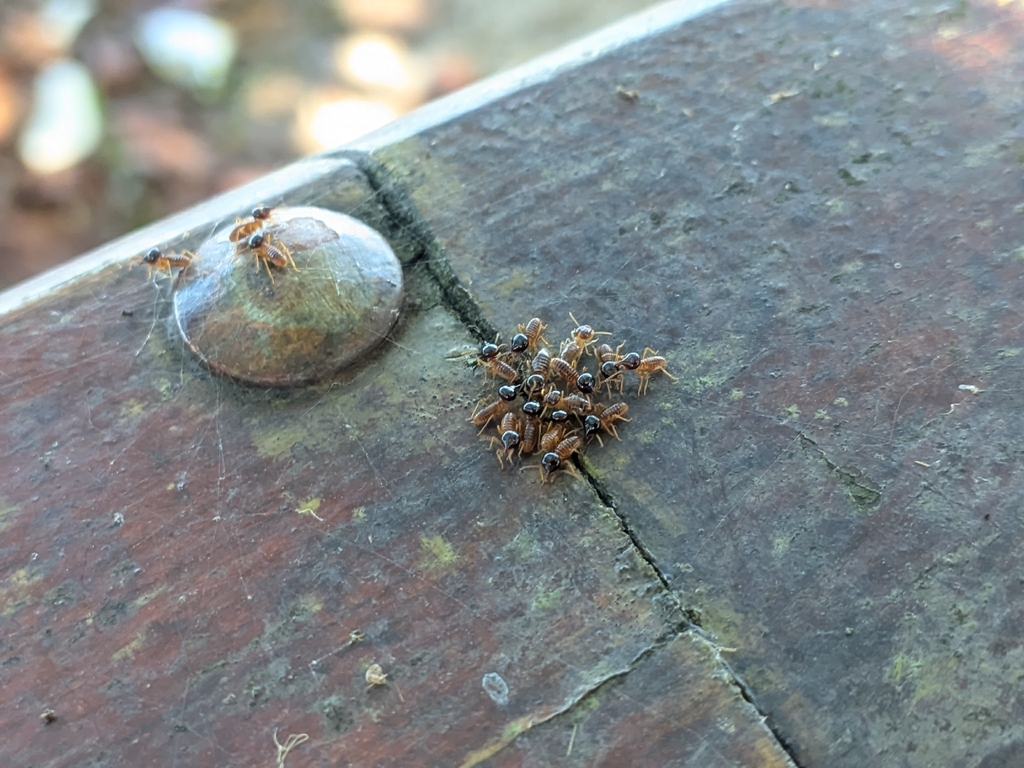
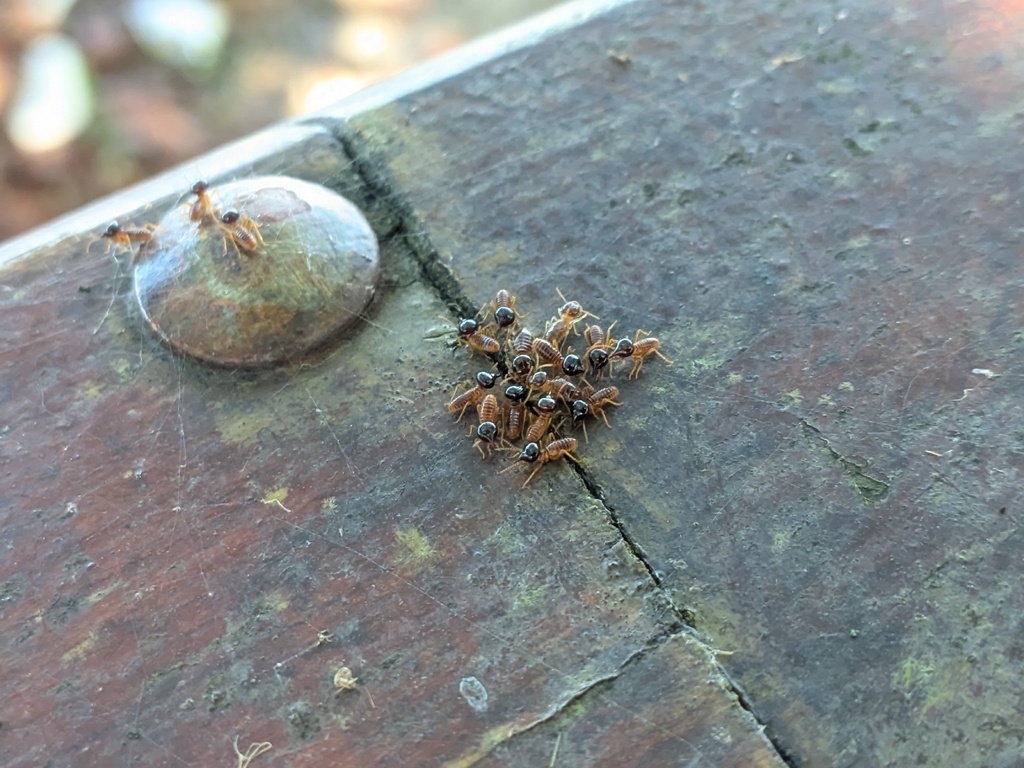
Photographs 378 photos · 13 species
Freely licensed photos; click to enlarge. This preview shows 6 photos; to browse by species, open “All photos”. Photos are hotlinked from iNaturalist / Wikimedia Commons; the rights stay with the photographers.
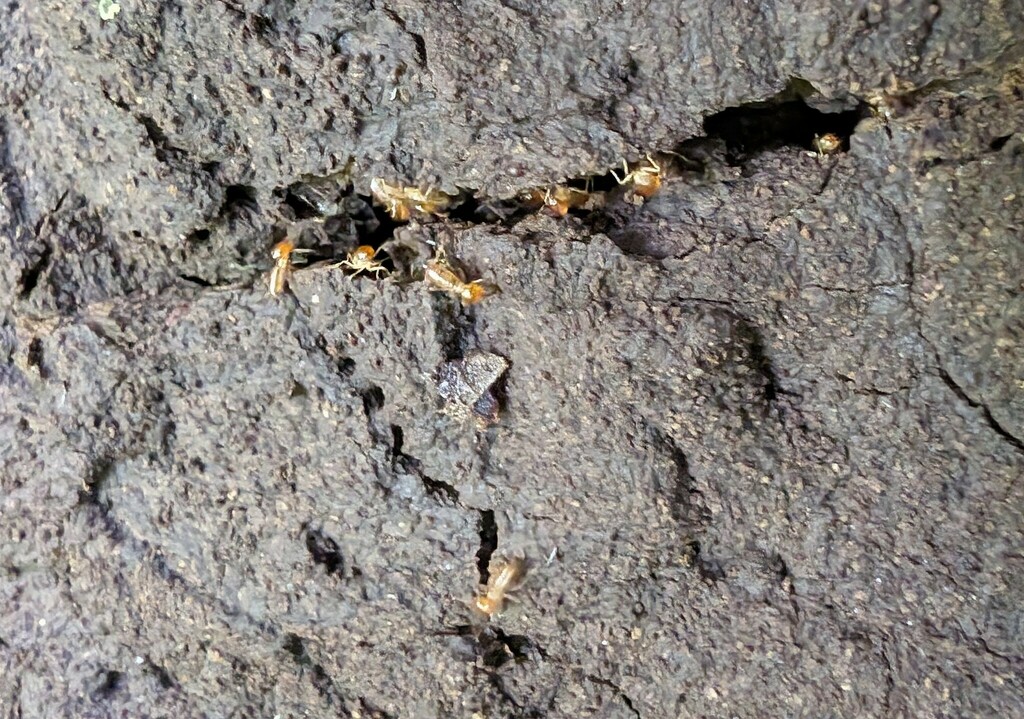
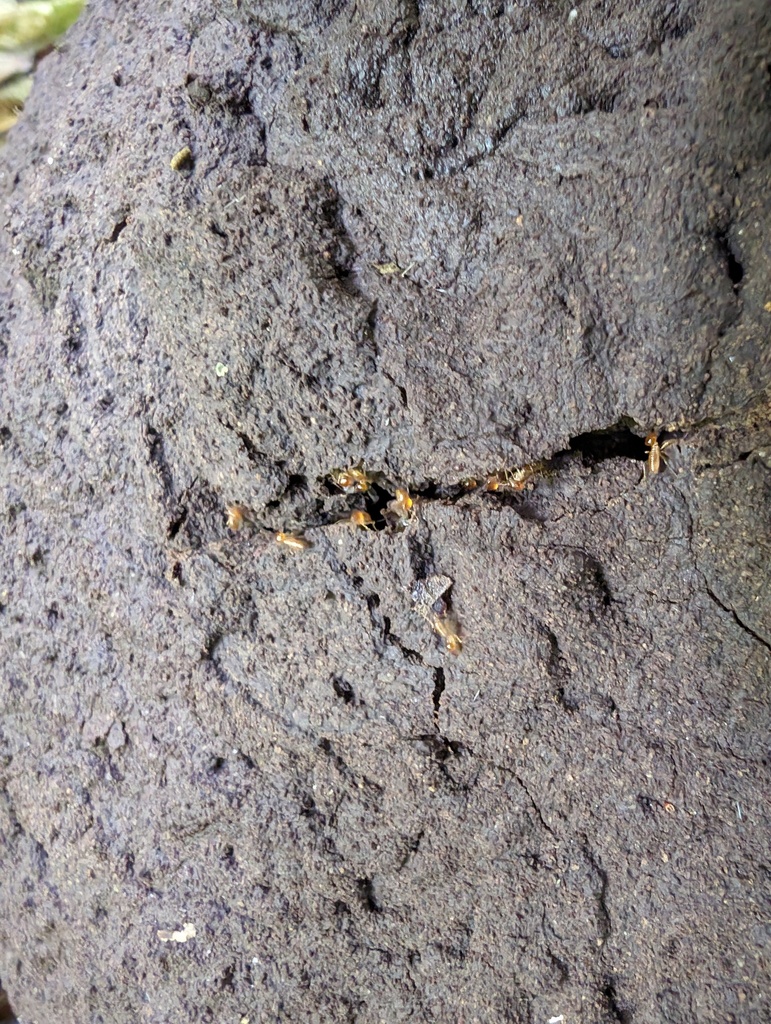
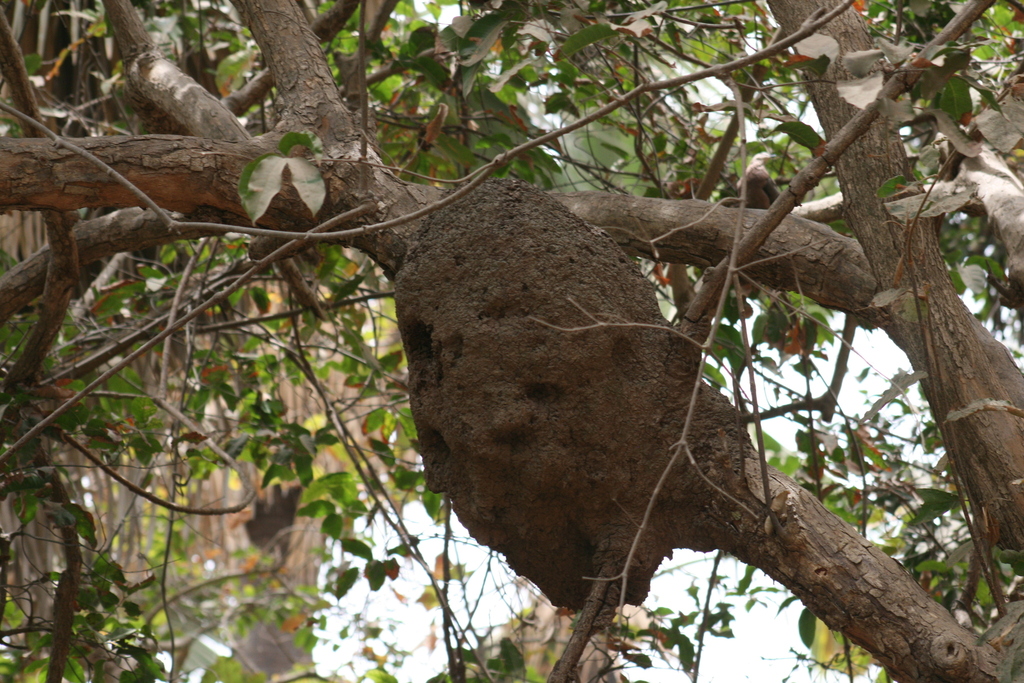
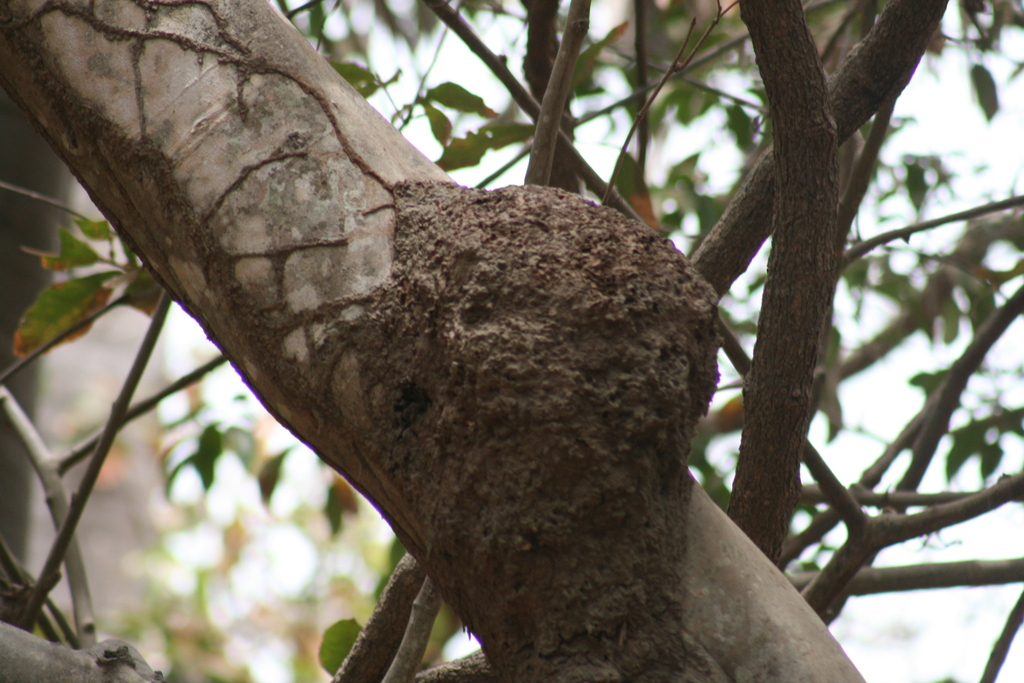
About the genus
This genus belongs to the family Termitidae 白蚁科, in the subfamily Nasutitermitinae 象白蚁亚科; the site records 243 species, 8 subspecies.
Type species: Nasutitermes corniger.
This page includes a distribution map for the genus (GBIF records aggregated on a 1° grid); open a species entry to see its type locality, distribution, and references.
Etymology
From Latin nasutus (large-nosed) + termes, for the nasute soldier.
The etymologies in this section are analytical breakdowns; the roots follow Brown (1956).
Fauna Sinica account
The account below is a reorganized and rewritten adaptation of the genus-level description in Fauna Sinica, Insecta Vol. 17, Isoptera (2000) (generic description in the original book's section on Nasutitermes, reorganised and rewritten); the source keys and measurement tables are not reproduced here.
Morphology
Key characters
Soldier head circular or elongate oval, the nasus projecting from the front of the frons as a tube or a cone, the middle of the head not constricted, no constriction behind the antennal sockets, mandibles minute and labrum very short, soldiers generally monomorphic; alate entirely dark.
Soldier
Soldier head capsule circular or elongate oval, the nasus projecting from the front of the frons, either tubular or conical, narrow anteriorly and broad posteriorly, the middle of the head not constricted. The junction of the vertex and the nasus straight, or slightly concave. No constriction behind the antennal sockets. Mandibles minute, their anterior lateral corners obtusely rounded, or produced into sharp points. Antennal segments not very long. Labrum very short. Soldiers of this genus generally of a single size.
Alate
Alate entirely dark. Head broadly oval, postclypeus paler in colour, its width several times its length, fontanelle small, mostly elongate and forked. Antennal segments not much elongated. The incisions of the posterior margins of the mesonotum and metanotum are both fairly wide. Forewing scale and hindwing scale similar in size, radius absent, media very close to the cubitus.
Distribution
Neotropical, Nearctic, Afrotropical, Oriental and Australian Regions; rather many species in southern China.
Summary
Nasutitermes soldiers have a round or long oval head with a tubular or cone-shaped nasus arising from the front of the frons; the head is not constricted at the middle and the junction of vertex and nasus is flat or slightly concave. There is no constriction behind the antennal sockets. The mandibles are minute, their anterolateral corners blunt or produced into points, and the labrum is very short. Soldiers are usually monomorphic. Alates are dark, with 15-segmented antennae. The genus is widespread in warm regions.
Sources cited: Huang Fusheng, Zhu Shimo, Ping Zhengming, Wang Zhiguo, Li Can and Xu Chungui, 2000. Fauna Sinica, Insecta Vol. 17, Isoptera. Beijing: Science Press. This text is a reorganized adaptation, not a verbatim transcription.
Literature notes
Edited notes based on the original literature, not transcriptions. The source markers in each paragraph point to archived records in .sources; full citations are listed below.
Assemblage structure in a northern Australian savanna
According to the abstract, Dawes-Gromadzki (2008) sampled four 50 × 50 m sites in Charles Darwin National Park, Northern Territory, Australia, between April and June 2003 and recorded 16 termite species in nine genera and three families; Termitidae accounted for 69% of occurrences, Nasutitermes eucalypti, a wood/soil interface feeder, for 30% of all encounters, Ephelotermes taylori was recorded for the first time in open savanna woodland and Macrognathotermes errator was the first official record for north Australian savanna.
The survey recorded four nesting habits—epigeal mounds, subterranean nests, nests within wood and arboreal nests—with termites most often encountered in epigeal mounds and lying dead wood, wood feeders and wood/soil interface feeders being the commonest; soil feeders and live-wood feeders were scarcer and grass-harvesting species were absent, and the author attributes this lower diversity in part to soil nitrogen and phosphorus and to the richness and patchiness of the ground vegetation.
Records from Java
In a survey of five land-use types on the eastern slopes of Mount Slamet, Central Java, Pribadi et al. (2011) recorded Nasutitermes javanicus in all five habitats (21 individuals in total) and Nasutitermes matangensis only in protected forest (2 individuals).
According to the abstract of Ratiknyo et al. (2018), an altitudinal survey on four slopes of Mount Slamet between 700 and 1300 m grouped Nasutitermes matangensis with several Bulbitermes species as humus feeders; the survey recorded 11 species, 9 genera, 5 subfamilies and 2 families, with the highest diversity on the western slope.
References
- Dawes-Gromadzki, T. Z. (2008). Abundance and diversity of termites in a savanna woodland reserve in tropical Australia. Australian Journal of Entomology.
- Pribadi, T. I.; Raffiudin, R.; Harahap, I. S. 2011. Termites community as environmental bioindicators in highlands: a case study in eastern slopes of Mount Slamet, Central Java. Biodiversitas 12(3): 235–240.
- Ratiknyo, H.; Ahmad, I.; Budianto, B. H. 2018. Diversity and abundance of termites along altitudinal gradient and slopes in Mount Slamet, Central Java, Indonesia. Biodiversitas 19(5).
Species (243 species, 8 subspecies)
- Nasutitermes acajutlae Holmgren, 1910 阿卡胡特拉象白蚁
- Nasutitermes acangussu Bandeira & Fontes, 1979 头大象白蚁
- Nasutitermes acutus Holmgren, 1913 尖锐象白蚁
- Nasutitermes aduncus Snyder, 1926 弯曲象白蚁
- Nasutitermes alticola Holmgren, 1913 高地象白蚁
- Nasutitermes amboinensis Kemner, 1931 安汶象白蚁
- Nasutitermes anamalaiensis Snyder, 1933 安纳马莱象白蚁
- Nasutitermes anjiensis Gao & Guo, 1995 安吉象白蚁
- Nasutitermes anoniensis Akhtar, 1975 阿诺尼象白蚁
- Nasutitermes aquilinus Holmgren, 1910 鹰喙象白蚁
- Nasutitermes araujoi Roonwal & Rathore, 1976 阿劳若象白蚁
- Nasutitermes arborum Smeathman, 1781 树生象白蚁
- Nasutitermes arenarius Hagen, 1858 沙地象白蚁
- Nasutitermes aruensis John, 1925 阿鲁象白蚁
- Nasutitermes atripennis Haviland, 1898 黑翅象白蚁
- Nasutitermes aurantius Scheffrahn, 2025 橙黄象白蚁
- Nasutitermes balingtauagensis Oshima, 1917 巴林他象白蚁
- Nasutitermes banksi Emerson, 1925 班克斯象白蚁
- Nasutitermes bannaensis Li, 1986 版纳象白蚁
- Nasutitermes bashanensis Zhang, 1992 巴山象白蚁
- Nasutitermes benjamini Snyder, 1926 本杰明象白蚁
- Nasutitermes bikpelanus Roisin & Pasteels, 1996 鼻大象白蚁
- Nasutitermes bivalens Holmgren, 1910 二价象白蚁
- Nasutitermes boengiensis Kemner, 1934 博恩象白蚁
- Nasutitermes boetoni Oshima, 1914 博顿象白蚁
- Nasutitermes bolivari Snyder, 1959 玻利瓦尔象白蚁
- Nasutitermes bolivianus Holmgren, 1910 玻利维亚象白蚁
- Nasutitermes brachynasutus Morimoto, 1973 鼻短象白蚁
- Nasutitermes brevioculatus Holmgren, 1910 小眼象白蚁
- Nasutitermes brevirostris Oshima, 1917 短吻象白蚁
- Nasutitermes brunneus Snyder, 1934 棕色象白蚁
- Nasutitermes bulbiceps Holmgren, 1913 葱头象白蚁
- Nasutitermes bulbus Tsai & Huang, 1979 胖头象白蚁
- Nasutitermes callimorphus Mathews, 1977 硬皮象白蚁
- Nasutitermes camerunensis Sjöstedt, 1899 喀麦隆象白蚁
- Nasutitermes carnarvonensis Hill, 1942 卡那封象白蚁
- Nasutitermes castaneus Oshima, 1920 栗色象白蚁
- Nasutitermes celebensis Holmgren, 1913 西里伯斯象白蚁
- Nasutitermes centraliensis Hill, 1925 中部象白蚁
- Nasutitermes ceylonicus Holmgren, 1911 锡兰象白蚁
- Nasutitermes changningensis Gao, 1988 长宁象白蚁
- Nasutitermes chapmani Light & Wilson, 1936 查普曼象白蚁
- Nasutitermes chaquimayensis Holmgren, 1906 查基马约象白蚁
- Nasutitermes cherraensis Roonwal & Chhotani, 1962 乞拉象白蚁
- Nasutitermes chhotanii Bose, 1997 乔塔里象白蚁
- Nasutitermes choui Ping & Xu, 1989 周氏象白蚁
- Nasutitermes chrysopleura Sjöstedt, 1897 金纹象白蚁
- Nasutitermes coalescens Mjöberg, 1920 团结象白蚁
- Nasutitermes colimae Light, 1933 科利马象白蚁
- Nasutitermes communis Tsai & Chen, 1963 圆头象白蚁
- Nasutitermes comorensis Wasmann, 1910 科摩罗象白蚁
- Nasutitermes comstockae Emerson, 1925 科姆斯托克象白蚁
- Nasutitermes corniger Motschulsky, 1855 具角象白蚁 ★ Type species
- Nasutitermes corporaali Wasmann, 1922 科尔波弱尔象白蚁
- Nasutitermes coxipoensis Holmgren, 1910 科西波象白蚁
- Nasutitermes crassicornis Holmgren & Holmgren, 1917 厚角象白蚁
- Nasutitermes crassus Snyder, 1926 粗颚象白蚁
- Nasutitermes curtinasus He, 1987 短鼻象白蚁
- Nasutitermes dendrophilus Desneux, 1906 喜树象白蚁
- Nasutitermes devrayi Maiti & Chakraborty, 1994 德沃瑞象白蚁
- Nasutitermes diabolus Sjöstedt, 1907 魔鬼象白蚁
- Nasutitermes dimorphus Ahmad, 1965 二型象白蚁
- Nasutitermes dixoni Hill, 1932 迪克森象白蚁
- Nasutitermes dobonensis Oshima, 1914 多波象白蚁
- Nasutitermes dolichorhinos Ping & Xu, 1988 长鼻象白蚁
- Nasutitermes dudgeoni Gao & Lam, 1986 香港象白蚁
- Nasutitermes dunensis Chatterjee & Thakur, 1969 德拉敦象白蚁
- Nasutitermes ecuadorianus Holmgren, 1910 厄瓜多尔象白蚁
- Nasutitermes ehrhardti Holmgren, 1910 埃尔哈特象白蚁
- Nasutitermes elegantulus Sjöstedt, 1911 小雅象白蚁
- Nasutitermes emersoni Snyder, 1934 埃默森象白蚁
- Nasutitermes ephratae Holmgren, 1910 埃夫拉塔象白蚁
- Nasutitermes eucalypti Mjöberg, 1920 桉树象白蚁
- Nasutitermes exitiosus Hill, 1925 破坏象白蚁
- Nasutitermes fabricii Krishna, 1965 法布里克象白蚁
- Nasutitermes falciformis Ping & Xu, 1988 鹰鼻象白蚁
- Nasutitermes fengkaiensis Li, 1986 封开象白蚁
- Nasutitermes ferranti Wasmann, 1911 费朗象白蚁
- Nasutitermes feytaudi Holmgren, 1910 费淘德象白蚁
- Nasutitermes fletcheri Holmgren & Holmgren, 1917 弗莱彻象白蚁
- Nasutitermes fulleri Emerson, 1928 富勒象白蚁
- Nasutitermes fumigatus Brauer, 1865 烟色象白蚁
- Nasutitermes fuscipennis Haviland, 1898 暗翅象白蚁
- Nasutitermes gaigei Emerson, 1925 盖格象白蚁
- Nasutitermes gardneri Snyder, 1933 尖鼻象白蚁
- Nasutitermes gardneriformis Xia, Gao, Pan & Tang, 1983 若尖象白蚁
- Nasutitermes garoensis Roonwal & Chhotani, 1962 山地象白蚁
- Nasutitermes glabritergus Snyder & Emerson, 1949 光背象白蚁
- Nasutitermes globiceps Holmgren, 1910 球头象白蚁
- Nasutitermes gracilirostris Desneux, 1905 细嘴象白蚁
- Nasutitermes gracilis Oshima, 1916 细瘦象白蚁
- Nasutitermes grandinasus Tsai & Chen, 1963 大鼻象白蚁
- Nasutitermes graveolus Hill, 1925 稍重象白蚁
- Nasutitermes guayanae Holmgren, 1910 圭亚那象白蚁
- Nasutitermes guizhouensis Ping & Xu, 1988 贵州象白蚁
- Nasutitermes haddoensis Maiti & Chakraborty, 1994 哈多象白蚁
- Nasutitermes havilandi Desneux, 1904 哈维兰象白蚁
- Nasutitermes hejiangensis Gao & Tian, 1990 合江象白蚁
- Nasutitermes heterodon Gao, 1988 异齿象白蚁
- Nasutitermes hexianensis Krishna, 2013 和县象白蚁
- Nasutitermes hirticeps Sands, 1965 毛头象白蚁
- Nasutitermes horni Wasmann, 1902 霍恩象白蚁
- Nasutitermes huangshanensis Gao & Chen, 1992 黄山象白蚁
- Nasutitermes hubbardi Banks, 1919 哈伯德象白蚁
- Nasutitermes inclinasus Ping & Xu, 1988 倾鼻象白蚁
- Nasutitermes indicola Holmgren & Holmgren, 1917 印度象白蚁
- Nasutitermes infuscatus Sjöstedt, 1902 暗色象白蚁
- Nasutitermes itapocuensis Holmgren, 1910 伊塔波库象白蚁
- Nasutitermes jacobsoni Oshima, 1923 雅各布森象白蚁
- Nasutitermes jalpaigurensis Prashad & Sen-Sarma, 1959 杰尔拜古里象白蚁
- Nasutitermes jaraguae Holmgren, 1910 哈拉瓜象白蚁
- Nasutitermes javanicus Holmgren, 1913 爪哇象白蚁
- Nasutitermes jiangxiensis Fu & Xu, 1994 江西象白蚁
- Nasutitermes johoricus John, 1925 柔佛象白蚁
- Nasutitermes kali Roonwal & Chhotani, 1962 卡尔象白蚁
- Nasutitermes kemneri Snyder & Emerson, 1949 凯姆勒象白蚁
- Nasutitermes kempae Harris, 1954 肯帕象白蚁
- Nasutitermes kimberleyensis Mjöberg, 1920 金伯利象白蚁
- Nasutitermes kinoshitai Hozawa, 1915 木下象白蚁
- Nasutitermes koiari Roisin & Pasteels, 1996 科伊阿瑞象白蚁
- Nasutitermes krishna Roonwal & Bose, 1970 克里希纳象白蚁
- Nasutitermes lacustris Bugnion, 1912 湖泊象白蚁
- Nasutitermes latifrons Sjöstedt, 1896 宽额象白蚁
- Nasutitermes latus Light & Wilson, 1936 宽阔象白蚁
- Nasutitermes leponcei Roisin & Pasteels, 1996 莱波斯象白蚁
- Nasutitermes lividus Burmeister, 1839 青色象白蚁
- Nasutitermes llinquipatensis Holmgren, 1906 林奎帕塔象白蚁
- Nasutitermes longiarticulatus Holmgren, 1910 显长象白蚁
- Nasutitermes longinasoides Thapa, 1982 似鼻长象白蚁
- Nasutitermes longinasus Holmgren, 1913 鼻长象白蚁
- Nasutitermes longipennis Hill, 1915 长翅象白蚁
- Nasutitermes longirostratus Holmgren, 1906 喙长象白蚁
- Nasutitermes longirostris Holmgren, 1913 长喙象白蚁
- Nasutitermes longwangshanensis Gao, 1988 龙王山象白蚁
- Nasutitermes lujae Wasmann, 1911 卢哈象白蚁
- Nasutitermes luzonicus Oshima, 1914 吕宋象白蚁
- Nasutitermes machengensis Ping & Li, 1992 麻城象白蚁
- Nasutitermes macrocephalus Silvestri, 1903 大头象白蚁
- Nasutitermes magnus Froggatt, 1898 巨大象白蚁
- Nasutitermes maheensis Holmgren, 1910 马埃象白蚁
- Nasutitermes major Holmgren, 1906 大型象白蚁
- Nasutitermes makassarensis Kemner, 1934 望加锡象白蚁
- Nasutitermes mangshanensis Li, 1986 莽山象白蚁
- Nasutitermes maniseri John, 1920 马尼塞象白蚁
- Nasutitermes matangensis Haviland, 1898 马登象白蚁
- Nasutitermes mauritianus Wasmann, 1910 毛里求斯象白蚁
- Nasutitermes maximus Holmgren, 1910 最大象白蚁
- Nasutitermes medoensis Tsai & Huang, 1979 墨脱象白蚁
- Nasutitermes meinerti Wasmann, 1894 迈纳特象白蚁
- Nasutitermes meridianus Light & Wilson, 1936 南方象白蚁
- Nasutitermes mexicanus Light, 1933 墨西哥象白蚁
- Nasutitermes mindanensis Light & Wilson, 1936 棉兰老岛象白蚁
- Nasutitermes minimus Holmgren, 1906 最小象白蚁
- Nasutitermes minor Holmgren, 1906 小型象白蚁
- Nasutitermes mirabilis Ping & Xu, 1988 奇鼻象白蚁
- Nasutitermes mojosensis Holmgren, 1910 莫霍斯象白蚁
- Nasutitermes mollis Light & Wilson, 1936 柔软象白蚁
- Nasutitermes montanae Holmgren, 1910 大山象白蚁
- Nasutitermes moratus Silvestri, 1914 拖延象白蚁
- Nasutitermes motu Roisin & Pasteels, 1996 易动象白蚁
- Nasutitermes muli Roisin & Pasteels, 1996 柑橘象白蚁
- Nasutitermes myersi Snyder, 1933 迈尔斯象白蚁
- Nasutitermes neonanus Cachan, 1949 新鼻象白蚁
- Nasutitermes neoparvus Thapa, 1982 新微象白蚁
- Nasutitermes nigriceps Haldeman, 1854 黑头象白蚁
- Nasutitermes nomadensis Roisin & Pasteels, 1996 诺马德象白蚁
- Nasutitermes nordenskioldi Holmgren, 1910 努登舍尔德象白蚁
- Nasutitermes novarumhebridarum Holmgren & Holmgren, 1915 新赫布里底象白蚁
- Nasutitermes obscurus Holmgren, 1906 昏暗象白蚁
- Nasutitermes obtusimandibulus Li, 1986 钝颚象白蚁
- Nasutitermes octopilis Banks, 1918 八毛象白蚁
- Nasutitermes oculatus Holmgren, 1911 眼显象白蚁
- Nasutitermes olidus Hill, 1926 臭味象白蚁
- Nasutitermes orthonasus Tsai & Chen, 1963 直鼻象白蚁
- Nasutitermes oshimai Light & Wilson, 1936 大岛象白蚁
- Nasutitermes ovatus Fan, 1983 卵头象白蚁
- Nasutitermes ovipennis Haviland, 1898 椭圆翅象白蚁
- Nasutitermes palaoensis Oshima, 1942 帕劳象白蚁
- Nasutitermes panayensis Oshima, 1920 班乃象白蚁
- Nasutitermes parviceps Ping & Xu, 1993 小头象白蚁
- Nasutitermes parvonasutus Nawa, 1911 小象白蚁
- Nasutitermes parvus Light & Wilson, 1936 微象白蚁
- Nasutitermes perparvus Ahmad, 1965 似微象白蚁
- Nasutitermes peruanus Holmgren, 1910 秘鲁象白蚁
- Nasutitermes pictus Light, 1933 着色象白蚁
- Nasutitermes pilosus Snyder, 1926 多毛象白蚁
- Nasutitermes pinocchio Roisin & Pasteels, 1996 皮诺基奥象白蚁
- Nasutitermes planiusculus Ping & Xu, 1988 平圆象白蚁
- Nasutitermes pluriarticulatus Silvestri, 1901 多节象白蚁
- Nasutitermes pluvialis Mjöberg, 1920 招雨象白蚁
- Nasutitermes princeps Desneux, 1905 第一象白蚁
- Nasutitermes proatripennis Ahmad, 1965 似黑翅象白蚁
- Nasutitermes profuscipennis Akhtar, 1975 似暗翅象白蚁
- Nasutitermes projectus Hill, 1942 喷射象白蚁
- Nasutitermes proximus Silvestri, 1901 最新象白蚁
- Nasutitermes qimenensis Gao & Chen, 1992 祁门象白蚁
- Nasutitermes qingjiensis Li, 1979 庆界象白蚁
- Nasutitermes rectangularis Thapa, 1982 直角象白蚁
- Nasutitermes regularis Haviland, 1898 规律象白蚁
- Nasutitermes retus Kemner, 1931 红色象白蚁
- Nasutitermes rippertii Rambur, 1842 里珀特象白蚁
- Nasutitermes roboratus Silvestri, 1914 强壮象白蚁
- Nasutitermes rotundatus Holmgren, 1906 圆形象白蚁
- Nasutitermes rotundus Light & Wilson, 1936 球形象白蚁
- Nasutitermes saleierensis Kemner, 1934 萨莱尔象白蚁
- Nasutitermes sanctaeanae Holmgren, 1910 圣安娜象白蚁
- Nasutitermes sandakensis Oshima, 1914 山打根象白蚁
- Nasutitermes schoutedeni Sjöstedt, 1924 斯考特登象白蚁
- Nasutitermes seghersi Roisin & Pasteels, 1996 西格象白蚁
- Nasutitermes shangchengensis Wang & Li, 1984 商城象白蚁
- Nasutitermes simaluris Oshima, 1923 锡默卢象白蚁
- Nasutitermes similis Emerson, 1935 相似象白蚁
- Nasutitermes simulans Light & Wilson, 1936 模仿象白蚁
- Nasutitermes sinensis Gao & Tian, 1990 中华象白蚁
- Nasutitermes smithi Hill, 1942 史密斯象白蚁
- Nasutitermes stricticeps Mathews, 1977 缩头象白蚁
- Nasutitermes subtibetanus Tsai & Huang, 1979 亚藏象白蚁
- Nasutitermes subtibialis Fan, 1983 亚径象白蚁
- Nasutitermes suknensis Prashad & Sen-Sarma, 1959 苏克纳象白蚁
- Nasutitermes surinamensis Holmgren, 1910 苏里南象白蚁
- Nasutitermes takasagoensis Nawa, 1911 高砂象白蚁
- Nasutitermes tandoni Bose, 1997 坦登象白蚁
- Nasutitermes tatarendae Holmgren, 1910 塔塔恩达象白蚁
- Nasutitermes taylori Light & Wilson, 1936 泰勒象白蚁
- Nasutitermes thanensis Prashad & Sen-Sarma, 1959 塔诺象白蚁
- Nasutitermes tianmuensis Gao, 1988 天目象白蚁
- Nasutitermes tiantongensis Zhou & Xu, 1993 天童象白蚁
- Nasutitermes tibetanus Tsai & Huang, 1979 西藏象白蚁
- Nasutitermes timoriensis Holmgren, 1913 帝汶象白蚁
- Nasutitermes tipuanicus Holmgren, 1910 蒂普阿尼象白蚁
- Nasutitermes torresi Hill, 1942 托里斯象白蚁
- Nasutitermes tredecimarticulatus Holmgren, 1910 十三节象白蚁
- Nasutitermes triloki Bose, 1980 特里洛克象白蚁
- Nasutitermes triodiae Froggatt, 1898 三齿程草象白蚁
- Nasutitermes tsaii Huang & Han, 1987 蔡氏象白蚁
- Nasutitermes tungsalangensis Ahmad, 1965 通沙朗象白蚁
- Nasutitermes unduliceps Mathews, 1977 浪头象白蚁
- Nasutitermes vadoni Cachan, 1951 瓦东象白蚁
- Nasutitermes vallis Tsai & Huang, 1979 山谷象白蚁
- Nasutitermes vishnu Bose, 1984 维什鲁象白蚁
- Nasutitermes walkeri Hill, 1942 沃克象白蚁
- Nasutitermes wheeleri Emerson, 1925 惠勒象白蚁
- Nasutitermes xingshanensis Ping & Yin, 1992 兴山象白蚁
- Nasutitermes longirostris longirostris Holmgren, 1913 指名亚种
- Nasutitermes longirostris sabahicola Engel & Krishna, 2013 沙巴亚种
- Nasutitermes matangensis christmasensis Krishna, 2013 圣诞岛亚种
- Nasutitermes matangensis matangensioides Holmgren, 1913 似马登亚种
- Nasutitermes matangensis matangensis Haviland, 1898 指名亚种
- Nasutitermes matangensis pyricephalus Kemner, 1934 梨头亚种
- Nasutitermes seghersi malangganus Roisin & Pasteels, 1996 马兰干亚种
- Nasutitermes seghersi seghersi Roisin & Pasteels, 1996 指名亚种
Parent level: Checklist index · Nasutitermitinae 象白蚁亚科 · Data & downloads