Coptotermes formosanus 台湾乳白蚁
- Type locality
- Taiwan: Taipei
- Distribution
- southern China and Taiwan, native, widely distributed in the tropics and subtropics through the timber trade
List: English (genus page) · 中文 · Español
Summary
Coptotermes formosanus is a species of the genus Coptotermes, in the family HETEROTERMITIDAE. The species was described by Shiraki in 1909; the type locality is Taiwan: Taipei. Distribution: southern China and Taiwan, native, widely distributed in the tropics and subtropics through the timber trade. This site records 17 junior synonyms for the species.
Etymology
Genus name Coptotermes: From Greek koptein (to cut) + Latin termes.
Specific epithet formosanus: Named after Formosa (Taiwan, former name)
Taxonomic position
- Family: HETEROTERMITIDAE — 3 genera, 229 species
- Genus: Coptotermes — 58 species
- Type species of the genus: Coptotermes gestroi
Distribution
- Distribution records: southern China and Taiwan, native, widely distributed in the tropics and subtropics through the timber trade
The record above follows the wording of the original data; no geocoding or standardized place names have been applied.
Junior synonyms
This site records 17 junior synonyms for the species, listed by their original literature source:
- Coptotermes formosae Holmgren, 1911: 192 — type locality: Taiwan: ?
- Coptotermes hongkonensis Oshima, 1914: 7-10 — type locality: China: Hong Kong
- Coptotermes intrudens Oshima, 1920: 262-264 — type locality: United States: Hawaii: Honolulu, Oahu
- Coptotermes remotus Silvestri, 1927: 93-95 — type locality: South Africa: Cape Province: Simonstown
- Coptotermes eucalyptus Ping, 1984: 186-187, 189 — type locality: China: Guangdong Province: Xiaoliang of Dianbai County
- Coptotermes xiaoliangensis Ping, 1984: 184-185, 188 — type locality: China: Guangdong Province: Xiaoliang of Dianbai County
- Coptotermes guangzhouensis Ping, 1985: 317-318, 326-327 — type locality: China: Guangdong Province: Guangzhou
- Coptotermes heteromorphus Ping, 1985: 320-321, 327 — type locality: China: Guangdong Province: Guangzhou
- Coptotermes (Polycrinitermes) changtaiensis Xia & He, 1986: 164-165, 178 — type locality: China: Fujian Province: Changtai County
- Coptotermes (Polycrinitermes) hekouensis Xia & He, 1986: 162-164, 178 — type locality: China: Yunnan Province: Hekou County
- Coptotermes (Polycrinitermes) suzhouensis Xia & He, 1986: 167-169, 180 — type locality: China: Jiangsu Province: Suzhou County
- Coptotermes (Polycrinitermes) communis Xia & He, 1986: 166-167, 179 — type locality: China: Zhejiang Province: Jinhua County
- Coptotermes rectangularis Ping & Zhu in Ping et al., 1986: 157-158, 160 — type locality: China: Guizhou Province: Conjiang County
- Coptotermes setosus Li, 1986: 227-228, 229 — type locality: China: Guangdong Province: Xuwen
- Coptotermes xianrendongensis Ping & Xu, 1993: 432-433, 442 — type locality: China: Guangdong Province: Shixing County: Xianrendong of Chebaling
- Coptotermes (Polycrinitermes) anglefontanalis Gao, Lau & He, 1995: 1-5 — type locality: China: Hong Kong: New Territories: Lui Kung Tin
- Coptotermes guizhouensis He & Qui, 1992 — type locality: China: Guizhou Province: Conjiang County
In older literature, regional checklists and database searches, this species may appear under the synonyms above (Coptotermes formosae, Coptotermes hongkonensis, Coptotermes intrudens, Coptotermes remotus, Coptotermes eucalyptus, Coptotermes xiaoliangensis, Coptotermes guangzhouensis, Coptotermes heteromorphus); this site treats them all under Coptotermes formosanus.
Recorded in Fauna Sinica
The morphological and biological accounts below are taken from Fauna Sinica and related literature; only structure and punctuation have been standardized here.
Morphology
Soldier
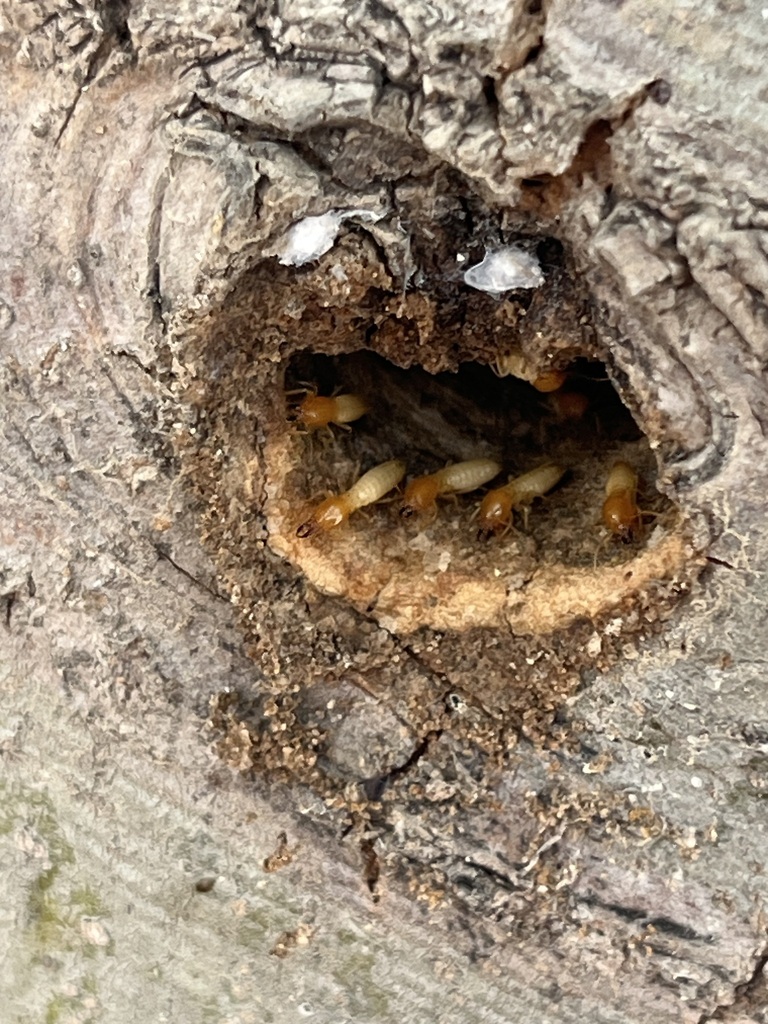
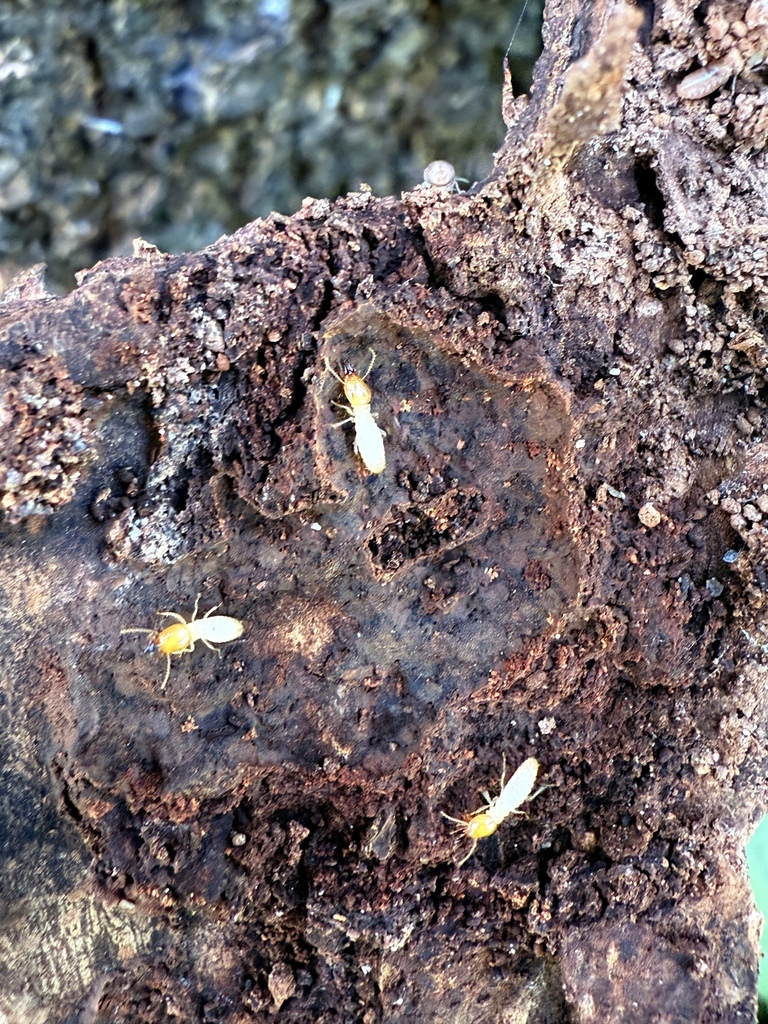
Soldier: head and antennae pale yellow, mandibles blackish brown, abdomen milky white. The width of the head changes markedly with the age of the colony: in young colonies less than two and a half years old the head width is generally less than 0.99 mm, while after the colony matures the body gradually becomes larger, and in colonies that have developed for twenty years the head width may reach 1.16–1.25 mm, mature colonies being more than one-quarter broader than young ones; in addition, the pronotum and the number of antennal segments also increase with the development of the colony.
Alate
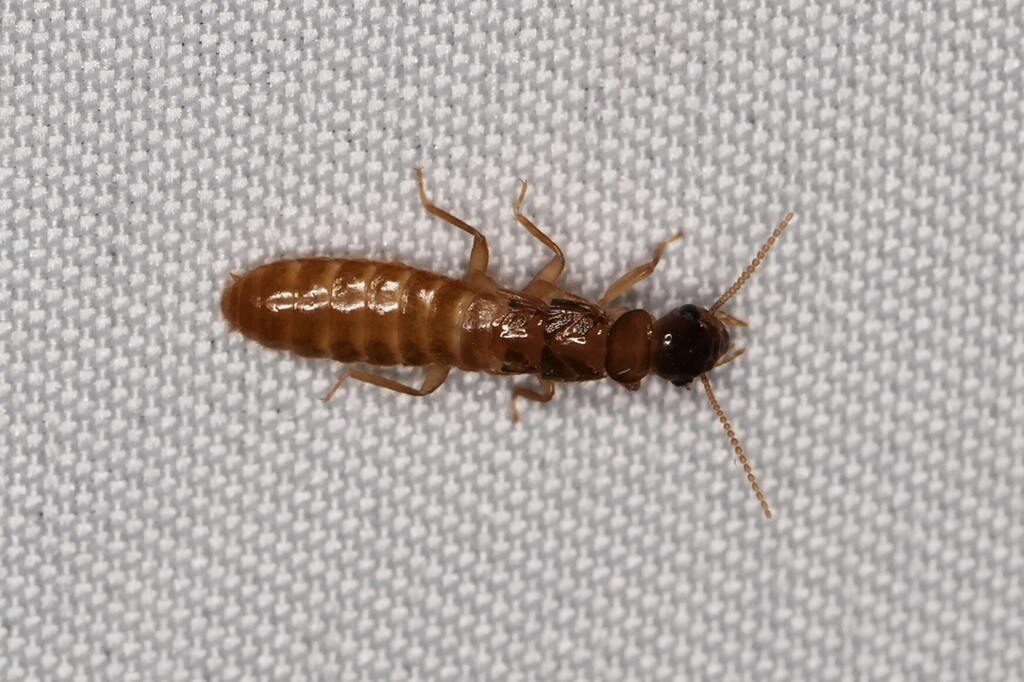
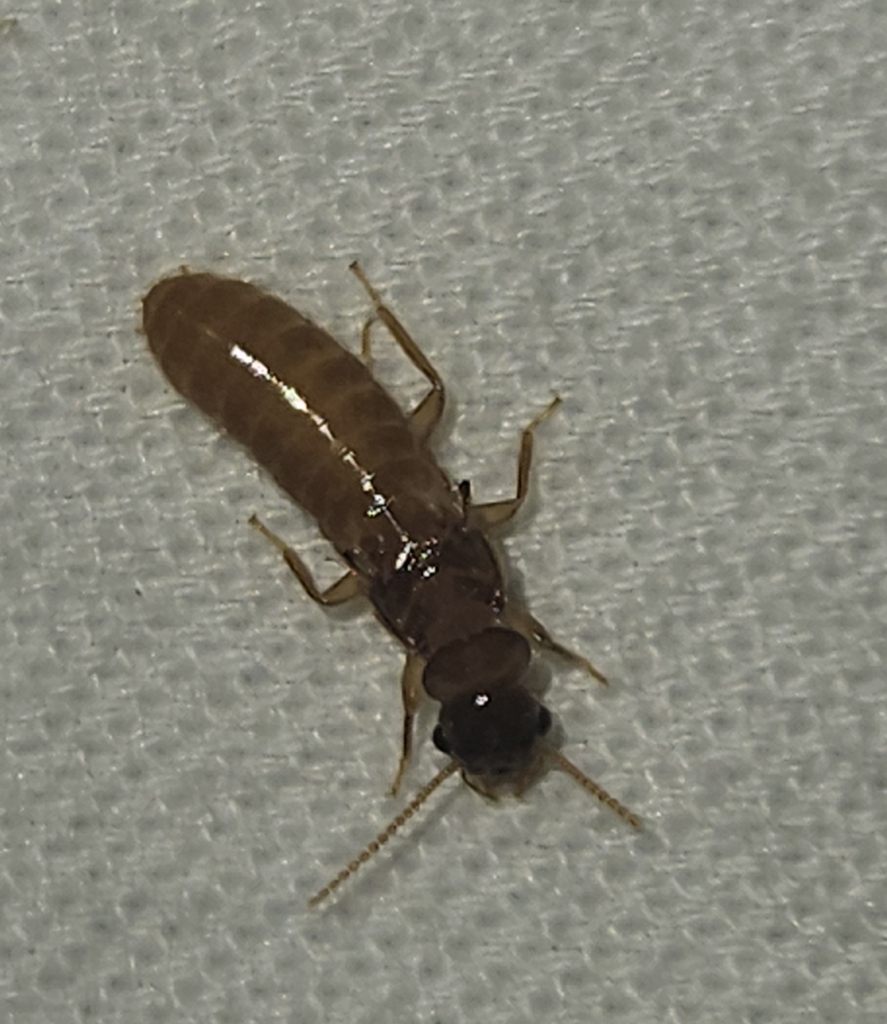
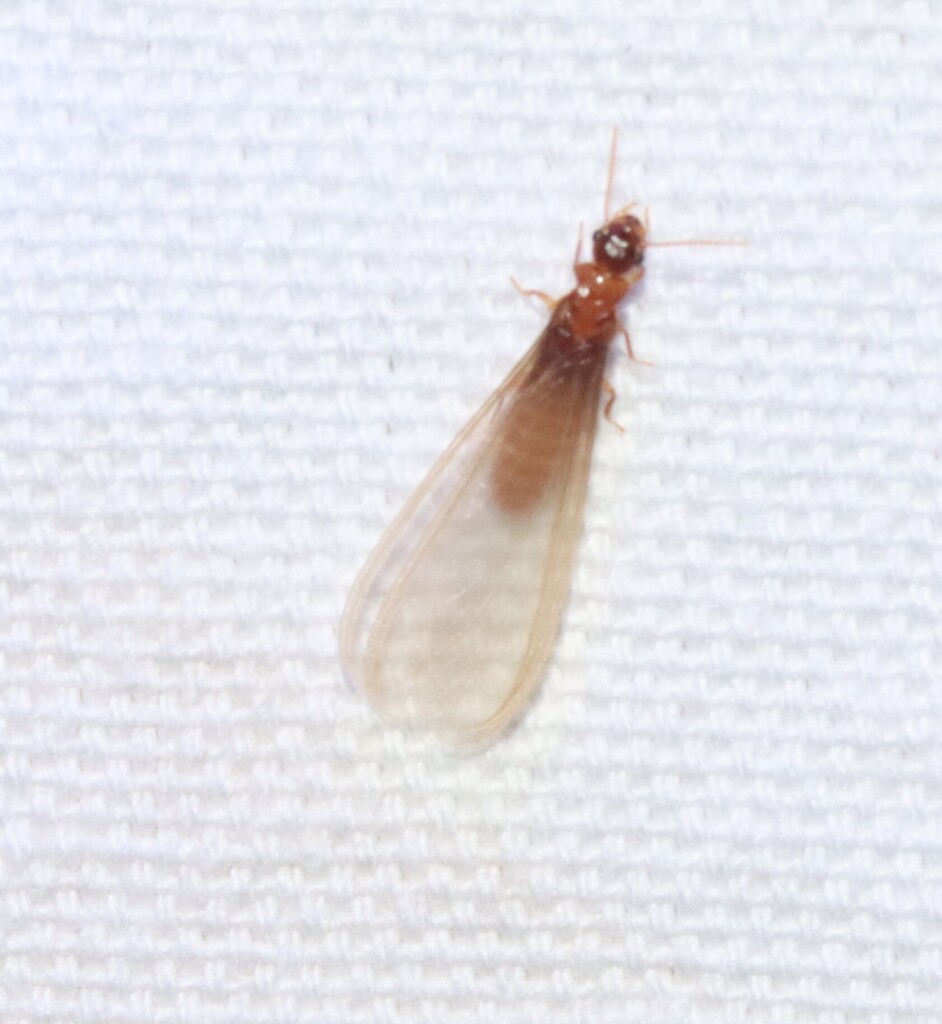
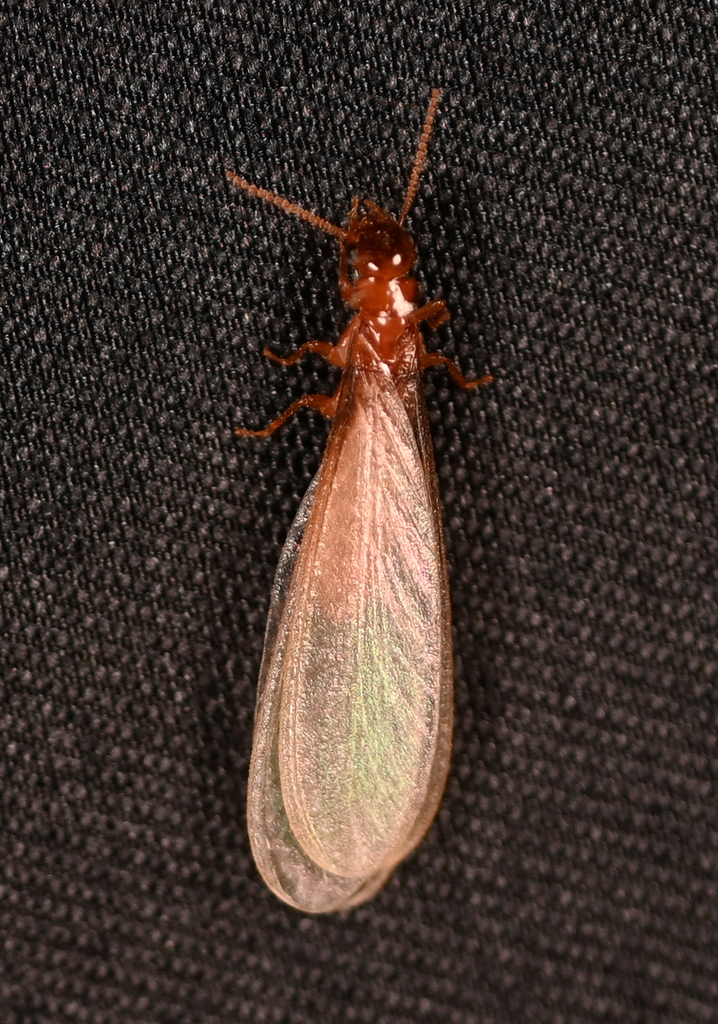
Alate: the dorsum of the head deep yellowish brown, the dorsum of the thorax and abdomen brownish yellow and paler than the head, the venter of the abdomen yellow, the wings tinged with pale yellow. Compound eyes nearly round, ocelli elongate-round, the distance between the ocellus and the compound eye less than the width of the ocellus itself. Postclypeus extremely short, forming a transverse band, pale yellow and slightly raised, about one-quarter to one-third as long as wide; anteclypeus white and longer than the postclypeus; labrum pale yellow, rounded at the front. Antennae with 19–21 segments, mostly the third or fourth shorter. Head oval, widest behind the middle, narrower at both the anterior and posterior ends than at the middle; fontanelle aperture oval, narrow above and broad below, large and conspicuous, situated on a slightly projecting short tube at the front of the head and facing forwards. Mandibles sickle-shaped, their anterior part curved towards the midline, the base of the left mandible with a deep notch, in front of which are four small processes, successively smaller towards the front, the foremost behind the middle of the mandible, the rest of the mandibular surface smooth and toothless. Labrum nearly tongue-shaped, its front with an indistinct transparent point reaching half the length of the closed mandibles. Pronotum flat, narrower than the head, with a notch in the middle of both the anterior and posterior margins. Forewing scale larger than the hindwing scale, the wing membrane densely covered with fine short hairs; in the forewing the media arising independently at the humeral suture and closer to the cubitus than to the radial sector, the cubitus with 6–8 branches; in the hindwing the media arising from the base of the radial sector and, after arising, closer to the cubitus than to the radial sector, the cubitus with 7–8 branches.
Worker
Nymph
Abstract (from the source)
The soldier has a pale yellow head and antennae, blackish brown mandibles and a milk-white abdomen, its head width increasing markedly with colony age. The alate has an oval head widest behind the middle, with a large oval fontanelle opening forwards on a short tube at the front. The left mandible carries a deep basal notch followed by four small crenulations, the labrum is tongue-shaped with a faint transparent tip, and the antennae have nineteen to twenty-one segments.
Biology
Distribution and locality
In China distributed in the eastern part of the country, the northern limit roughly along and south of the line from Hefei, Chaoxian and Wuhu, Anhui, to Jianhu, Jiangsu, south of the Huai River at about 32–39° N; abroad recorded from Japan, the Philippines, the southern states of the United States, Hawaii and Africa.
Taxonomic notes
Source: Huang Fusheng et al. (2000), Fauna Sinica, Insecta vol. 17, Isoptera, Science Press. (entry no. 83 in the original work) Entries are cited by their number in the original work.
Photos 120 photos
Freely licensed photos, click to enlarge. Hotlinked from iNaturalist / Wikimedia Commons; the rights stay with the photographers — author, licence and source page are shown under each photo. Only the first 6 are shown here; the rest are under “All photos” at the end of the page.
Distribution map
Aggregated from GBIF occurrence records on a 1° grid; only extant taxa of this checklist are used, so fossil records are excluded. Dot size and shade show the number of records inside a cell.
Related papers
Cached papers for this genus (matched automatically, for reference); to search this species with its junior synonyms merged in, use the literature search.
- Phylogeography of Coptotermes gestroi and Coptotermes formosanus (Isoptera: Rhinotermitidae) in Taiwan
Abstract
Abstract The Formosan subterranean termite, Coptotermes formosanus Shiraki (Isoptera: Rhinotermitidae), is primarily reported from subtropical and warm temperate regions, whereas Coptotermes gestroi (Wasmann) is reported from many areas of the tropics. Taiwan is one of a few areas where the distributions of the two species overlap. By analyzing partial mitochondrial sequences of COII, 12S rRNA, and 16S rRNA, we found that most Taiwanese C. formosanus populations were closely related to Japanese and some Chinese populations and that Taiwanese C. gestroi populations were most closely related to those from the Philippines and Hawaii rather than populations from Thailand, Malaysia, Singapore, and Indonesia. The intraspecific variation of C. formosanus was 0.7–0.8% for three genes among seven Taiwanese populations, whereas all Taiwanese C. gestroi populations had identical sequences. The results support that Taiwan may be a center of origin for C. formosanus, but a recent introduction site for C. gestroi.
- Genetic Relationship Between Coptotermes gestroi and Coptotermes vastator (Isoptera: Rhinotermitidae)
Abstract
The phylogenetic relationship of Coptotermes gestroi (Wasmann) and Coptotermes vastator Light (Isoptera: Rhinotermitidae) was determined using DNA sequence comparisons of mitochondrial genes. Partial sequences of the ribosomal RNA small subunit 12S, ribosomal RNA large subunit 16S, and mitochondrial COII were obtained from nine populations of C. gestroi from South East Asia (Malaysia, Singapore, Thailand, and Indonesia) and four populations of C. vastator from the Philippines and Hawaii. In addition, four populations of Coptotermes formosanus Shiraki and Globitermes sulphureus (Haviland) were used as the outgroups. Consensus sequences were obtained and aligned. C. vastator and C. gestroi are synonymous, based on high sequence homology across the 12S, 16S, and COII genes. The interspecific pairwise sequence divergence, based on Kimura 2-parameter model between C. gestroi and C. vastator, varied only up to 0.80%. Morphometric measurements of 16 characteristics revealed numerous overlaps between the examined individuals of both species. Based on the molecular phylogenetics and morphometric data, it is proposed that C. vastator is a junior synonym of C. gestroi.
- Tunneling activity, wood consumption and survivorship of Coptotermes gestroi, Coptotermes curvignathus and Coptotermes kalshoveni (Isoptera: Rhinotermitidae) in the laboratory
Abstract
The tunneling activity, wood consumption and survivorship of three species of subterranean termites, Coptotermes gestroi (Wasmann), C. curvignathus Holmgren and C. kalshoveni Kemner were compared in the laboratory using two methods: petri dish and glass jar methods. The petri dish method consisted of a 15-cm petri dish containing 5% agar and 4 rubber wood blocks placed at positions of 0, 90, 180 and 270°. The second method consisted of a glass jar containing 200 g sand moistened with 40 ml distilled water and a piece each of rubber and pine wood on the top of the sand surface. Termites were released into the dish and jar, and allowed to tunnel freely for 28 days. At the end of the experiment, the tunneling activity was semi-quantitatively ranked, the set-up was dissembled, and termite survivorship and wood consumption rate were determined. Results suggested that C. curvignathus has the most active tunneling activity, followed by C. gestroi. On the other hand, C. kalshoveni has the least tunneling activity, but highest wood consumption rate, possibly showing a higher resource fidelity. The survivorship of the termites was >75% after the 28-day experimental period.
Papers on this species, synonyms included → OpenAlex Google Scholar CNKI
Abstracts come from open metadata; copyright remains with the original authors/publishers. For reference only — please check the original.
Literature notes
Edited notes based on the original literature, not transcriptions. The source markers in each paragraph point to archived records in .sources; full citations are listed below.
Bait density and cost in area-wide control
According to the abstract, Lin et al. (2026) ran a two-year baiting programme in the Central Taiwan Science Park (466 ha) and the Hsinchu Science Park (777 ha), monitored colony activity of Coptotermes formosanus monthly with a 5-m-spaced wood-stake matrix, and baited each colony with a single in-ground station; 11 colonies were eliminated, with a mean elimination time of 1.82 ± 1.25 months and bait consumption of 164.3 ± 68.6 g (about one bait tube) per colony; simulating bait-station spacings of 6–16 m showed that colonies could be eliminated at spacings of ≤8 m in the Central Taiwan park and ≤12 m in Hsinchu, with minimum annual costs of about 13.59 and 14.83 million NTD, respectively.
References
Other species in Coptotermes (57 species)
- Coptotermes acinaciformis
- Coptotermes amanii
- Coptotermes amboinensis
- Coptotermes bannaensis
- Coptotermes beckeri
- Coptotermes bentongensis
- Coptotermes boetonensis
- Coptotermes brunneus
- Coptotermes ceylonicus
- Coptotermes chaoxianensis
- Coptotermes cooloola
- Coptotermes curvignathus
- Coptotermes cyclocoryphus
- Coptotermes dimorphus
- Coptotermes dobonicus
- Coptotermes dreghorni
- Coptotermes elisae
- Coptotermes emersoni
- Coptotermes frenchi
- Coptotermes fumipennis
- Coptotermes gambrinus
- Coptotermes gaurii
- Coptotermes gestroi
- Coptotermes grandiceps
- Coptotermes grandis
- Coptotermes guangdongensis
- Coptotermes gulangyuensis
- Coptotermes hainanensis
- Coptotermes intermedius
- Coptotermes kalshoveni
- Coptotermes kishori
- Coptotermes lacteus
- Coptotermes longignathus
- Coptotermes longistriatus
- Coptotermes mauricianus
- Coptotermes melanoistriatus
- Coptotermes menadoae
- Coptotermes michaelseni
- Coptotermes minutissimus
- Coptotermes monosetosus
57 species in this genus. See all species on the genus page →
Cite this species
Citation strings are generated from the fields of this page; please keep the DOI and the version number when citing.
GB/T 7714
班奈特格林. Extant Isoptera (termites): a checklist of Latin and Chinese names: Coptotermes formosanus 台湾乳白蚁[EB/OL]. Version 2026.10.30. https://termite-extant-isoptera.org/en/species/coptotermes-formosanus/. DOI: 10.5281/zenodo.23646836.
BibTeX
@misc{isoptera_coptotermes_formosanus_2026,
  author       = {班奈特格林},
  title        = {Coptotermes formosanus: a checklist of extant Isoptera (termites)},
  year         = {2026},
  version      = {2026.10.30},
  howpublished = {https://termite-extant-isoptera.org/en/species/coptotermes-formosanus/},
  note         = {HETEROTERMITIDAE; version 2026.10.30; DOI: 10.5281/zenodo.23646836},
  doi          = {10.5281/zenodo.23646836}
}
RIS
TY  - ELEC
TI  - Coptotermes formosanus: a checklist of extant Isoptera (termites)
AU  - 班奈特格林
PY  - 2026
UR  - https://termite-extant-isoptera.org/en/species/coptotermes-formosanus/
DO  - 10.5281/zenodo.23646836
ER  -