Coptotermes formosanus 台湾乳白蚁
- 模式产地
- Taiwan: Taipei
- 分布
- 中国南部及台湾、原产、随木材广布热带亚热带
名录: 中文(属页) · English · Español
摘要
台湾乳白蚁(Coptotermes formosanus)是异白蚁科(HETEROTERMITIDAE)乳白蚁属(Coptotermes)的一种。本种由 Shiraki 于 1909 年描述,模式产地为 Taiwan: Taipei。分布记录包括中国南部及台湾。文献另注:随木材广布热带亚热带。本站记录本种有 17 个次异名。
词源
属名 Coptotermes:属名由希腊文 koptein(切、斩)与拉丁文 termes(白蚁)组合。
种加词 formosanus:以地名 Formosa(台湾旧称,葡语「美丽岛」)命名
分类位置
- 科:异白蚁科 HETEROTERMITIDAE —— 本站收录 3 属 229 种
- 属:乳白蚁属 Coptotermes —— 共 58 种
- 本属模式种:Coptotermes gestroi
分布
- 分布记录:中国南部及台湾
- 补充记录:随木材广布热带亚热带
以上记录沿用原始数据的写法,未做地理编码与译名统一。
次异名
本站记录本种有 17 个次异名(junior synonyms),按原始文献出处列出:
- Coptotermes formosae Holmgren, 1911: 192 —— 模式产地:Taiwan: ?
- Coptotermes hongkonensis Oshima, 1914: 7-10 —— 模式产地:China: Hong Kong
- Coptotermes intrudens Oshima, 1920: 262-264 —— 模式产地:United States: Hawaii: Honolulu, Oahu
- Coptotermes remotus Silvestri, 1927: 93-95 —— 模式产地:South Africa: Cape Province: Simonstown
- Coptotermes eucalyptus Ping, 1984: 186-187, 189 —— 模式产地:China: Guangdong Province: Xiaoliang of Dianbai County
- Coptotermes xiaoliangensis Ping, 1984: 184-185, 188 —— 模式产地:China: Guangdong Province: Xiaoliang of Dianbai County
- Coptotermes guangzhouensis Ping, 1985: 317-318, 326-327 —— 模式产地:China: Guangdong Province: Guangzhou
- Coptotermes heteromorphus Ping, 1985: 320-321, 327 —— 模式产地:China: Guangdong Province: Guangzhou
- Coptotermes (Polycrinitermes) changtaiensis Xia & He, 1986: 164-165, 178 —— 模式产地:China: Fujian Province: Changtai County
- Coptotermes (Polycrinitermes) hekouensis Xia & He, 1986: 162-164, 178 —— 模式产地:China: Yunnan Province: Hekou County
- Coptotermes (Polycrinitermes) suzhouensis Xia & He, 1986: 167-169, 180 —— 模式产地:China: Jiangsu Province: Suzhou County
- Coptotermes (Polycrinitermes) communis Xia & He, 1986: 166-167, 179 —— 模式产地:China: Zhejiang Province: Jinhua County
- Coptotermes rectangularis Ping & Zhu in Ping et al., 1986: 157-158, 160 —— 模式产地:China: Guizhou Province: Conjiang County
- Coptotermes setosus Li, 1986: 227-228, 229 —— 模式产地:China: Guangdong Province: Xuwen
- Coptotermes xianrendongensis Ping & Xu, 1993: 432-433, 442 —— 模式产地:China: Guangdong Province: Shixing County: Xianrendong of Chebaling
- Coptotermes (Polycrinitermes) anglefontanalis Gao, Lau & He, 1995: 1-5 —— 模式产地:China: Hong Kong: New Territories: Lui Kung Tin
- Coptotermes guizhouensis He & Qui, 1992 —— 模式产地:China: Guizhou Province: Conjiang County
在旧文献、地方名录与数据库检索中,本种可能以上述异名(Coptotermes formosae、Coptotermes hongkonensis、Coptotermes intrudens、Coptotermes remotus、Coptotermes eucalyptus、Coptotermes xiaoliangensis、Coptotermes guangzhouensis、Coptotermes heteromorphus 等)出现,本站统一归入 Coptotermes formosanus。
《中国动物志》记载
以下形态与生物学记载摘自《中国动物志》等相关文献,本站仅作结构与标点整理。
形态描述
兵蚁
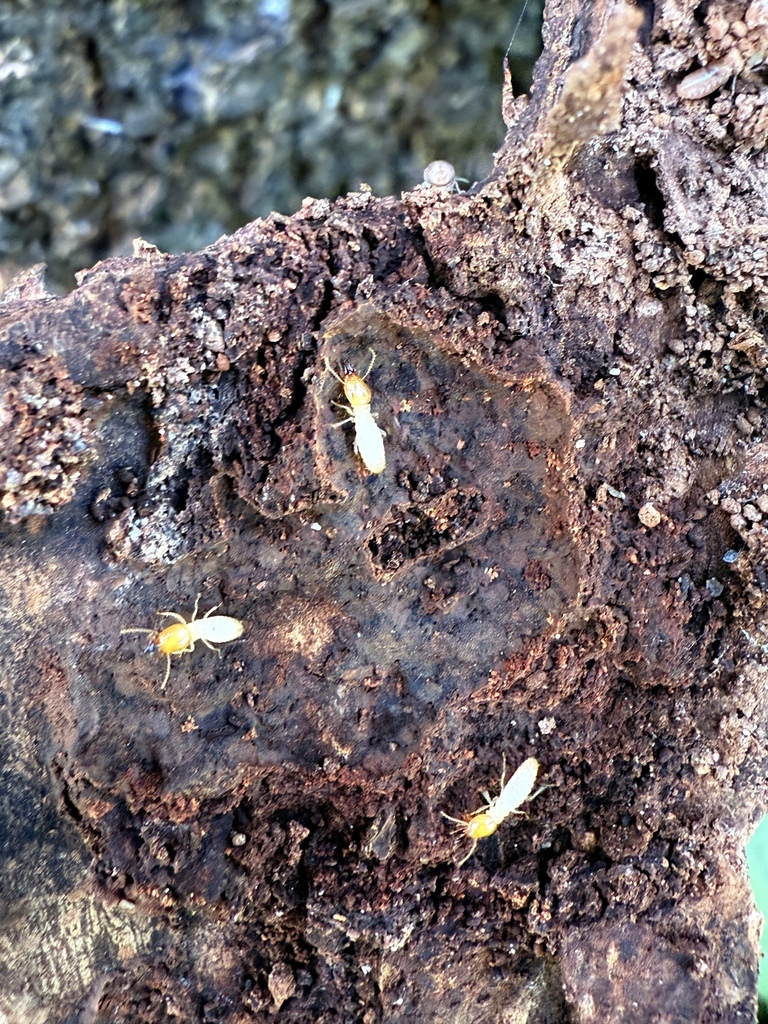
兵蚁头与触角浅黄,上颚黑褐,腹部乳白。头宽随巢龄增长而明显变化:两年半以内的幼龄巢个体头宽一般不足零点九九毫米,巢群成熟后体躯渐大,经二十年发育的群体头宽可达一点一六至一点二五毫米,成熟巢群较幼龄者可增宽四分之一以上;此外前胸背板与触角节数也随群体发育而增长。
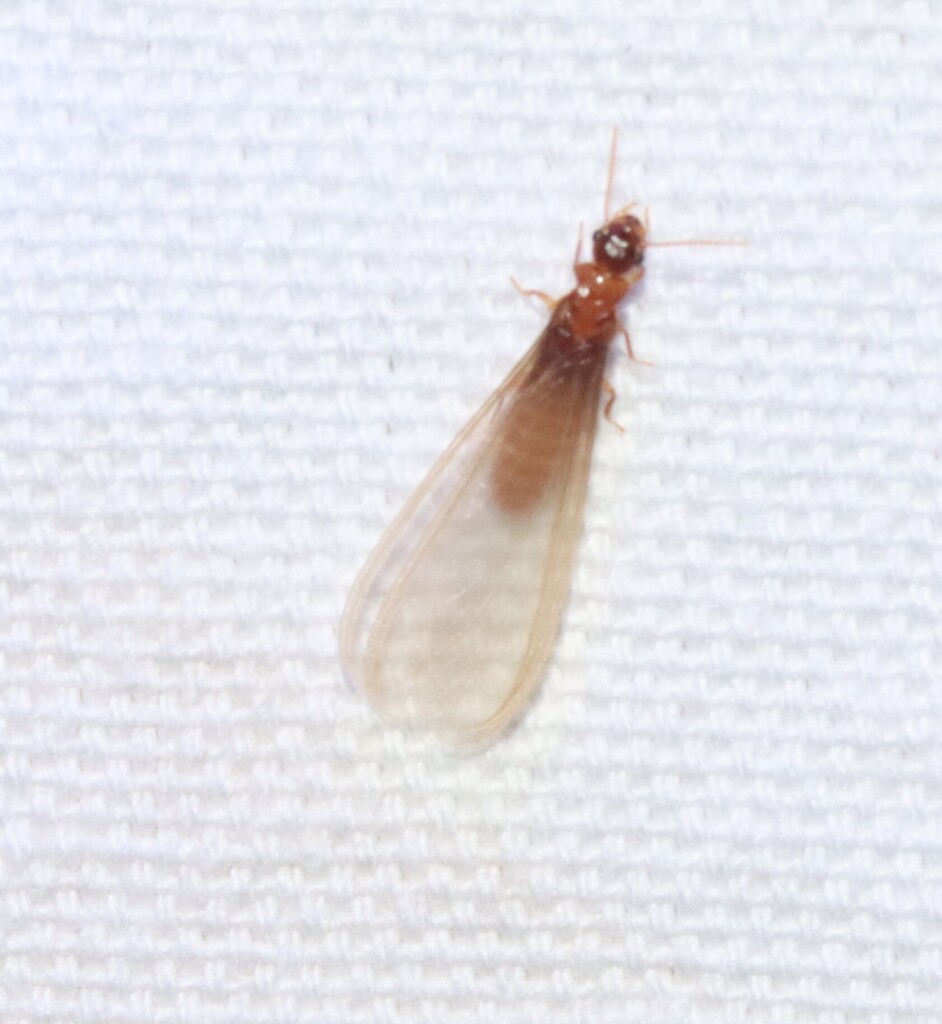
有翅成虫
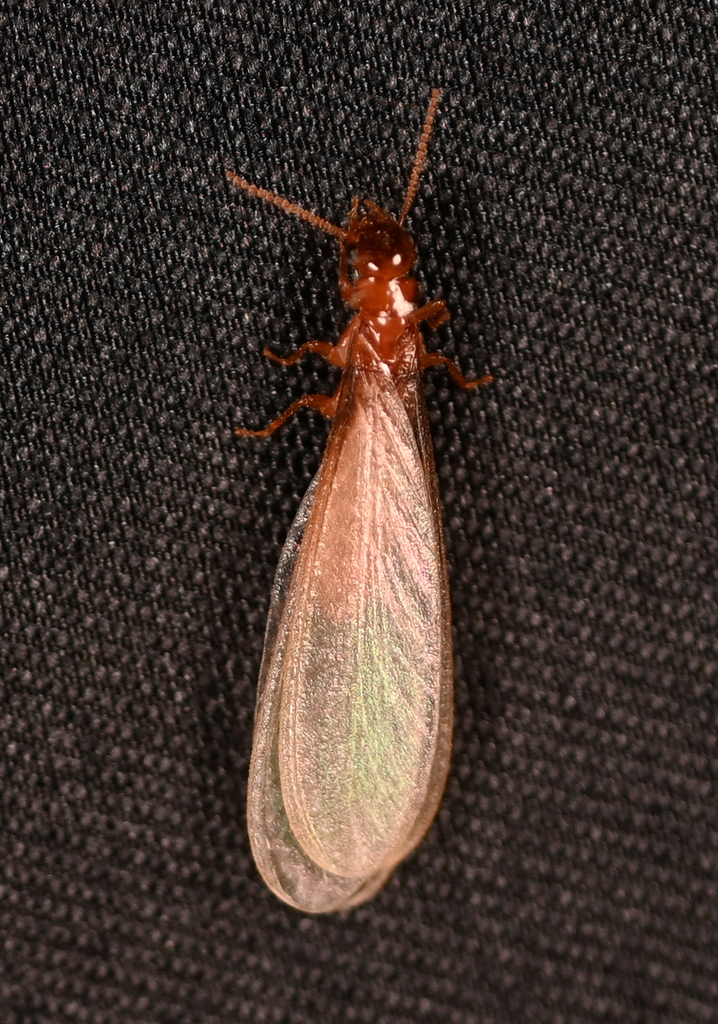
有翅成虫头背深黄褐,胸腹背面褐黄而较头色淡,腹部腹面黄,翅微带淡黄。复眼近圆,单眼长圆,单眼与复眼之间的距离小于单眼本身的宽度。后唇基极短,形如一横条,淡黄而略隆,长约当宽的四分之一至三分之一;前唇基白色且长于后唇基;上唇淡黄,前端圆形。触角十九至二十一节,多数第3或第4节较短。头呈椭圆形,最宽处在中段之后,前后两端均较中段狭;囟孔上窄下宽呈卵圆形,大而显著,位于头前端一个微突的短管上,朝向前方。上颚镰刀形,前部弯向中线,左上颚基部有一深凹刻,其前另有四个小突起,越靠前越小,最前一个位于上颚中点之后,颚面其余部分光滑无齿。上唇近舌形,前端有一不明显的透明尖,伸达闭拢上颚长度之半。前胸背板平坦,较头狭窄,前缘与后缘中央均有缺刻。前翅鳞大于后翅鳞,翅面密布细短毛;前翅中脉在肩缝处独立伸出,距肘脉较近于径分脉,肘脉六至八支;后翅中脉由径分脉基部分出,分出后距肘脉较距径分脉近,肘脉七八支。
工蚁
若虫
生物学
分布与产地
国内分布于我国东部,北界大致在淮河以南、约北纬32至39度的安徽合肥、巢县、芜湖与江苏建湖一线以南各地;国外见于日本、菲律宾、美国南部诸州及夏威夷与非洲。
分类说明
文献依据:黄复生等(2000)《中国动物志·昆虫纲 第十七卷 等翅目》,科学出版社。 (原书第 83 号条目) 本站引文按原书条目编号标注。
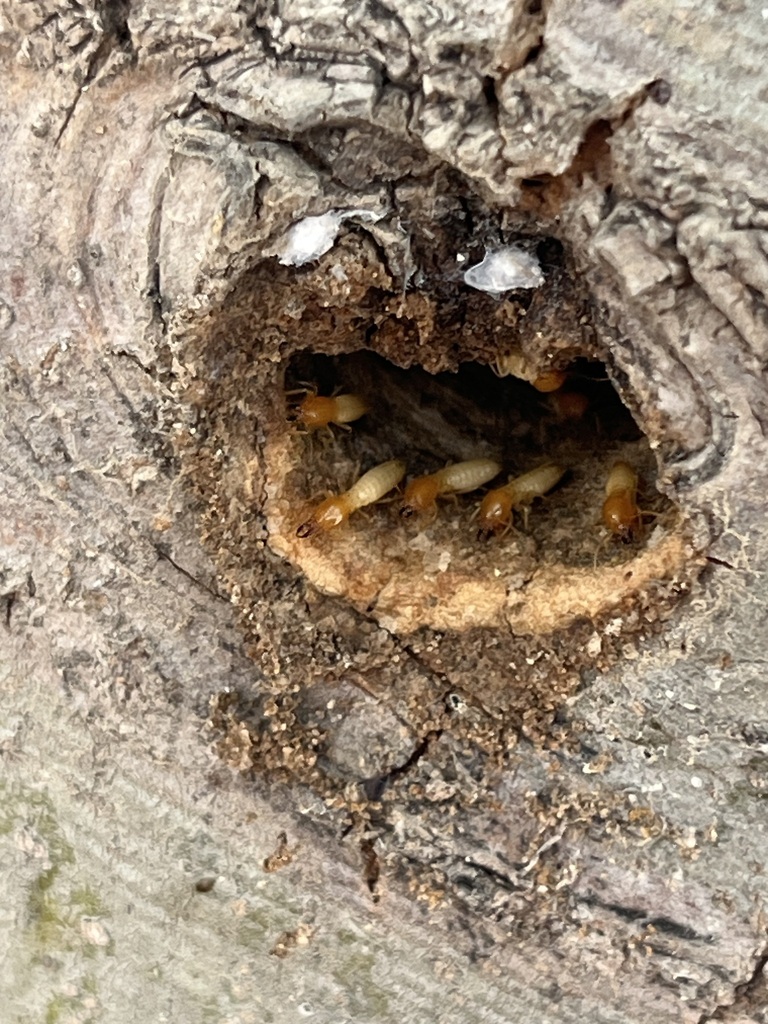
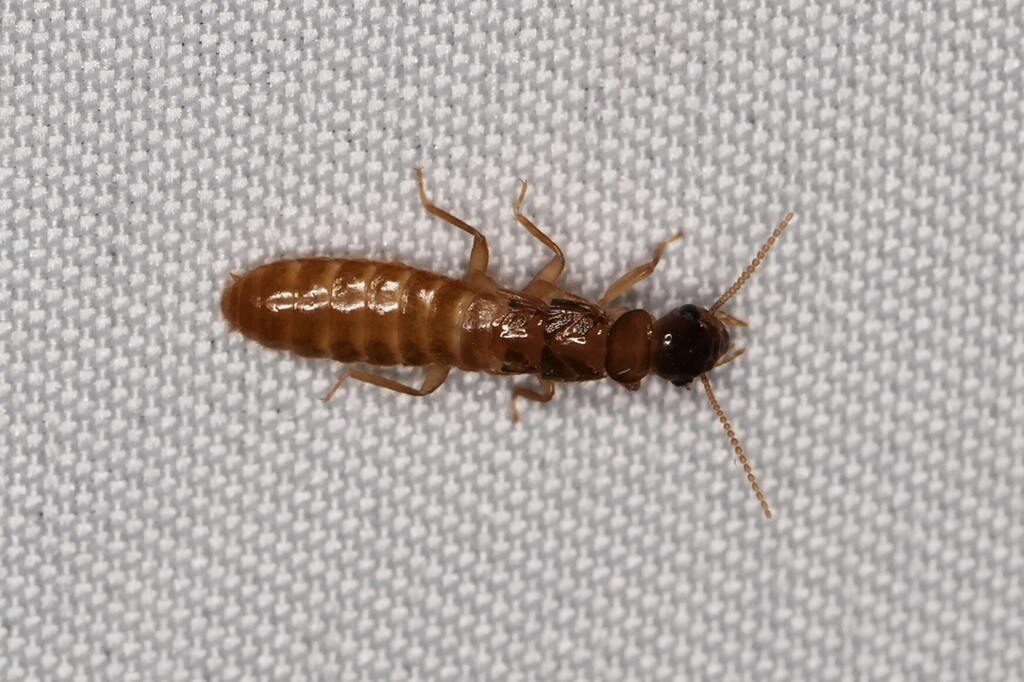
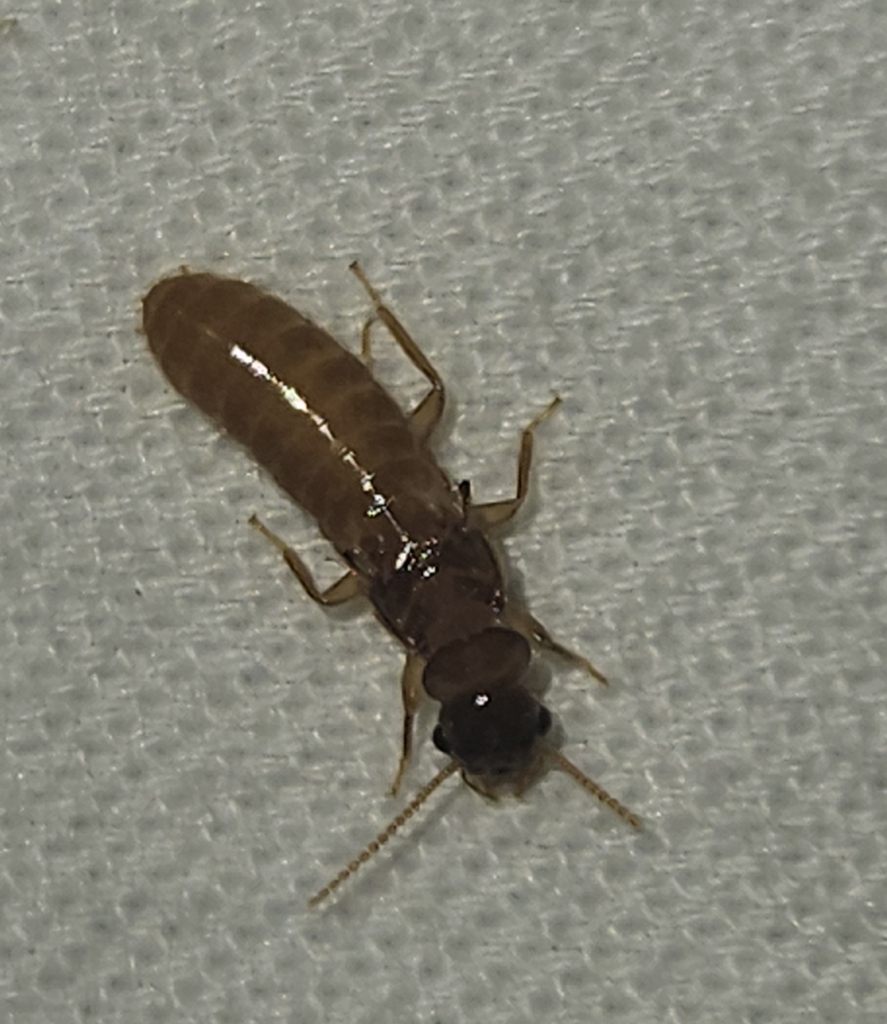
图片 120 张
开放许可照片,点击可放大浏览。图片热链自 iNaturalist / Wikimedia Commons,版权归原作者;每张图下方标注作者、许可协议与原始页面。本页先展示前 6 张,其余见页尾「全部图片」链接。
分布图
按 GBIF 出现记录聚合到 1°×1° 网格;只统计本名录收录的现生类群,化石记录不参与。点的大小与深浅表示该网格内的记录条数。
相关文献
以下为本站缓存的本属相关文献(自动匹配,供参考);查本种请用检索器,会自动合并次异名。
- Phylogeography of Coptotermes gestroi and Coptotermes formosanus (Isoptera: Rhinotermitidae) in Taiwan
摘要
Abstract The Formosan subterranean termite, Coptotermes formosanus Shiraki (Isoptera: Rhinotermitidae), is primarily reported from subtropical and warm temperate regions, whereas Coptotermes gestroi (Wasmann) is reported from many areas of the tropics. Taiwan is one of a few areas where the distributions of the two species overlap. By analyzing partial mitochondrial sequences of COII, 12S rRNA, and 16S rRNA, we found that most Taiwanese C. formosanus populations were closely related to Japanese and some Chinese populations and that Taiwanese C. gestroi populations were most closely related to those from the Philippines and Hawaii rather than populations from Thailand, Malaysia, Singapore, and Indonesia. The intraspecific variation of C. formosanus was 0.7–0.8% for three genes among seven Taiwanese populations, whereas all Taiwanese C. gestroi populations had identical sequences. The results support that Taiwan may be a center of origin for C. formosanus, but a recent introduction site for C. gestroi.
- Genetic Relationship Between Coptotermes gestroi and Coptotermes vastator (Isoptera: Rhinotermitidae)
摘要
The phylogenetic relationship of Coptotermes gestroi (Wasmann) and Coptotermes vastator Light (Isoptera: Rhinotermitidae) was determined using DNA sequence comparisons of mitochondrial genes. Partial sequences of the ribosomal RNA small subunit 12S, ribosomal RNA large subunit 16S, and mitochondrial COII were obtained from nine populations of C. gestroi from South East Asia (Malaysia, Singapore, Thailand, and Indonesia) and four populations of C. vastator from the Philippines and Hawaii. In addition, four populations of Coptotermes formosanus Shiraki and Globitermes sulphureus (Haviland) were used as the outgroups. Consensus sequences were obtained and aligned. C. vastator and C. gestroi are synonymous, based on high sequence homology across the 12S, 16S, and COII genes. The interspecific pairwise sequence divergence, based on Kimura 2-parameter model between C. gestroi and C. vastator, varied only up to 0.80%. Morphometric measurements of 16 characteristics revealed numerous overlaps between the examined individuals of both species. Based on the molecular phylogenetics and morphometric data, it is proposed that C. vastator is a junior synonym of C. gestroi.
- Tunneling activity, wood consumption and survivorship of Coptotermes gestroi, Coptotermes curvignathus and Coptotermes kalshoveni (Isoptera: Rhinotermitidae) in the laboratory
摘要
The tunneling activity, wood consumption and survivorship of three species of subterranean termites, Coptotermes gestroi (Wasmann), C. curvignathus Holmgren and C. kalshoveni Kemner were compared in the laboratory using two methods: petri dish and glass jar methods. The petri dish method consisted of a 15-cm petri dish containing 5% agar and 4 rubber wood blocks placed at positions of 0, 90, 180 and 270°. The second method consisted of a glass jar containing 200 g sand moistened with 40 ml distilled water and a piece each of rubber and pine wood on the top of the sand surface. Termites were released into the dish and jar, and allowed to tunnel freely for 28 days. At the end of the experiment, the tunneling activity was semi-quantitatively ranked, the set-up was dissembled, and termite survivorship and wood consumption rate were determined. Results suggested that C. curvignathus has the most active tunneling activity, followed by C. gestroi. On the other hand, C. kalshoveni has the least tunneling activity, but highest wood consumption rate, possibly showing a higher resource fidelity. The survivorship of the termites was >75% after the 28-day experimental period.
检索本种文献(含异名)→ OpenAlex Google Scholar 知网
摘要来自开放元数据,版权归原作者/出版方;仅用于检索参考,请以原文为准。
研究记述
以下为据原始文献整理的摘记,不是原文转录;每段末的注释指向 .sources 中的存档记录,完整出处见文末参考文献。
区域诱饵防治的密度与成本
据摘要,Lin 等(2026)在台湾中部科学园区(466 ha)与新竹科学园区(777 ha)开展为期 2 年的诱饵防治计划,以 5 m 间距的木桩矩阵逐月监测台湾乳白蚁(Coptotermes formosanus)的群体活动,每个群体设 1 个地下诱饵站;共消灭 11 个群体,平均消灭时间 1.82±1.25 个月,每群体取食诱饵 164.3±68.6 g(约 1 支诱饵管);模拟 6–16 m 的诱饵站间距后,中部园区在间距 ≤8 m、新竹园区在 ≤12 m 时可使群体被消灭,最低年成本分别约 1359 万与 1483 万新台币。
参考文献
同属其他种(57 种)
- Coptotermes acinaciformis 短刀乳白蚁
- Coptotermes amanii 阿马尼乳白蚁
- Coptotermes amboinensis 安汶乳白蚁
- Coptotermes bannaensis 版纳乳白蚁
- Coptotermes beckeri 贝克乳白蚁
- Coptotermes bentongensis 文冬乳白蚁
- Coptotermes boetonensis 博顿乳白蚁
- Coptotermes brunneus 深棕乳白蚁
- Coptotermes ceylonicus 锡兰乳白蚁
- Coptotermes chaoxianensis 巢县乳白蚁
- Coptotermes cooloola 库鲁拉乳白蚁
- Coptotermes curvignathus 曲颚乳白蚁
- Coptotermes cyclocoryphus 圆头乳白蚁
- Coptotermes dimorphus 二型乳白蚁
- Coptotermes dobonicus 多波乳白蚁
- Coptotermes dreghorni 雷德霍恩乳白蚁
- Coptotermes elisae 瑞明乳白蚁
- Coptotermes emersoni 埃默森乳白蚁
- Coptotermes frenchi 弗伦奇乳白蚁
- Coptotermes fumipennis 烟翅乳白蚁
- Coptotermes gambrinus 甘布里努斯乳白蚁
- Coptotermes gaurii 高瑞乳白蚁
- Coptotermes gestroi 格斯特乳白蚁
- Coptotermes grandiceps 庞头乳白蚁
- Coptotermes grandis 大头乳白蚁
- Coptotermes guangdongensis 广东乳白蚁
- Coptotermes gulangyuensis 鼓浪屿乳白蚁
- Coptotermes hainanensis 海南乳白蚁
- Coptotermes intermedius 中间乳白蚁
- Coptotermes kalshoveni 卡尔斯霍芬乳白蚁
- Coptotermes kishori 基绍乳白蚁
- Coptotermes lacteus 乳色乳白蚁
- Coptotermes longignathus 长颚乳白蚁
- Coptotermes longistriatus 长带乳白蚁
- Coptotermes mauricianus 毛里求斯乳白蚁
- Coptotermes melanoistriatus 黑带乳白蚁
- Coptotermes menadoae 万鸦东乳白蚁
- Coptotermes michaelseni 米夏埃尔森乳白蚁
- Coptotermes minutissimus 最小乳白蚁
- Coptotermes monosetosus 单毛乳白蚁
该属共 57 种,在 乳白蚁属 Coptotermes 属页面查看全部物种 →
引用本种
以下引用字符串按本页字段自动生成,引用时请保留 DOI 与版本号;点击「复制」即可粘贴到论文、报告或文献管理器。
GB/T 7714
班奈特格林. 现存等翅下目(白蚁)拉丁学名—中文正名对照名录:Coptotermes formosanus 台湾乳白蚁[EB/OL]. 2026.10.30 版. https://termite-extant-isoptera.org/species/coptotermes-formosanus/. DOI: 10.5281/zenodo.23646836.
BibTeX
@misc{isoptera_coptotermes_formosanus_2026,
  author       = {班奈特格林},
  title        = {Coptotermes formosanus:台湾乳白蚁 · 现存等翅下目(白蚁)拉丁学名—中文正名对照名录},
  year         = {2026},
  version      = {2026.10.30},
  howpublished = {https://termite-extant-isoptera.org/species/coptotermes-formosanus/},
  note         = {HETEROTERMITIDAE 异白蚁科;2026.10.30 版;DOI: 10.5281/zenodo.23646836},
  doi          = {10.5281/zenodo.23646836}
}
RIS
TY  - ELEC
TI  - Coptotermes formosanus:台湾乳白蚁 · 现存等翅下目(白蚁)拉丁学名—中文正名对照名录
AU  - 班奈特格林
PY  - 2026
UR  - https://termite-extant-isoptera.org/species/coptotermes-formosanus/
DO  - 10.5281/zenodo.23646836
ER  -