Odontotermes formosanus 黑翅土白蚁
- Type locality
- Taiwan: ?
- Distribution
- Old World tropics, Taiwan, China, China, Macau, China, Hong Kong, China, Japan, Myanmar, Thailand, Vietnam
List: English (genus page) · 中文 · Español
Summary
Odontotermes formosanus is a species of the genus Odontotermes, in the family TERMITIDAE (subfamily Macrotermitinae). The species was described by Shiraki in 1909; the type locality is Taiwan: ?. Distribution: Old World tropics, Taiwan, China, China, Macau, China, Hong Kong, China, Japan, Myanmar, Thailand, Vietnam. This site records 3 junior synonyms for the species.
Etymology
Genus name Odontotermes: From Greek odous (tooth) + Latin termes.
Specific epithet formosanus: Named after Formosa (Taiwan, former name)
Taxonomic position
- Family: TERMITIDAE — 280 genera, 2144 species
- Subfamily: Macrotermitinae — 12 genera, 373 species
- Genus: Odontotermes — 198 species
- Type species of the genus: Odontotermes vulgaris
Distribution
- Distribution records: Old World tropics, Taiwan, China, China, Macau, China, Hong Kong, China, Japan, Myanmar, Thailand, Vietnam
The record above follows the wording of the original data; no geocoding or standardized place names have been applied.
Junior synonyms
This site records 3 junior synonyms for the species, listed by their original literature source:
- Odontotermes formosanus Holmgren, 1912: 127-129 — type locality: China: Canton
- Odontotermes (Cyclotermes) sinensis Holmgren, 1913: 115-116 — type locality: Fujian Province: Fuzhou (Foochow)
- Odontotermes qianyangensis Lin, 1981: 426-427 — type locality: Hong Kong
In older literature, regional checklists and database searches, this species may appear under the synonyms above (Odontotermes formosanus, Odontotermes (Cyclotermes) sinensis, Odontotermes qianyangensis); this site treats them all under Odontotermes formosanus.
Recorded in Fauna Sinica
The morphological and biological accounts below are taken from Fauna Sinica and related literature; only structure and punctuation have been standardized here.
Morphology
Soldier
Head dark yellow, abdomen pale yellow to greyish white. Pilosity of the head sparse, that of the thorax and abdomen denser. Head oval, longer than wide, widest in the middle and posterior part, slightly narrowed anteriorly; the frons flat; postmentum short and stout, narrow at the anterior end and slightly projecting towards the ventral surface. Mandibles sickle-shaped, the left marginal tooth in front of the midpoint, its apex directed obliquely forwards; the right mandible with a minute tooth at the corresponding position on the inner margin, small and inconspicuous. Labrum lingulate, narrow at the anterior end and without a transparent patch, arcuate at the sides, broader posteriorly, with a row of erect long bristles along the lateral margins, its apex reaching about the middle of the mandibles and not covering the marginal teeth. Antennae with 16–17 segments, segment 2 about equal in length to segments 3 and 4 together, segment 3 longer than, or sometimes shorter than, segment 4. The anterior part of the pronotum is narrow and inclined upwards forwards, the posterior part broader, shaped like an ingot; at the corners where the anterior and posterior parts meet on each side there is an oblique groove running backwards, and both the anterior and the posterior margin have a distinct median notch.
Alate
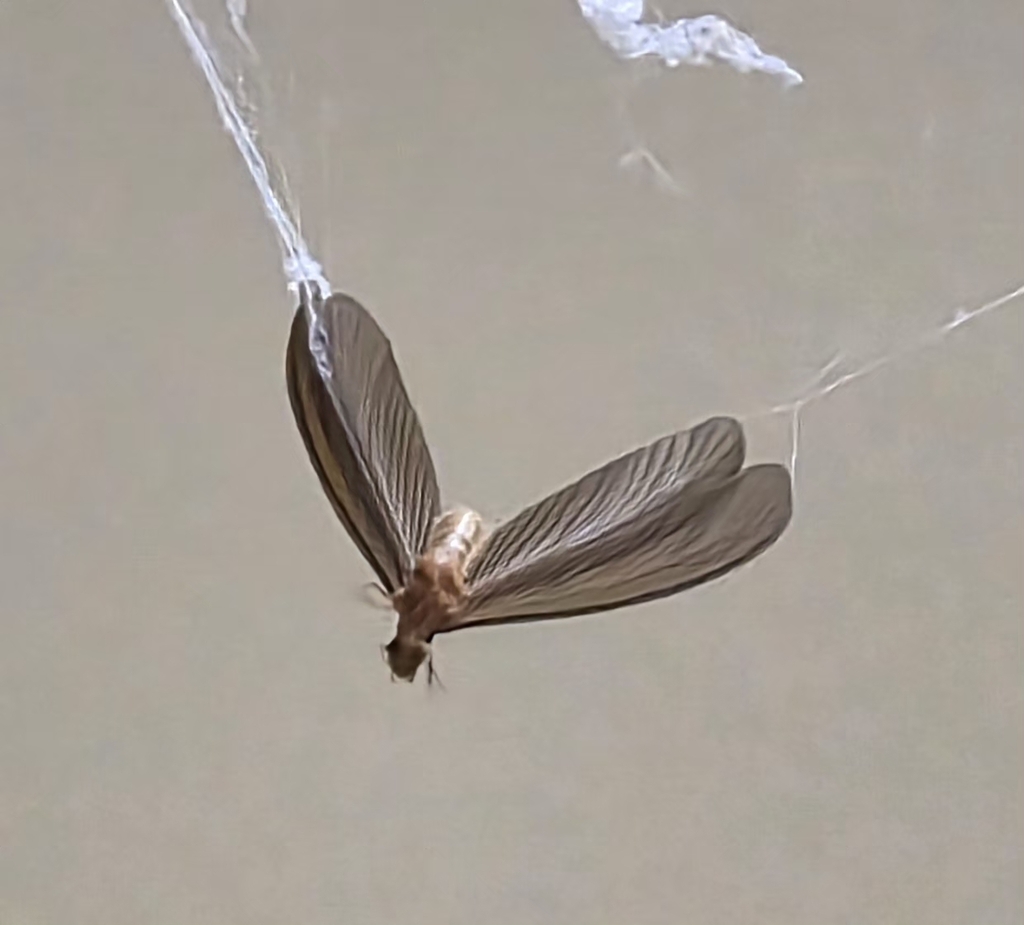
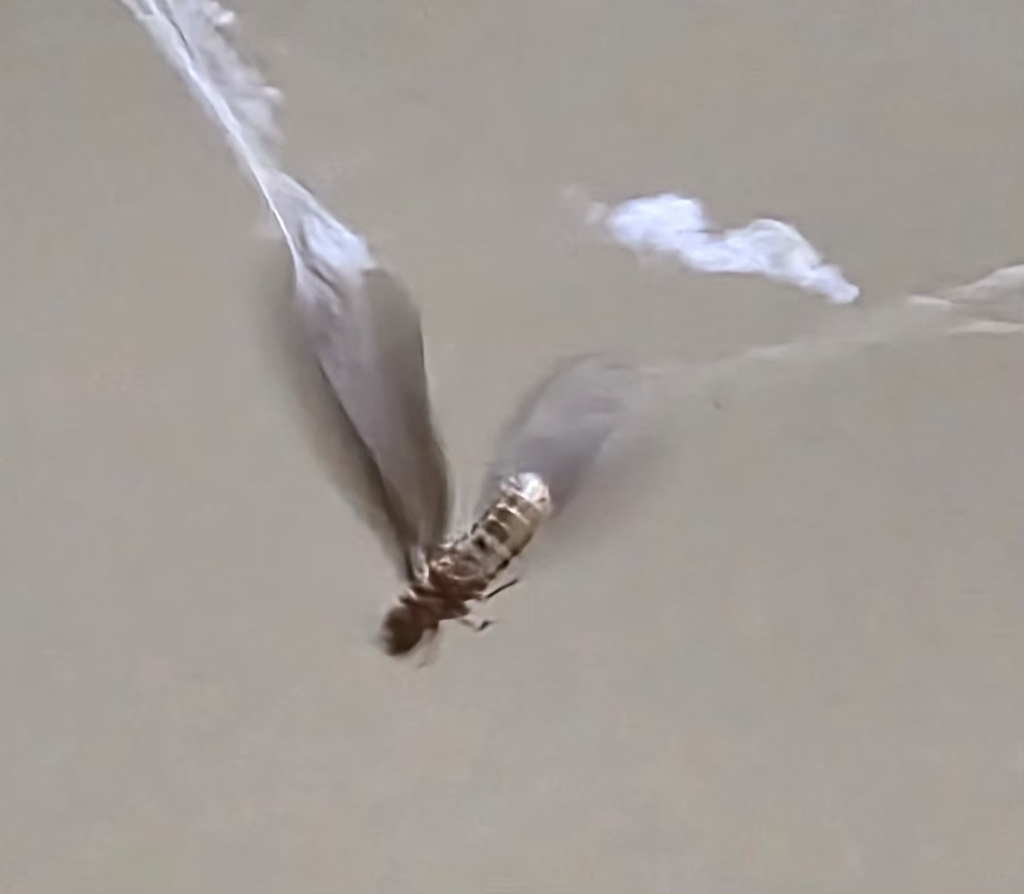
Dorsum of the head and dorsum of the thorax and abdomen dark brown, the venter brownish yellow; the anterior half of the labrum orange-red and the posterior half pale orange, with a white transverse band between them, the anterior and lateral margins of the labrum white and transparent; wings dark brown. The whole body densely hairy. Head circular, the compound eyes elliptical and the ocelli also elliptical, the distance between the ocellus and the compound eye about equal to the length of the ocellus itself. Postclypeus raised, less than half as long as wide, divided into right and left halves by a median longitudinal suture; anteclypeus equal in length to the postclypeus. Antennae with 19 segments, segment 2 longer than segment 3, 4 or 5. Pronotum broad anteriorly and narrow posteriorly, without a distinct median notch on the anterior margin, the middle of the posterior margin concave forwards; the centre of the pronotum bears a pale cross-shaped mark with a circular pale spot on each side in front of it. Wings long and large, the forewing scale slightly larger than the hindwing scale; the media of the forewing arises from the cubitus and branches profusely at its apex, the cubitus having more than ten branches; the media of the hindwing arises from the radial sector.
Worker
Head yellow, thorax and abdomen greyish white. The lateral and posterior margins of the head form a continuous arc; the fontanelle lies in the middle of the vertex and is a small circular pit; the postclypeus is markedly raised, about half as long as wide, with a median longitudinal suture; antennae with 17 segments, segment 2 longer than segment 3. Length of head to the apex of the labrum 1.70–1.81 mm, width of head 1.36–1.41 mm, width of pronotum 0.72–0.77 mm.
Nymph
Abstract (from the source)
Soldier: head orange yellow to brownish yellow, the capsule oval and rather long; fontanelle a small pit on the frons. Labrum tongue-shaped with a rounded tip. Mandibles sabre-like, the left bearing a tooth at about one third from the tip, the right with a minute tooth at the corresponding level. Antennae sixteen to seventeen segmented. Pronotum saddle-shaped, narrower than the head, the anterior margin with a distinct median notch. Alate: body dark brown, wings with the median vein unbranched. Widespread in southern China in dead wood, stumps and buried timber.
Biology
Alates appear in the nest from March; between April and June they build conical emergence turrets on the ground beside the nest, and towards seven in the evening they crawl out in swarms, usually taking flight in heavy rain, with 2,000 to 3,000 alates flying from a single nest. This species is a major pest that damages reservoir dams, living in the core of the downstream slope where weeds grow; it is very polyphagous, feeding on the trunks and bark of masson pine, Chinese arborvitae, black locust, rubber, elm, eucalyptus, chestnut and China fir, and also damages rice.
Distribution and locality
Widely distributed approximately south of 35° N. In China it occurs at Luoyang and Jigongshan, Henan; Chaoxian and Wuhu, Anhui; Shaanxi; Gansu; Nanjing and Zhenjiang, Jiangsu; Hangzhou, Fenghua, Wenzhou and Longquan, Zhejiang; Wuhan, Jiangling, Yichang and Badong, Hubei; Dong'an and Hengyang, Hunan; Guizhou; Dechang, Xichang, Ya'an, Wanxian and Fuling, Sichuan; Chongqing; Jiangxi; Zhangpu, Xiamen, Nanjing, Yunxiao, Pinghe, Zhangzhou, Putian, Fuzhou, Nanping, Longyan, Changting, Jian'ou and Yong'an, Fujian; Guangzhou, Shunde, Yingde, Kaiping, Taishan and Xuwen, Guangdong; Yulin, Yishan and Liuzhou, Guangxi; Kunming (1,900 m a.s.l.), Daweishan in Pingbian (1,500 m a.s.l.), Yunjinghong and Jinping, Yunnan; as well as Taiwan, Hainan and Hong Kong; abroad it is found in Myanmar and Thailand.
Taxonomic notes
Source: Huang Fusheng et al. (2000), Fauna Sinica, Insecta vol. 17, Isoptera, Science Press. (entry no. 263 in the original work) Entries are cited by their number in the original work.
Photos 120 photos
Freely licensed photos, click to enlarge. Hotlinked from iNaturalist / Wikimedia Commons; the rights stay with the photographers — author, licence and source page are shown under each photo. Only the first 6 are shown here; the rest are under “All photos” at the end of the page.
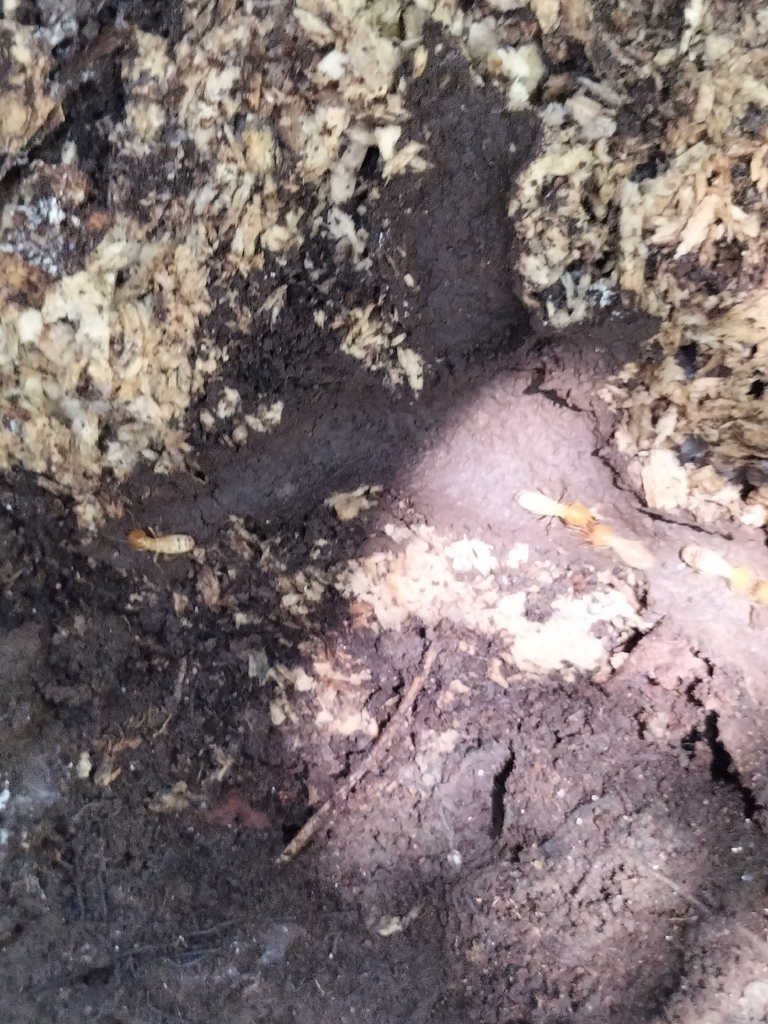
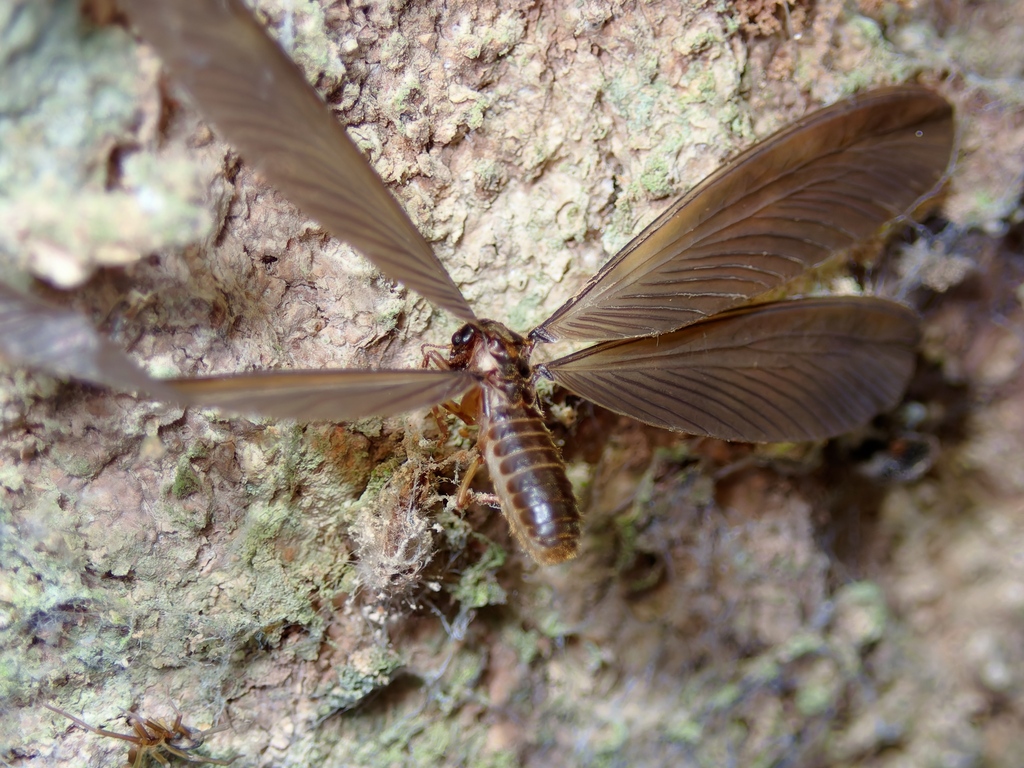
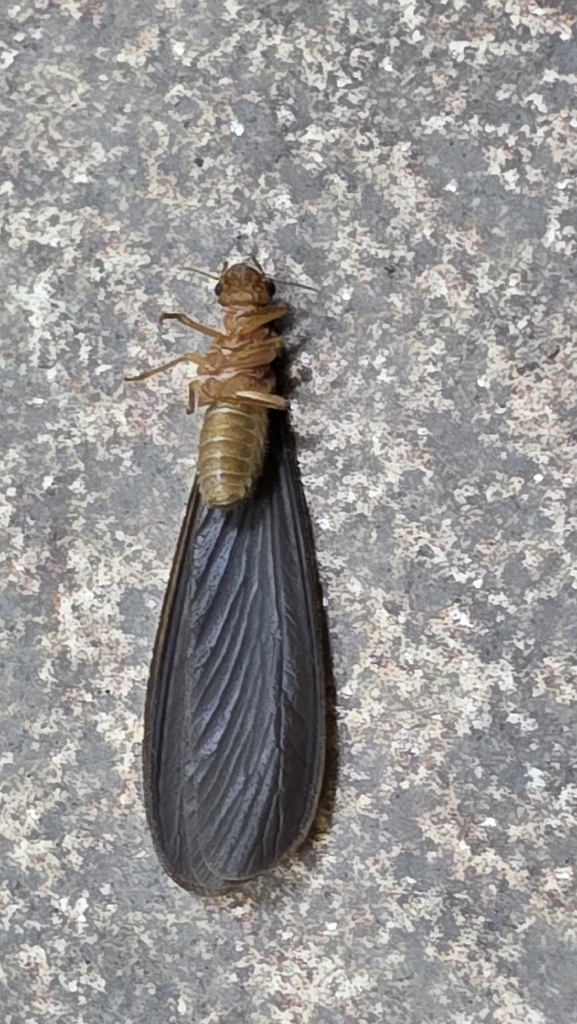
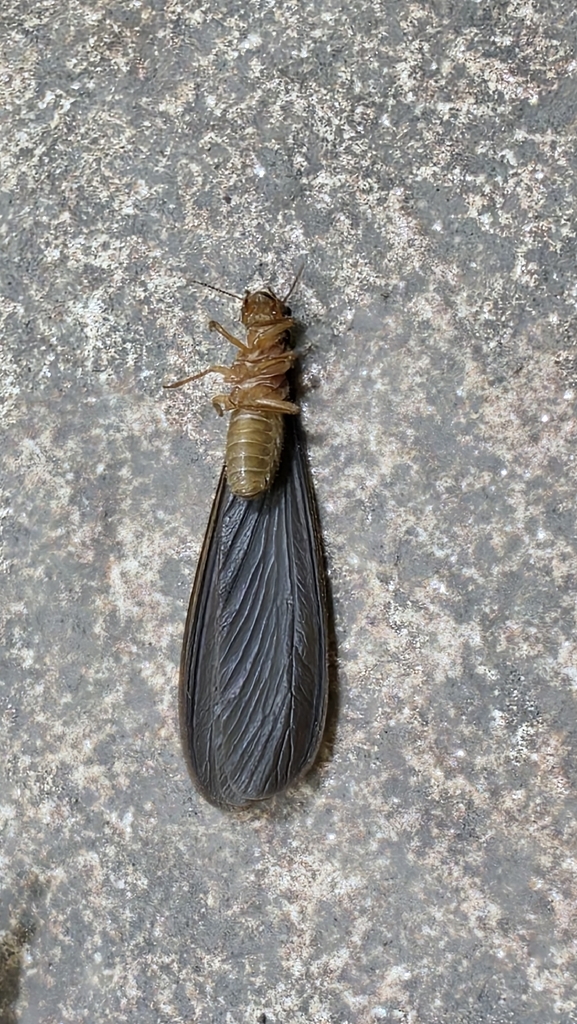
Distribution map
Aggregated from GBIF occurrence records on a 1° grid; only extant taxa of this checklist are used, so fossil records are excluded. Dot size and shade show the number of records inside a cell.
Related papers
Cached papers for this genus (matched automatically, for reference); to search this species with its junior synonyms merged in, use the literature search.
- BIONOMICS OF ODONTOTERMES HAINANENSIS (LIGHT)
Abstract
Odontotermes hainanensis (Light) is an important insect pest damaging the dikes of reservoirs in South China. The present paper deals with the morphologies of the castes, behaviour during cultivation of the primary colonies in the laboratory and the activities of dispersal flight, foraging and nest building in the field.
- Termites of the Genus Odontotermes are Optionally Keratophagous
Abstract
In this study we tested experimentally whether the consumption of mammalian hooves by termites of the genus Odontotermes is a mere incidental, previously overlooked event, or whether higher termites frequently exploit hooves of ungulates as a supplementary food source. The experiment was conducted in the open woodland savanna region of Serengeti National Park, Tanzania. In total, 88 hooves of wildebeest (Connochaetes taurinus) and zebra (Equus burchelli) – of two age classes – were offered to the termites in the field. After five days, 18.3% of old and 15.0% of fresh wildebeest hooves and 16.7% of old zebra hooves were utilized by termites as a food source. Accordingly, we report here for the first time a systematic, frequent necrophorous foraging behavior of termites in general, which also adds termites to the very short list of potential decomposers of mammalian hooves. Termites of the genus Odontotermes seem not to show a preference for a specific age class of the provided wildebeest hooves. Our results suggest that ungulate hooves represent a spatially and temporarily highly variable, potentially macro- and micronutrient-rich, supplementary food source for higher termites in this savanna ecosystem. Termites of the genus Odontotermes might accordingly be considered as being not only decomposers, but also optional necrophores, i.e. being keratophagous. Members of this genus might play an important role in the decomposition of mammalian hooves in African savannas.
- Xylaria species associated with nests of Odontotermes formosanus in Taiwan
Abstract
Nine species of Xylaria were collected in Taiwan from nests of Odontotermes formosanus, the only known macrotermitine termite in Taiwan. These include six newly described species, X. acuminatilongissima, X. atrodivaricata, X. brunneovinosa, X. griseosepiacea, X. intraflava and X. ochraceostroma, and three previously known species, X. cirrata, X. escharoidea and X. nigripes. We obtained cultures and ITS sequences from the nine species found in Taiwan and describe anamorphs for eight of them. Before the current study teleomorphanamorph connections in the Xylaria species associated with termite nests have been established unequivocally in X. escharoidea only. Xylaria angulosa, X. fimbriata, X. kedahae, X. micrura, X. radicans, X. reinkingii and X. tolosa also are considered and annotated because they were reported to grow on ground and likely are associated with termite nests. Epitypifications are made for X. cirrata, X. escharoidea and X. nigripes. Xylaria sanchezii is considered a nomen dubium. Photographs are presented for most of the aforementioned species. A dichotomous key to 25 Xylaria species growing on termite nests or ground also is given.
Papers on this species, synonyms included → OpenAlex Google Scholar CNKI
Abstracts come from open metadata; copyright remains with the original authors/publishers. For reference only — please check the original.
Literature notes
Edited notes based on the original literature, not transcriptions. The source markers in each paragraph point to archived records in .sources; full citations are listed below.
Xylaria diversity in nests in Taiwan
According to the abstract, Ju and Hsieh (2007) collected 9 Xylaria species from nests of Odontotermes formosanus in Taiwan, of which 6 were new species and 3 were known species; Odontotermes formosanus is the only member of the Macrotermitinae known from Taiwan, and the authors also provided a key to 25 Xylaria species growing on termite nests or on the ground.
References
Other species in Odontotermes (197 species)
- Odontotermes acutidens
- Odontotermes adampurensis
- Odontotermes agilis
- Odontotermes akengeensis
- Odontotermes amanicus
- Odontotermes amaniensis
- Odontotermes anamallensis
- Odontotermes anceps
- Odontotermes angustatus
- Odontotermes angustignathus
- Odontotermes angustipennis
- Odontotermes annulicornis
- Odontotermes apollo
- Odontotermes aquaticus
- Odontotermes assmuthi
- Odontotermes aurora
- Odontotermes badius
- Odontotermes bellahunisensis
- Odontotermes bequaerti
- Odontotermes bhagwatii
- Odontotermes billitoni
- Odontotermes boetonensis
- Odontotermes bogoriensis
- Odontotermes bomaensis
- Odontotermes boranicus
- Odontotermes bottegoanus
- Odontotermes boveni
- Odontotermes brunneus
- Odontotermes buchholzi
- Odontotermes butteli
- Odontotermes caffrariae
- Odontotermes capensis
- Odontotermes celebensis
- Odontotermes ceylonicus
- Odontotermes chicapanensis
- Odontotermes classicus
- Odontotermes conignathus
- Odontotermes culturarum
- Odontotermes denticulatus
- Odontotermes diana
197 species in this genus. See all species on the genus page →
Cite this species
Citation strings are generated from the fields of this page; please keep the DOI and the version number when citing.
GB/T 7714
班奈特格林. Extant Isoptera (termites): a checklist of Latin and Chinese names: Odontotermes formosanus 黑翅土白蚁[EB/OL]. Version 2026.10.30. https://termite-extant-isoptera.org/en/species/odontotermes-formosanus/. DOI: 10.5281/zenodo.23646836.
BibTeX
@misc{isoptera_odontotermes_formosanus_2026,
  author       = {班奈特格林},
  title        = {Odontotermes formosanus: a checklist of extant Isoptera (termites)},
  year         = {2026},
  version      = {2026.10.30},
  howpublished = {https://termite-extant-isoptera.org/en/species/odontotermes-formosanus/},
  note         = {TERMITIDAE; version 2026.10.30; DOI: 10.5281/zenodo.23646836},
  doi          = {10.5281/zenodo.23646836}
}
RIS
TY  - ELEC
TI  - Odontotermes formosanus: a checklist of extant Isoptera (termites)
AU  - 班奈特格林
PY  - 2026
UR  - https://termite-extant-isoptera.org/en/species/odontotermes-formosanus/
DO  - 10.5281/zenodo.23646836
ER  -