Embiratermes neotenicus 幼态生白蚁
- Localidad tipo
- Bolivia: La Paz: San Fermín [13.9056S 68.9722W]; Peru: Puno: Chaquimayo [13.45S 70.4W]
- Distribución (según la fuente)
- Peru, Brazil, French Guiana, Colombia, Suriname, Ecuador, Bolivia, Guyana, Venezuela
Listado: Español (página del género) · 中文 · English
Resumen
Embiratermes neotenicus es una especie del género Embiratermes, en la familia TERMITIDAE (subfamilia Syntermitinae). La especie fue descrita por Holmgren en 1906; la localidad tipo es Bolivia: La Paz: San Fermín [13.9056S 68.9722W]; Peru: Puno: Chaquimayo [13.45S 70.4W]. Distribución según la fuente: Peru, Brazil, French Guiana, Colombia, Suriname, Ecuador, Bolivia, Guyana, Venezuela. Este sitio registra 1 sinónimo junior para la especie.
Etimología
Nombre del género Embiratermes: Del tupí Embirá (un árbol) + -termes.
Epíteto específico neotenicus: De neotenia: griego neos (joven) + teinein (extender); retención de rasgos juveniles
Posición taxonómica
- Familia: TERMITIDAE — 280 géneros, 2144 especies
- Subfamilia: Syntermitinae — 22 géneros, 105 especies
- Género: Embiratermes — 9 especies
- Especie tipo del género: Embiratermes festivellus
Distribución
- Registros de distribución (según la fuente): Peru, Brazil, French Guiana, Colombia, Suriname, Ecuador, Bolivia, Guyana, Venezuela
El registro anterior sigue la redacción de los datos originales; no se han aplicado geocodificación ni nombres de lugar normalizados.
Sinónimos junior
Este sitio registra 1 sinónimo junior para la especie, ordenado según su fuente bibliográfica original:
- Armitermes (Armitermes) percutiens Emerson, 1925: 369-371 — type locality: Guyana: Cuyuni-Mazaruni: Kartabo [6.38N 58.7W]
En la literatura antigua, los listados regionales y las búsquedas en bases de datos, esta especie puede aparecer bajo el sinónimo Armitermes (Armitermes) percutiens; este sitio lo reúne bajo Embiratermes neotenicus.
Morfología
Todavía no se ha compilado una descripción morfológica de la especie a partir de la literatura original. Descripción original: Holmgren, 1906. Véase la página del género para la descripción genérica; esta página se actualizará tras revisar el texto original.
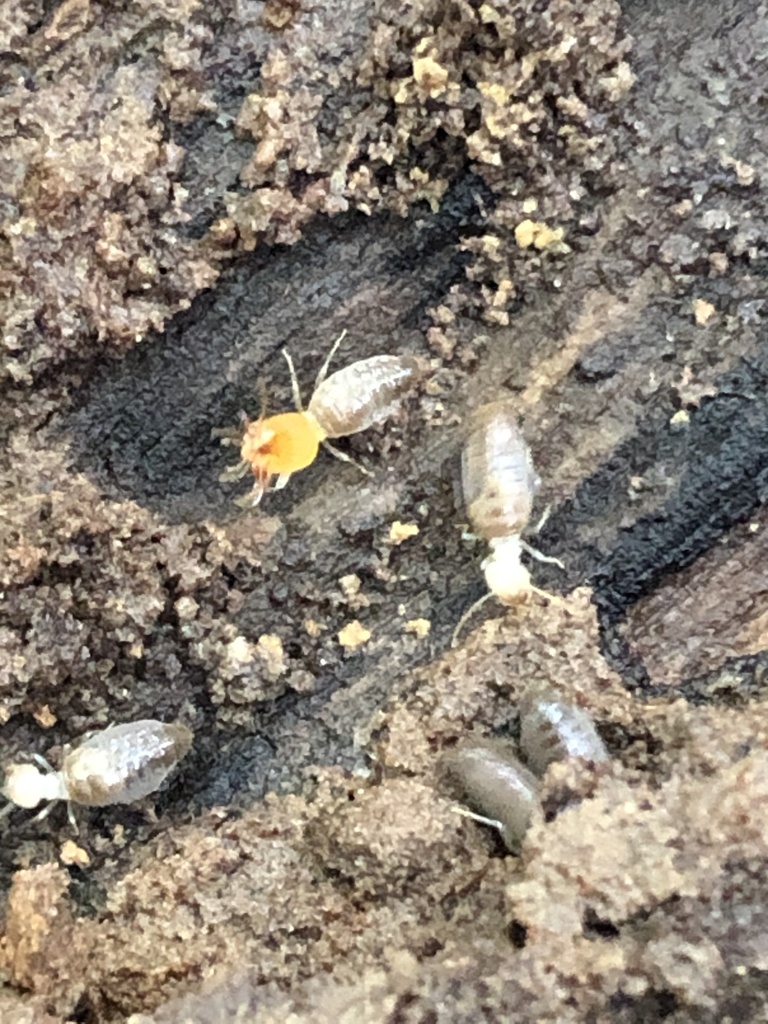
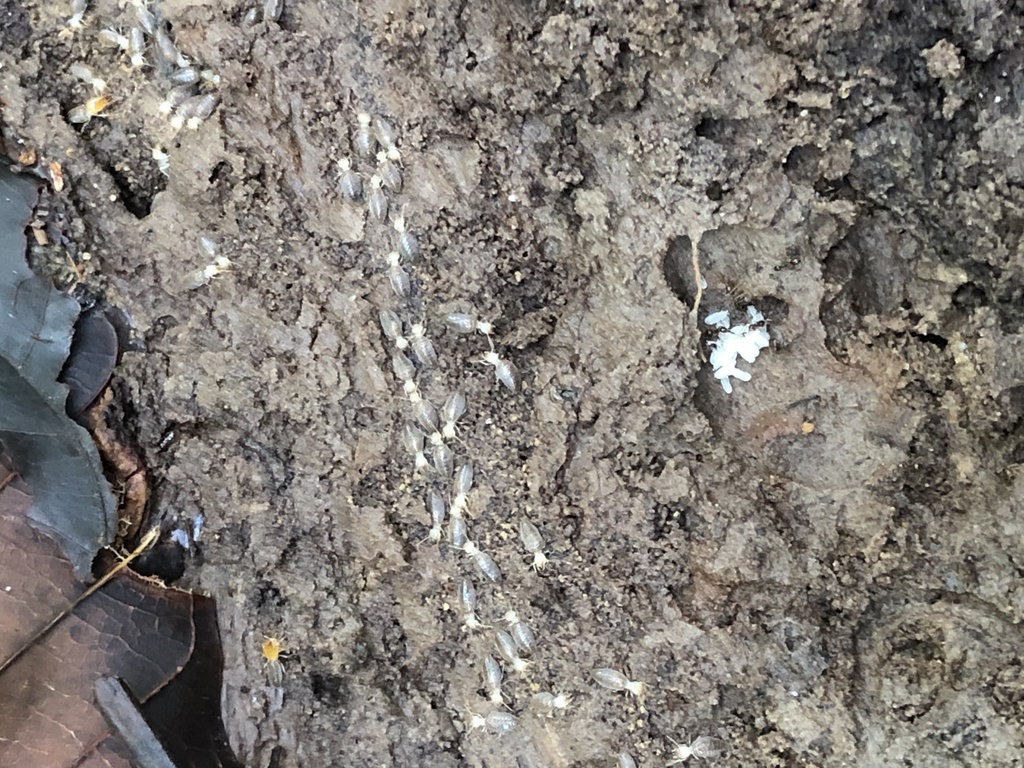
Fotos 7 fotos
Fotos con licencia libre; haga clic para ampliar. Enlazadas desde iNaturalist / Wikimedia Commons; los derechos son de sus autores — bajo cada foto se indican autor, licencia y página original. Aquí se muestran solo las primeras 6; el resto está en «Todas las fotos», al final de la página.
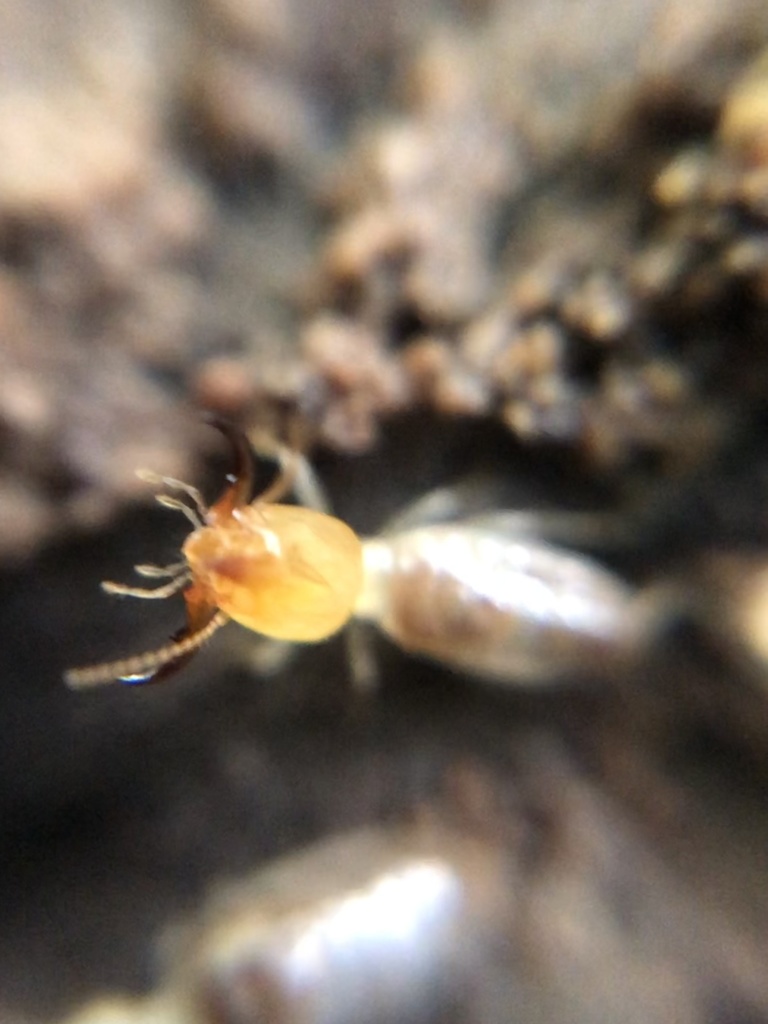
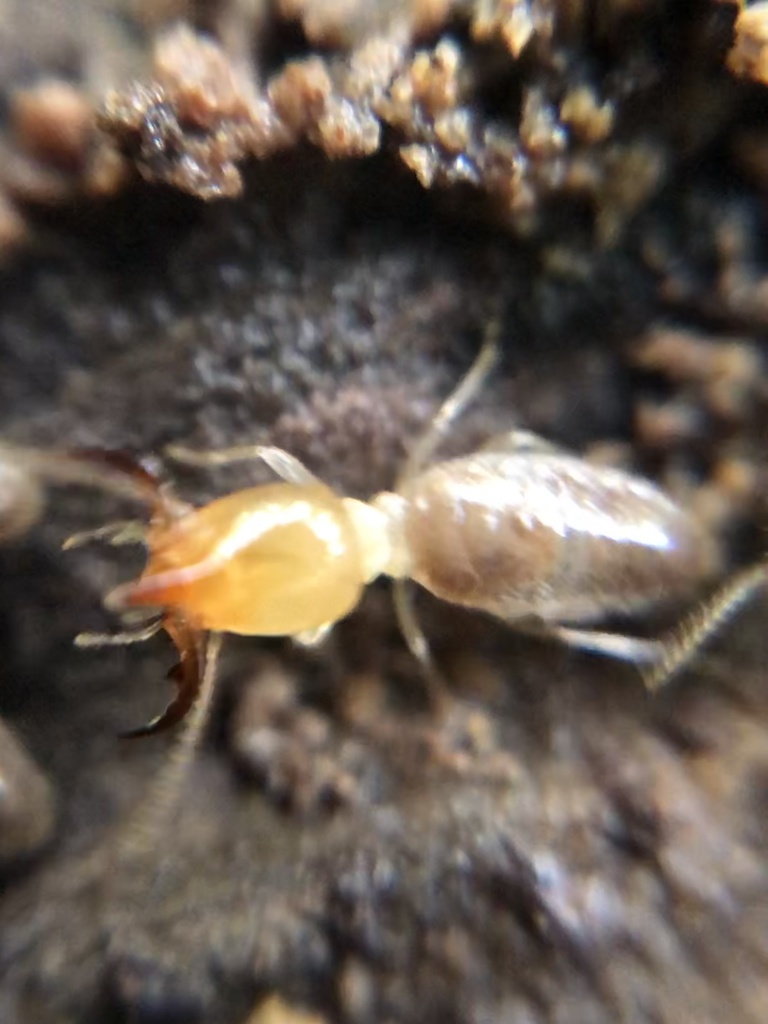
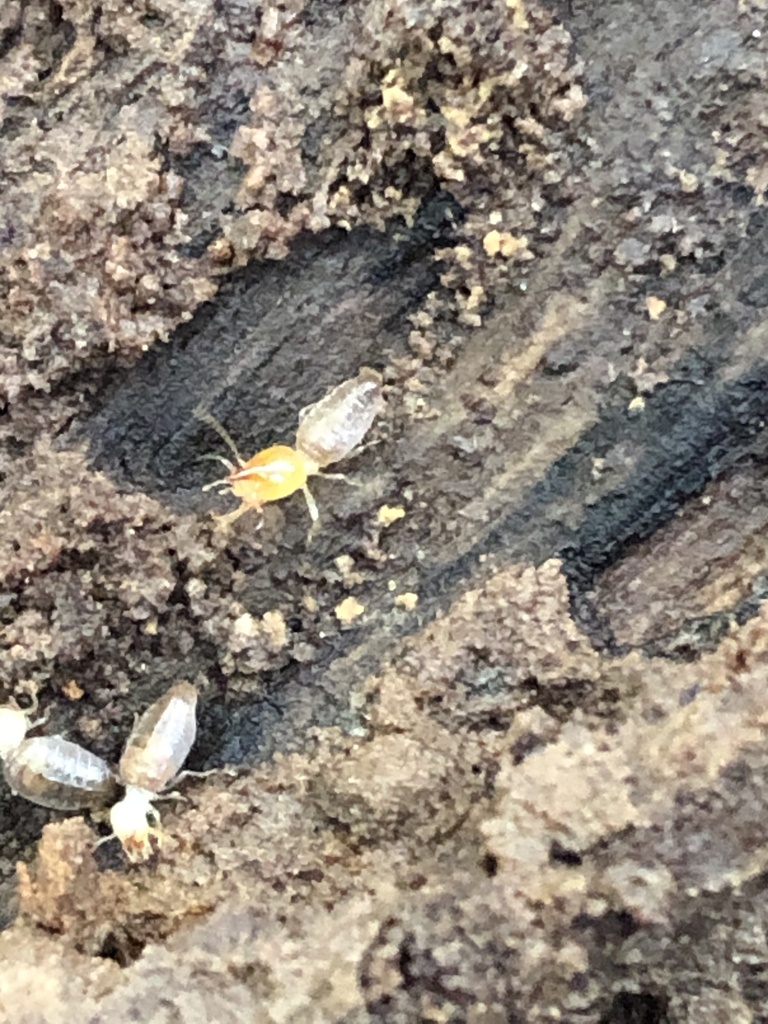
Mapa de distribución
Agregado de registros de GBIF en una rejilla de 1°; solo se usan taxones actuales de esta lista, por lo que los registros fósiles quedan excluidos. El tamaño y la intensidad del punto indican el número de registros de la celda.
Artículos relacionados
Artículos en caché de este género (coincidencia automática, a título orientativo); para buscar esta especie con sus sinónimos junior incluidos, use el buscador de literatura.
- Asexual queen succession in the higher termite Embiratermes neotenicus
Resumen
Asexual queen succession (AQS), in which workers, soldiers and dispersing reproductives are produced sexually while numerous non-dispersing queens arise through thelytokous parthenogenesis, has recently been described in three species of lower termites of the genus Reticulitermes. Here, we show that AQS is not an oddity restricted to a single genus of lower termites, but a more widespread strategy occurring also in the most advanced termite group, the higher termites (Termitidae). We analysed the genetic structure in 10 colonies of the Neotropical higher termite Embiratermes neotenicus (Syntermitinae) using five newly developed polymorphic microsatellite loci. The colonies contained one primary king accompanied either by a single primary queen or by up to almost 200 neotenic queens. While the workers, the soldiers and most future dispersing reproductives were produced sexually, the non-dispersing neotenic queens originated through thelytokous parthenogenesis of the founding primary queen. Surprisingly, the mode of thelytoky observed in E. neotenicus is most probably automixis with central fusion, contrasting with the automixis with terminal fusion documented in Reticulitermes. The occurrence of AQS based on different mechanisms of ploidy restoration raises the hypothesis of an independent evolutionary origin of this unique reproductive strategy in individual lineages of lower and higher termites.
- Development of non-reproductive castes in the neotropical termite generaCornitermes, Embiratermes andRhynchotermes (Isoptera, Nasutitermitinae)
Resumen
- Response to orphaning in two Neotropical termites: Armitermes euamignathus and Embiratermes festivellus
Resumen
In this paper we examine the potential of the termites Armitermes euamignathus Silvestri: 1901 and Embiratermes festivellus (Silvestri, 1901) (Isoptera, Termitidae, Nasutitermitinae) to produce neotenics experimentally. Three nests of the mound‐building termite A. euamignathus, from the Brazilian cerrado, had their primary queens removed in August 1994. After 12 months, only one mound survived; it had a normal appearance. In this healthy, orphaned colony we found the primary king, six physogastric nymphoid female replacement reproductives, two ergatoid female replacement reproductives, 46 nymphs, several presoldiers, soldiers, workers, larvae and many eggs. These data show that neotenics in A. euamignathus may originate from both workers and nymphs, but nymphoids are produced in larger numbers. The biometric study of nymphs and nymphoids suggests that these brachypterous neotenics were derived from third instar nymphs after a single moult or from four instar nymphs after a reduction of wing bud length. A piece of an E. festivellus nest with some third instar nymphs, soldiers and workers was kept under laboratory conditions. After 12 months, the whole experimental subcolony was examined and appeared to contain two pigmented nymphoid females, two pigmented nymphoid males, only one larva, seven nymphs of the same instar, 148 workers, five soldiers and many eggs. These results also indicate the capacity of the termite E. festivellus to produce nymphoid neotenics. These neotenic females were laying eggs, but they were not physogastric after a year, unlike some nymphoids of the same species collected from natural colonies.
Artículos sobre esta especie, sinónimos incluidos → OpenAlex Google Scholar CNKI
Los resúmenes proceden de metadatos abiertos; los derechos pertenecen a sus autores/editores. Solo para referencia; consulte el original.
Otras especies de Embiratermes (8 especies)
Citar esta especie
Las citas se generan a partir de los campos de esta página; conserve el DOI y el número de versión al citar.
GB/T 7714
班奈特格林. Lista de nombres latinos y chinos de los Isoptera (termitas) actuales: Embiratermes neotenicus 幼态生白蚁[EB/OL]. Versión 2026.10.30. https://termite-extant-isoptera.org/es/species/embiratermes-neotenicus/. DOI: 10.5281/zenodo.23646836.
BibTeX
@misc{isoptera_embiratermes_neotenicus_2026,
  author       = {班奈特格林},
  title        = {Embiratermes neotenicus: lista de Isoptera (termitas) actuales},
  year         = {2026},
  version      = {2026.10.30},
  howpublished = {https://termite-extant-isoptera.org/es/species/embiratermes-neotenicus/},
  note         = {TERMITIDAE; versión 2026.10.30; DOI: 10.5281/zenodo.23646836},
  doi          = {10.5281/zenodo.23646836}
}
RIS
TY  - ELEC
TI  - Embiratermes neotenicus: lista de Isoptera (termitas) actuales
AU  - 班奈特格林
PY  - 2026
UR  - https://termite-extant-isoptera.org/es/species/embiratermes-neotenicus/
DO  - 10.5281/zenodo.23646836
ER  -