Speculitermes macrodentatus 大齿稀白蚁
- Localidad tipo
- Thailand: Pitsanulok Province: Tung Sa-Lang Luang National Park
- Distribución (según la fuente)
- southern China, Thailand, Cambodia
Listado: Español (página del género) · 中文 · English
Resumen
Speculitermes macrodentatus es una especie del género Speculitermes, en la familia TERMITIDAE (subfamilia Apicotermitinae). La especie fue descrita por Ahmad en 1965; la localidad tipo es Thailand: Pitsanulok Province: Tung Sa-Lang Luang National Park. Distribución según la fuente: southern China, Thailand, Cambodia.
Etimología
Nombre del género Speculitermes: Del latín speculum (espejo) + termes.
Epíteto específico macrodentatus: De macrodent (grande) + atus (provisto de)
Posición taxonómica
- Familia: TERMITIDAE — 280 géneros, 2144 especies
- Subfamilia: Apicotermitinae — 68 géneros, 241 especies
- Género: Speculitermes — 13 especies
- Especie tipo del género: Speculitermes cyclops
Distribución
- Registros de distribución (según la fuente): southern China, Thailand, Cambodia
El registro anterior sigue la redacción de los datos originales; no se han aplicado geocodificación ni nombres de lugar normalizados.
Morfología
Todavía no se ha compilado una descripción morfológica de la especie a partir de la literatura original. Descripción original: Ahmad, 1965. Véase la página del género para la descripción genérica; esta página se actualizará tras revisar el texto original.
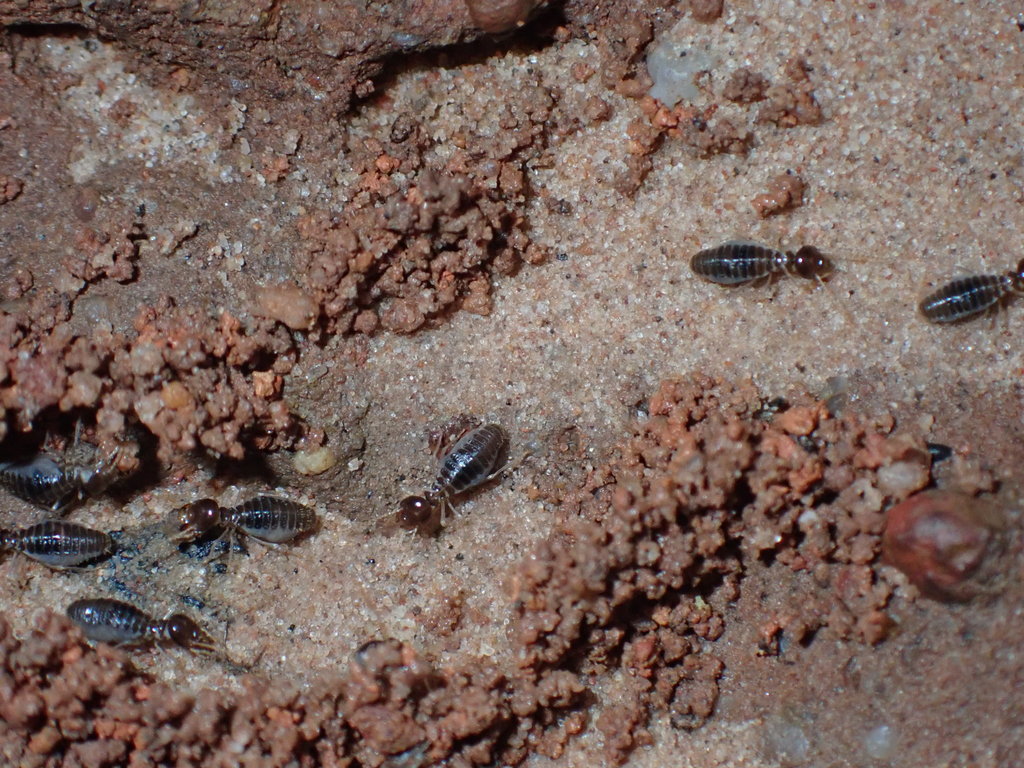
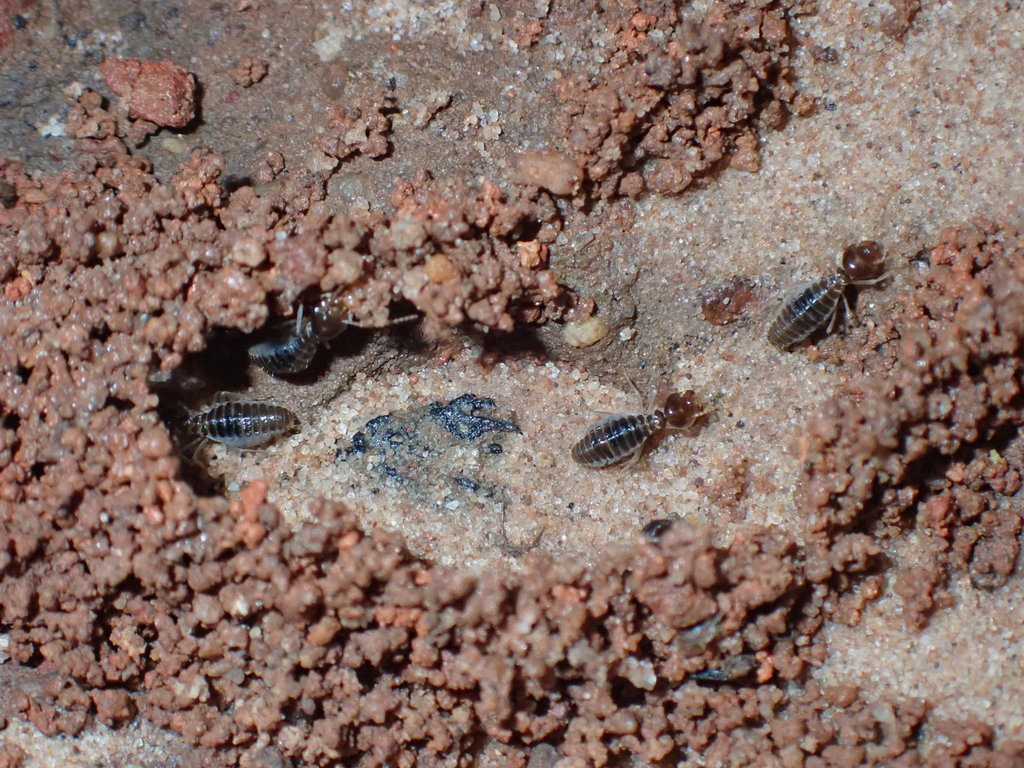
Fotos 12 fotos
Fotos con licencia libre; haga clic para ampliar. Enlazadas desde iNaturalist / Wikimedia Commons; los derechos son de sus autores — bajo cada foto se indican autor, licencia y página original. Aquí se muestran solo las primeras 6; el resto está en «Todas las fotos», al final de la página.
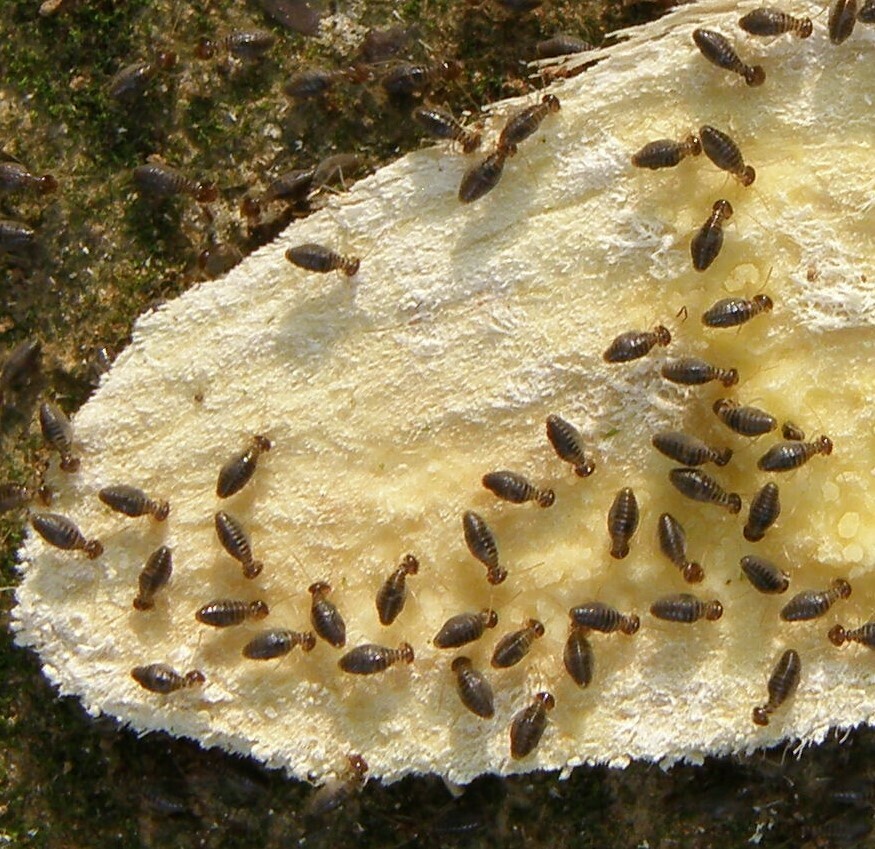
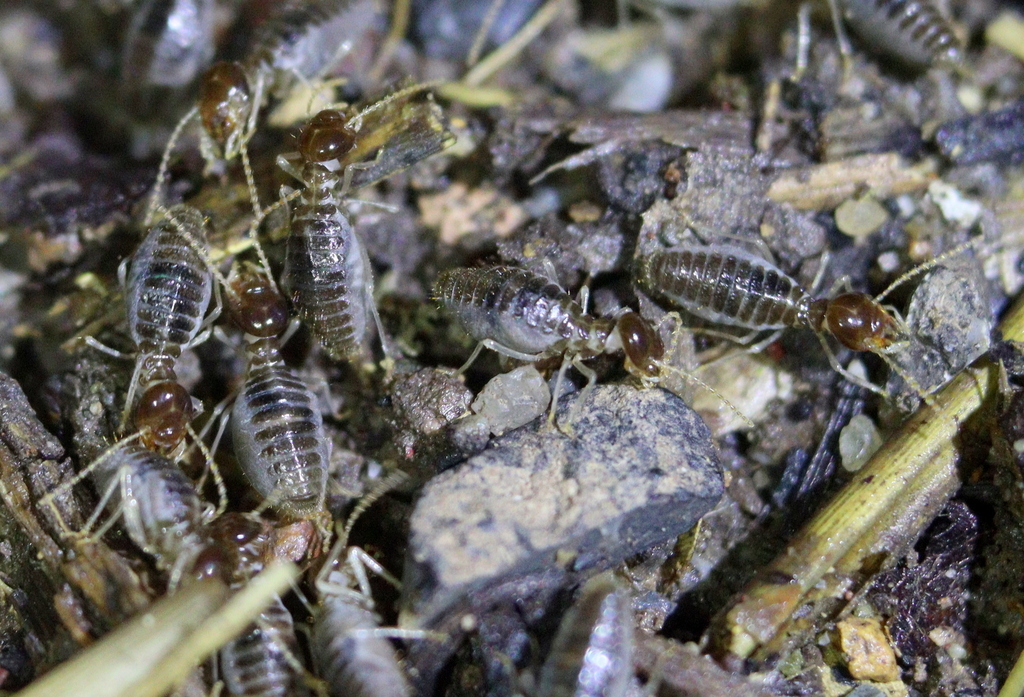
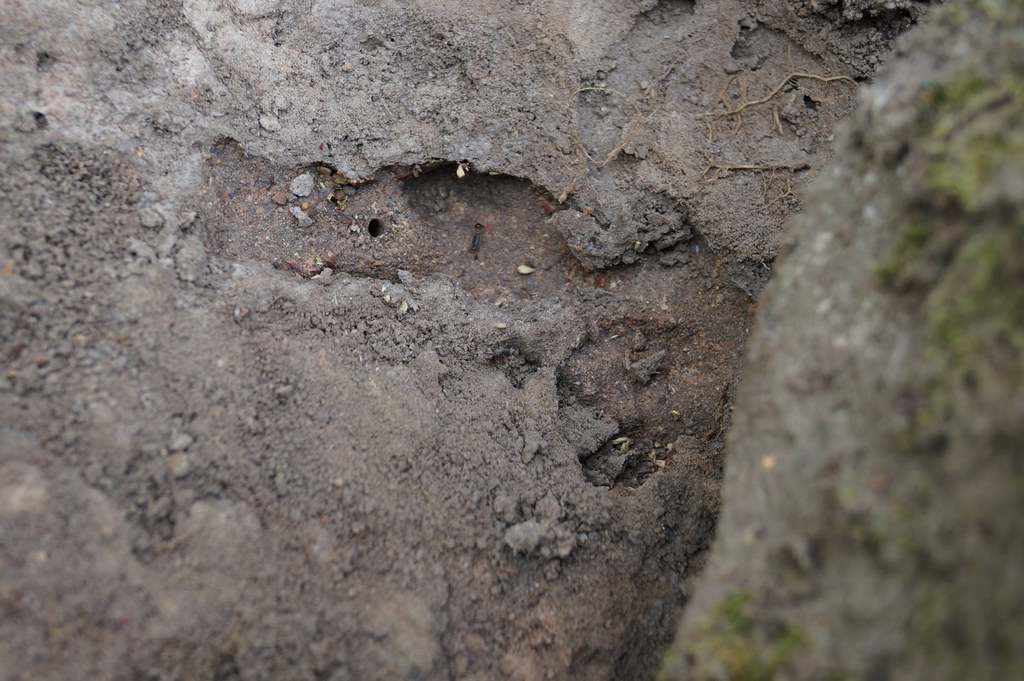
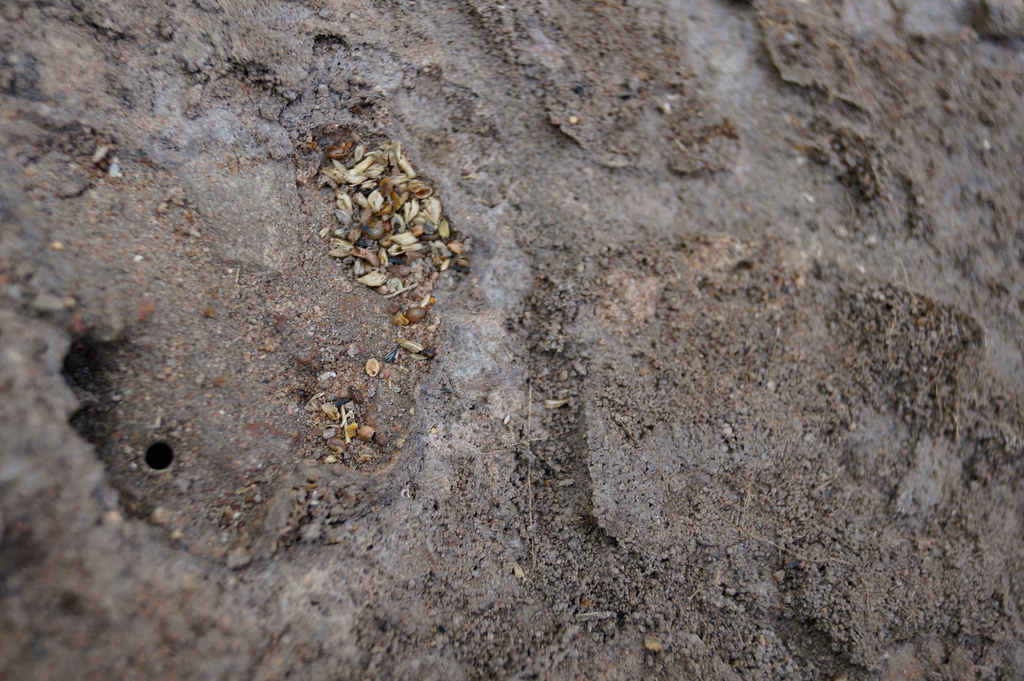
Mapa de distribución
Agregado de registros de GBIF en una rejilla de 1°; solo se usan taxones actuales de esta lista, por lo que los registros fósiles quedan excluidos. El tamaño y la intensidad del punto indican el número de registros de la celda.
Artículos relacionados
Artículos en caché de este género (coincidencia automática, a título orientativo); para buscar esta especie con sus sinónimos junior incluidos, use el buscador de literatura.
- Speculitermes Wasmann 1902
Resumen
Genus Speculitermes Wasmann, 1902 Type species: Speculitermes cyclops Wasmann, 1902 Distribution in India: Andhra Pradesh, Assam, Bihar, Gujarat, Himachal Pradesh, Jammu and Kashmir, Karnataka, Kerala, Madhya Pradesh, Maharashtra, Odisha, Punjab, Rajasthan, Tamil Nadu, Uttar Pradesh, Uttarakhand, West Bengal (Fig. 8). Remarks: The genus Speculitermes was first placed in the subfamily Amitermitinae Kemner, 1934, and later transferred to Apicotermitinae by Sands (1972). The soldier caste is absent in most of the species of Speculitermes excluding S. sinhalensis, S. dharwarensis and S. macrodentatus, hence the species identification is mainly based on the worker caste and imagoes. Out of the 12 species of Speculitermes known from the Oriental Region, 10 species were reported from India. In Kerala, this genus is represented by four species so far, namely, S. emersoni, S. sinhalensis, S. chadaensis and S. dharwarensis. The occurrence of soldier caste in S. latalabrum is of considerable significance as it shows a rare deviation from the predominantly soldierless genus.
- Speculitermes latalabrum Aiswarya and Amina 2026, sp. nov.
Resumen
Speculitermes latalabrum Aiswarya and Amina sp. nov. (Figs 1A–1F, 2A–2E, 3A– 3D, 7A, Table 1.) Material examined: Holotype (soldier), India: Kerala: Thrissur (Asurankundu Dam), 10.6852N, 76.2955E, 13 January 2024, P. M. Aiswarya and A. V. Sudhikumar coll., Colony code, Vial No. AK-1, CATE / IX /1913. Paratypes: 15 workers with same data as holotype. Diagnosis Soldiers with large head (width 2.00mm), broadly dome shaped labrum. Postmentum strongly narrowed at waist. Abdomen small and moderately pilose. Worker head with mid-dorsal spot flushed with its surface, clypeus long (more than half its width). Description Imago - Unknown Soldier- Head capsule dark brown, paler anteriorly, pale yellow streak running on either side, converging posteriorly; antennae pale brown. Mandibles dark brown, paler at the base; labrum pale brown. Thorax, legs and abdomen creamish (Fig. 1A). Body length 7.8 mm (Table 1). Head capsule and thorax sparsely hairy, abdomen moderately hairy. Head subrectangular and flat in dorsal view (Fig. 1B), sloping in front in profile (Fig. 1C). Antennae with fourteen articles, third segment subdivided and longer than second segment; second segment shortest. Postclypeus subdivided by an incision into right and left halves, sparsely hairy; anteclypeus thin, strip-like and apilose. Labrum broadly dome-shaped (Fig. 1D) with long and short hairs on the anterior portion and body. Mandibles long and thick, broader at the base, distally incurved inwards, much longer, more than 3/4 of head length; each mandible with large, pointed tooth 1/3 length from tip; Right mandibular tooth is more pointed than left, right tooth, upwardly directed, left tooth laterally directed. Postmentum long, club shaped (Fig. 1E), and narrow basally; two bristles on either side of anterior margin, longer one pointing inward and shorter one pointing towards sides; lateral sides are characterized with single moderately long hair on each side followed by gradually shortening hairs towards the middle. Pronotum is substantially saddle shaped with a fringe of short hairs on anterior margin and few longer hairs on the lateral margins, there is no median notch on anterior or posterior margins (Fig. 1F). Mesonotum slightly smaller, metanotum slightly wider. Legs slender, hairy, apical tibial spurs 3:2:2. Abdomen small, moderately pilose, tergites and sternites with poor sclerotization. Worker - Head capsule brown; labrum and post clypeus light coloured than head; antennae pale in colour, brown towards the tip; thorax and abdomen pale and translucent (Fig. 2A). Head sparsely and body densely hairy. Total body length 5.54-6.32 mm. Head capsule subcircular (Fig. 2B), wider than head length to base of mandible (head length to tip of labrum 1.57-1.71 mm; length to the base of mandibles 1.00- 1.23 mm, maximum head width 1.25- 1.30 mm). Y- suture is distinctly marked with round, small mid-dorsal spot which is not swollen. Antennae with fourteen articles; article three subdivided, club shaped and longer than two; segment two shortest. Postclypeus swollen, length more than half of its width (length 0.22-0.29 mm, width 0.50-0.55 mm). Left mandible with triangular apical tooth, subequal to or slightly shorter than first + second marginal; anterior margin of first + second marginal tooth shorter than long and sinuate posterior margin; third marginal tooth pointed, triangular, shorter than first + second marginal, with an incision between first + second; molar prominence projects beyond third marginal, not reaching up to first + second marginal. Right mandible with apical tooth subequal to first marginal; anterior margin of first marginal straight, posterior margin longer; second marginal tooth short with a blunt end, posterior margin long and slightly incurved; molar plate with apical thickening, concave, smooth and without ridges (Fig. 2D). Pronotum (Fig.2E) saddle shaped (length 0.42-0.47 mm, width 0.73-0.77 mm), mesonotum wider than pronotum, legs with apical tibial spurs in 2:2:2 ratio; tarsi four segmented. Abdomen elongated, cerci two segmented. Gut (Figs 3A–3D) with crop slightly asymmetrical, not voluminous; gizzard regressed. Mixed segment absent. First proctodaeal segment (P1) long and tubular, opening into elongated paunch (P3) through enteric valve (P2) constriction. P1 “C” shaped at posterior region. Enteric-valve armature (Fig 7A) with six hexaradial cushions separated by short intervals; each cushion bearing numerous spines. Distal region of paunch (P3) opens into thin fourth proctodaeal segment (P4), which finally joins rectum (P5). Etymology: The species is named “ latalabrum " (in Latin, lata=wider) after its wider labrum comparing to other known species of Speculitermes. Comparison: Of the three known species to have soldiers of Speculitermes from the Oriental region, Speculitermes latalabrum sp. nov. shows affinity to S. macrodentatus in having broad labrum with parallel lateral margin and broadly rounded anterolateral corners. In addition, it can be separated from S. macrodentatus in the following characters - head comparatively broad (head width 2.00 mm; head index (head width/ head length to the base of mandibles) = 0.90 mm) in proposed new species vs. narrow (head width 1.74-1.92 mm; head index 0.78-0.84 mm) in S. macrodentatus; and the postmentum long and broad (length 1.55 mm, width 0.62 mm, width at waist 0.46) vs. comparatively short and narrow (length 1.19-1.30 mm, width 0.46-0.52 mm, width at waist 0.31-33 mm). The soldier of S. latalabrum resembles S. sinhalensis in having subrectangular, flat head with pale yellow streaks running on either side of the head. The head capsule of the new species is comparatively wide (2.0 mm) vs. narrow (1.8-1.93 mm). The labrum is broad and lateral sides nearly parallel and anterolateral corners broadly rounded in S. latalabrum vs. labrum is comparatively and lateral sides not parallel and anterolateral corners narrowly rounded in S. sinhalensis. Mandible long (length 1.81 mm, index 0.82) vs. short (length 1.44-1.52 mm, index 0.58-0.65). Speculitermes latalabrum resembles S. dharwarensis with both having subrectangular head sloping anteriorly in profile; mandibles with forwardly directed tooth. S. latalabrum differs from S. dharwarensis in having a broader head (width 2.00 mm) vs. less broad (width 1.75 mm) in the latter. The marginal tooth is at a distance more than 1/3 from the apical point in S. latalabrum vs. marginal tooth at a distance less than 1/3 from the tip of mandible. Workers of the S. latalabrum resembles S. sinhalensis in having a mid-dorsal spot on the head, which is not swollen, but it differs from S. sinhalensis in post clypeus length, more than half of its width (length 0.22-0.29 mm, width 0.50-0.55 mm) vs. length nearly half of its width (length 0.29-0.33 mm; width 0.60-0.66 mm).
- The digestive tube and enteric valve armature of termite species of the genera Speculitermes and Indotermes (Isoptera: Termitidae).
Resumen
Artículos sobre esta especie, sinónimos incluidos → OpenAlex Google Scholar CNKI
Los resúmenes proceden de metadatos abiertos; los derechos pertenecen a sus autores/editores. Solo para referencia; consulte el original.
Otras especies de Speculitermes (12 especies)
Citar esta especie
Las citas se generan a partir de los campos de esta página; conserve el DOI y el número de versión al citar.
GB/T 7714
班奈特格林. Lista de nombres latinos y chinos de los Isoptera (termitas) actuales: Speculitermes macrodentatus 大齿稀白蚁[EB/OL]. Versión 2026.10.30. https://termite-extant-isoptera.org/es/species/speculitermes-macrodentatus/. DOI: 10.5281/zenodo.23646836.
BibTeX
@misc{isoptera_speculitermes_macrodentatus_2026,
  author       = {班奈特格林},
  title        = {Speculitermes macrodentatus: lista de Isoptera (termitas) actuales},
  year         = {2026},
  version      = {2026.10.30},
  howpublished = {https://termite-extant-isoptera.org/es/species/speculitermes-macrodentatus/},
  note         = {TERMITIDAE; versión 2026.10.30; DOI: 10.5281/zenodo.23646836},
  doi          = {10.5281/zenodo.23646836}
}
RIS
TY  - ELEC
TI  - Speculitermes macrodentatus: lista de Isoptera (termitas) actuales
AU  - 班奈特格林
PY  - 2026
UR  - https://termite-extant-isoptera.org/es/species/speculitermes-macrodentatus/
DO  - 10.5281/zenodo.23646836
ER  -