Macrotermes barneyi 黄翅大白蚁
- Type locality
- China: Hong Kong: Hong Kong University, China: Amoy Harbour, China: near Kuliang, in the mountains near Foochow
- Distribution
- East Asia, China, Hong Kong, China, Macau, China, Vietnam
List: English (genus page) · 中文 · Español
Summary
Macrotermes barneyi is a species of the genus Macrotermes, in the family TERMITIDAE (subfamily Macrotermitinae). The species was described by Light in 1924; the type locality is China: Hong Kong: Hong Kong University, China: Amoy Harbour, China: near Kuliang, in the mountains near Foochow. Distribution: East Asia, China, Hong Kong, China, Macau, China, Vietnam.
Etymology
Genus name Macrotermes: From Greek makros (large) + Latin termes, ‘large termite’.
Specific epithet barneyi: Named after Barney
Taxonomic position
- Family: TERMITIDAE — 280 genera, 2144 species
- Subfamily: Macrotermitinae — 12 genera, 373 species
- Genus: Macrotermes — 57 species
- Type species of the genus: Macrotermes lilljeborgi
Distribution
- Distribution records: East Asia, China, Hong Kong, China, Macau, China, Vietnam
The record above follows the wording of the original data; no geocoding or standardized place names have been applied.
Recorded in Fauna Sinica
The morphological and biological accounts below are taken from Fauna Sinica and related literature; only structure and punctuation have been standardized here.
Morphology
Soldier
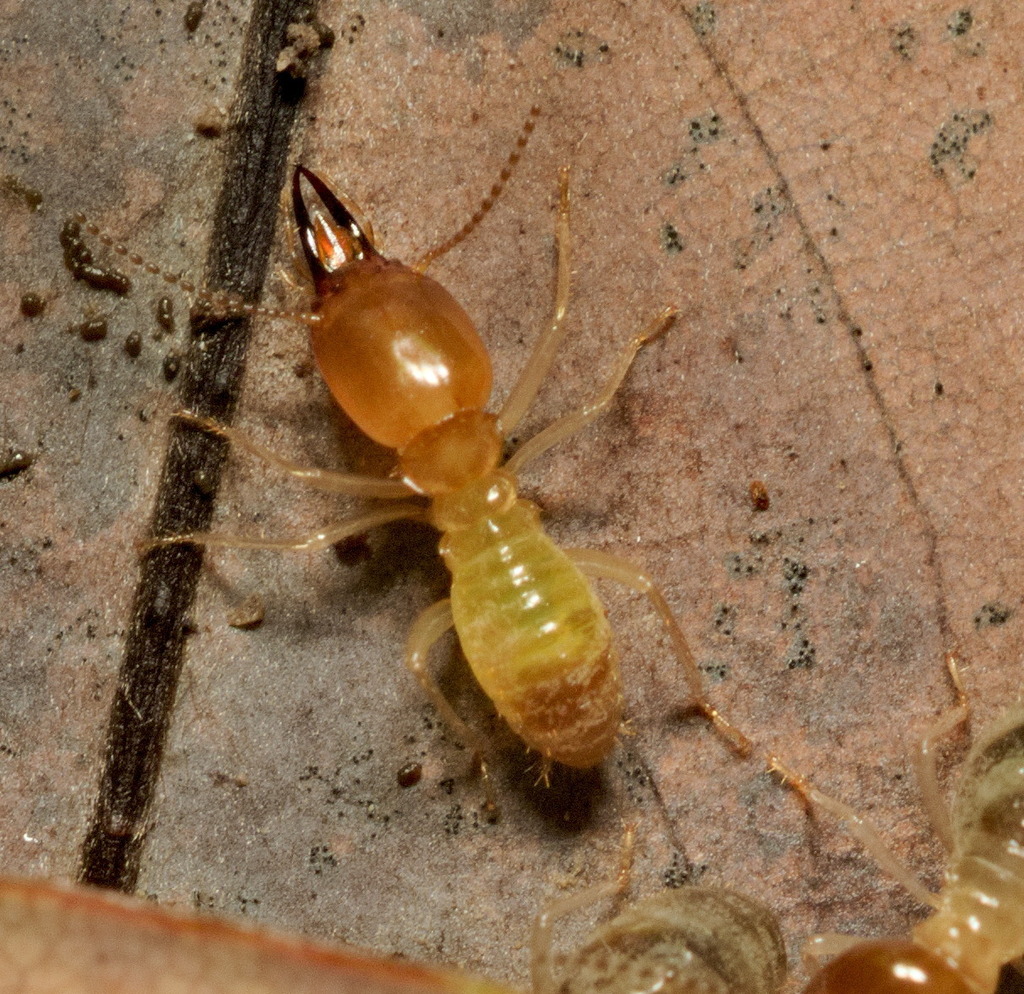
Major soldier: head deep yellow, abdomen paler, mandibles black; head and pronotum with a few erect hairs, the abdominal dorsum with few hairs and the venter with more. Head rectangular, widest in the posterior part or at the middle, only the anterior end slightly narrowed; fontanelle very small, situated near the midpoint of the head; head dorsum fairly flat, sloping gradually forwards and downwards from the fontanelle. Mandibles sickle-shaped, labrum ligulate, with a transparent triangular area at the tip; antennae with 17 segments, segment 3 longer than or equal to segment 2, a pale eye spot below and behind the antennal socket. Thorax and legs as in the preceding species. Minor soldier markedly smaller and slightly paler; head oval, the lateral margins more curved than in the major soldier, the posterolateral corners rounded; mandibles relatively longer, appearing slender and straight; antennae with 17 segments, segment 2 longer than or equal to segment 3; otherwise similar to the major soldier.
Alate
Coloration and morphology very similar to the preceding species, differing in the head and pronotum being shorter and narrower.
Worker
Nymph
Abstract (from the source)
The major soldier has a deep yellow head, black mandibles and a rectangular head widest behind the middle, with a very small fontanelle on a flat dorsum sloping forward. The mandibles are sickle shaped and the labrum bears a hyaline triangular tip. Antennae have seventeen segments, the third as long as or longer than the second, with pale eye spots behind the antennal sockets. The minor soldier is much smaller and paler, with an oval head, more curved sides and relatively longer mandibles.
Biology
Distribution and locality
In China widely distributed in the southern provinces and in Hong Kong; abroad it occurs in Vietnam.
Taxonomic notes
Source: Huang Fusheng et al. (2000), Fauna Sinica, Insecta vol. 17, Isoptera, Science Press. (entry no. 295 in the original work) Entries are cited by their number in the original work.
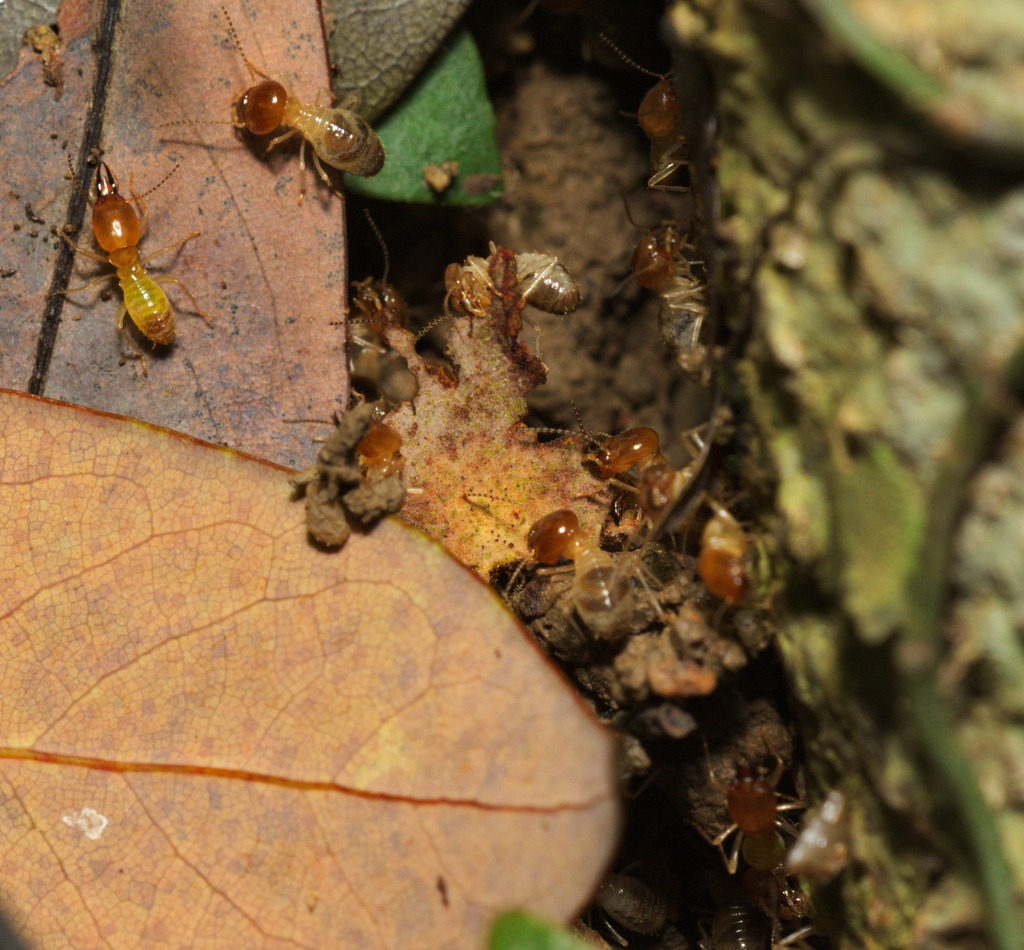
Photos 8 photos
Freely licensed photos, click to enlarge. Hotlinked from iNaturalist / Wikimedia Commons; the rights stay with the photographers — author, licence and source page are shown under each photo. Only the first 6 are shown here; the rest are under “All photos” at the end of the page.
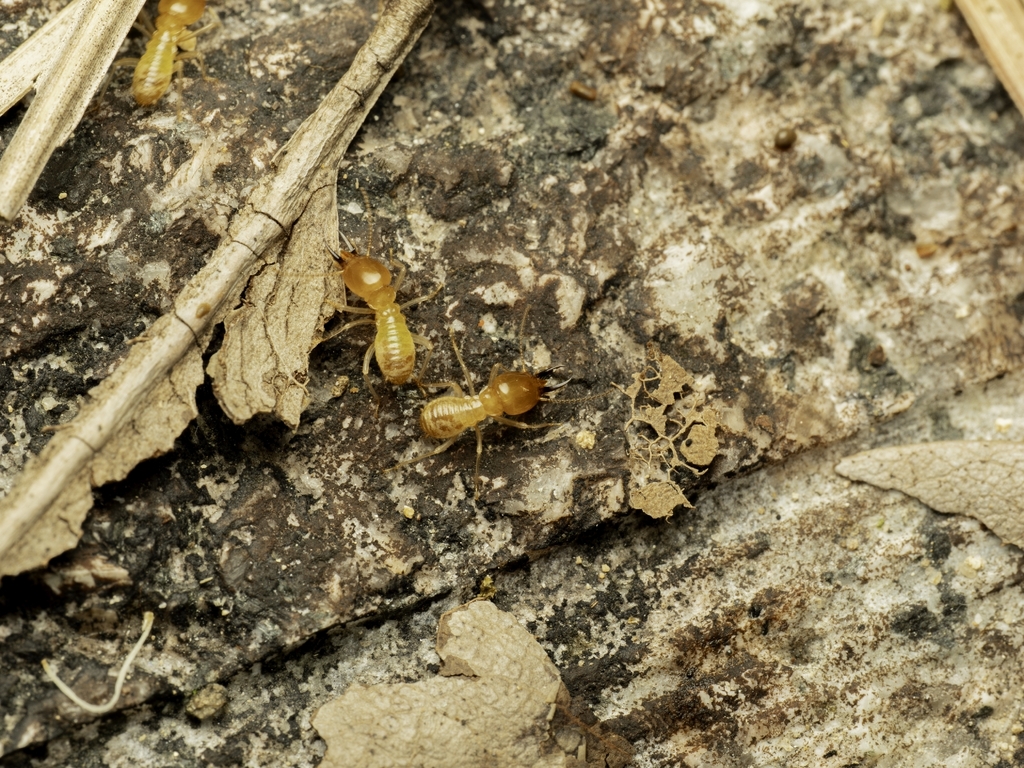
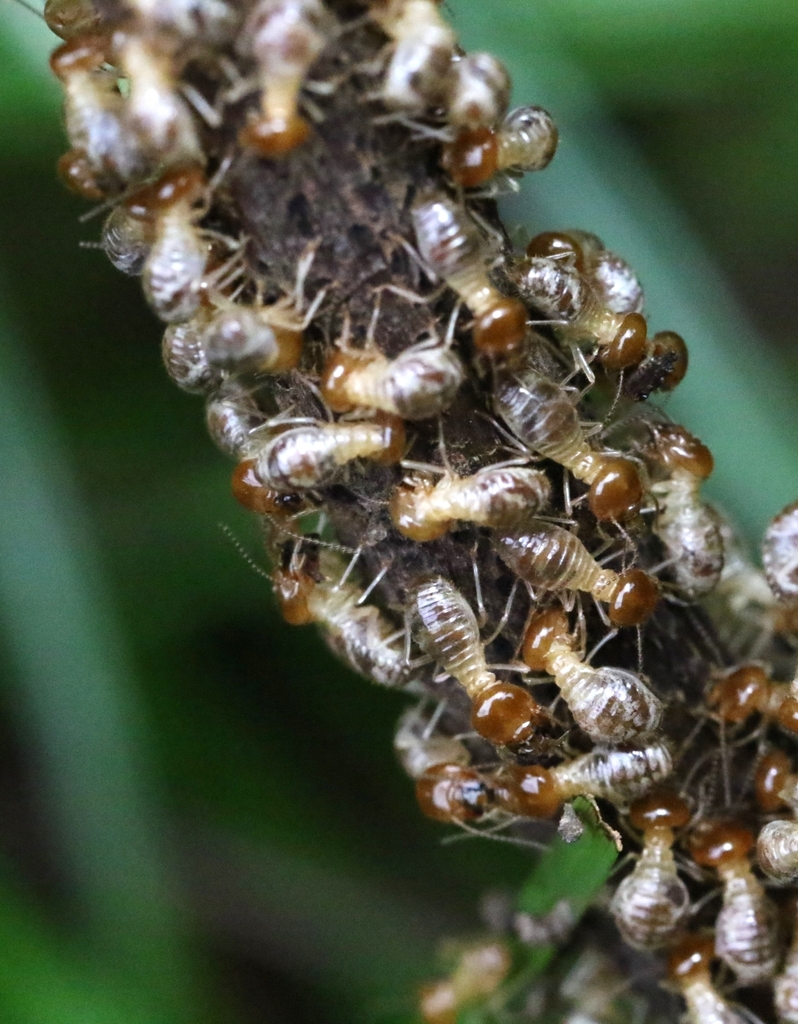
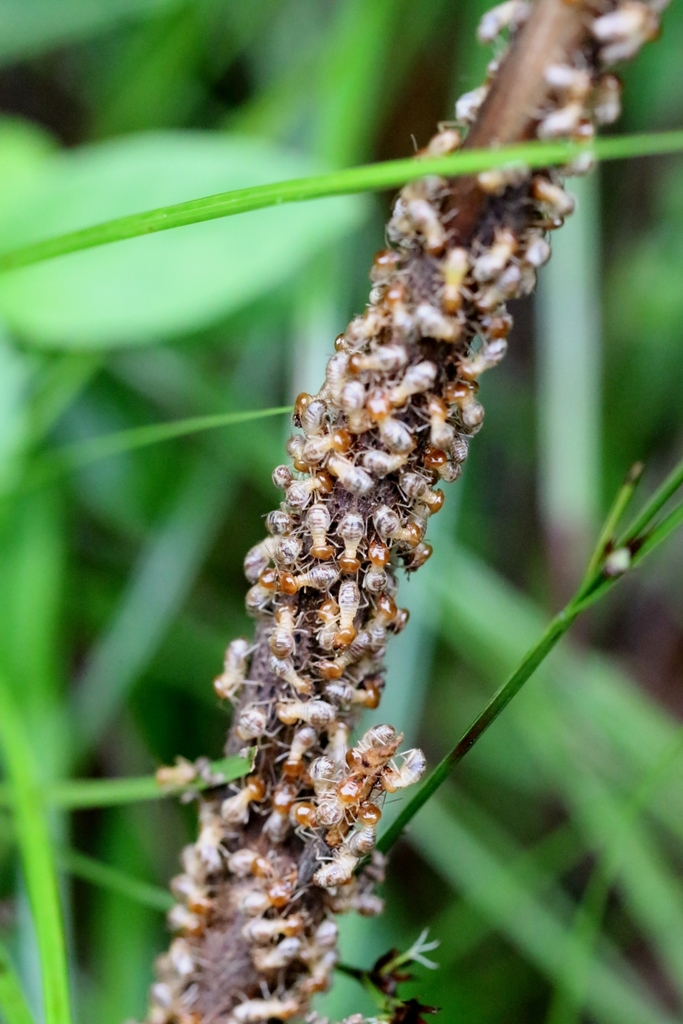
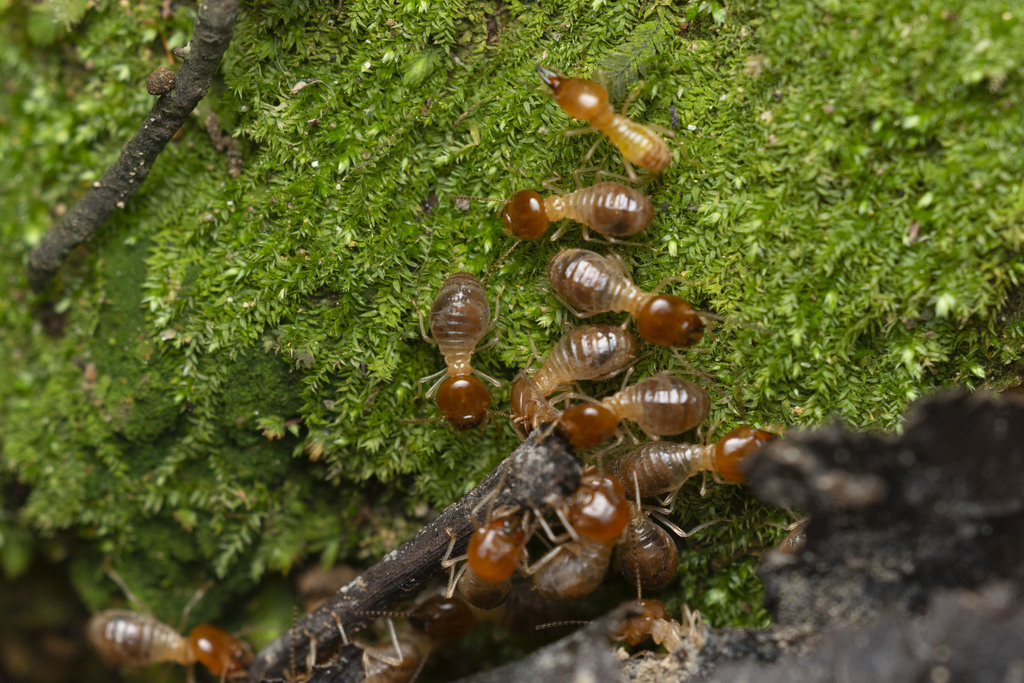
Distribution map
Aggregated from GBIF occurrence records on a 1° grid; only extant taxa of this checklist are used, so fossil records are excluded. Dot size and shade show the number of records inside a cell.
Related papers
Cached papers for this genus (matched automatically, for reference); to search this species with its junior synonyms merged in, use the literature search.
- Intraspecific colony recognition in the termites Macrotermes subhyalinus and Macrotermes bellicosus (Isoptera, Termitidae)
Abstract
- Ecdysone and ecdysterone in physogastric termite queens and eggs of Macrotermes bellicosus and Macrotermes subhyalinus
Abstract
- The mound-building termite Macrotermes michaelseni as an ecosystem engineer
Abstract
Many organisms create or alter resource flows that affect the composition and spatial arrangement of current and future organismal diversity. The phenomenon called ecosystem engineering is considered with a case study of the mound building termite Macrotermes michaelseni. It is argued that this species acts as an ecosystem engineer across a range of spatial scales, from alteration of local infiltration rates to the creation of landscape mosaics, and that its impacts accrue because of the initiation of biophysical processes that often include feedback mechanisms. These changes to resource flows are likely to persist for long periods and constrain the biological structure of the habitat. The value of ecosystem engineering is discussed as a holistic way of understanding the complexity of tropical ecology.
Papers on this species, synonyms included → OpenAlex Google Scholar CNKI
Abstracts come from open metadata; copyright remains with the original authors/publishers. For reference only — please check the original.
Other species in Macrotermes (56 species)
- Macrotermes acrocephalus
- Macrotermes ahmadi
- Macrotermes aleemi
- Macrotermes amplus
- Macrotermes annandalei
- Macrotermes beaufortensis
- Macrotermes bellicosus
- Macrotermes carbonarius
- Macrotermes chaiglomi
- Macrotermes chebalingensis
- Macrotermes choui
- Macrotermes constrictus
- Macrotermes convulsionarius
- Macrotermes declivatus
- Macrotermes denticulatus
- Macrotermes falciger
- Macrotermes gilvus
- Macrotermes gratus
- Macrotermes guangxiensis
- Macrotermes hainanensis
- Macrotermes herus
- Macrotermes hopini
- Macrotermes incisus
- Macrotermes ituriensis
- Macrotermes ivorensis
- Macrotermes jinghongensis
- Macrotermes khajuriai
- Macrotermes latignathus
- Macrotermes lilljeborgi
- Macrotermes longiceps
- Macrotermes longimentis
- Macrotermes luokengensis
- Macrotermes maesodensis
- Macrotermes malaccensis
- Macrotermes meidoensis
- Macrotermes menglongensis
- Macrotermes michaelseni
- Macrotermes natalensis
- Macrotermes niger
- Macrotermes nobilis
56 species in this genus. See all species on the genus page →
Cite this species
Citation strings are generated from the fields of this page; please keep the DOI and the version number when citing.
GB/T 7714
班奈特格林. Extant Isoptera (termites): a checklist of Latin and Chinese names: Macrotermes barneyi 黄翅大白蚁[EB/OL]. Version 2026.10.30. https://termite-extant-isoptera.org/en/species/macrotermes-barneyi/. DOI: 10.5281/zenodo.23646836.
BibTeX
@misc{isoptera_macrotermes_barneyi_2026,
  author       = {班奈特格林},
  title        = {Macrotermes barneyi: a checklist of extant Isoptera (termites)},
  year         = {2026},
  version      = {2026.10.30},
  howpublished = {https://termite-extant-isoptera.org/en/species/macrotermes-barneyi/},
  note         = {TERMITIDAE; version 2026.10.30; DOI: 10.5281/zenodo.23646836},
  doi          = {10.5281/zenodo.23646836}
}
RIS
TY  - ELEC
TI  - Macrotermes barneyi: a checklist of extant Isoptera (termites)
AU  - 班奈特格林
PY  - 2026
UR  - https://termite-extant-isoptera.org/en/species/macrotermes-barneyi/
DO  - 10.5281/zenodo.23646836
ER  -