Genus Macrotermes · 大白蚁属
Filter the taxa recorded under this genus by name and locality; for the whole site use the full-text search.
Distribution map
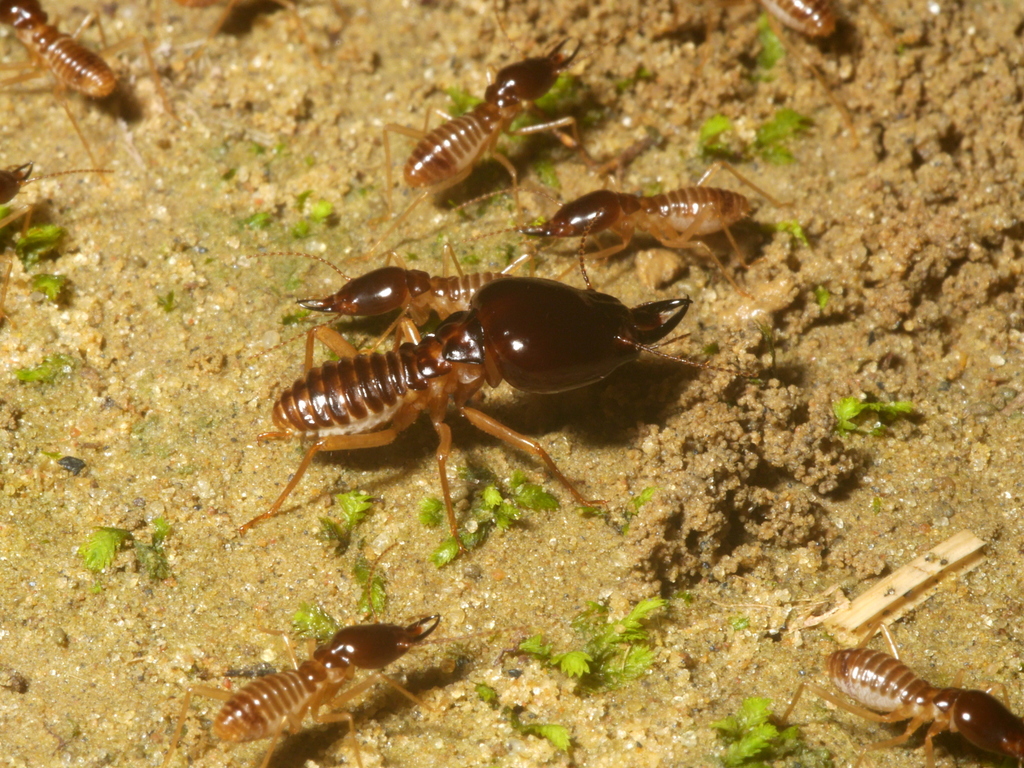
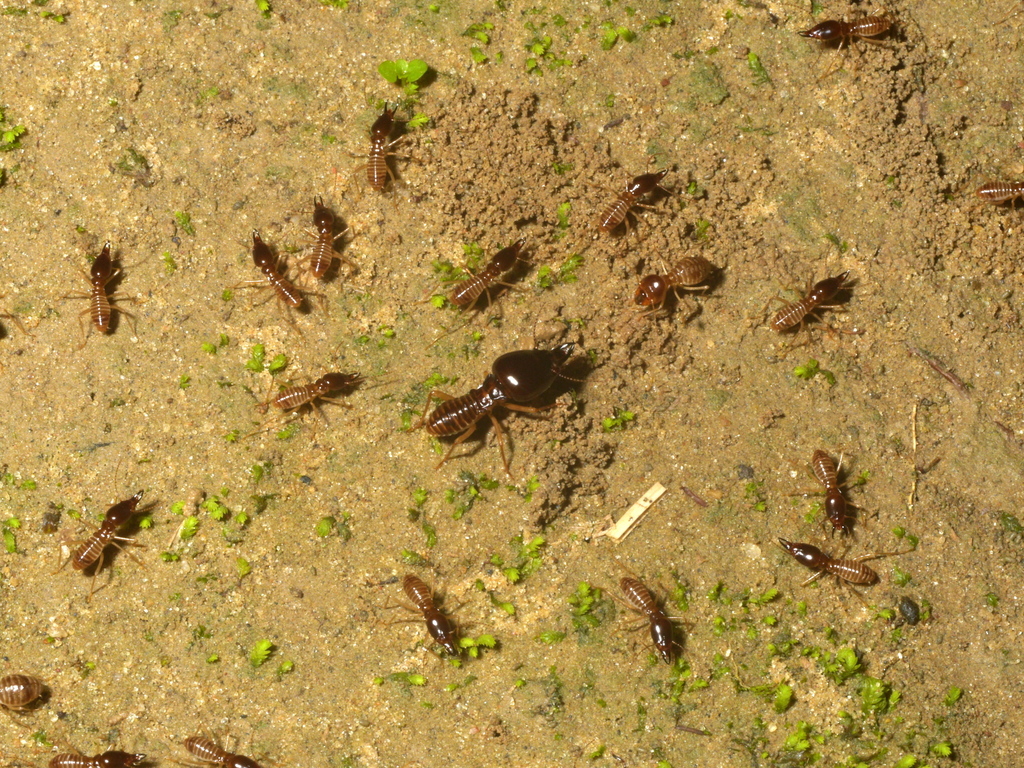
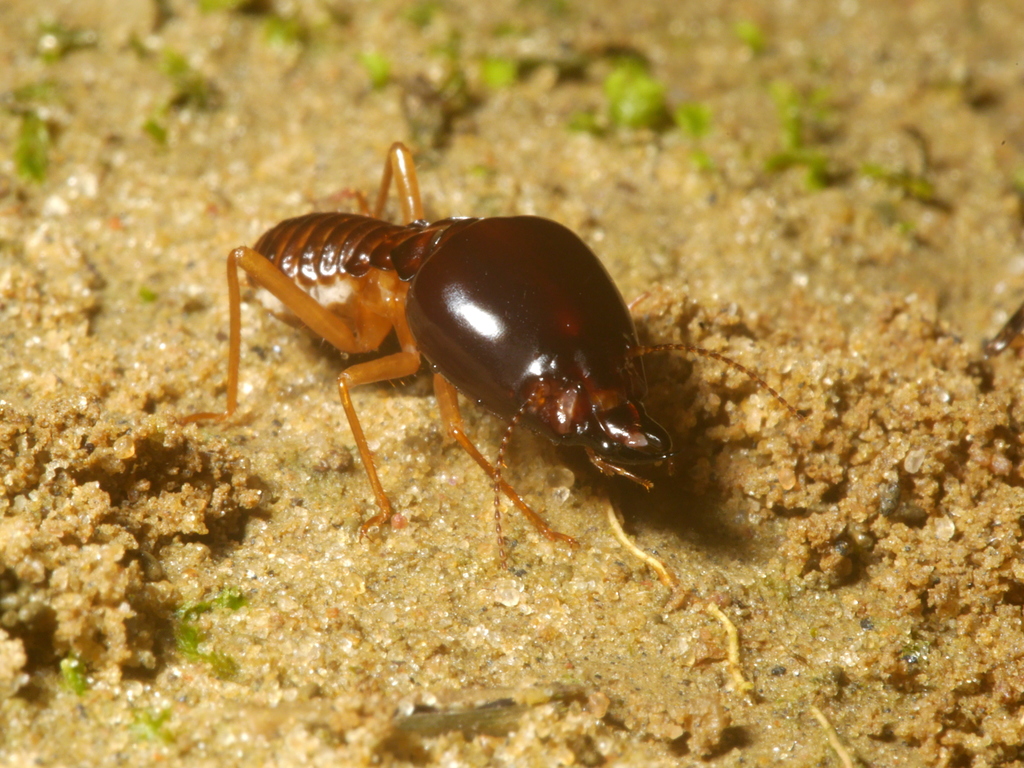
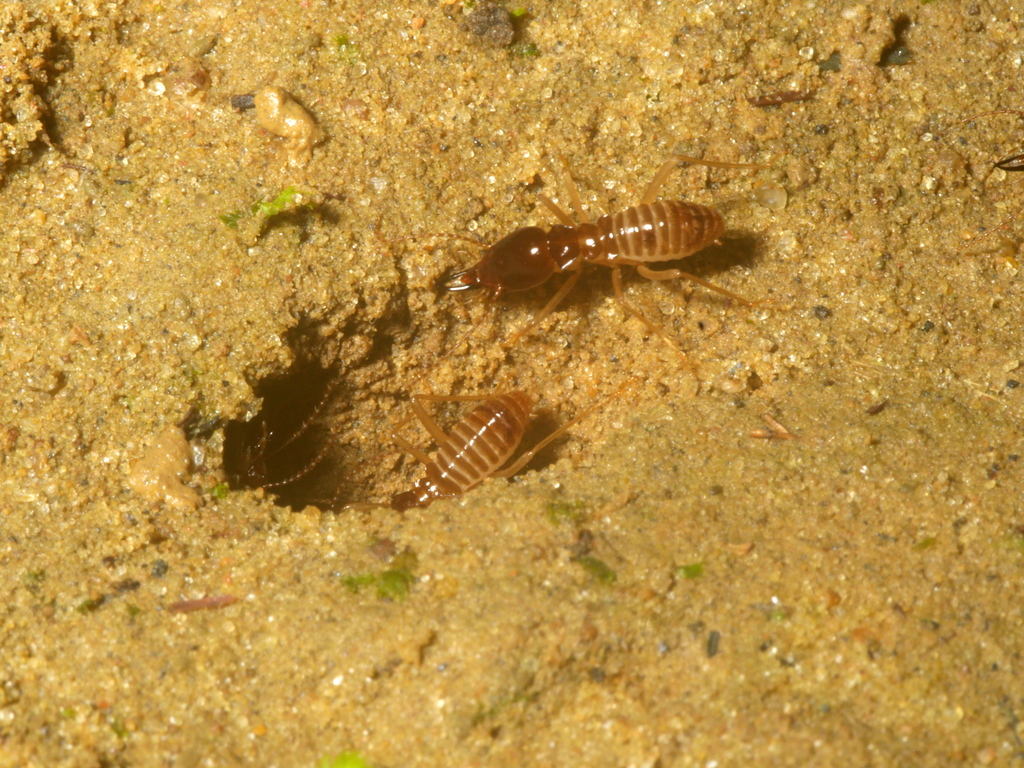
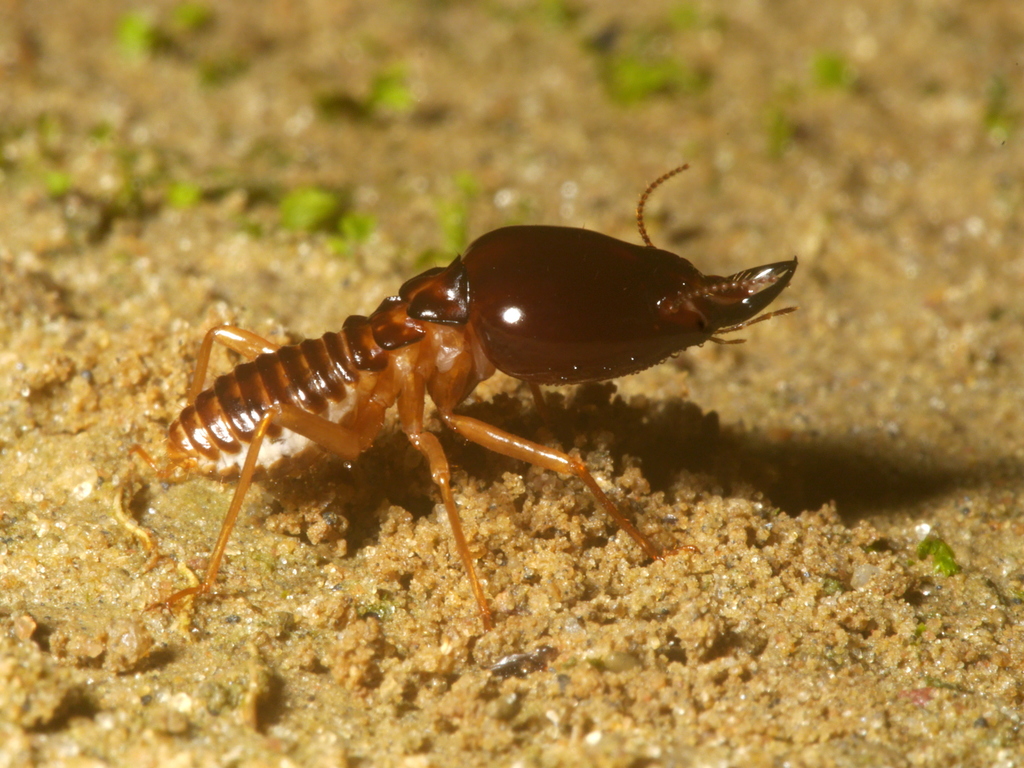
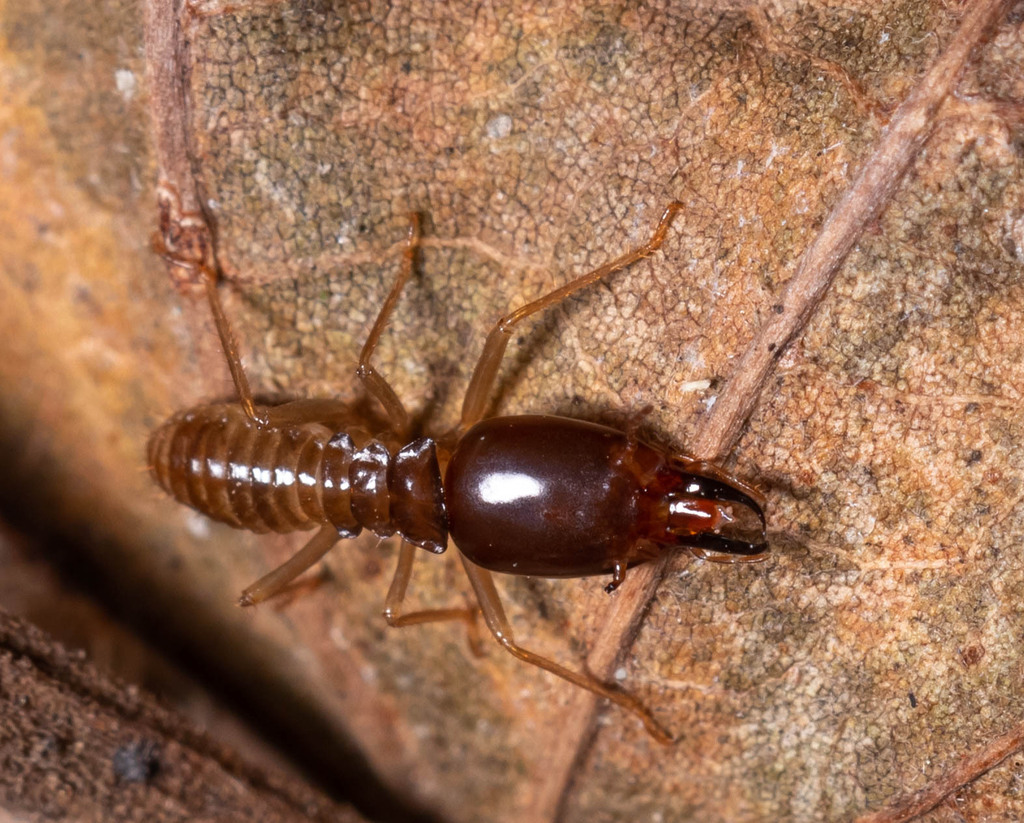
Photographs 320 photos · 13 species
Freely licensed photos; click to enlarge. This preview shows 6 photos; to browse by species, open “All photos”. Photos are hotlinked from iNaturalist / Wikimedia Commons; the rights stay with the photographers.
About the genus
This genus belongs to the family Termitidae 白蚁科, in the subfamily Macrotermitinae 大白蚁亚科; the site records 57 species.
Type species: Macrotermes lilljeborgi.
This page includes a distribution map for the genus (GBIF records aggregated on a 1° grid); open a species entry to see its type locality, distribution, and references.
Etymology
From Greek makros (large) + Latin termes, 'large termite'.
The etymologies in this section are analytical breakdowns; the roots follow Brown (1956).
Fauna Sinica account
The account below is a reorganized and rewritten adaptation of the genus-level description in Fauna Sinica, Insecta Vol. 17, Isoptera (2000) (generic description in the original book's section on Macrotermes, reorganised and rewritten); the source keys and measurement tables are not reproduced here.
Morphology
Key characters
Soldier usually of two sizes, major and minor, or of three, major, medium and minor; the two sides of the head parallel or narrowed anteriorly, frons flat, fontanelle punctiform; mandibles curved like sickles, the base of the left mandible with several notches and a distinct basal tooth; antennae with seventeen segments.
Soldier
Soldier usually of two sizes, major and minor, some species also with a medium size, three in all. The two sides of the head parallel, or narrowed anteriorly. Frons flat, fontanelle punctiform. Labrum widest at the middle, with a small transparent patch at the apex. Mandibles curved like sickles; the base of the left mandible with several notches and one distinct basal tooth, no other teeth besides the basal one; the right mandible likewise toothed only at the base. Antennae with seventeen segments, the third often longer than the second. Pronotum saddle-shaped, both its anterior and posterior margins notched.
Alate
Alate head broadly oval, fontanelle distinct and slightly raised, ocelli fairly large. Postclypeus convex, about half as long as wide, the posterior margin arcuate and the anterior margin straight. Antennae with nineteen segments, the third longer than the second. The posterior margins of the mesonotum and metanotum form shallow arcuate incisions. Radius projecting slightly beyond the wing scale; the media of the forewing arises independently at the humeral suture, the media of the hindwing mostly from the base of the radial sector. The lateral walls of the queen's abdomen without dense coloured dots.
Distribution
Oriental and Afrotropical Regions; recorded from every province and autonomous region of southern China.
Summary
Macrotermes soldiers occur in two size classes, or three in some species. The head is parallel-sided or narrowed anteriorly, the frons is flat with a dot-like fontanelle, and the labrum is widest at the middle. The sickle-shaped mandibles have several notches and a distinct basal tooth on the left, while the right is toothless apart from the basal tooth. Antennae have seventeen segments, and the saddle-shaped pronotum is notched both anteriorly and posteriorly.
Sources cited: Huang Fusheng, Zhu Shimo, Ping Zhengming, Wang Zhiguo, Li Can and Xu Chungui, 2000. Fauna Sinica, Insecta Vol. 17, Isoptera. Beijing: Science Press. This text is a reorganized adaptation, not a verbatim transcription.
Literature notes
Edited notes based on the original literature, not transcriptions. The source markers in each paragraph point to archived records in .sources; full citations are listed below.
Larval instars of two sympatric Macrotermes species
According to the abstract of Neoh and Lee (2009), who studied the sympatric Macrotermes gilvus and Macrotermes carbonarius in Malaysia, the larvae of both species fall into five clearly delimited caste groups, with minor and major workers each passing through three larval instars; first-instar larvae are sexually monomorphic, and from the second instar onwards females are smaller than males; minor and major soldiers are both female sterile castes; nymphs develop into alates through five moults starting from the first instar.
References
Species (57)
- Macrotermes acrocephalus Ping, 1985 隆头大白蚁
- Macrotermes ahmadi Tho, 1975 阿哈默德大白蚁
- Macrotermes aleemi Akhtar, 1975 阿利姆大白蚁
- Macrotermes amplus Sjöstedt, 1899 体大大白蚁
- Macrotermes annandalei Silvestri, 1914 土垄大白蚁
- Macrotermes barneyi Light, 1924 黄翅大白蚁
- Macrotermes beaufortensis Thapa, 1982 保佛大白蚁
- Macrotermes bellicosus Smeathman, 1781 勇猛大白蚁
- Macrotermes carbonarius Hagen, 1858 炭色大白蚁
- Macrotermes chaiglomi Ahmad, 1965 蔡格洛姆大白蚁
- Macrotermes chebalingensis Ping & Xu, 1993 车八岭大白蚁
- Macrotermes choui Ping, 1985 周氏大白蚁
- Macrotermes constrictus Ping & Li, 1985 缢颏大白蚁
- Macrotermes convulsionarius König, 1779 震撼大白蚁
- Macrotermes declivatus Zhu, 1995 箕头大白蚁
- Macrotermes denticulatus Li & Ping, 1983 细齿大白蚁
- Macrotermes falciger Gerstäcker, 1891 镰刀大白蚁
- Macrotermes gilvus Hagen, 1858 暗黄大白蚁
- Macrotermes gratus Sjöstedt, 1900 可爱大白蚁
- Macrotermes guangxiensis Han, 1986 广西大白蚁
- Macrotermes hainanensis Li & Ping, 1983 海南大白蚁
- Macrotermes herus Sjöstedt, 1914 优势大白蚁
- Macrotermes hopini Roonwal & Sen-Sarma, 1956 和平大白蚁
- Macrotermes incisus He & Qiu, 1990 凹缘大白蚁
- Macrotermes ituriensis Sjöstedt, 1924 伊图里大白蚁
- Macrotermes ivorensis Grassé & Noirot, 1951 象牙海岸大白蚁
- Macrotermes jinghongensis Ping & Li, 1985 景洪大白蚁
- Macrotermes khajuriai Roonwal & Chhotani, 1962 哈贾瑞大白蚁
- Macrotermes latignathus Thapa, 1982 宽颚大白蚁
- Macrotermes lilljeborgi Sjöstedt, 1896 利勒伯格大白蚁 ★ Type species
- Macrotermes longiceps Li & Ping, 1983 长头大白蚁
- Macrotermes longimentis Zhu & Luo, 1987 长颏大白蚁
- Macrotermes luokengensis Lin & Shi, 1982 罗坑大白蚁
- Macrotermes maesodensis Ahmad, 1965 湄索德大白蚁
- Macrotermes malaccensis Haviland, 1898 马六甲大白蚁
- Macrotermes meidoensis Huang & Han, 1988 梅多大白蚁
- Macrotermes menglongensis Han, 1986 勐龙大白蚁
- Macrotermes michaelseni Sjöstedt, 1914 米夏埃尔森大白蚁
- Macrotermes natalensis Haviland, 1898 纳塔尔大白蚁
- Macrotermes niger Sjöstedt, 1898 黑色大白蚁
- Macrotermes nobilis Sjöstedt, 1900 闻名大白蚁
- Macrotermes orthognathus Ping & Xu, 1985 直颚大白蚁
- Macrotermes peritrimorphus Li & Xiao, 1989 近三型大白蚁
- Macrotermes planicapitatus Gao & Lau, 1996 平头大白蚁
- Macrotermes probeaufortensis Thapa, 1982 似保佛大白蚁
- Macrotermes renouxi Rouland, 1993 勒努大白蚁
- Macrotermes serrulatus Snyder, 1934 细锯齿大白蚁
- Macrotermes singaporensis Oshima, 1913 新加坡大白蚁
- Macrotermes subhyalinus Rambur, 1842 近明大白蚁
- Macrotermes trapezoides Ping & Xu, 1985 梯头大白蚁
- Macrotermes trimorphus Li & Ping, 1983 三型大白蚁
- Macrotermes ukuzii Fuller, 1922 乌库兹大白蚁
- Macrotermes vikaspurensis Thakur, Kumar & Tyagi, 2011 维卡斯布尔大白蚁
- Macrotermes vitrialatus Sjöstedt, 1899 明翼大白蚁
- Macrotermes yunnanensis Han, 1986 云南大白蚁
- Macrotermes zhejiangensis Ping & Dong, 1994 浙江大白蚁
- Macrotermes zhui Krishna, 2013 朱氏大白蚁
Parent level: Checklist index · Macrotermitinae 大白蚁亚科 · Data & downloads