Reticulitermes speratus 栖北散白蚁
- Type locality
- Japan: Hakodate, Kaga-Yashiki, Mohezi, Yedo
- Distribution
- Japan, Korean Peninsula, northeastern China, Taiwan, Russia, United States
List: English (genus page) · 中文 · Español
Summary
Reticulitermes speratus is a species of the genus Reticulitermes, in the family HETEROTERMITIDAE. The species was described by Kolbe in 1885; the type locality is Japan: Hakodate, Kaga-Yashiki, Mohezi, Yedo. Distribution: Japan, Korean Peninsula, northeastern China, Taiwan, Russia, United States.
Etymology
Genus name Reticulitermes: From Latin reticulum (little net) + termes.
Specific epithet speratus: Latin speratus (hoped for)
Taxonomic position
- Family: HETEROTERMITIDAE — 3 genera, 229 species
- Genus: Reticulitermes — 140 species
- Type species of the genus: Reticulitermes flavipes
Distribution
- Distribution records: Japan, Korean Peninsula, northeastern China, Taiwan, Russia, United States
The record above follows the wording of the original data; no geocoding or standardized place names have been applied.
Subspecies
This species includes 3 subspecies:
- Reticulitermes speratus kyushuensis — Morimoto, 1968, type locality: Japan: Asa, Asacho, Fukuoka, Hiroshima, Kashii
- Reticulitermes speratus leptolabralis — Morimoto, 1968, type locality: Japan: Aichi, Kasugai, Tokushima, Yami
- Reticulitermes speratus speratus — Kolbe, 1885, type locality: Japan: Hakodate, Kaga-Yashiki, Mohezi, Yedo
Recorded in Fauna Sinica
The morphological and biological accounts below are taken from Fauna Sinica and related literature; only structure and punctuation have been standardized here.
Morphology
Soldier
Head capsule rectangular, head-width index 0.63–0.72, lateral margins nearly parallel and slightly widening posteriorly, posterior margin broadly rounded. Frontal peaks slightly raised, nearly flat between the two peaks. Labrum ligulate, apex bluntly rounded, narrowly rounded in a few individuals; one pair of apical setae, subapical setae almost invisible, lateral apical setae absent. Mandibles slightly stout, apex slightly curved; mandible length 0.58–0.61 times head capsule length and 0.88–0.92 times head width. Antennae 15–16 segments. Broad region of the postmentum at the anterior fifth, anterior lateral margins nearly trapezoidal, the middle section slightly concave; waist region with nearly parallel margins, waist constriction index 0.33–0.38. Pronotum nearly trapezoidal, 1.5–1.66 times as wide as long, anterior and posterior margins nearly straight, anterior margin shallowly concave in the middle, posterior margin slightly concave in the middle; setae in the middle region sparse, about 4–8.
Alate
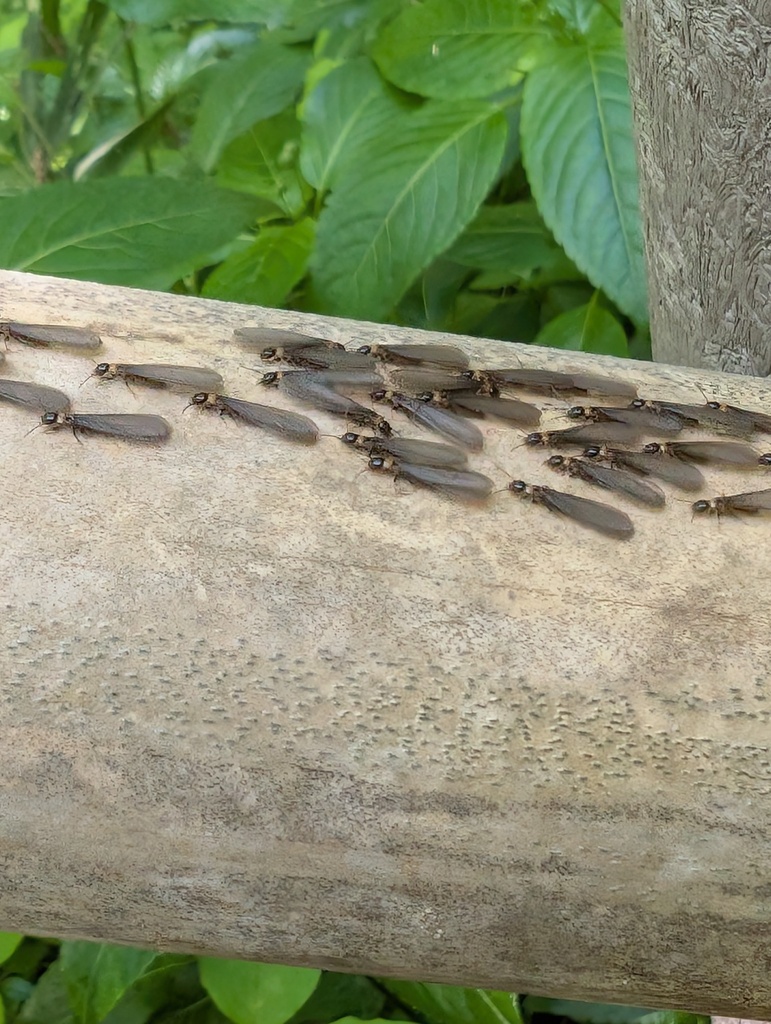
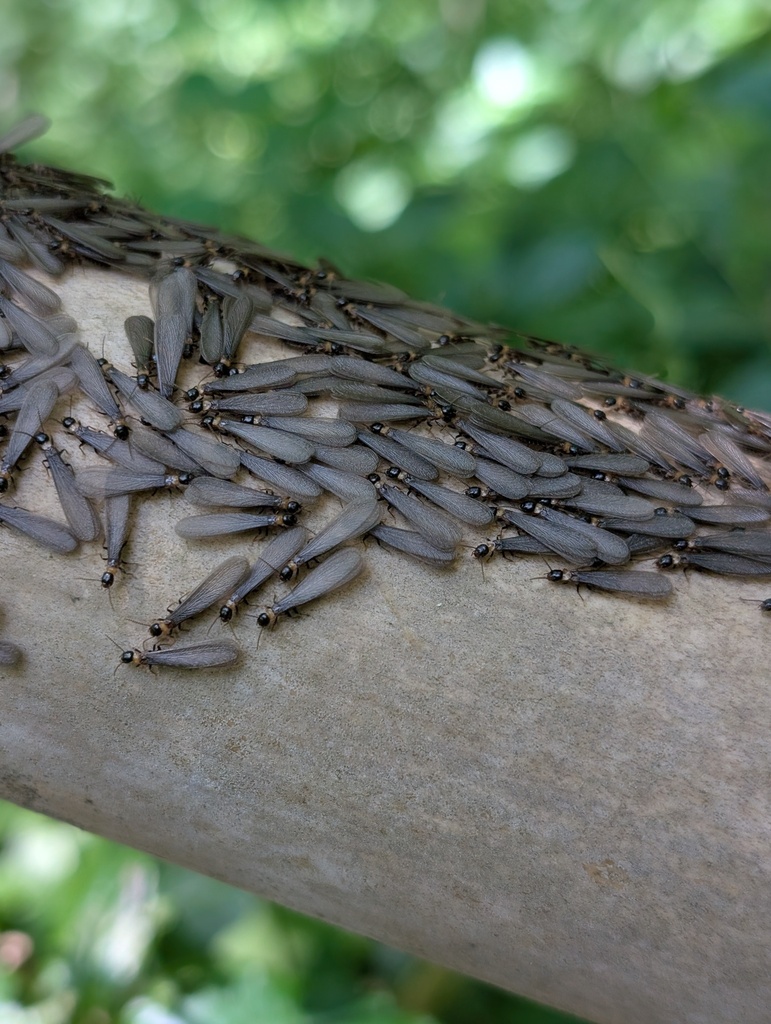
Head capsule dark chestnut brown, pronotum greyish yellow, postmentum, labrum, postclypeus and femora chestnut brown, tibiae greyish yellow, wings pale brown and semi-transparent. Head capsule circular and rather short, fontanelle a small dot, 0.51–0.53 mm from the anterior margin of the frons. Compound eyes nearly circular, protrusion 2–4%; distance from the compound eye to the lower margin of the head less than the long diameter of the compound eye. Ocelli nearly circular, ocellus–compound eye distance about equal to the short diameter of the ocellus. Antennae 16–17 segments. Dorsal margin of the head mound-shaped, postclypeus almost not projecting, lower than the vertex and higher than the ocelli. Pronotum about 1.6–1.65 times as wide as long, anterior margin nearly straight and shallowly notched in the middle, posterior margin formed by two intersecting arcs with a deeper notch. Forewing 7.04–7.26 mm long, 1.84–1.99 mm wide; hindwing 6.88–7.04 mm long, 1.84–1.91 mm wide; Cu vein with about 8–10 branches in each.
Worker
Nymph
Abstract (from the source)
The soldier has a rectangular head 0.63 to 0.72 as wide as long, nearly parallel sides widening slightly behind, and a broadly rounded hind margin. Frontal peaks are low, the labrum is ligulate with one pair of apical setae and almost invisible subapical ones, and lateral setae are absent. Mandibles are slightly stout with gently curved tips, antennae have 15 to 16 segments, and the waist index is 0.33 to 0.38. The pronotum is nearly trapezoidal with four to eight sparse median setae.
Biology
Distribution and locality
Dandong and Dalian, Liaoning; coastal areas of Hebei; and Beijing and Tianjin.
Taxonomic notes
The genus name is printed as Reticuliter mes in the original work, a misspelling of Reticulitermes; the species is here placed in Reticulitermes.
Source: Huang Fusheng et al. (2000), Fauna Sinica, Insecta vol. 17, Isoptera, Science Press. (entry no. 188 in the original work) Entries are cited by their number in the original work.
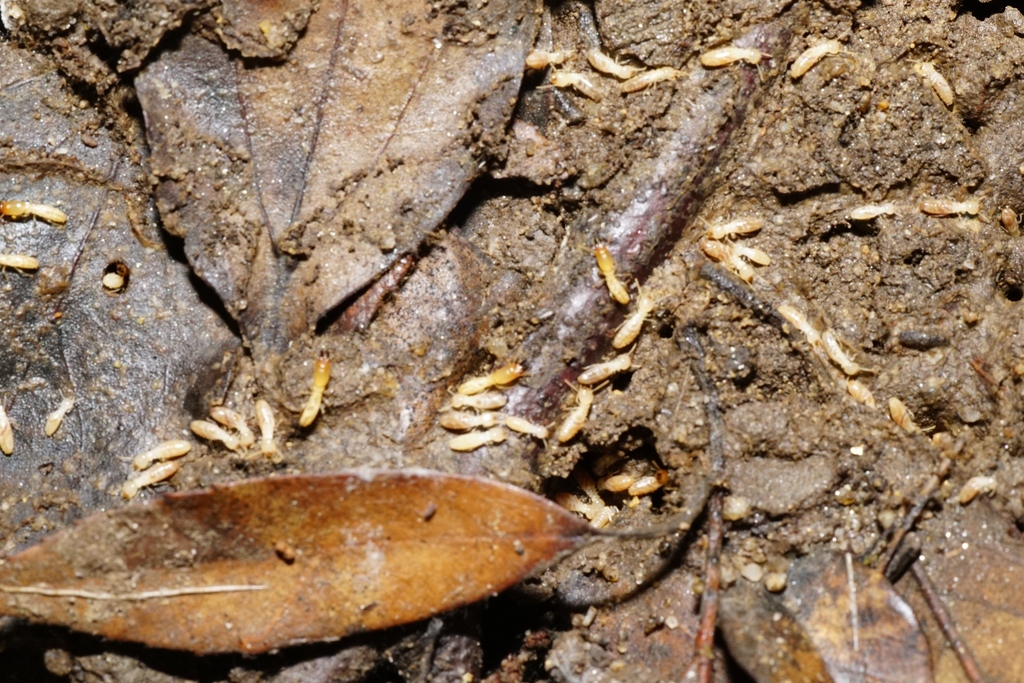
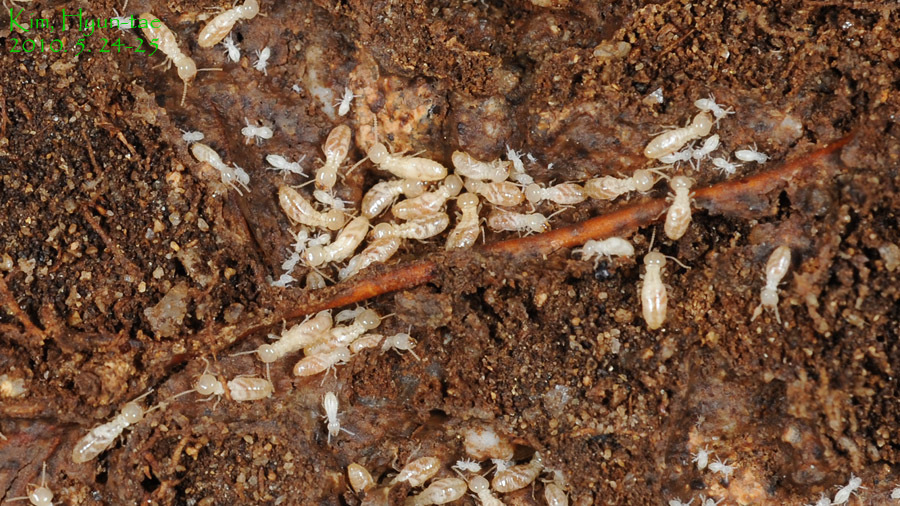
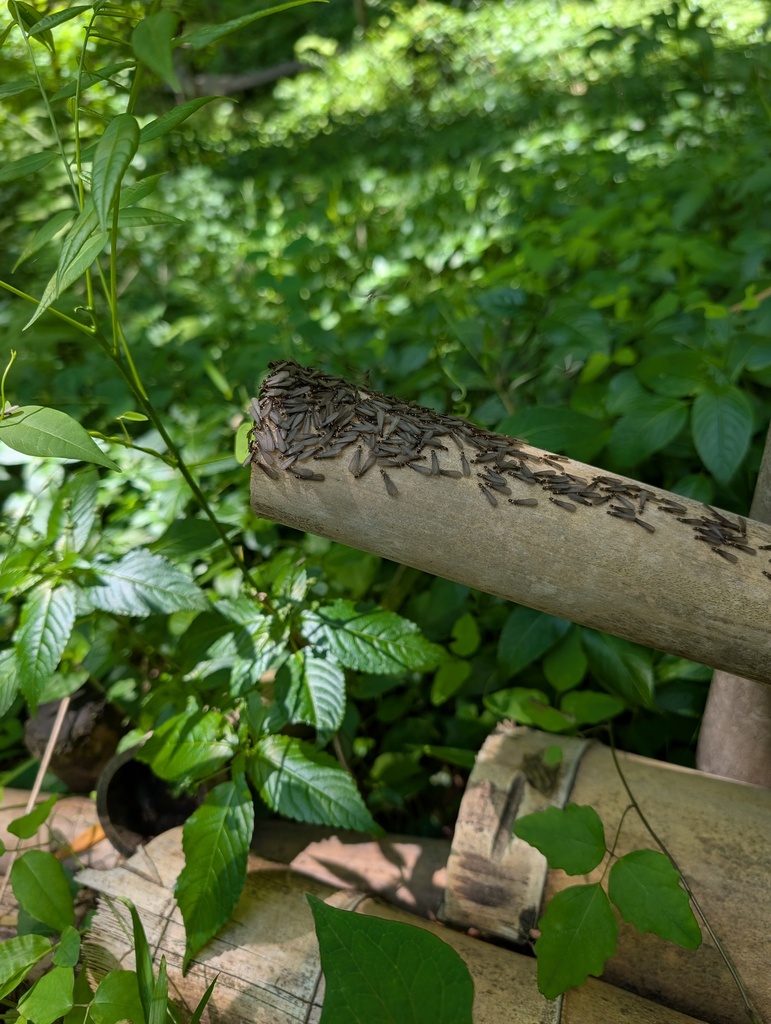
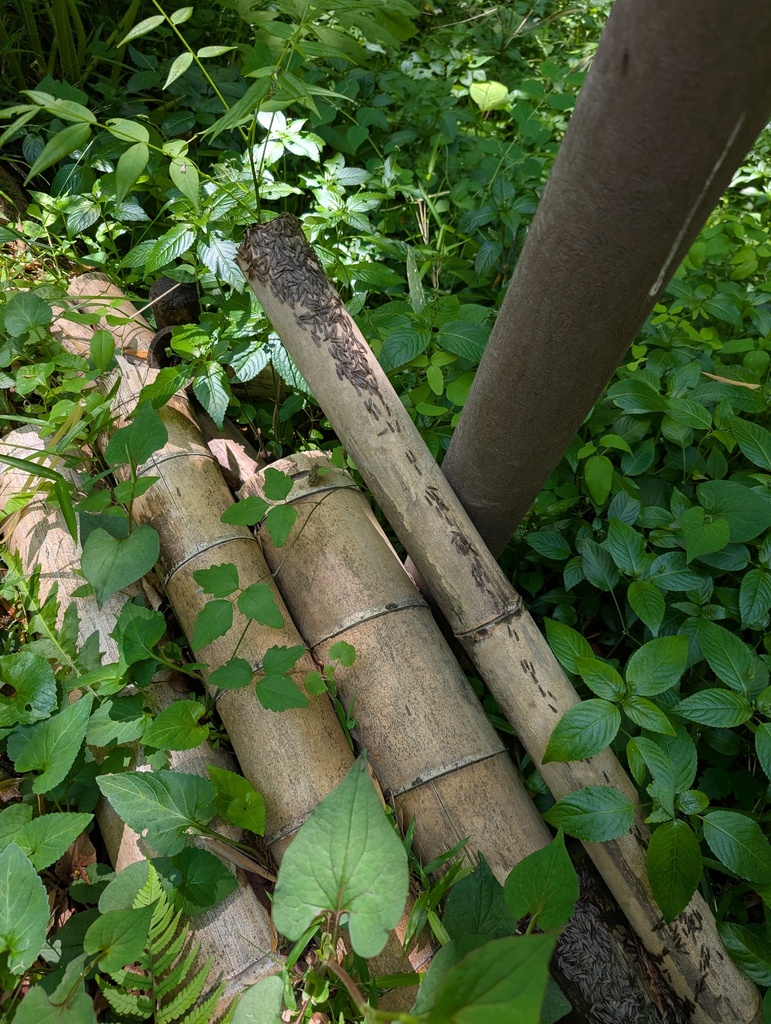
Photos 8 photos
Freely licensed photos, click to enlarge. Hotlinked from iNaturalist / Wikimedia Commons; the rights stay with the photographers — author, licence and source page are shown under each photo. Only the first 6 are shown here; the rest are under “All photos” at the end of the page.
Distribution map
Aggregated from GBIF occurrence records on a 1° grid; only extant taxa of this checklist are used, so fossil records are excluded. Dot size and shade show the number of records inside a cell.
Related papers
Cached papers for this genus (matched automatically, for reference); to search this species with its junior synonyms merged in, use the literature search.
- Genetic Evidence for the Synonymy of Two Reticulitermes Species: Reticulitermes flavipes and Reticulitermes santonensis
Abstract
By applying the 16S rRNA mitochondrial marker to 434 populations of Reticulitermes termites from North, Central, and South America; France; and Germany with other locations around the world that we have analyzed, identical DNA sequence data were obtained from Reticulitermes flavipes (Kollar) in North America and Germany and for Reticulitermes santonensis Feytaud from undisturbed (nonurban) forested locations in western France. We also discovered identical DNA sequence data from previously unidentified Reticulitermes specimens from South America and Easter Island. Haplotypes F, M, and GG were observed in France; haplotype F in Germany; and haplotype GG was found on Easter Island, Santiago, Chile, and Montevideo, Uruguay. All of these haplotypes are found in numerous states within the continental United States. In light of their well documented morphological, chemical, and phylogenetic relationships, coupled with this new data that directly link these disjunct groups, R. flavipes and R. santonensis should be synonymized. Compared with other studies that largely suggest phyletic similarities, this is the first study that specifically matches haplotypes from North America (where populations of R. flavipes are endemic) with populations in Europe (where R. flavipes, described as R. santonensis, is presumed exotic).
- An indirect test of inbreeding depression in the termites Reticulitermes flavipes and Reticulitermes virginicus
Abstract
- Phylogenetic relationships of nearctic Reticulitermes species (Isoptera: Rhinotermitidae) with particular reference to Reticulitermes arenincola Goellner
Abstract
Papers on this species, synonyms included → OpenAlex Google Scholar CNKI
Abstracts come from open metadata; copyright remains with the original authors/publishers. For reference only — please check the original.
Other species in Reticulitermes (139 species)
- Reticulitermes aculabialis
- Reticulitermes aegeus
- Reticulitermes affinis
- Reticulitermes altus
- Reticulitermes amamianus
- Reticulitermes ampliceps
- Reticulitermes ancyleus
- Reticulitermes angustatus
- Reticulitermes angusticephalus
- Reticulitermes arenincola
- Reticulitermes assamensis
- Reticulitermes aurantius
- Reticulitermes balkanensis
- Reticulitermes banyulensis
- Reticulitermes bicristatus
- Reticulitermes bitumulus
- Reticulitermes brachygnathus
- Reticulitermes brevicurvatus
- Reticulitermes cancrifemuris
- Reticulitermes castanus
- Reticulitermes chayuensis
- Reticulitermes chinensis
- Reticulitermes choui
- Reticulitermes chryseus
- Reticulitermes citrinus
- Reticulitermes clypeatus
- Reticulitermes coelceps
- Reticulitermes conus
- Reticulitermes croceus
- Reticulitermes curticeps
- Reticulitermes curvatus
- Reticulitermes cymbidii
- Reticulitermes dabieshanensis
- Reticulitermes dantuensis
- Reticulitermes dayongensis
- Reticulitermes dinghuensis
- Reticulitermes emei
- Reticulitermes fengduensis
- Reticulitermes flaviceps
- Reticulitermes flavipes
139 species in this genus. See all species on the genus page →
Cite this species
Citation strings are generated from the fields of this page; please keep the DOI and the version number when citing.
GB/T 7714
班奈特格林. Extant Isoptera (termites): a checklist of Latin and Chinese names: Reticulitermes speratus 栖北散白蚁[EB/OL]. Version 2026.10.30. https://termite-extant-isoptera.org/en/species/reticulitermes-speratus/. DOI: 10.5281/zenodo.23646836.
BibTeX
@misc{isoptera_reticulitermes_speratus_2026,
  author       = {班奈特格林},
  title        = {Reticulitermes speratus: a checklist of extant Isoptera (termites)},
  year         = {2026},
  version      = {2026.10.30},
  howpublished = {https://termite-extant-isoptera.org/en/species/reticulitermes-speratus/},
  note         = {HETEROTERMITIDAE; version 2026.10.30; DOI: 10.5281/zenodo.23646836},
  doi          = {10.5281/zenodo.23646836}
}
RIS
TY  - ELEC
TI  - Reticulitermes speratus: a checklist of extant Isoptera (termites)
AU  - 班奈特格林
PY  - 2026
UR  - https://termite-extant-isoptera.org/en/species/reticulitermes-speratus/
DO  - 10.5281/zenodo.23646836
ER  -